Ingredient
Mustard greens (gat)
갓
Romanization: gat
Broad, pungent leaves of Korean leaf mustard, green or deep purple-red. The star of gat-kimchi from Yeosu's Dolsan Island and a sharp, aromatic addition to winter kimchi seasoning.
Flavor
Peppery and mustard-hot with a slightly bitter, nose-tingling edge; red gat is the sharpest. Salting mellows the bite, and fermentation turns it deeply savory and aromatic.
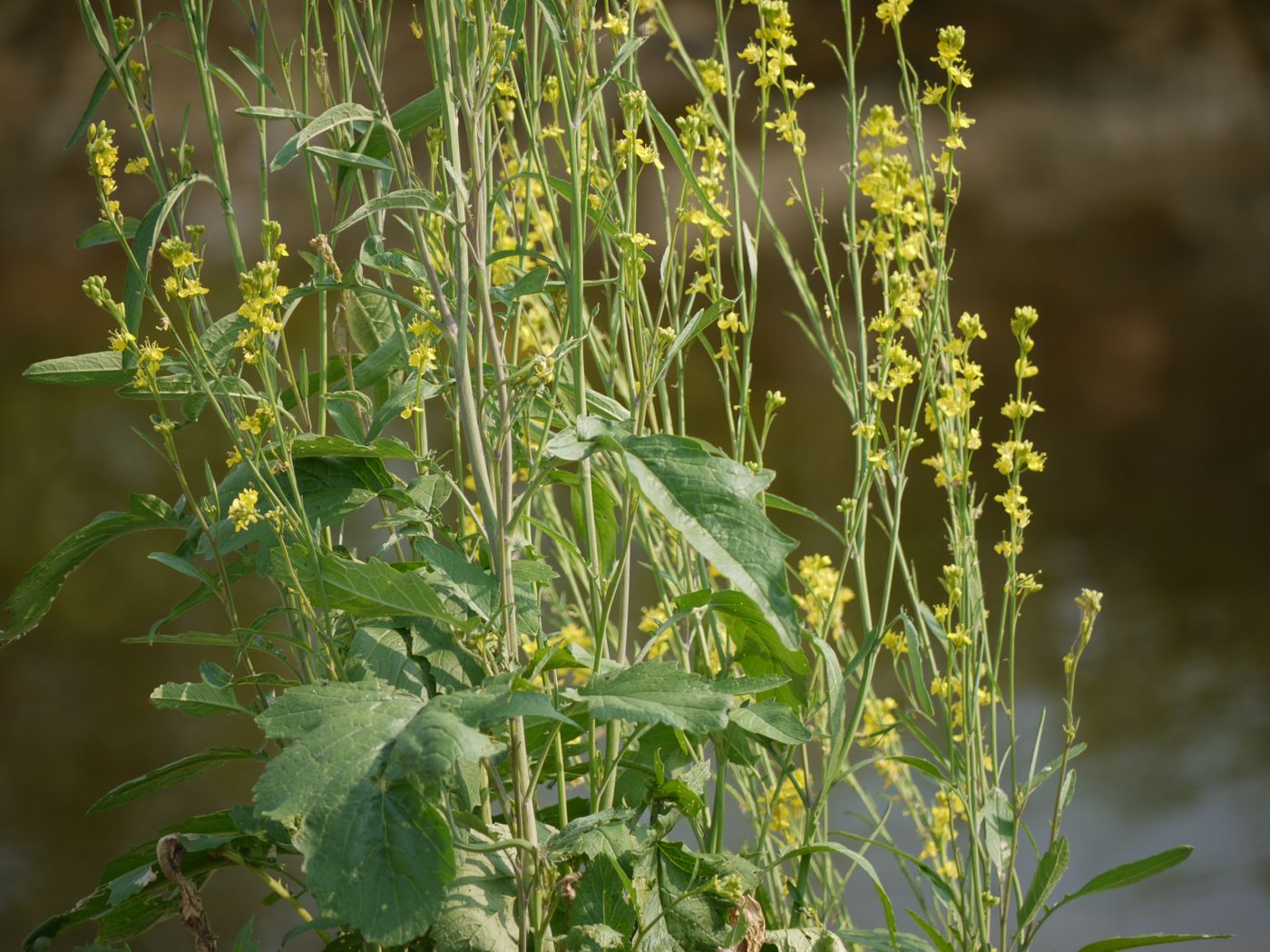 Photo: Dinesh Valke from Thane, India, CC BY-SA 2.0, via Wikimedia Commons
Origin & History
Gat is leaf mustard (Brassica juncea), an annual of the cabbage family thought to have originated in Central Asia. The plant grows to about a meter tall, with wrinkled leaves that are often tinged purple and clusters of small yellow flowers. Its seeds are ground into the pungent spice gyeoja, and as breeding has diverged, the name gat has come to mean leaf varieties and gyeoja the seed types.
Leaf mustard came to Korea from China early: it is mentioned in records from the Three Kingdoms period. A cultivation method appears in Sangayorok, a cookbook and farming manual of about 1450, which notes that dried gat could keep for years, and later Joseon books such as Jeungbo sallim gyeongje describe pickling tender spring gat and saving the autumn crop for winter kimchi. Tongyeong on the south coast was once known for its gat.
Today growers distinguish red gat, with dark purplish, hairy, strongly pungent leaves; green gat, with smooth, milder leaves; and mixed types. Red and mixed gat are mostly used as an aromatic ingredient in kimjang seasoning, while green gat is made into kimchi on its own. The best known is Dolsan gat from Yeosu in South Jeolla, a large, fleshy green type developed from a variety introduced during the Japanese colonial period. The purplish-red gat of Haenam is prized for gatssam-kimchi, in which whole leaves are layered with seasoning.
Gat's heat comes from sinigrin, which an enzyme in the leaf converts to a sharp, volatile compound when the leaf is cut or chewed, much as in mustard and wasabi. Because that heat fades with cooking, gat is used mostly raw or salted. Gat-kimchi made from Dolsan gat, seasoned with chili, anchovy and shrimp sauces and a glutinous-rice paste, is a celebrated Jeolla specialty; in Jeongseon, Gangwon Province, a version is made with red gat.
Nutrition
| Calories | 22 kcal |
|---|---|
| Protein | 2.53 g |
| Fat | 0.27 g |
| Carbohydrates | 3.7 g |
| Fiber | 2.4 g |
| Sodium | 7 mg |
Notable forVitamin K · Vitamin C · Vitamin A · Calcium · Folate
Korean Food Composition Table entry "Leaf mustard (Gat), Dolsan, Raw" (갓, 돌산, 생것): also 150.1 µg vitamin K, 53 mg vitamin C, 110 µg RAE vitamin A, 140 mg calcium, 122 µg folate and 544 mg potassium per 100 g. Actual values vary with ingredients, portion size and preparation.
Health Benefits
- Vitamins: Per the Korean Food Composition Table, raw Dolsan gat is rich in vitamin K and vitamin C and provides vitamin A (as beta-carotene) and folate.
- Minerals: It is a source of calcium and potassium.
- Glucosinolates: Like other mustard-family greens, gat contains glucosinolates such as sinigrin, which give it its bite; research on their health effects is ongoing.
- Sodium and vitamin K: Gat-kimchi is salted and seasoned with fish sauces, so it is high in sodium. People taking warfarin should keep their intake of vitamin K–rich greens consistent and talk with their doctor before changing their diet.
Informational, not medical advice. Talk to a qualified professional about your own health and diet.
Dishes with Mustard greens (gat)
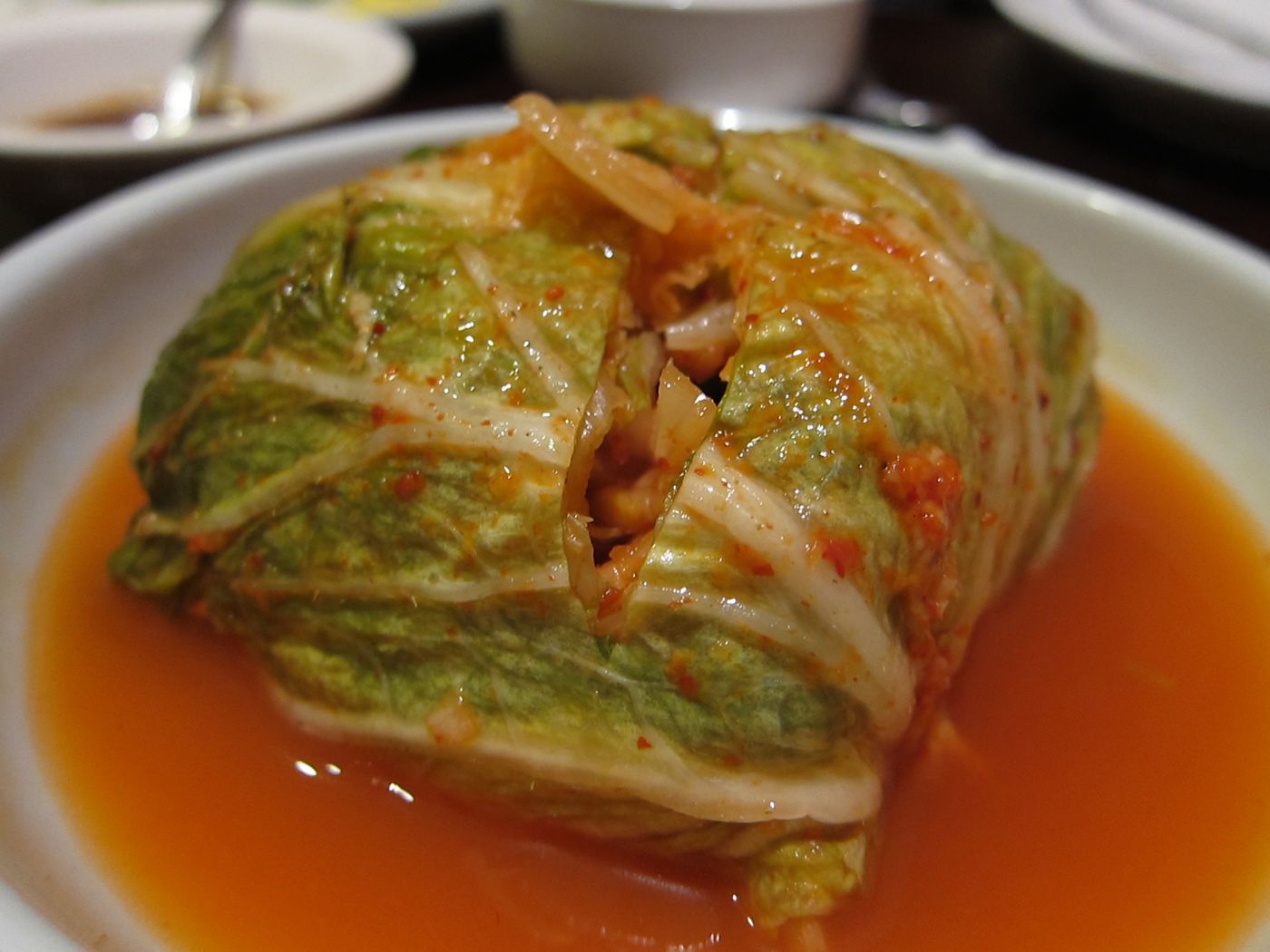 Wrapped Kimchi보쌈김치Cabbage, radish, fruit, nuts and seafood bundled inside whole cabbage leaves — the lavish wrapped kimchi of Gaeseong, made for honored guests.
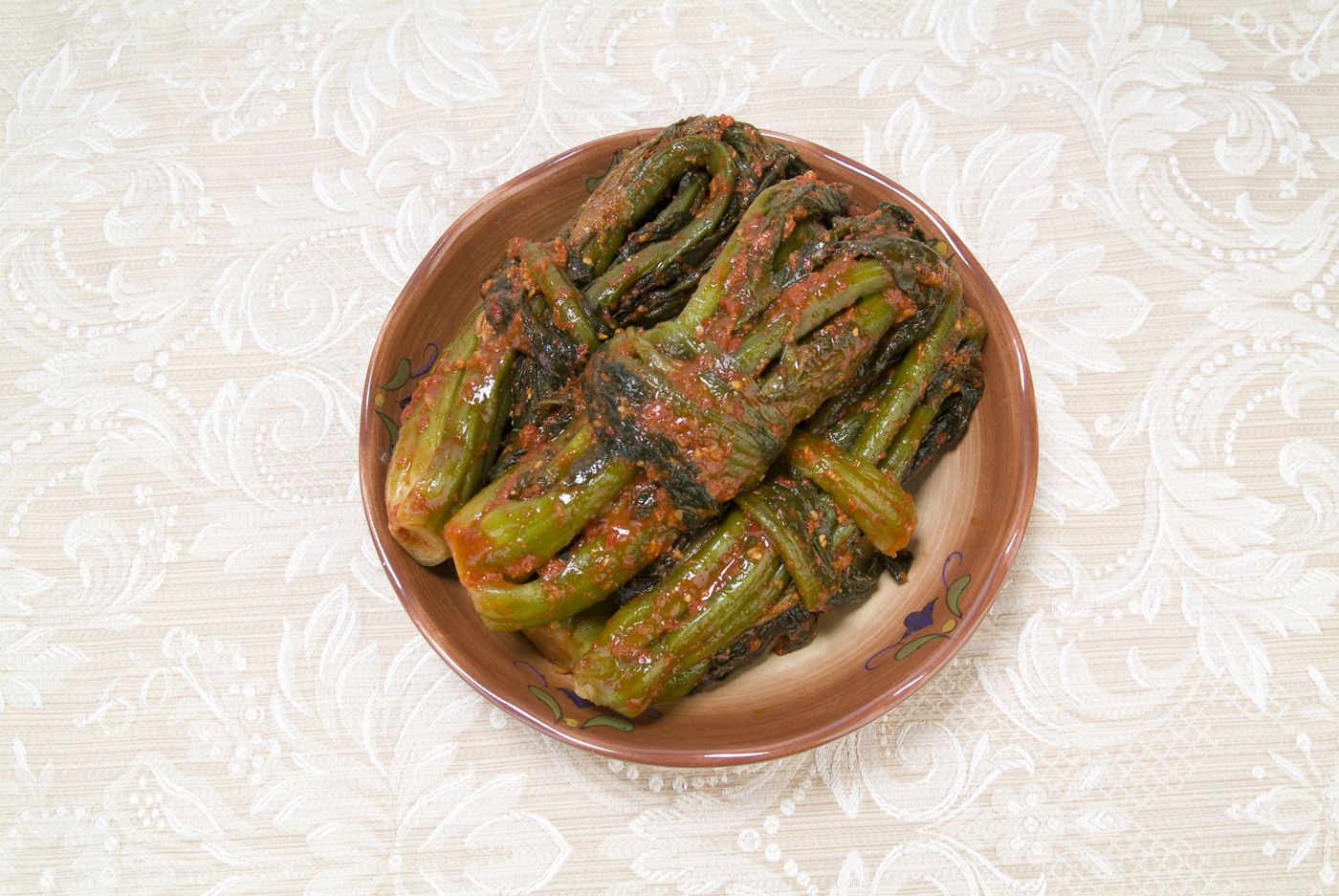 Mustard Leaf Kimchi갓김치Leaf mustard rolled in a chili and anchovy paste and fermented until its nose-tingling bite mellows — a Jeolla specialty, famously from Dolsan in Yeosu.
- Soy Sauce Water Kimchi장김치Cabbage and radish cured in soy sauce instead of salt, floated in a lightly sweet soy brine with pear, chestnut and pine nuts — a court and gentry kimchi.