Regions
Tongyeong
통영
A south-coast naval town turned fishing port, Tongyeong is known for farmed oysters, rice-only chungmu gimbap, syrup-glazed kkulppang and its harbor markets.
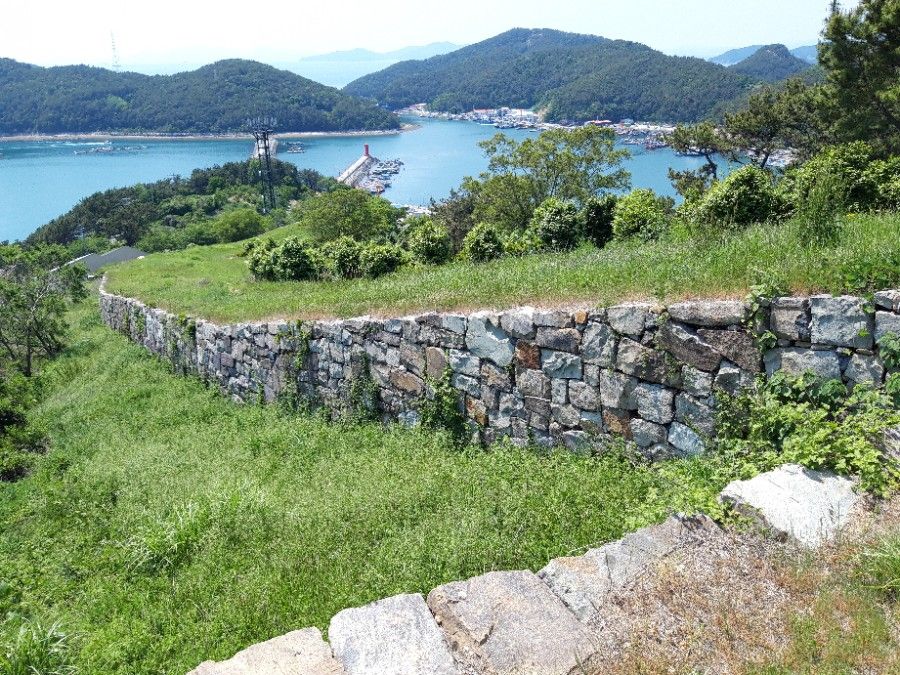 Photo: Yongchangjang, CC BY-SA 4.0, via Wikimedia Commons
Tongyeong sits at the tip of a peninsula on the South Gyeongsang coast, surrounded on three sides by the island-studded South Sea. The Encyclopedia of Korean Culture counts some 570 islands within the city's boundaries. It is a town shaped by the sea in every sense: a naval headquarters for nearly three centuries, a major fishing and aquaculture center today, and the home of a handful of foods that have spread across the country. For the province, see Gyeongsang.
A naval town with two names
The name recalls Tongjeyeong, the Joseon naval command, which the encyclopedia says was moved here in 1604, turning a small inlet into a military base. The commander's legacy is still everywhere, especially that of Admiral Yi Sun-sin, the hero of the Imjin War. When the town became a city in 1955 it was renamed Chungmu, after Yi's posthumous title; in 1995 Chungmu City and Tongyeong County merged as Tongyeong City. That is why the city's most famous dish still carries the older name.
Oysters
Tongyeong is Korea's oyster capital. The Encyclopedia of Korean Culture says the waters off Tongyeong produce about 30 percent of the country's farmed oysters (gul), and that the city holds an annual oyster festival. Hanging-culture farming, in which oysters grow on lines suspended from rafts or long ropes, matured in the 1970s and developed fastest along the south coast centered on Chungmu. Oysters are eaten raw, cooked into rice, porridge, soup and jeon, and salted as jeotgal, including the chili-seasoned eoriguljeot.
The encyclopedia lists anchovies (myeolchi), oysters and pearl oysters as Tongyeong's best-known catches, and adds that sea squirt (meongge) farming began in Korea in Tongyeong's waters in the 1970s. Mackerel, sea bream and rockfish round out a long list of local fish.
Chungmu gimbap
Chungmu gimbap is the opposite of the fat, filled rolls sold elsewhere: thin, finger-sized rolls of rice wrapped in laver with nothing inside, served with spicy seasoned squid (ojingeo) and chunky radish kimchi, either kkakdugi or larger-cut seokbakji. The Encyclopedia of Korean Culture regards it as a post-liberation dish and records two oral explanations. In one, fishermen who could not stop for proper meals packed gimbap to sea, but in summer the fillings spoiled, so they rolled the rice plain and carried the side dishes separately. In the other, vendors sold it to ferry passengers at the old Tongyeong terminal, a hub for boats to nearby islands and Busan; it was nicknamed baenmeori gimbap, "ship's-bow gimbap." Both stories share the same logic: keeping rice and banchan apart so the meal would last in summer heat without refrigeration.
The encyclopedia says the sheets of laver are cut into six, the squid is blanched and dressed with chili flakes, soy sauce, garlic, green onion, sesame, sugar and sesame oil, and the radish is salted and seasoned with jeotgal and chili. A bowl of radish-greens soup often comes alongside, and baby octopus or fish cake sometimes replaces the squid. Once a cheap, heaping laborer's meal, it became nationally known after it was featured at the Gukpung 81 festival in Seoul in 1981. See gimbap and ojingeochae-muchim for related dishes.
Kkulppang
Kkulppang, "honey bread," is Tongyeong's sweet snack: a ball of wheat dough filled with sweet red bean paste, deep-fried, then coated in a sticky sweet glaze. The Korea Tourism Organization describes it as a snack made to keep well in Tongyeong's warm climate and credits Omisa, a shop that began in the 1960s, as the original. Its Korean-language page on Omisa says the founder had worked as a pastry maker at a well-known local bakery before he started selling doughnuts and kkulppang from a street stall in the early 1960s. Today a whole kkulppang street lines the harbor.
Markets by the harbor
Tongyeong Jungang Market, beside the Gangguan harbor where replica turtle ships are moored, is the place to see all of this together. The Korea Tourism Organization describes a market with nearly 400 years of history, dominated by fresh and dried fish, alongside rice cakes, local produce and mother-of-pearl crafts. The hillside mural village of Dongpirang rises directly behind it. For the wider culture of these markets, see traditional markets.
Dishes from this region
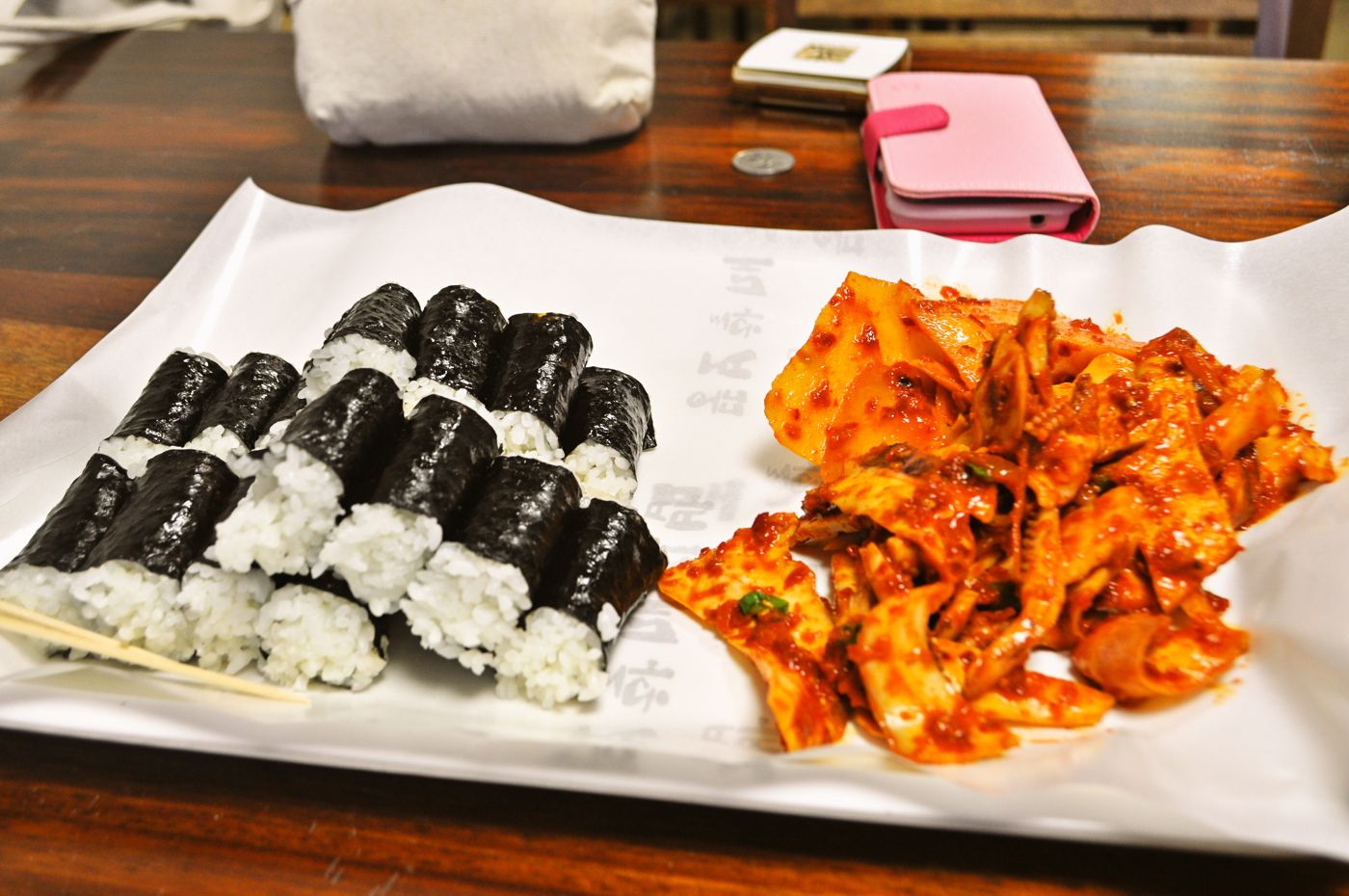 Chungmu Gimbap (Tongyeong Rice Rolls)충무김밥Finger-sized rolls of plain rice in laver, eaten with spicy squid and chunky radish kimchi on the side — Tongyeong's harbor food, built to survive summer heat.
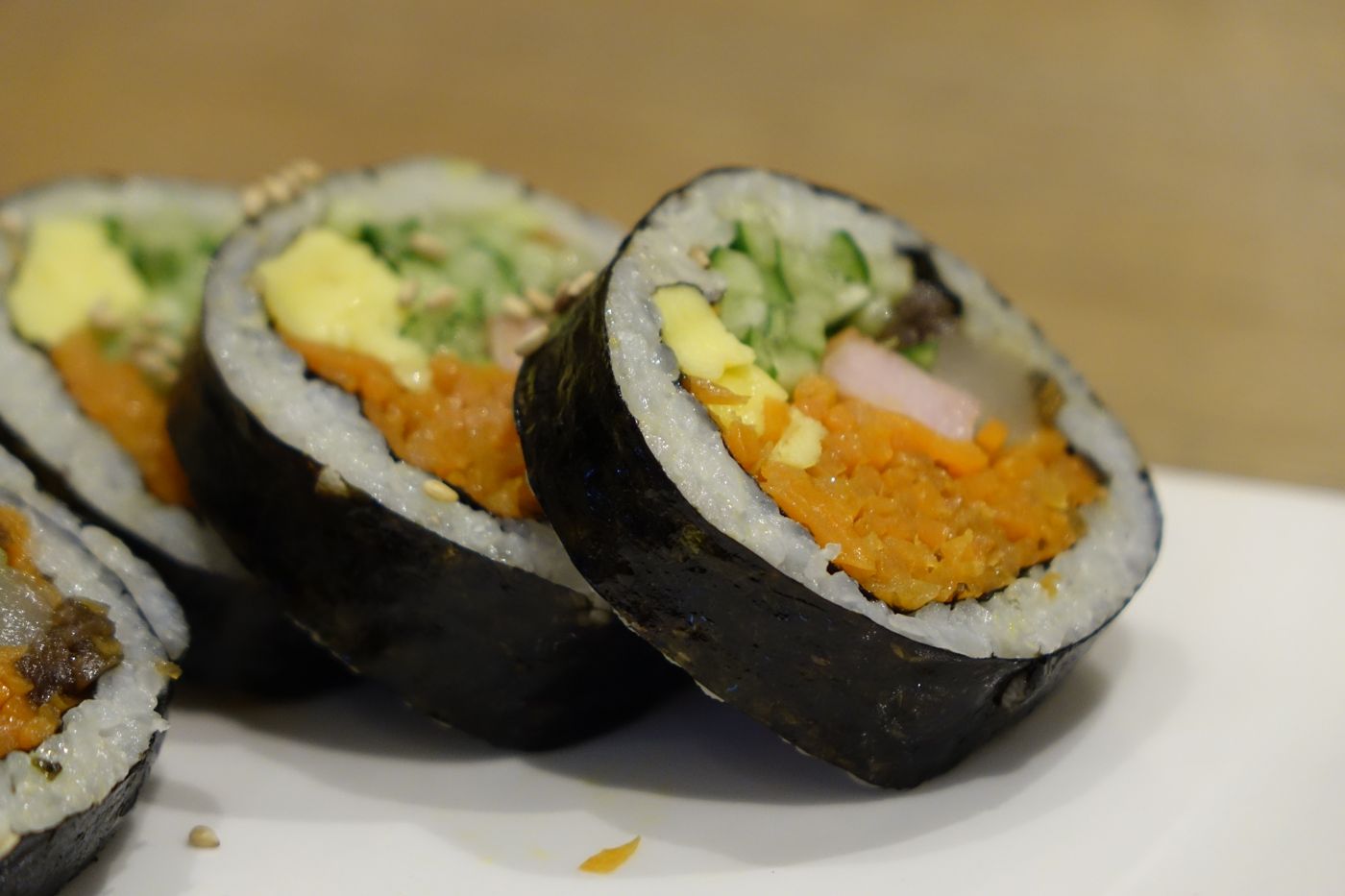 Gimbap (Seaweed Rice Rolls)김밥Rice seasoned with sesame oil and salt, rolled in laver around strips of spinach, egg, carrot and pickled radish, then sliced — Korea's classic picnic and lunchbox food.
- Gul Guk (Oyster Soup)굴국Fresh oysters dropped into a clear radish broth with tofu and green onion and cooked for barely a minute — a delicate cold-season soup of the south and west coasts.
- Gul-jeon (Pan-Fried Oysters)굴전Plump oysters dusted with flour, dipped in beaten egg and pan-fried until golden: a briny, tender jeon for banquet tables and everyday banchan.
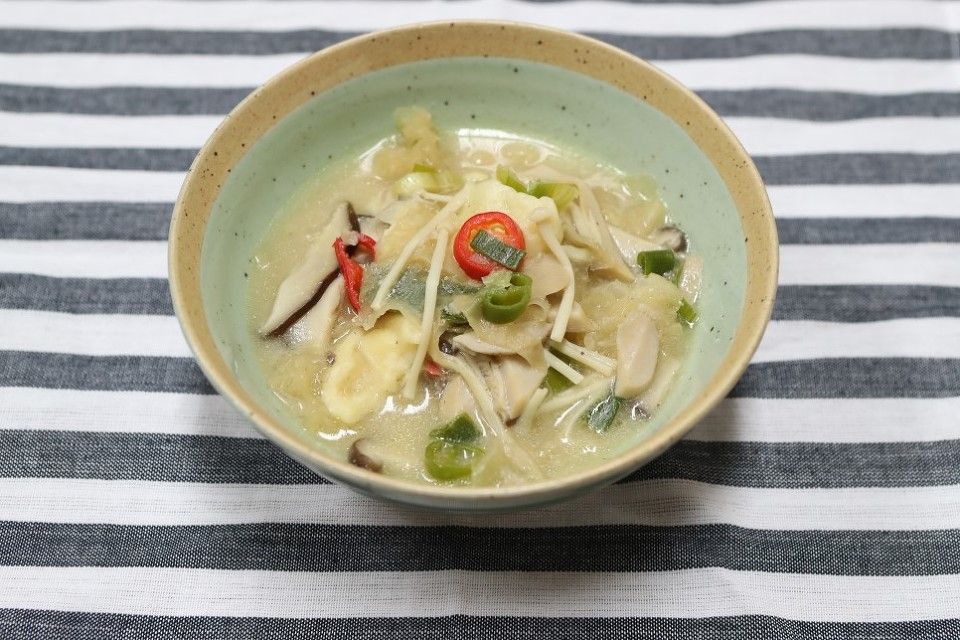 Sujebi (Hand-Torn Dough Soup)수제비Thin pieces of wheat dough pulled by hand into a simmering anchovy broth with zucchini and potato — a cozy, inexpensive one-pot meal, traditionally a summer staple.
Sources
- 01통영시 (Tongyeong) — Encyclopedia of Korean Culture
- 02충무 (Chungmu) — Encyclopedia of Korean Culture
- 03충무김밥 (Chungmu Gimbap) — Encyclopedia of Korean Culture
- 04굴 (Gul, oyster) — Encyclopedia of Korean Culture
- 05Tongyeong Jungang Market (통영 중앙시장) — VISITKOREA
- 06통영항 꿀빵거리 (Tongyeong Harbor Kkulppang Street) — VISITKOREA (Korean)