Ingredient
Oyster (gul)
굴
Romanization: gul
Plump, briny oysters, many of them grown on hanging lines in the bays around Tongyeong. Koreans eat them raw, cooked into rice, porridge, soup and pan-fried jeon, or salted with chili as eoriguljeot.
Flavor
Cold, briny and mineral with a creamy, faintly sweet finish; raw oysters are soft and slippery, while cooked ones firm up and turn rich and savory.
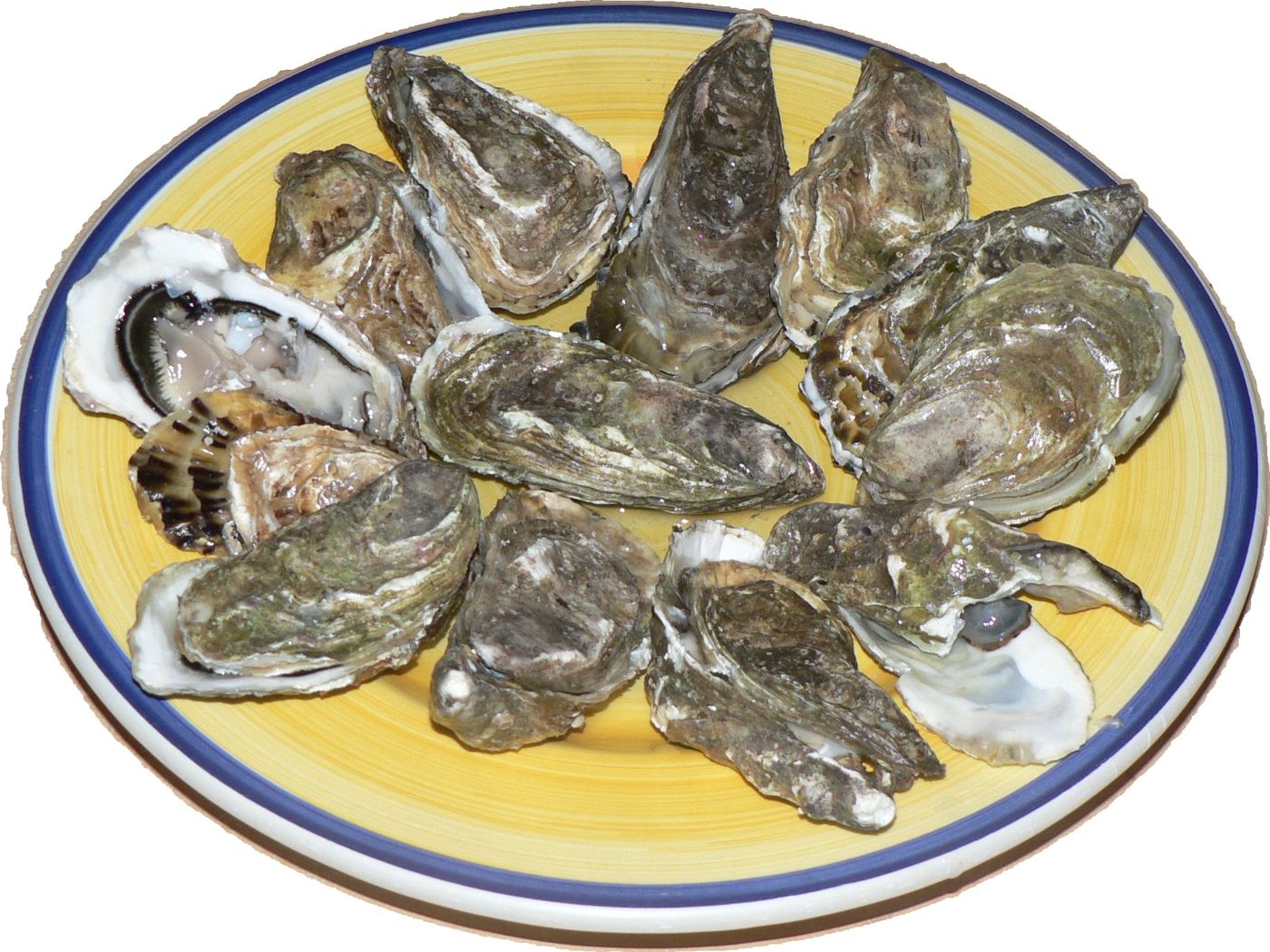 Photo: David Monniaux, CC BY-SA 3.0, via Wikimedia Commons
Origin & History
Gul, also called gul-jogae and written in older texts as seokhwa ("stone flower"), is the oyster. The Encyclopedia of Korean Culture names three main Korean species: the Pacific oyster (cham-gul), which is farmed; and the rock oyster (bawit-gul) and a third species, beot-gul, which are gathered wild. Oysters are the most common shells in Korea's prehistoric shell middens, and the 16th-century gazetteer Dongguk yeoji seungnam lists them as a local product of seventy districts in seven provinces.
No record shows when Koreans began to farm oysters. A survey from around 1908 found small-scale culture at the mouth of the Seomjin River, and Japanese operators started farms in the following years using bamboo and pine stakes. Hanging culture, with oysters grown on lines suspended in the water, appeared in the 1930s, and the industry took off in the 1950s, when the government promoted oysters to help struggling seaweed farmers. Raft and longline methods followed, and by the 1970s suspended culture was booming along the south coast around Tongyeong (then Chungmu).
Tongyeong in South Gyeongsang remains the center of the trade: the Encyclopedia of Korean Culture credits it with about 30 percent of national production, and the city holds an annual oyster festival. Oysters are eaten raw as saeng-gul or cooked into rice (gul-bap), porridge, soup and pan-fried gul-jeon, and they are also salted as jeotgal; eoriguljeot is a lightly salted version dressed with chili. More than half the national harvest is eaten fresh at home.
Nutrition
| Calories | 81 kcal |
|---|---|
| Protein | 9.45 g |
| Fat | 2.3 g |
| Carbohydrates | 4.95 g |
| Fiber | 0 g |
| Sodium | 106 mg |
Notable forVitamin B12 (16 µg) · Zinc (16.6 mg) · Selenium (77 µg) · Iron (5.11 mg)
Values copied from USDA FoodData Central for raw Pacific oyster, the same species as Korea's farmed cham-gul. The Korean Food Composition Table entry for farmed Pacific oyster (88 kcal, 10.5 g protein) does not report sodium or zinc, so the more complete USDA record is used here. Actual values vary with ingredients, portion size and preparation.
Health Benefits
- Exceptionally rich in zinc and vitamin B12: USDA data list about 16.6 mg of zinc and 16 µg of vitamin B12 per 100 g of raw Pacific oyster, along with selenium and iron.
- Raw oysters carry real risk: CDC says most vibriosis comes from eating raw or undercooked shellfish, particularly oysters, and lists liver disease, diabetes, cancer, immune suppression and acid-reducing medicines among the risk factors. CDC also notes oysters can carry norovirus when grown in contaminated water.
- Who should avoid them raw: The FDA advises pregnant women, young children, older adults and people with weakened immunity to avoid raw oysters, even ones treated after harvest, and to cook seafood thoroughly.
- Low in mercury: Oysters are on the FDA/EPA "Best Choices" list.
- Shellfish allergy: Oysters are mollusks. U.S. law's major-allergen list names crustacean shellfish rather than mollusks, so mollusks may not be called out on labels the same way; anyone with a shellfish allergy should ask an allergist which kinds to avoid.
Informational, not medical advice. Talk to a qualified professional about your own health and diet.
Dishes with Oyster (gul)
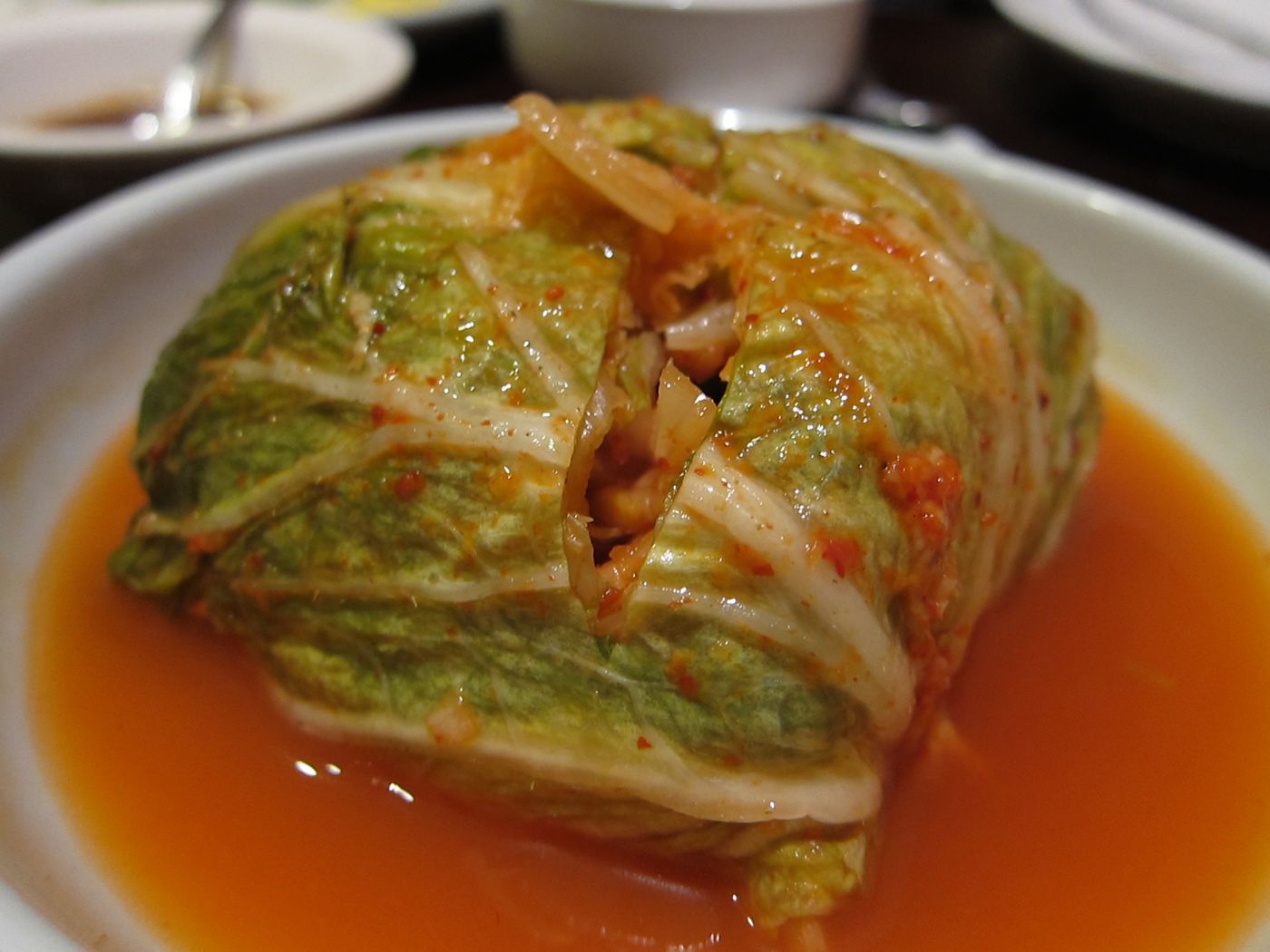 Wrapped Kimchi보쌈김치Cabbage, radish, fruit, nuts and seafood bundled inside whole cabbage leaves — the lavish wrapped kimchi of Gaeseong, made for honored guests.
- Spicy Lightly Salted Oysters어리굴젓Fresh oysters lightly salted and ripened with chili — a short-keeping winter jeotgal famous in Seosan and Ganwoldo in South Chungcheong.
- Gul Guk (Oyster Soup)굴국Fresh oysters dropped into a clear radish broth with tofu and green onion and cooked for barely a minute — a delicate cold-season soup of the south and west coasts.
- Gul-jeon (Pan-Fried Oysters)굴전Plump oysters dusted with flour, dipped in beaten egg and pan-fried until golden: a briny, tender jeon for banquet tables and everyday banchan.
- Oyster Radish Kimchi굴깍두기Cubed radish kimchi folded through with fresh raw oysters — a short-lived winter kimchi, eaten within days while the oysters are still sweet.
Sources
- 01굴 (Oyster) — Encyclopedia of Korean Culture
- 02통영시 (Tongyeong) — Encyclopedia of Korean Culture
- 03USDA FoodData Central — Mollusks, oyster, Pacific, raw
- 04About Vibrio Infection — U.S. Centers for Disease Control and Prevention
- 05How Norovirus Spreads — U.S. Centers for Disease Control and Prevention
- 06Selecting and Serving Fresh and Frozen Seafood Safely — U.S. Food and Drug Administration