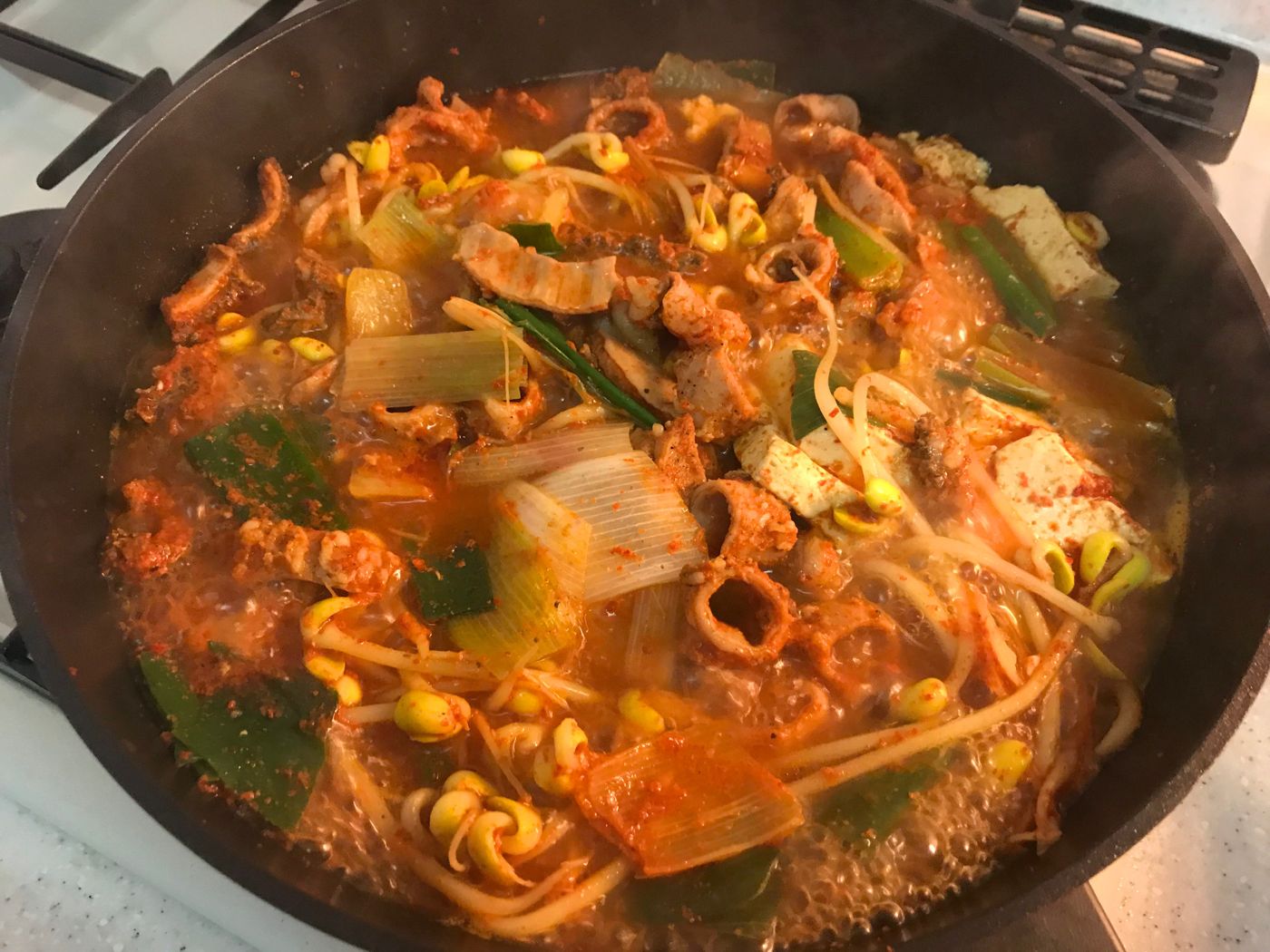
Ingredient
Neutari-beoseot (oyster mushroom)
느타리버섯
Romanization: neutari-beoseot
Soft gray-brown mushrooms with fan-shaped caps that grow in overlapping clusters. Mild and silky when cooked, they are Korea's everyday mushroom for namul, soups, stir-fries and jeon.
Flavor
Delicate and mildly savory, with a faint anise-like sweetness. The caps turn silky and tender when cooked; the stems stay slightly chewy.
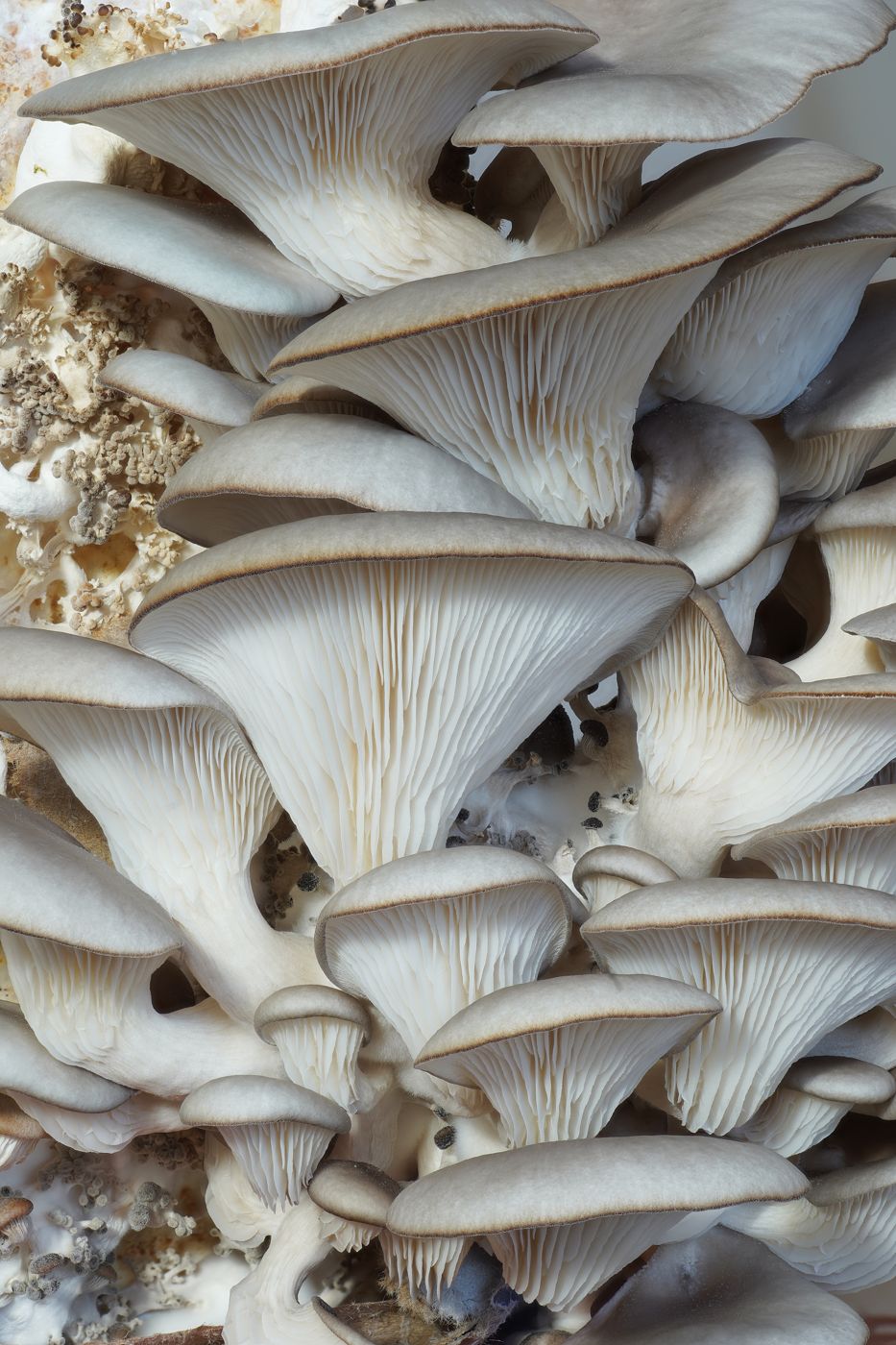 Photo: Zinnmann, CC BY-SA 3.0, via Wikimedia Commons
Origin & History
Neutari-beoseot is the oyster mushroom (Pleurotus ostreatus). According to the Encyclopedia of Korean Culture it grows in crowded clusters on the dead trunks, fallen logs and cut stumps of broadleaf trees such as oak, alder, poplar and willow, appearing in autumn (October to December) and again in early spring. Its caps are pale gray to light grayish brown and shaped like a half-moon or fan. The species is found well beyond Korea, across China, Japan, Europe, North America and Siberia. Older Sino-Korean names include cheonhwasim and mani.
Oyster mushrooms are now grown on a large scale, either on inoculated logs (spawned in spring, fruiting by autumn) or in bottles of sawdust medium. The encyclopedia notes that small caps around 2 to 3 centimeters across are preferred, since oversized caps fetch lower prices. It is one of the most important mushrooms on the Korean market: Gyeongsangnam-do's agricultural research service has bred oyster and king oyster varieties and even a hybrid of the two.
Cooking makes oyster mushrooms soft and pleasant in the mouth, which is why Korean cooks use them so widely. They are torn by hand along the gills, blanched and seasoned as namul, added to soups and hot pots, pan-fried as jeon or buchimgae, grilled and stir-fried, as in beoseot-bokkeum.
Nutrition
| Calories | 15 kcal |
|---|---|
| Protein | 2.6 g |
| Fat | 0.14 g |
| Carbohydrates | 4.7 g |
| Fiber | 2.9 g |
| Sodium | 2 mg |
Notable forNiacin · Pantothenic acid · Folate · Potassium
Korean Food Composition Table entry "Oyster mushroom (Neutari-beoseot), Raw" (느타리버섯, 생것): also 5.127 mg niacin, 1.852 mg pantothenic acid, 68 µg folate and 256 mg potassium per 100 g. Actual values vary with ingredients, portion size and preparation.
Health Benefits
- Light and savory: Per the Korean Food Composition Table, oyster mushrooms are very low in calories and fat and provide fiber, niacin, pantothenic acid, folate and potassium.
- Meaty texture without meat: Their tender, savory bite makes them a useful base for plant-based banchan and soups.
- Cook before eating: Eat oyster mushrooms cooked rather than raw, and keep them refrigerated and use them within a few days, discarding any that turn slimy or smell off.
- Buy, don't forage: Wild oyster-like mushrooms can be confused with inedible species. Korea's Forest Service advises eating only cultivated mushrooms from known sources.
Informational, not medical advice. Talk to a qualified professional about your own health and diet.