Ingredient
Paengi-beoseot (enoki mushroom)
팽이버섯
Romanization: paengi-beoseot
Long, slender, ivory-white stems topped with tiny caps, sold in tight bundles. Crisp-tender and mild, enoki is added at the last minute to stews and hot pots, and should always be eaten well cooked.
Flavor
Very mild, clean and faintly fruity. Raw enoki is crunchy; cooked, the stems turn tender yet springy and slightly slippery, soaking up the broth around them.
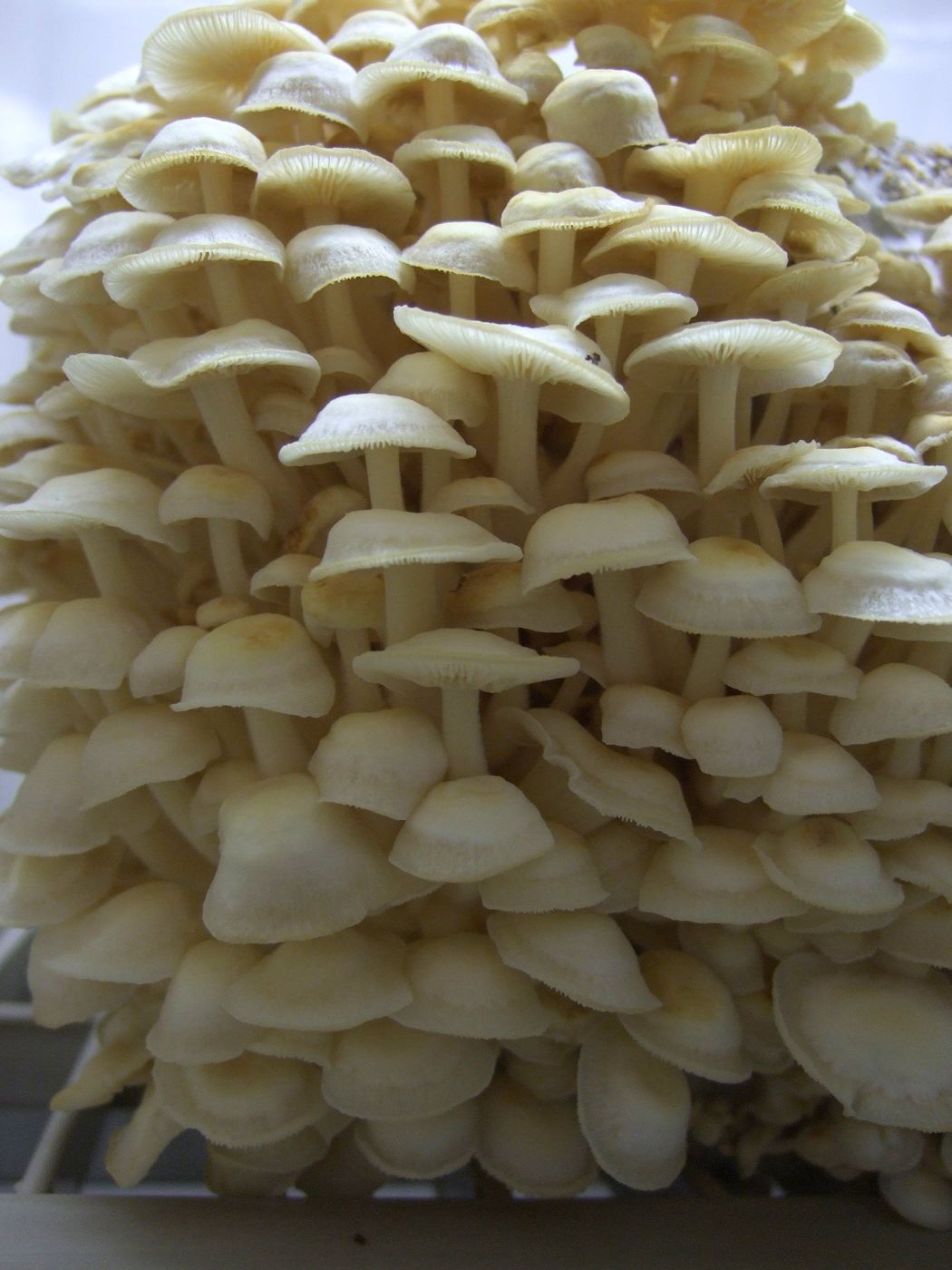 Photo: Wendell Smith, CC BY 2.0, via Wikimedia Commons
Origin & History
Paengi-beoseot is the enoki or winter mushroom (Flammulina velutipes). Its Korean name ties it to the paeng-namu, the East Asian hackberry tree on which it grows in the wild, and it is also called paeng-namu-beoseot. The familiar product is a cultivated form with slender pale stems up to about 12 centimeters long and small, button-sized caps.
Commercial cultivation began in Japan, which is why the Japanese name enokitake is widely used abroad. According to Korea's agri-food export agency, serious cultivation in Korea started in the late 1980s, and enoki is now grown in bottles of sawdust medium in highly automated facilities. It has become a significant export: the agency reports roughly 7,500 tonnes shipped in 2025, about half of it to the United States, followed by Australia and the Netherlands.
At home, enoki is a soup-and-stew mushroom. It goes into doenjang-jjigae and cheonggukjang-jjigae, clear soups and hot pots, and is added near the end so that it keeps some bite.
Enoki carries a specific food-safety note. In 2020 the U.S. Centers for Disease Control and Prevention linked 36 Listeria infections in 17 states, including 31 hospitalizations and four deaths, to enoki mushrooms from a supplier in the Republic of Korea; a second U.S. outbreak in 2022–23 was tied to enoki from China. The U.S. Food and Drug Administration now holds enoki from both countries under a country-wide import alert, and U.S. agencies advise cooking enoki thoroughly rather than eating it raw.
Nutrition
| Calories | 21 kcal |
|---|---|
| Protein | 2.48 g |
| Fat | 0.52 g |
| Carbohydrates | 7.08 g |
| Fiber | 3.8 g |
| Sodium | 3 mg |
Notable forDietary fiber · Niacin · Riboflavin · Potassium
Korean Food Composition Table entry "Winter mushroom (Paengi-beoseot), Raw" (팽이버섯, 생것): also 1.277 mg niacin, 0.237 mg riboflavin, 0.22 mg thiamin, 364 mg potassium and 54 µg folate per 100 g. Actual values vary with ingredients, portion size and preparation.
Health Benefits
- Fiber and B vitamins: Per the Korean Food Composition Table, enoki is low in calories and a source of fiber, B vitamins and potassium.
- Always cook enoki: Listeria monocytogenes has caused U.S. outbreaks linked to imported enoki. The FDA and CDC advise cooking enoki thoroughly, not eating it raw, keeping it away from ready-to-eat foods and washing hands after handling it.
- Higher-risk groups: Listeria is most dangerous for people who are pregnant, adults 65 and older, and people with weakened immune systems; in pregnancy it can cause miscarriage, stillbirth or newborn infection.
- Store cold: Listeria can survive and even grow at refrigerator temperatures, so use packaged enoki by its date and discard any that is slimy or discolored.
Informational, not medical advice. Talk to a qualified professional about your own health and diet.
Dishes with Paengi-beoseot (enoki mushroom)
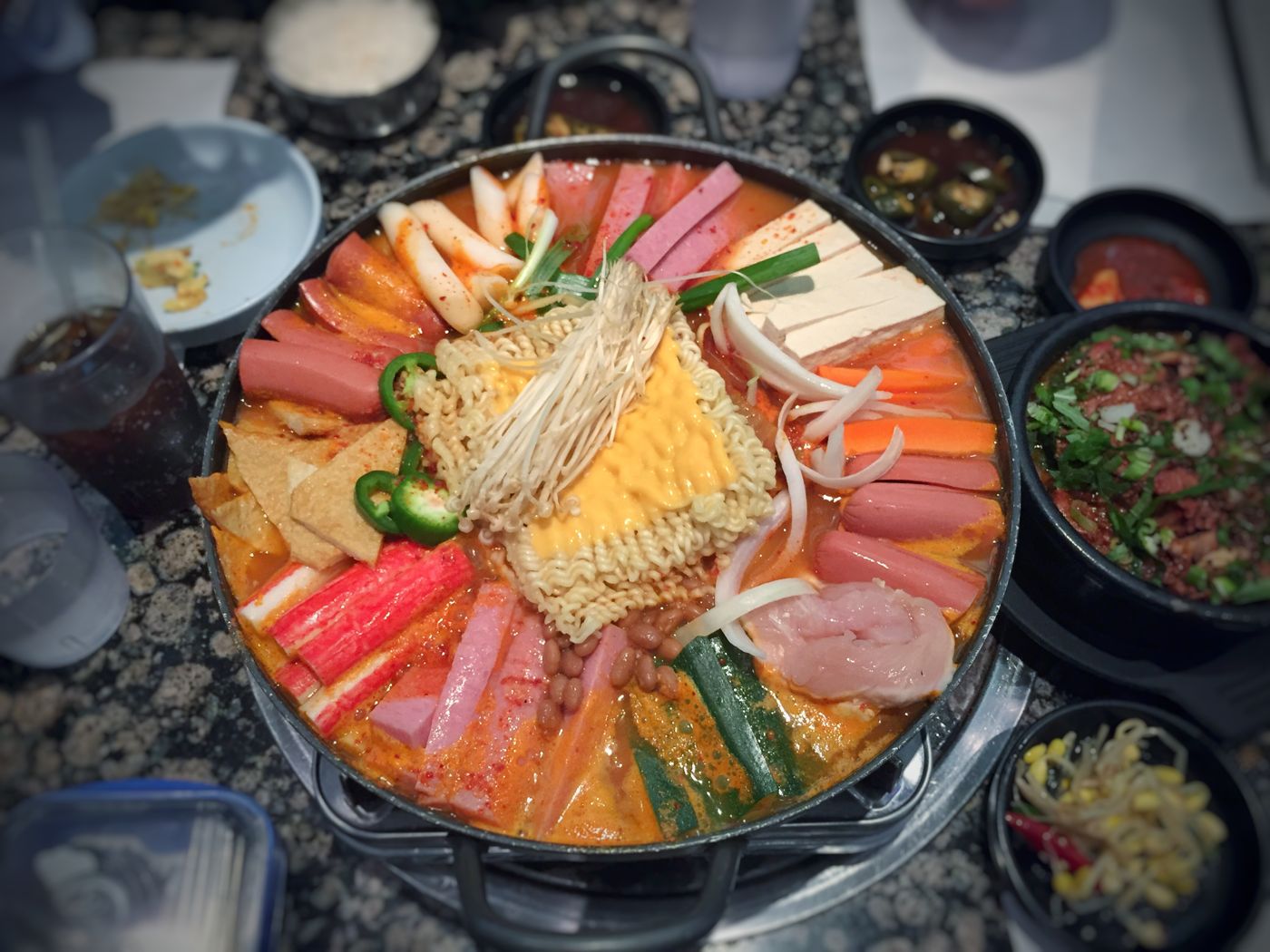 Budae Jjigae (Army Base Stew)부대찌개Ham, sausages and canned beans simmered with kimchi, tofu and a gochujang-chili broth, usually finished with instant noodles — a postwar stew born around US Army bases.
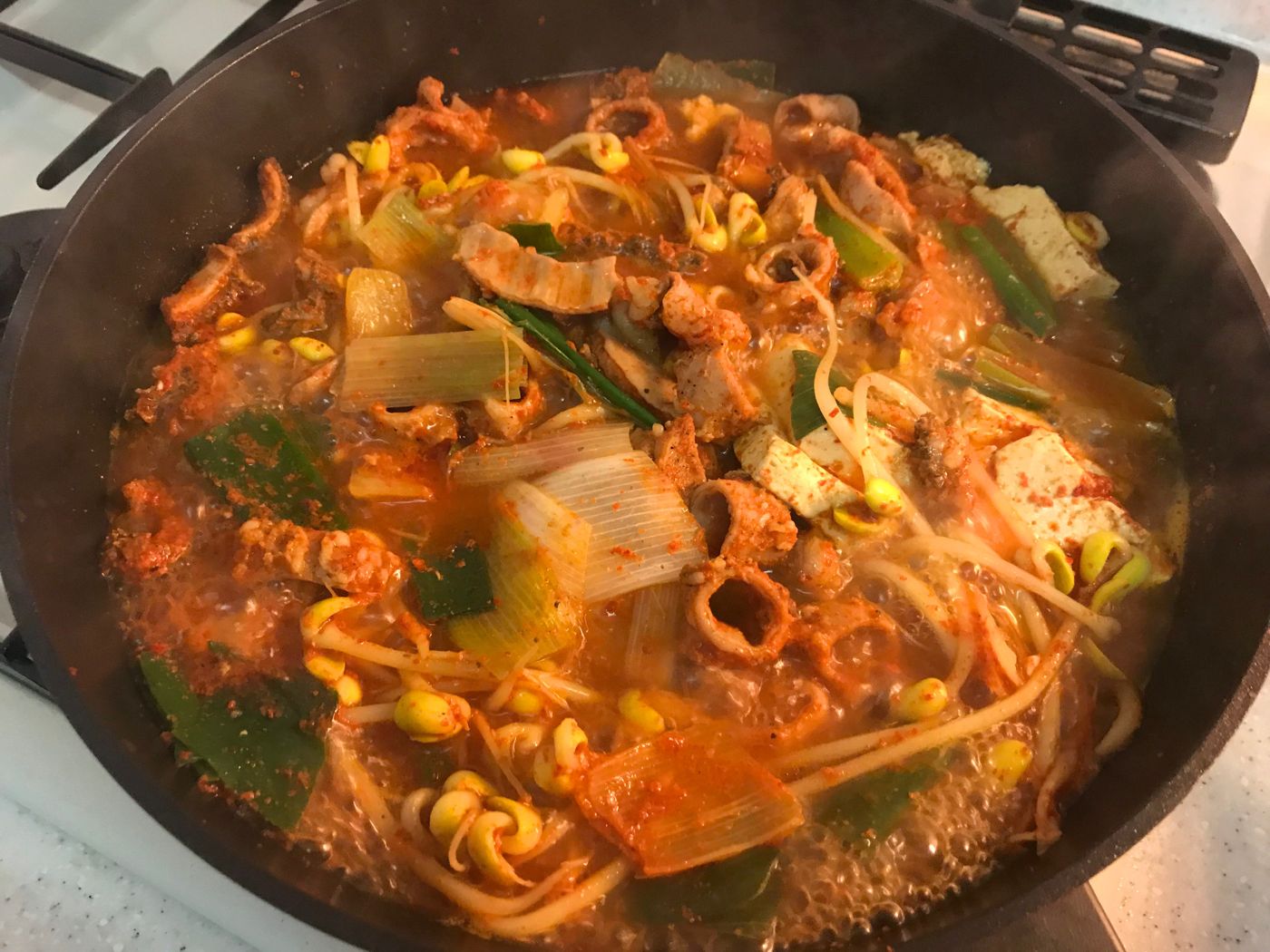 Gopchang Jeongol (Beef Intestine Hot Pot)곱창전골Cleaned beef small intestine and tripe simmered at the table with vegetables, mushrooms and glass noodles in a spicy broth — a rich, chewy hot pot for cold nights.
Sources
- 01국거리 대표 부재료 ‘팽이버섯’에 대해 알아보자 — KATI 농식품수출정보 (aT)
- 02품목 > 신선기타 > 팽이버섯 — KATI 농식품수출정보 (aT)
- 032020 Outbreak of Listeria Infections Linked to Enoki Mushrooms — CDC (archived)
- 04Outbreak Investigation of Listeria monocytogenes: Enoki Mushrooms (November 2022) — U.S. FDA
- 05Korean Food Composition Table: Winter mushroom (Paengi-beoseot), Raw — National Institute of Agricultural Sciences