Regions
Daegu
대구
A hot basin city whose food is fiery and modern: the Daegu 10-mi brand gathers ttaro-gukbap, grilled makchang, garlicky Dongin-dong jjimgalbi, flat dumplings and more.
Daegu, the great inland city of the Gyeongsang region, lies in a basin ringed by mountains, and it is famous for its summer heat; locals joke about "Daefrica." The Daegu History and Culture Encyclopedia links that climate to the city's taste for hot, garlicky food and chili oil. Most of its signature dishes are surprisingly young. For the surrounding food region, see Gyeongsang; for neighbors, Andong and Busan.
The Daegu 10-mi brand
Daegu 10-mi (대구 10미, "Daegu's ten flavors") is a city tourism brand, not an old tradition. The Digital Daegu Dong-gu Culture Encyclopedia explains that after the 2005 Daegu food tourism fair, the food industry and academics pressed for local dishes that could be developed into tourism products, and in May 2006 the city named ten after consulting industry and experts. The name borrows from the fifteenth-century scholar Seo Geo-jeong's poem cycle on Daegu's ten scenic views, and from Jeonju's own ten-flavor list. The ten are Daegu yukgaejang (ttaro-gukbap), grilled makchang, mungtigi, Dongin-dong jjimgalbi, catfish spicy stew, pufferfish bulgogi, nureun-guksu, muchimhoe, yaki-udon and napjak-mandu. The same encyclopedia notes that apart from yukgaejang, all of them appeared and became popular after the Korean War, during reconstruction and industrialization.
Ttaro-gukbap
Ttaro means "separately," and the Encyclopedia of Korean Culture defines ttaro-gukbap as yukgaejang served with the rice in a separate bowl instead of in the soup. Its broth is beef bone simmered for thirteen or fourteen hours and heavily seasoned with chili, green onion, garlic chives and garlic; the encyclopedia explains that long cooking turns some of the sharp sulfur compounds in the alliums sweet, giving heat with an undertone of sweetness. Daegu's version uses bone broth and often blood sausage, unlike the brisket-based yukgaejang elsewhere. A 1929 issue of the magazine Byeolgeongon already named yukgaejang a Daegu specialty.
The Gugil ttaro-gukbap restaurant, founded in 1946 by Seo Dong-sul and Kim I-sun, tells the usual origin story. The local encyclopedia records that the couple first served ordinary gukbap, with rice in the soup, and that the separate-bowl style became the norm after the Korean War because some customers asked for it. Another account in the same encyclopedia links serving rice separately to yangban table manners. Either way, the style spread with wartime refugees.
Makchang and gopchang
Makchang is the abomasum, the fourth stomach, of a cow, or the last part of a pig's intestine. Each animal yields only a few hundred grams. According to the Daegu History and Culture Encyclopedia, grilled makchang began after a slaughterhouse opened beside Seongdangmot pond in 1969 and offal became plentiful. Cleaned repeatedly with flour and salt, marinated or parboiled, and grilled, it is dipped in a doenjang-based sauce with garlic and green onion. The Anjirang gopchang alley, known for pork intestines grilled first over briquettes and finished at the table, has been recognized in national food-street and tourism listings.
Dongin-dong jjimgalbi
Daegu's braised short ribs are nothing like soy-glazed galbi-jjim. The Daegu History and Culture Encyclopedia traces them to the late 1960s (one of its entries says the 1970s), when a cheap eatery in Dongin-dong simmered beef ribs in a fiery sauce for construction workers. Today the parboiled ribs are finished in battered aluminum pots with hot gochugaru, coarsely minced garlic and reduced stock, with no vegetables, and served with baek-kimchi and water kimchi to cool the mouth. Leftover sauce is mixed with rice, sesame oil and crumbled gim. In the mid-1990s restaurant owners registered a shared trade name, so the alley has no fight over who was first.
The rest of the list
- Mungtigi: thick-cut raw beef, dipped in sesame oil with garlic and chili; see yangnyeom seasoning basics. Raw meat carries food-safety risks; see food safety at home.
- Napjak-mandu: paper-thin dumplings with a sparse filling of glass noodles and chives, boiled, pan-fried and sprinkled with soy sauce, green onion and chili. The encyclopedia credits the founder of Miseongdang in the early 1960s and ties its spread to the postwar campaign to eat more flour.
- Muchimhoe: blanched squid, whelks and freshwater snails with conger eel, tossed with radish, water dropwort and chili.
- Yaki-udon: a dry, spicy noodle stir-fry with seafood, pork and vegetables. Nureun-guksu: noodles of wheat and soybean flour in anchovy broth, close kin to kalguksu.
Daegu is also a tteokbokki town and a pork-soup town, with dwaeji-gukbap alleys of its own; see Korean street food.
Dishes from this region
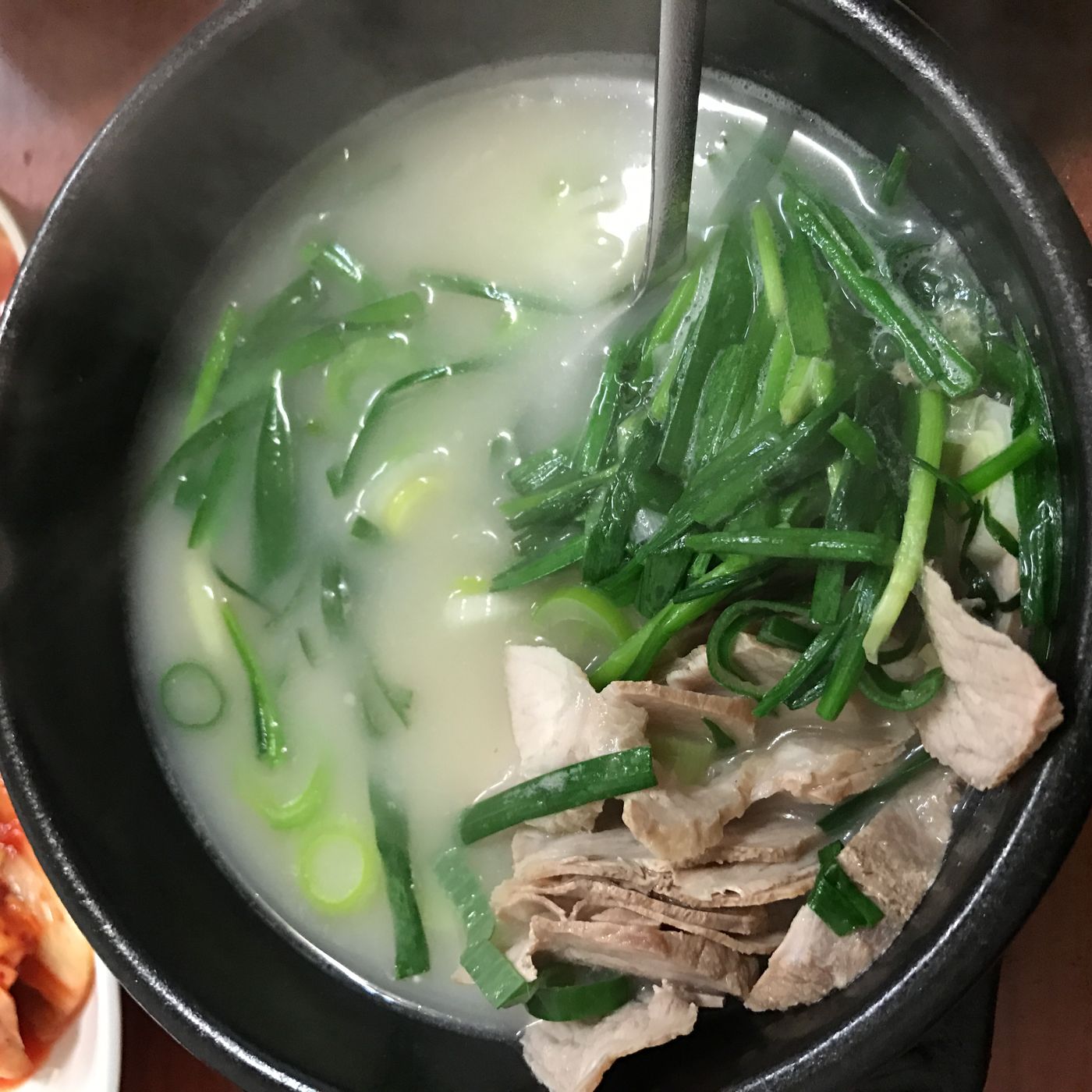 Dwaeji Gukbap (Busan Pork and Rice Soup)돼지국밥Slices of boiled pork in a milky pork-bone broth over rice, seasoned at the table with salted shrimp and garlic chives — Busan's signature everyday bowl.
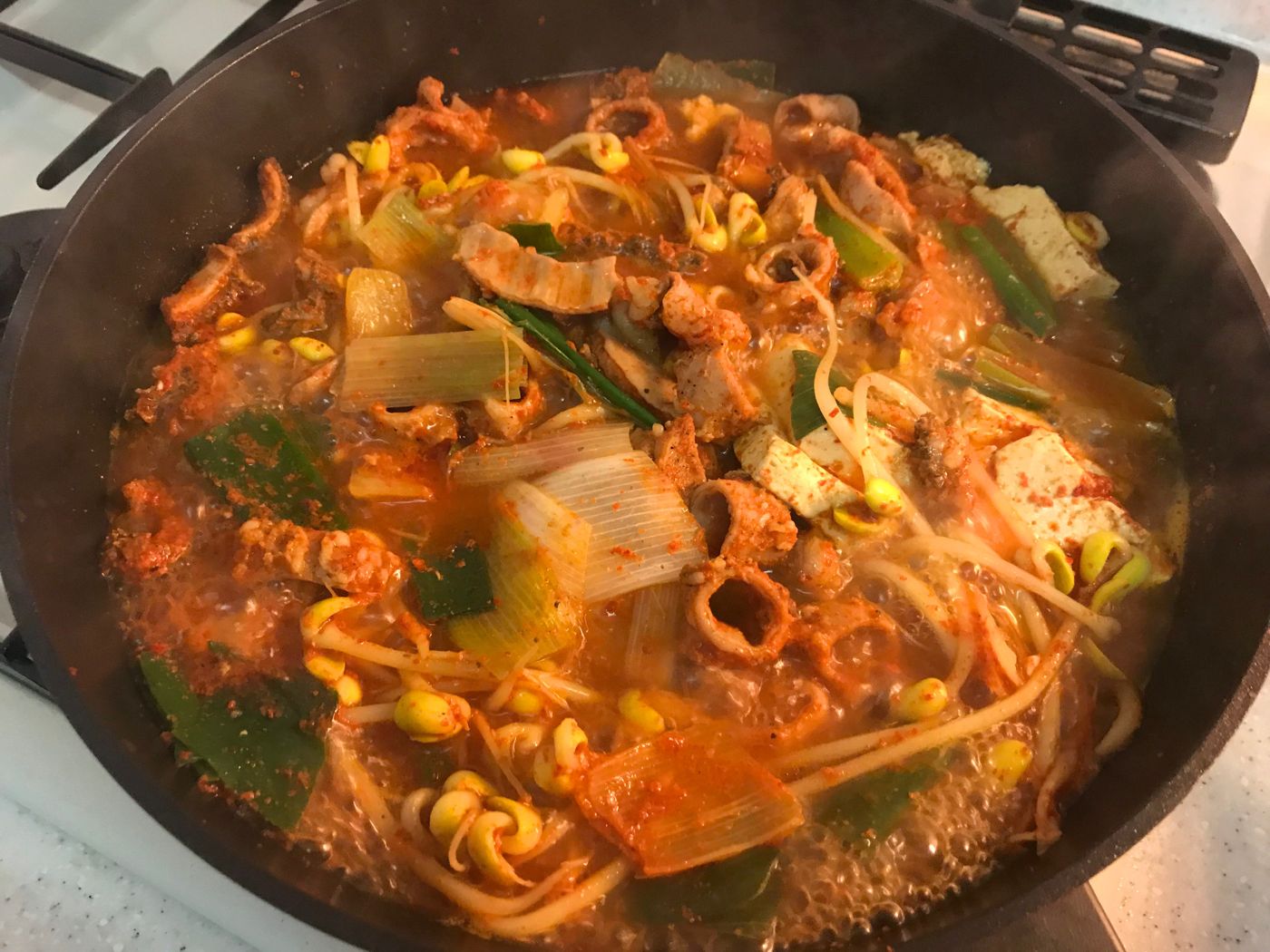 Gopchang Jeongol (Beef Intestine Hot Pot)곱창전골Cleaned beef small intestine and tripe simmered at the table with vegetables, mushrooms and glass noodles in a spicy broth — a rich, chewy hot pot for cold nights.
Sources
- 01대구십미 (Daegu 10-mi) — Digital Daegu Dong-gu Culture Encyclopedia
- 02대구. 음식 참 맛나다 (Daegu's food) — Daegu History and Culture Encyclopedia
- 03따로국밥 (Ttaro-gukbap) — Encyclopedia of Korean Culture
- 04국일따로국밥 (Gugil Ttaro-gukbap) — Daegu History and Culture Encyclopedia
- 05동인동찜갈비 (Dongin-dong jjimgalbi) — Daegu History and Culture Encyclopedia