Ingredient
Eggplant
가지
Romanization: gaji
Slender, glossy purple eggplant, steamed until silky and torn into strips for gaji-namul, one of the gentlest summer banchan. It is also pan-fried, braised, stir-fried and, in the past, sun-dried for winter.
Flavor
Mild and faintly sweet, with a spongy texture raw that turns soft, creamy and almost silky when steamed. It readily soaks up seasonings and oil.
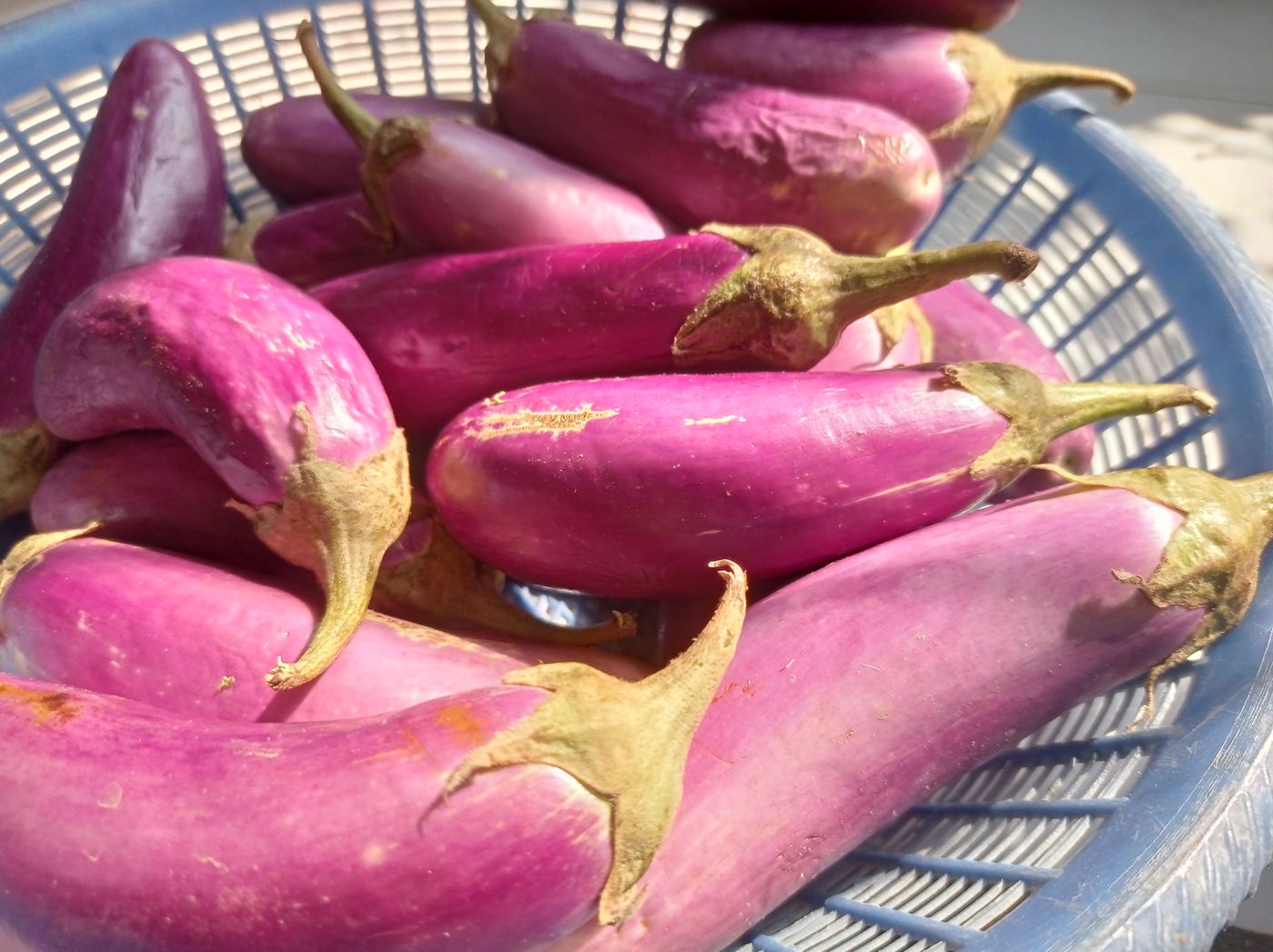 Photo: GTSPACE, CC BY-SA 4.0, via Wikimedia Commons
Origin & History
Eggplant (Solanum melongena) is an annual of the nightshade family, a relative of the potato and chili pepper. It is thought to have originated in India and to have reached the Korean peninsula by way of China, probably around the fifth or sixth century. The Sino-Korean name is gaja.
Korea's eggplants were noticed abroad early. Song-dynasty Chinese herbal writing, later quoted by Korean scholars, describes the eggplants grown in Silla as glossy and purple, shaped like an egg, and sweet enough to be taken to China and planted there. In the Goryeo period the poet Yi Gyu-bo wrote verses about the vegetables in his home garden, praising eggplant as good both raw and boiled, which suggests how ordinary it already was on the table.
The plant likes heat and moist soil and is grown throughout the country, mostly from transplanted seedlings; it needs an unusually long nursery period for a vegetable. Fruits are picked about two to three weeks after flowering, before the seeds mature. Of the round, oval and long types, Korean growers mainly raise the long, slim kind.
The classic preparation is namul: the eggplant is steamed or boiled, torn into strips and seasoned. It is also mixed into rice, grilled, stir-fried, steamed, battered and fried, and made into kimchi. Strips of eggplant dried in the sun, gaji-goji, are one of the preserved "old namul" traditionally prepared for Jeongwol Daeboreum, the first full moon of the lunar year.
Nutrition
| Calories | 25 kcal |
|---|---|
| Protein | 0.98 g |
| Fat | 0.18 g |
| Carbohydrates | 5.88 g |
| Fiber | 3 g |
| Sodium | 2 mg |
Notable forDietary fiber · Potassium · Manganese
Values from USDA FoodData Central (SR Legacy), "Eggplant, raw" (FDC ID 169228): also 229 mg potassium, 0.23 mg manganese and 22 µg folate per 100 g. The entry covers eggplant generally, not Korean long cultivars specifically. Actual values vary with ingredients, portion size and preparation.
Health Benefits
- Light vegetable: Raw eggplant is about 92% water and provides roughly 25 kcal per 100 g.
- Fiber: It is a source of dietary fiber and also provides some potassium and manganese.
- Cooking method matters: Eggplant absorbs oil readily, so pan-fried or deep-fried preparations carry far more fat and calories than steamed gaji-namul.
- Traditional use: Korean herbal texts describe eggplant as a cooling food; this is a traditional belief rather than an established health effect.
Informational, not medical advice. Talk to a qualified professional about your own health and diet.
Dishes with Eggplant
- Gaji Jjim (Steamed Stuffed Eggplant)가지찜Short lengths of eggplant slit and packed with seasoned beef and mushroom, steamed until silky and dressed with a light soy sauce — a refined summer banchan.
- Gaji Namul가지나물Eggplant steamed until silky, torn into strips and dressed with soy sauce, garlic and sesame — a soft, savory summer namul.