Regions
Gangneung
강릉
An East Sea city between mountains and coast, known for Chodang sundubu set with seawater, potato ongsimi, buckwheat noodles and a changing catch of squid and pollack.
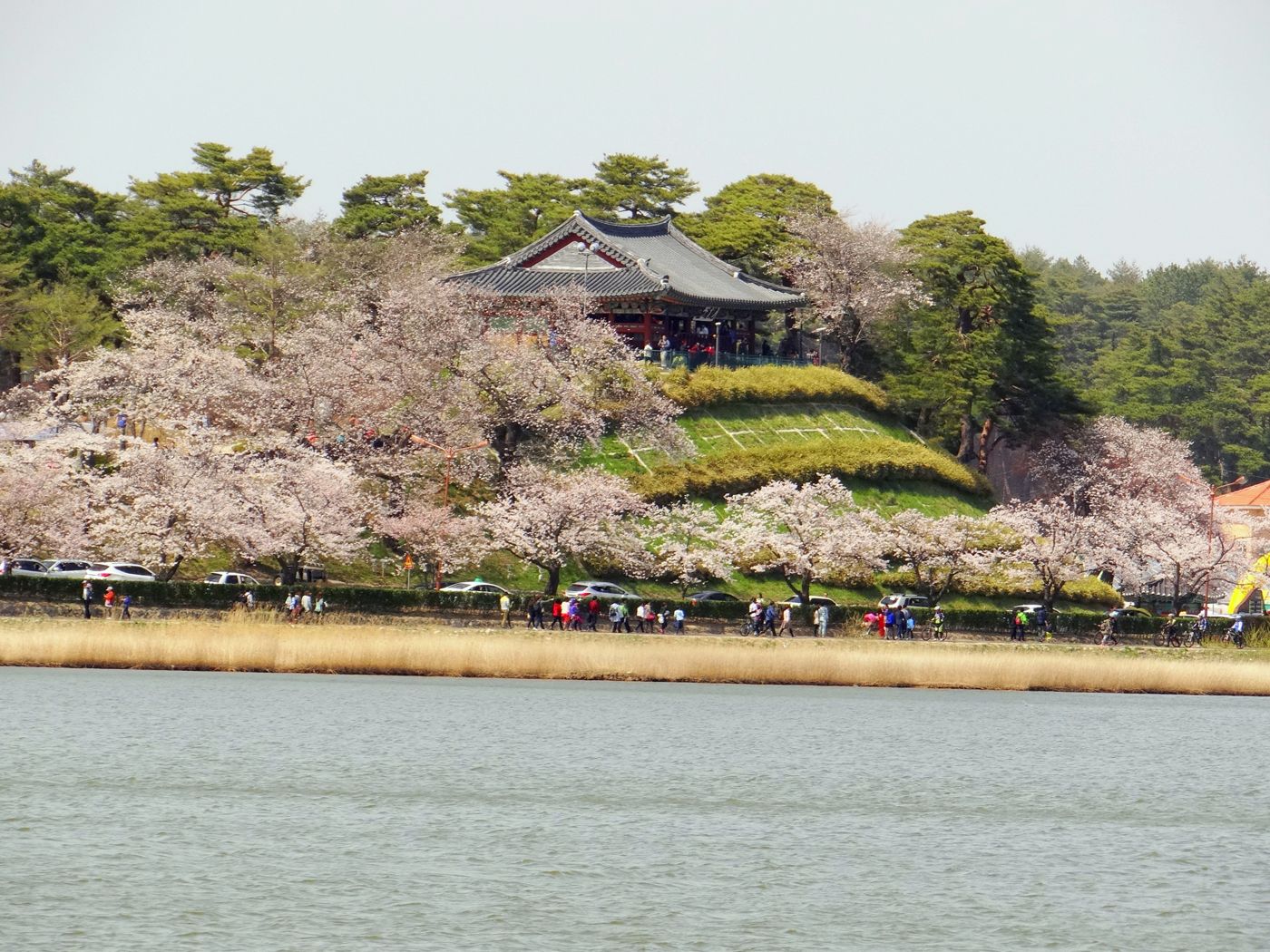 Photo: Scroozle, CC BY-SA 3.0, via Wikimedia Commons
Gangneung sits on Korea's east coast, with the high ridges of the Taebaek range at its back and the East Sea in front. The Digital Gangneung Culture Encyclopedia describes a city that has both a coastline, about 64.5 kilometers of it, and mountain country rising above 1,000 meters, and a cuisine shaped by both. Its most famous dish is soft tofu from Chodang village, curdled with seawater. For the wider province, see Gangwon; for its lakeside capital, Chuncheon.
Chodang tofu and sundubu
Chodang village lies by the sea near Gangmun-dong, among pine woods. What sets its tofu apart is the coagulant: instead of the usual gansu (bittern), cooks use seawater. The Encyclopedia of Korean Culture explains that East Sea water is rich enough in magnesium and calcium to set soy milk without being concentrated first, which is not true of the Yellow Sea or the southern coast. Soybeans are soaked, ground and strained, the soy milk is boiled, and seawater is added once it has cooled slightly. The curds that form are sundubu, soft tofu. Pressed in a cloth-lined wooden box, the same curds become firm block tofu (modubu). The local encyclopedia notes that seawater-set tofu holds more moisture than tofu made with other coagulants, so it is especially soft.
The name comes with a legend. Chodang (草堂) was the pen name of the mid-Joseon scholar-official Heo Yeop (1517–1580), and the story says he had tofu made from his house's spring water and clean seawater and let it carry his name. The Encyclopedia of Korean Culture is careful here: there is no documentary evidence for the story, and the Annals of King Munjong already mention seawater or salt water as a tofu coagulant decades before Heo was born. Enjoy the legend as a legend.
The modern trade is recent. According to the Digital Gangneung Culture Encyclopedia, families who had made tofu for three or four generations began opening restaurants around the pine woods from 1979, and a mechanized tofu factory followed in 1983; more than twenty sundubu restaurants now line the village. Each restaurant curdles and serves its tofu a little differently, and the encyclopedia calls Gangneung's the representative Korean sundubu, the same soft curd that goes into sundubu-jjigae. The village has also produced a newer local dish, jjamppong sundubu, a spicy seafood version, and tofu ice cream and desserts. See dubu.
Potatoes, buckwheat and corn
Gangneung grows less rice than lowland regions and far more potatoes, buckwheat and corn. The local encyclopedia describes containers of potatoes left to ferment behind farmhouse walls, a way of extracting starch that is then washed until the water runs clear. The starch gives chewiness to potato rice cakes and dusts the local gwajul, a traditional confection. Gamja-ongsimi, grated potato shaped into small dumplings and simmered in broth, has become the city's signature potato dish, alongside gamja-jeon, the grated potato pancake (gamja-jeon). Buckwheat from the hills becomes makguksu served in kimchi broth, and jang-kalguksu, knife-cut noodles in a broth of mussels or clams thickened with gochujang and doenjang, is a local favorite.
From the East Sea
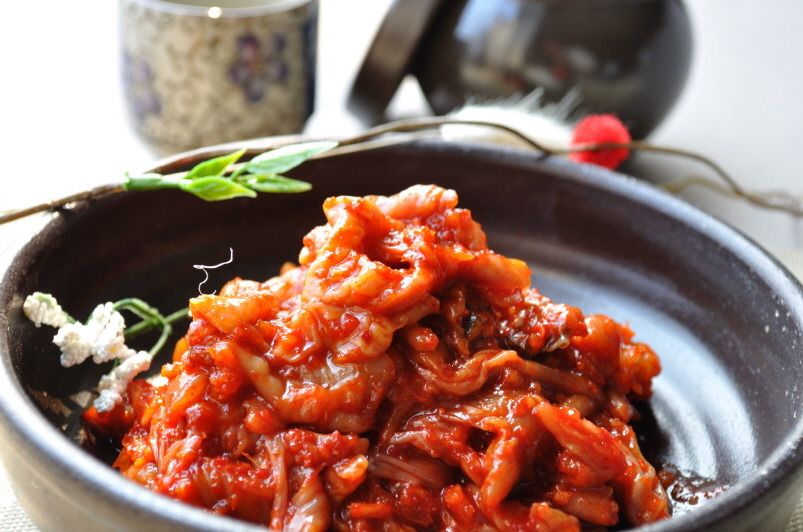
Cold and warm currents meet off Gangneung, bringing squid, saury and sand lance, and once great catches of pollack. Local dishes include dochi, a round, black lumpsucker sold belly-up at Jungang Market and steamed or stir-fried with kimchi, and samsuki-tang, a spicy stew of a homely fish once thrown back. Pollack gills were salted into seogeori-jeot for winter kimchi, or mixed straight into kkakdugi made with highland radish, and dried pollack was fermented with radish and malt into a sikhae. The local encyclopedia warns that both are disappearing as the squid and pollack catch falls with warming seas, a reminder that regional food depends on what the water still provides. From the shore comes soemiyeok, a kelp eaten in wraps and fried, see miyeok, and from Gyeongpo, abalone porridge.
Hills and markets
The mountains supply dureup, Ligularia, doraji, chestnuts, jujubes and acorns. Acorn jelly is still made from scratch and tossed with seasoned soy sauce, cucumber and water dropwort; see dotori-muk-muchim and making muk. In 2017 the city grouped its best-known foods into themed "food villages": seafood at Jumunjin, cold raw-fish soup (mulhoe) at Sacheon, sundubu at Chodang and potato ongsimi at Byeongsan. That is a tourism initiative, but it maps the city's food neatly from the harbors to the hills.