Ingredient
Acorns and acorn starch
도토리
Romanization: dotori
Oak acorns, leached of their bitterness and ground into a fine brown starch. Cooked with water and set, the starch becomes dotori-muk, a quivering, gently astringent jelly served with a soy-sesame dressing.
Flavor
Earthy and nutty with a light, pleasant bitterness and astringency; the muk is soft and springy, and mostly a carrier for its savory dressing.
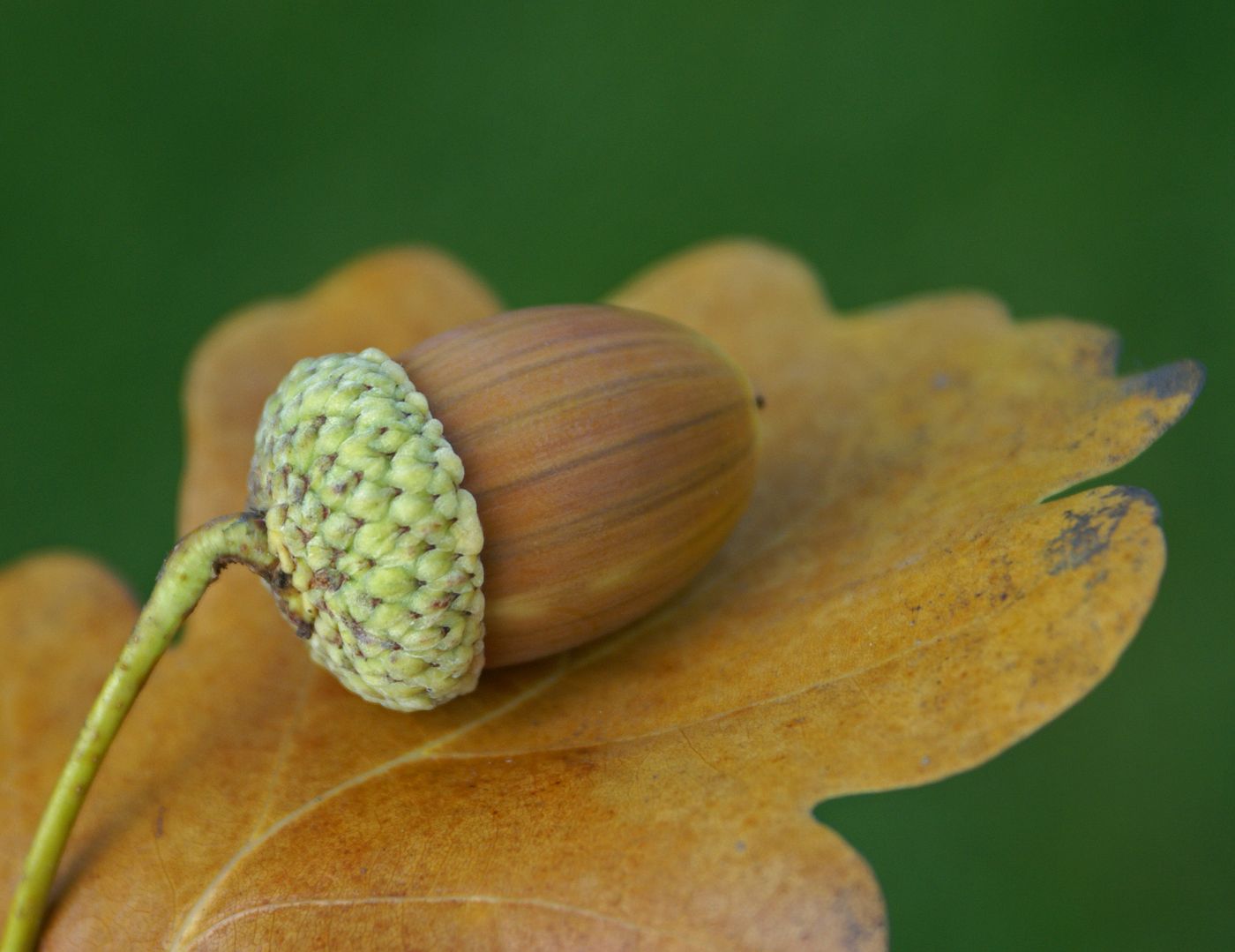 Photo: Randi Hausken from Bærum, Norway, CC BY-SA 2.0, via Wikimedia Commons
Origin & History
Dotori is the collective name for the nuts of oaks (Quercus), including the Mongolian, daimyo, oriental white and konara oaks and their many hybrids. Korea has around thirteen oak species, of which the Mongolian oak (singal-namu) is the most common. Each acorn sits in a scaly, cup-shaped cap.
Acorns are among the oldest foods on the peninsula: they have been found at Neolithic sites such as Amsa-dong in Seoul, Misa-ri in Hanam and Jitap-ri in Hwanghae Province. For centuries they were a famine food. The Goryeosa records King Chungseon cutting back his side dishes and tasting acorns during a bad harvest, King Sukjong of Joseon is said to have sent acorns for famine relief, and later works such as Sallim gyeongje and Mongmin simseo list acorns among foods for lean years.
Raw acorns are too astringent to eat because of their tannins. The traditional method is to dry and pound them, discard the shells, and steep the meal in water for several days, changing it often, until the bitterness leaches out. The settled starch is collected and dried. To make muk, the starch is whisked into water, cooked and stirred until glossy and translucent, seasoned with a little salt and oil, and poured into a mold to set.
Once a hunger food, dotori-muk is now a favorite side dish: sliced and tossed with soy sauce, chili flakes, sesame oil and greens as dotori-muk-muchim, or served in chilled broth. Acorns also figure in proverbs, such as gaebap-e dotori — an acorn in the dog's dish — for someone left out of the group.
Nutrition
| Calories | 47 kcal |
|---|---|
| Protein | 0.33 g |
| Fat | 0.11 g |
| Carbohydrates | 11.23 g |
| Fiber | Not reported |
| Sodium | 76 mg |
Notable forLow in calories (47 kcal)
Values copied from the Korean Food Composition Table (Rural Development Administration / National Institute of Crop Science) for this exact food, per 100 g edible portion. The table does not report dietary fiber for this food. Dry acorn starch in the same table lists 366 kcal and 87.1 g carbohydrate per 100 g. Actual values vary with ingredients, portion size and preparation.
Health Benefits
- Light and low in calories: Dotori-muk is mostly water set with starch, so it is very low in calories and fat; the dressing supplies most of its flavor, sodium and fat.
- Tannins and astringency: Acorns contain tannins, which leaching removes in part. Korean food references traditionally caution that muk is not ideal for people prone to constipation.
- Do not eat raw acorns: Unprocessed acorns are very bitter and are only eaten after thorough leaching and cooking.
- Tree nut allergy: Acorns are oak nuts. People with tree-nut allergies should ask their allergist before eating acorn products.
Informational, not medical advice. Talk to a qualified professional about your own health and diet.