Ingredient
Alaska pollock (myeongtae)
명태
Romanization: myeongtae
A lean, mild cold-water fish that Koreans know by a dozen names, depending on how it has been frozen, dried or salted. Dried bugeo simmers into a clear hangover soup, and its roe becomes myeongnan-jeot.
Flavor
Fresh pollock is clean, mild and delicately sweet with soft white flakes; dried bugeo and hwangtae are chewy-fibrous with a gentle, toasty savoriness that turns milky and rich when simmered.
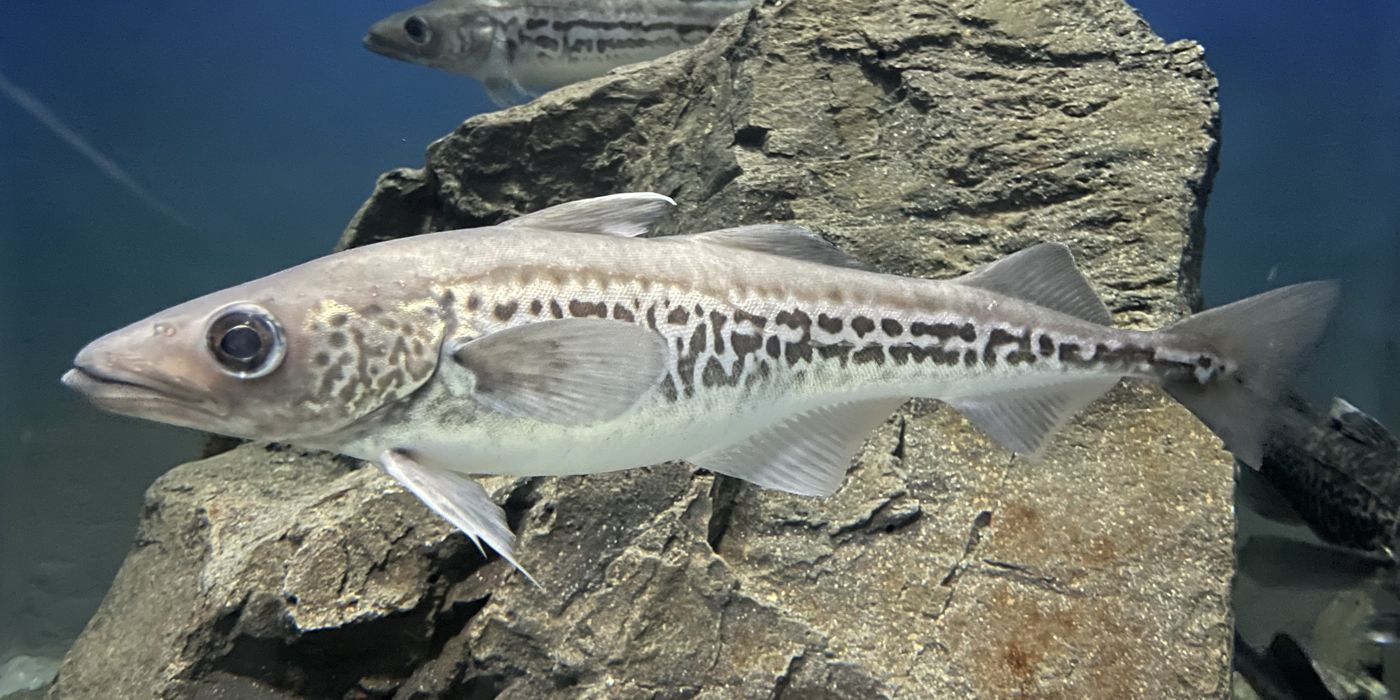 Photo: Totti, CC BY-SA 4.0, via Wikimedia Commons
Origin & History
Myeongtae is the Alaska pollock, a slender member of the cod family now classified by NOAA as Gadus chalcogrammus (older Korean references use Theragra chalcogramma). The Encyclopedia of Korean Culture describes it as a cold-current fish of the East Sea, once caught most heavily off South Hamgyeong Province, and distinguishes it from true cod by its slimmer body and slightly jutting lower jaw. The name is said to join Myeongcheon, a Hamgyeong county, with the surname of a fisherman called Tae, a story recorded in the 19th-century Imha pilgi.
Few fish change names so readily. Fresh pollock is saengtae and frozen pollock dongtae; dried pollock is bugeo, the name the fisheries scholar Seo Yu-gu already gave the dried fish in the 19th century. Hwangtae is pollock hung outdoors through winter in the mountains, where it freezes by night and thaws by day until the flesh turns spongy and golden. Kodari is gutted and only half-dried, sold strung on a cord, and nogari is young pollock, sold dried. The Korean Food Composition Table carries separate entries for most of these forms, including the darker meoktae.
Pollock fishing grew into one of Korea's great fisheries in the late Joseon period, helped by the freeze-drying method that let a huge winter catch be stored and shipped; dried pollock became indispensable at weddings, funerals and ancestral rites. After division, the main grounds lay in the North, and South Korean catches later collapsed, partly because young nogari were caught heavily. Domestic pollock fishing has been fully banned since 2019, so the pollock eaten in Korea is imported: frozen fish has long come from abroad, chilled fresh pollock came mainly from Japan, and the first fresh Russian shipment arrived at Donghae in 2023. Hwangtae is still made the old way: Yongdae-ri in Inje County, Gangwon, the country's largest drying ground, began production in the early 1960s with refugees from Hamgyeong and supplies roughly 70 percent of the nation's hwangtae, drying it on wooden racks from about December to April.
In the kitchen, fresh and frozen pollock go into soups and stews, while bugeo is torn into shreds for bugeo-guk, a clear soup eaten in winter and as a hangover cure. The roe is salted as myeongnan-jeot and the guts as changnan-jeot, and the liver was once pressed for oil; as the Encyclopedia of Korean Culture puts it, almost nothing of the fish is wasted.
Nutrition
| Calories | 80 kcal |
|---|---|
| Protein | 17.5 g |
| Fat | 0.7 g |
| Carbohydrates | 0 g |
| Fiber | 0 g |
| Sodium | 132 mg |
Notable forProtein (17.5 g) · Phosphorus (202 mg) · Potassium (293 mg)
Values copied from the Korean Food Composition Table (Rural Development Administration / National Institute of Crop Science) for this exact food, per 100 g edible portion. The table leaves dietary fiber blank; it is shown as 0 because fish and shellfish contain none. Dried bugeo in the same table is far more concentrated: about 339 kcal, 73 g protein, 464 mg sodium and 125 µg selenium per 100 g. Actual values vary with ingredients, portion size and preparation.
Health Benefits
- Lean protein: Raw pollock supplies about 17 g of protein per 100 g with less than 1 g of fat, and dried bugeo concentrates that protein several times over by weight.
- Low in mercury: The FDA/EPA advice on eating fish lists pollock among its "Best Choices," the lowest-mercury group, suitable for two to three servings a week during pregnancy and breastfeeding.
- Fish allergy: Fish is one of the nine major food allergens under U.S. law. Fish sauces, broths and dried pollock snacks can all contain it.
- Watch the prepared forms: Myeongnan-jeot and changnan-jeot are salt-cured, and seasoned dried pollock strips are a different product from plain fish; check labels for sodium.
Informational, not medical advice. Talk to a qualified professional about your own health and diet.
Dishes with Alaska pollock (myeongtae)
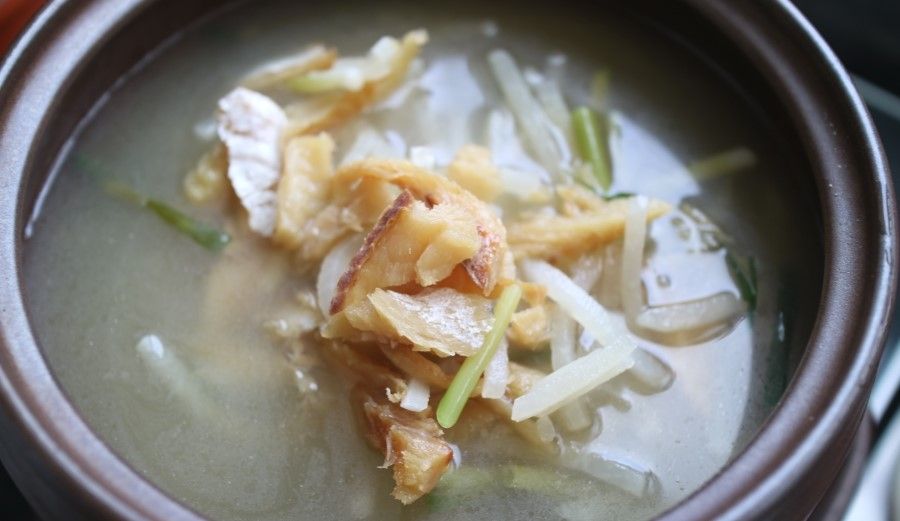 Bugeo Guk (Dried Pollock Soup)북엇국Shredded dried pollock sautéed in sesame oil and simmered into a milky, savory broth with radish, tofu and a ribbon of egg — Korea's favorite morning-after soup.
- Bugeo Muchim (Shredded Dried Pollock Salad)북어무침Shredded dried pollock softened with a splash of water and tossed in a sweet, spicy gochujang dressing — a chewy, protein-rich banchan that keeps for days.
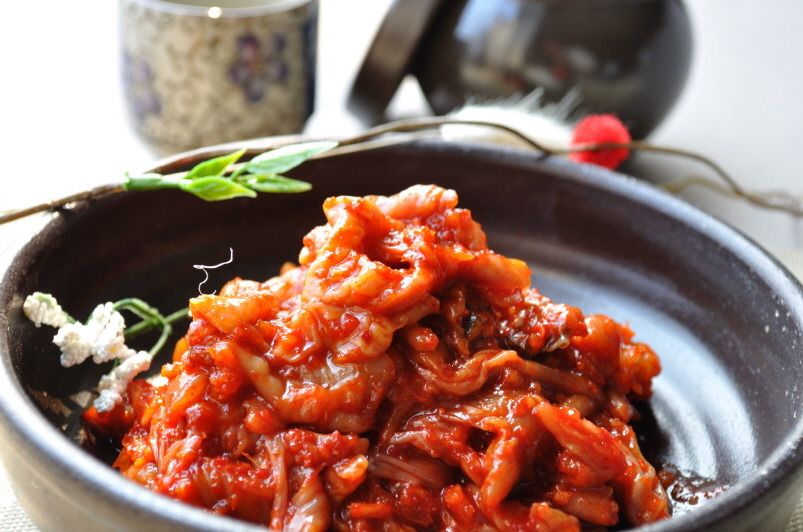 Salted Pollock Tripe창난젓Pollock intestines cured in salt, then cut and dressed with chili, garlic and green onion — a chewy, savory East Sea jeotgal, often mixed with radish.
- Dongtae-jjigae (Frozen Pollack Stew)동태찌개A spicy, clean-tasting stew of frozen Alaska pollack with radish, tofu and fresh greens in a gochugaru-and-jang broth — a winter staple at the Korean table.
- Hwangtae Gui (Grilled Seasoned Dried Pollock)황태구이Winter-cured dried pollock softened, opened flat and grilled with a glossy gochujang glaze — tender, savory and a specialty of Gangwon's mountain drying yards.
- Kodari Jorim (Braised Semi-Dried Pollock)코다리조림Half-dried Alaska pollock braised with radish in a sweet, spicy soy-gochugaru sauce until the chewy flesh soaks up the glaze.
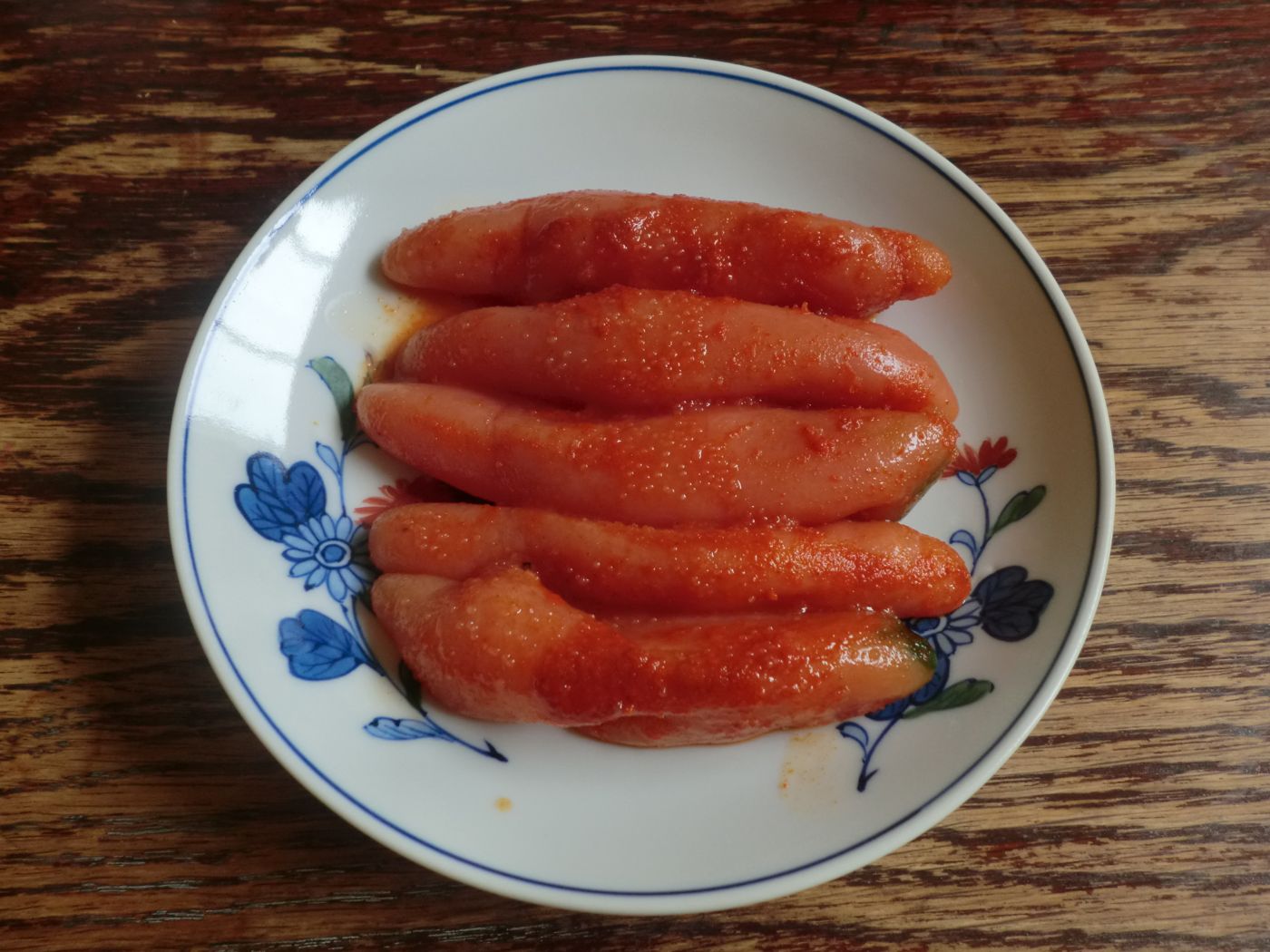 Salted Pollock Roe명란젓Whole sacs of Alaska pollock roe cured in salt and coated with chili and garlic — briny, savory and eaten in small amounts with rice and sesame oil.
- Saengtae Jjigae (Fresh Pollock Stew)생태찌개Chunks of fresh, never-frozen pollock simmered with radish, tofu and a red chili broth, finished with water dropwort and crown daisy — a winter stew prized for its clean, bracing taste.
Sources
- 01명태 (Alaska pollock) — Encyclopedia of Korean Culture
- 02북엇국 (Bugeo-guk) — Encyclopedia of Korean Culture
- 03눈보라 보듬고 칼바람 맞으며 한겨울 버텨내…황태, 그 이름을 얻다 — Seoul Shinmun (2019)
- 04Russian fresh pollock imported for first time at Donghae Port — KED Global (2023)
- 05Korean Food Composition Table — Alaska pollock, Raw
- 06Advice about Eating Fish — U.S. Food and Drug Administration / EPA