Ingredient
Buckwheat
메밀
Romanization: memil
Small, three-cornered seeds ground into a gray, earthy flour for cold noodles, makguksu and silky memil-muk. Buckwheat is the grain of Korea's cool mountain country, above all Gangwon-do.
Flavor
Earthy, nutty and faintly grassy, with a gentle bitterness; pure buckwheat noodles are soft and break easily, while *muk* is mild, smooth and tender.
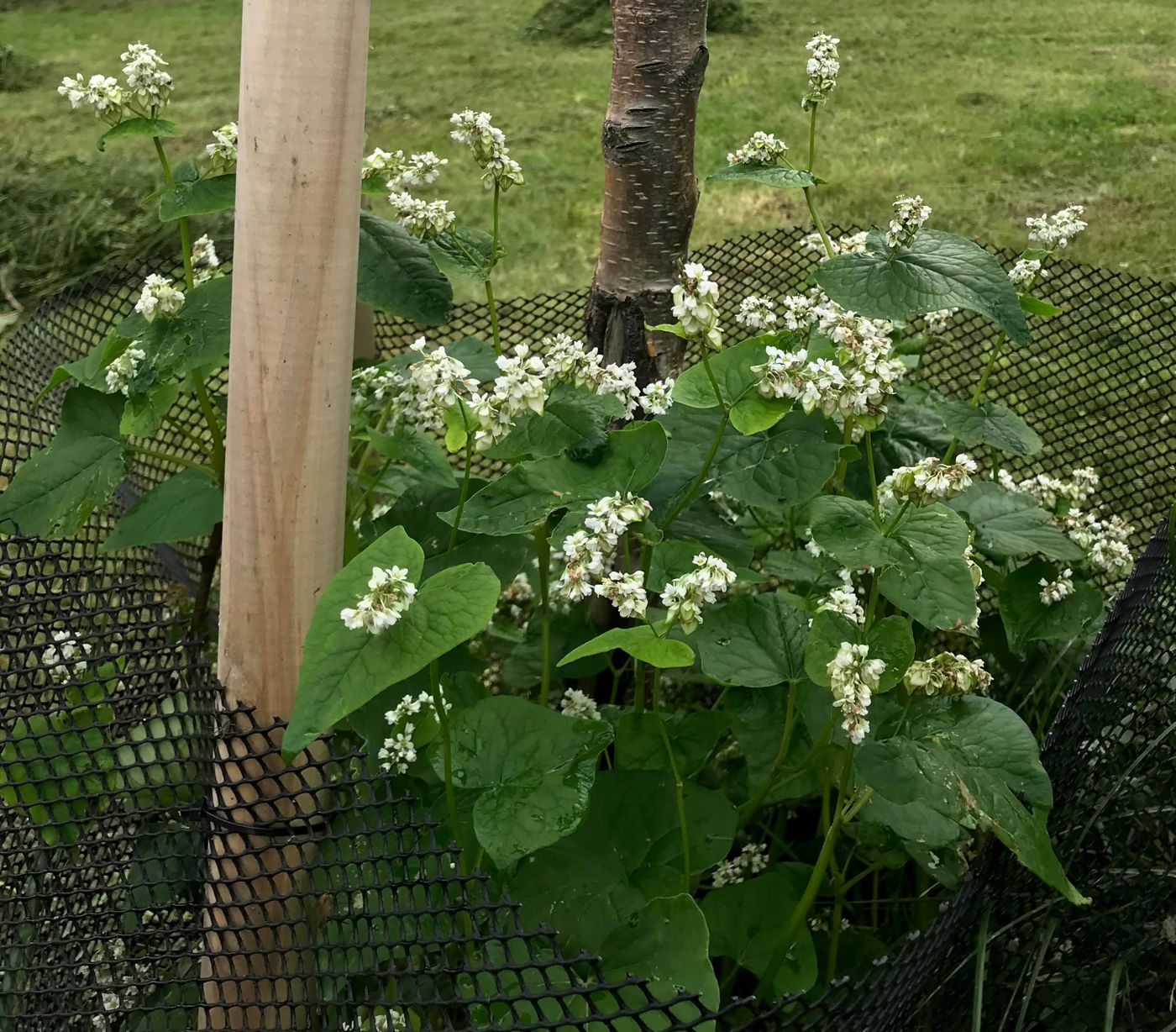 Photo: Afanasovich, CC BY-SA 4.0, via Wikimedia Commons
Origin & History
Memil (also momil) is common buckwheat, Fagopyrum esculentum. Despite its name it is not a cereal grass but a fast-growing annual of the knotweed family, with reddish hollow stems, heart-shaped leaves and clusters of small white or pinkish flowers. It is thought to come from the cool temperate north of East Asia — the Lake Baikal, Manchuria and Amur region — and Korean records first mention it in the medical text Hyangyak gugeupbang.
Buckwheat tolerates drought, cold and thin soil, and it can go from sowing to harvest in a short season. That made it a classic famine-relief crop, listed as such in the Sejong-era Gugwang byeokgokbang, and a mainstay of high, cool, rocky farmland. Summer buckwheat is sown in May; the more common autumn crop is sown in July and harvested in October.
Those mountain regions — Gangwon, and historically Hamgyeong and Pyeongan in the north — built their noodle traditions on it. Naengmyeon, buckwheat noodles in chilled broth or dongchimi brine, is a northern specialty, and Gangwon has its own makguksu. Bongpyeong in Pyeongchang is the setting of Lee Hyo-seok's 1936 short story When the Buckwheat Flowers Bloom, and each September the Hyoseok Cultural Festival there celebrates the white fields and serves buckwheat noodles, pancakes and muk.
Memil-muk is made by grinding soaked buckwheat, straining it, and cooking the settled starch into a soft jelly. It is comparatively recent in the written record, appearing in early 20th-century cookbooks, and was long a humble winter night snack sold by street vendors, dressed with chopped kimchi. Buckwheat is also made into dumpling wrappers, pancakes, and — on Jeju — noodles and hand-torn dough soup.
Nutrition
| Calories | 363 kcal |
|---|---|
| Protein | 13.64 g |
| Fat | 3.38 g |
| Carbohydrates | 67.84 g |
| Fiber | 6.3 g |
| Sodium | 1 mg |
Notable forMagnesium (244 mg) · Potassium (444 mg) · Niacin (5.19 mg) · Thiamin (0.46 mg)
Values copied from the Korean Food Composition Table (Rural Development Administration / National Institute of Crop Science) for this exact food, per 100 g edible portion. Noodles, muk and flour differ substantially from the whole grain; buckwheat jelly is mostly water. Actual values vary with ingredients, portion size and preparation.
Health Benefits
- More protein and minerals than rice: Per the Korean Food Composition Table, buckwheat has about twice the protein of white rice and is notably rich in magnesium and potassium.
- Rutin, traditionally prized: Buckwheat leaves and flowers are a source of the flavonoid rutin, and Korean sources long linked it to circulation; research on health effects in people is ongoing.
- A serious allergen: Buckwheat allergy can cause hives, asthma and life-threatening anaphylaxis, from eating it or breathing in flour, and is a recognized problem in Korea, Japan and northern China. Strict avoidance is the main treatment. Korea requires buckwheat to be declared on food labels.
- Gluten-free grain, but check the noodles: Buckwheat itself is a gluten-free pseudocereal, but many buckwheat noodles also contain wheat flour or other starches, so people with celiac disease should read labels.
Informational, not medical advice. Talk to a qualified professional about your own health and diet.
Dishes with Buckwheat
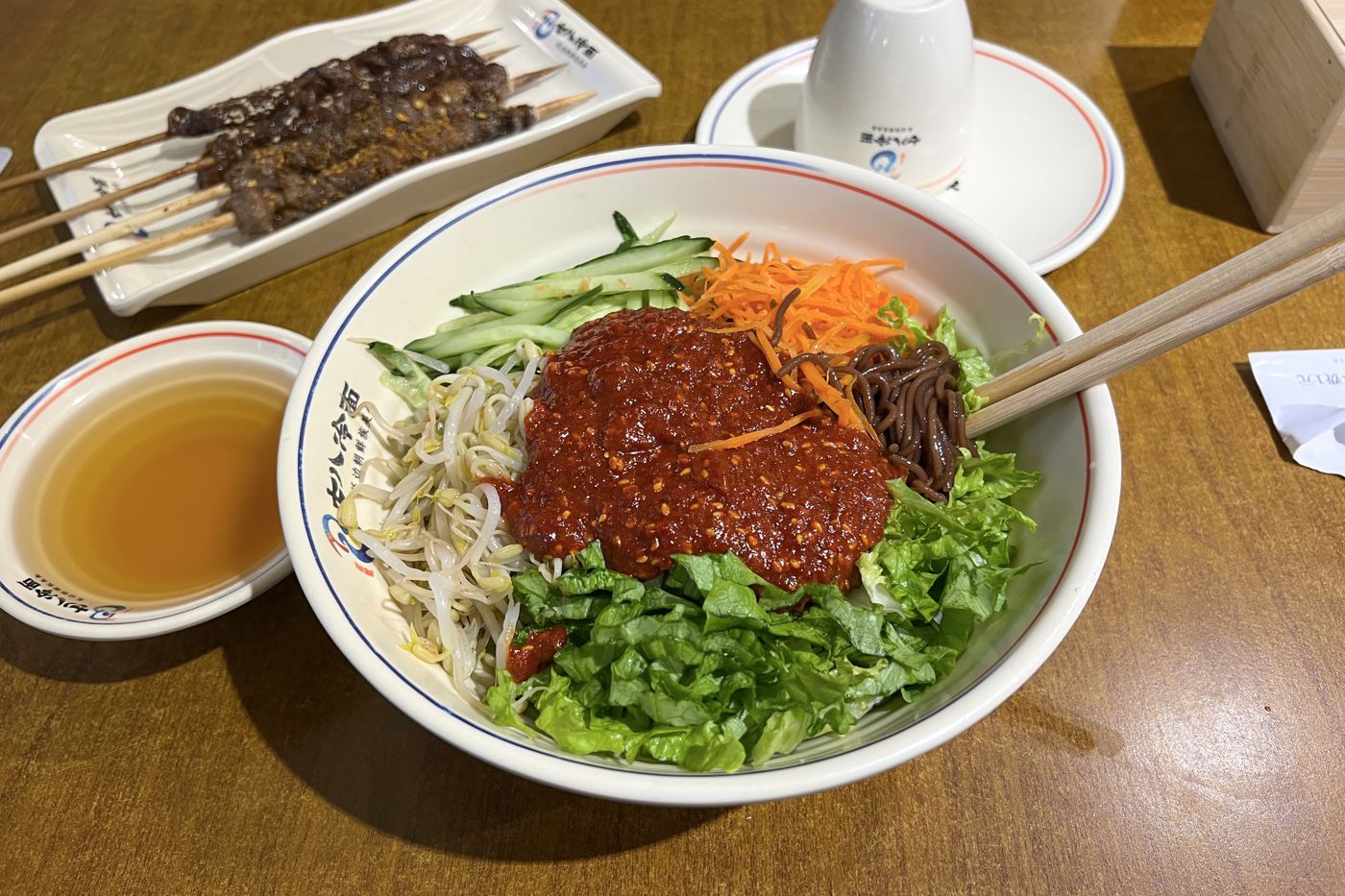 Bibim-naengmyeon (Spicy Mixed Cold Noodles)비빔냉면Chewy starch noodles tossed in a sweet, vinegary chili sauce, topped with cucumber, pear and egg — the Hamheung tradition of hoe-naengmyeon, carried south by refugees.
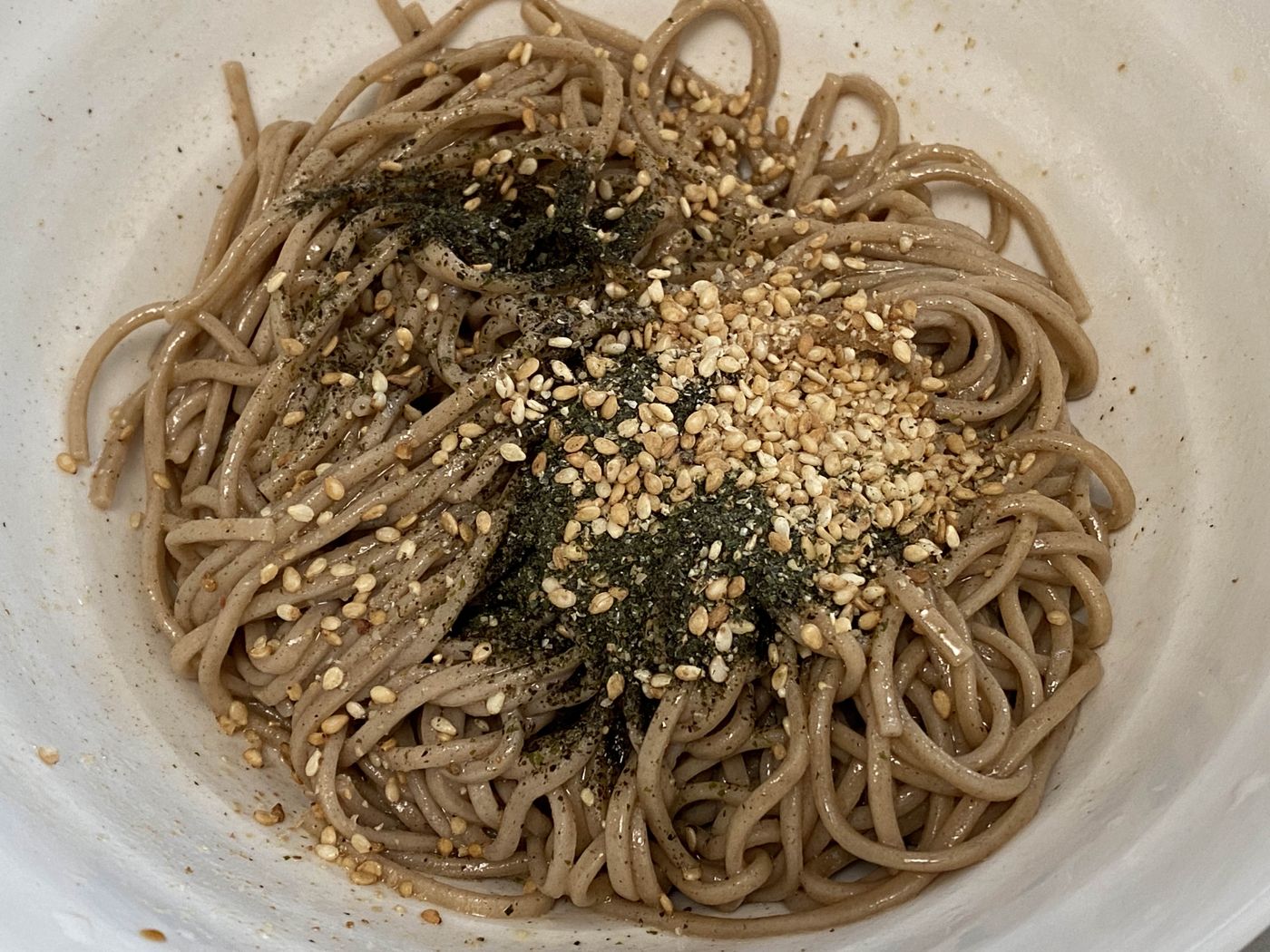 Makguksu (Gangwon Buckwheat Noodles)막국수Coarse, grayish buckwheat noodles served in cold dongchimi broth or tossed with spicy sauce — a Gangwon mountain dish most famously eaten in Chuncheon.
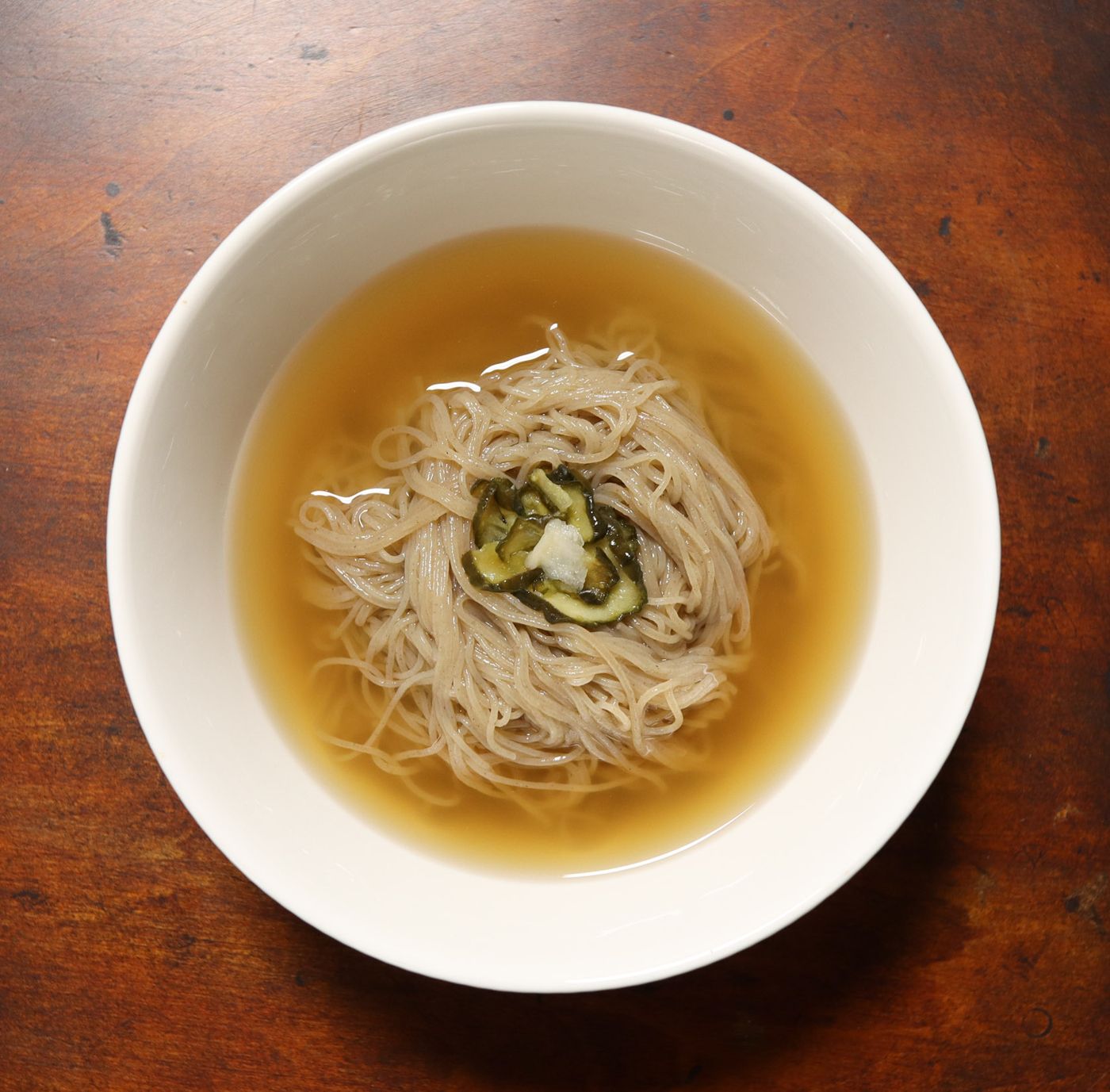 Mul-naengmyeon (Cold Buckwheat Noodles in Broth)물냉면Buckwheat noodles in an icy mix of beef broth and dongchimi, topped with sliced beef, pear, radish and egg — a Pyongyang winter dish now loved in summer.
Sources
- 01메밀 (Buckwheat) — Encyclopedia of Korean Culture
- 02메밀묵 (Memil-muk) — Encyclopedia of Korean Culture
- 03Global Perspectives on Allergen Labeling: Harmonization of Regulations and Practices (Allergy Asthma Immunol Res, 2025)
- 04Hyoseok Cultural Festival — VISITKOREA
- 05Korean Food Composition Table — Buckwheat (Memil), Polished, Raw
- 06Buckwheat allergy (Asian Pac J Allergy Immunol, 2025)