Ingredient
Hanu (Korean native beef)
한우
Romanization: hanu
Beef from Korea's native cattle, most of them a warm yellow-brown, prized for rich marbling and a deep, beefy flavor. Hanu is the premium beef for grilling, braised galbi-jjim, holiday gift sets and ancestral-rite dishes.
Flavor
Rich, sweet and deeply beefy, with buttery fat and a tender chew in well-marbled cuts; leaner cuts are firmer and more mineral.
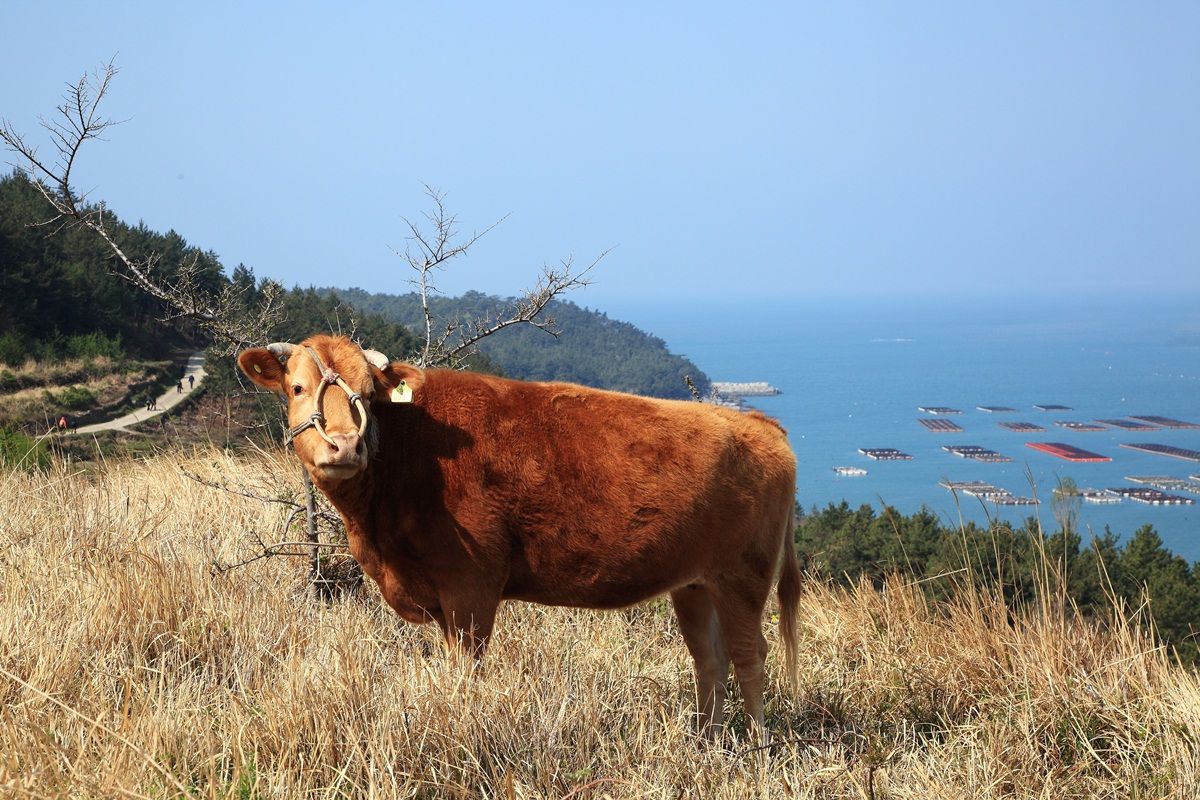 Photo: Park Jong-jin, CC BY 2.0 kr, via Wikimedia Commons
Origin & History
Hanu (often spelled Hanwoo in English) are the native cattle of the Korean peninsula, raised there for thousands of years; one review dates them to around 2000 BC. Their exact origin is unclear, and over the centuries they likely mixed with cattle from China and Japan. More than 90 percent are the familiar yellow-brown type. Other native breeds include the black heugu, the Jeju black cattle, and the tiger-striped chikso.
For most of Korean history hanu were draft animals, pulling plows and carts, and they were offered at sacrifices. Large-scale beef production began only in the 1960s with economic growth. Since then the breed has been selected for marbling: young bulls are commonly castrated and finished on high-grain diets with rice straw, producing beef with more intramuscular fat than most foreign breeds.
Korea introduced a national carcass grading system in 1992. Each carcass receives two grades from the Korea Institute for Animal Products Quality Evaluation (KAPE): a yield grade (A, B or C), which estimates how much usable meat it carries, and a quality grade (1++, 1+, 1, 2 or 3). The quality grade weighs marbling, lean color, fat color, texture and maturity at the loin. A revision that took effect on December 1, 2019 widened the top grade, 1++, to include marbling score 7 as well as 8 and 9. It also graded each factor separately, with the lowest-scoring factor setting the final grade. Retail labels for 1++ beef must now show which marbling number (7, 8 or 9) it received.
At home, hanu shows up thinly sliced for bulgogi, as short ribs in galbi and galbi-jjim, as brisket in miyeok-guk, and as round in jangjorim.
Nutrition
| Calories | 313 kcal |
|---|---|
| Protein | 15.61 g |
| Fat | 26.3 g |
| Carbohydrates | 0 g |
| Fiber | 0 g |
| Sodium | 56 mg |
Notable forZinc (4.49 mg) · Selenium (20.2 µg) · Iron (2.24 mg) · Riboflavin (0.35 mg)
Values copied from the Korean Food Composition Table (Rural Development Administration / National Institute of Crop Science) for this exact food, per 100 g edible portion. Values vary widely by cut and grade: marbled loin is far fattier than round or shank. Actual values vary with ingredients, portion size and preparation.
Health Benefits
- High-quality protein and minerals: Beef supplies complete protein and is a good source of zinc, selenium and iron.
- Marbling means fat: The Korean Food Composition Table lists raw hanu loin at over 26 g fat per 100 g; highly marbled, top-grade cuts are especially rich, while round and shank are much leaner.
- Red meat in moderation: The WHO notes that meat can be part of a healthy diet, but its cancer agency classifies red meat as probably carcinogenic (Group 2A, mainly colorectal cancer) and processed meat as carcinogenic (Group 1). Guidelines recommend limiting both.
- Cooking and food safety: Beef should be handled hygienically. Raw preparations such as yukhoe carry a higher risk of foodborne illness, especially for pregnant people, young children, older adults and anyone with a weakened immune system.
Informational, not medical advice. Talk to a qualified professional about your own health and diet.
Dishes with Hanu (Korean native beef)
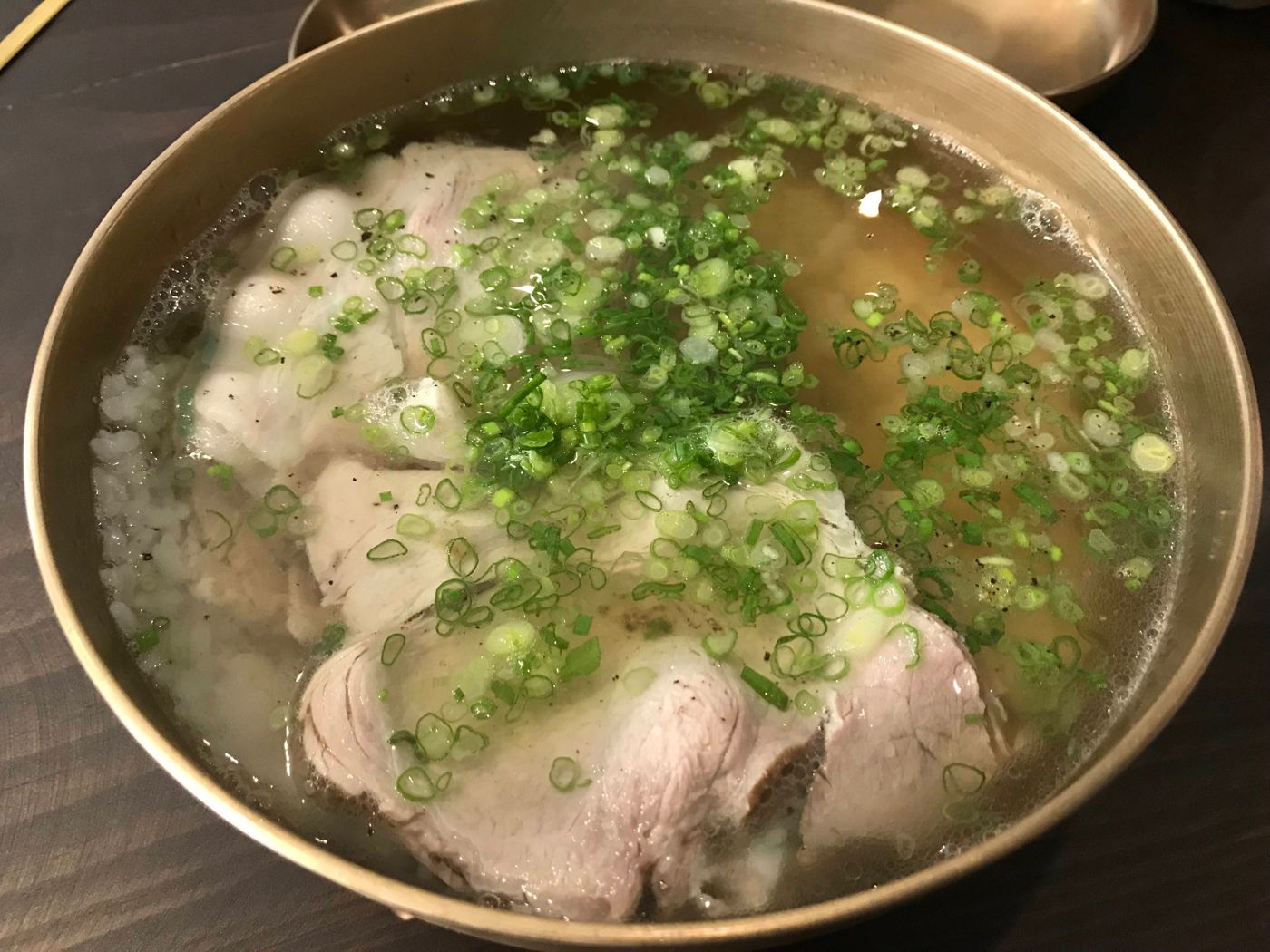 Gomtang (Beef Bone and Brisket Soup)곰탕A long-simmered beef soup, usually built on brisket, shank and offal and served over rice, with a broth that is lightly salted at the table. A pillar of the Korean gukbap tradition.
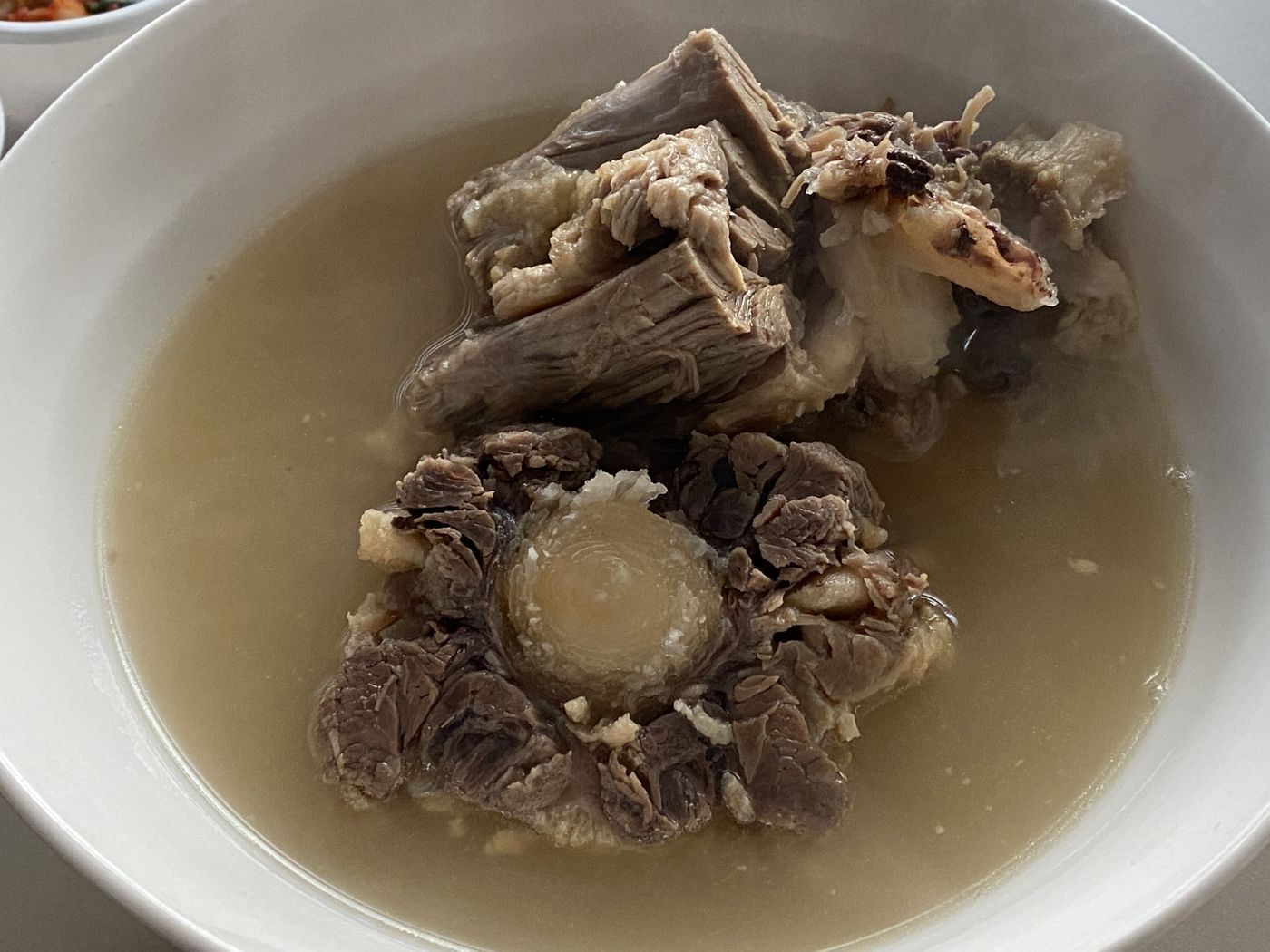 Kkori-gomtang (Oxtail Soup)꼬리곰탕Oxtail simmered for hours until the meat slips from the bone, in a rich, savory broth ladled over rice. A gomtang built on a single cut.
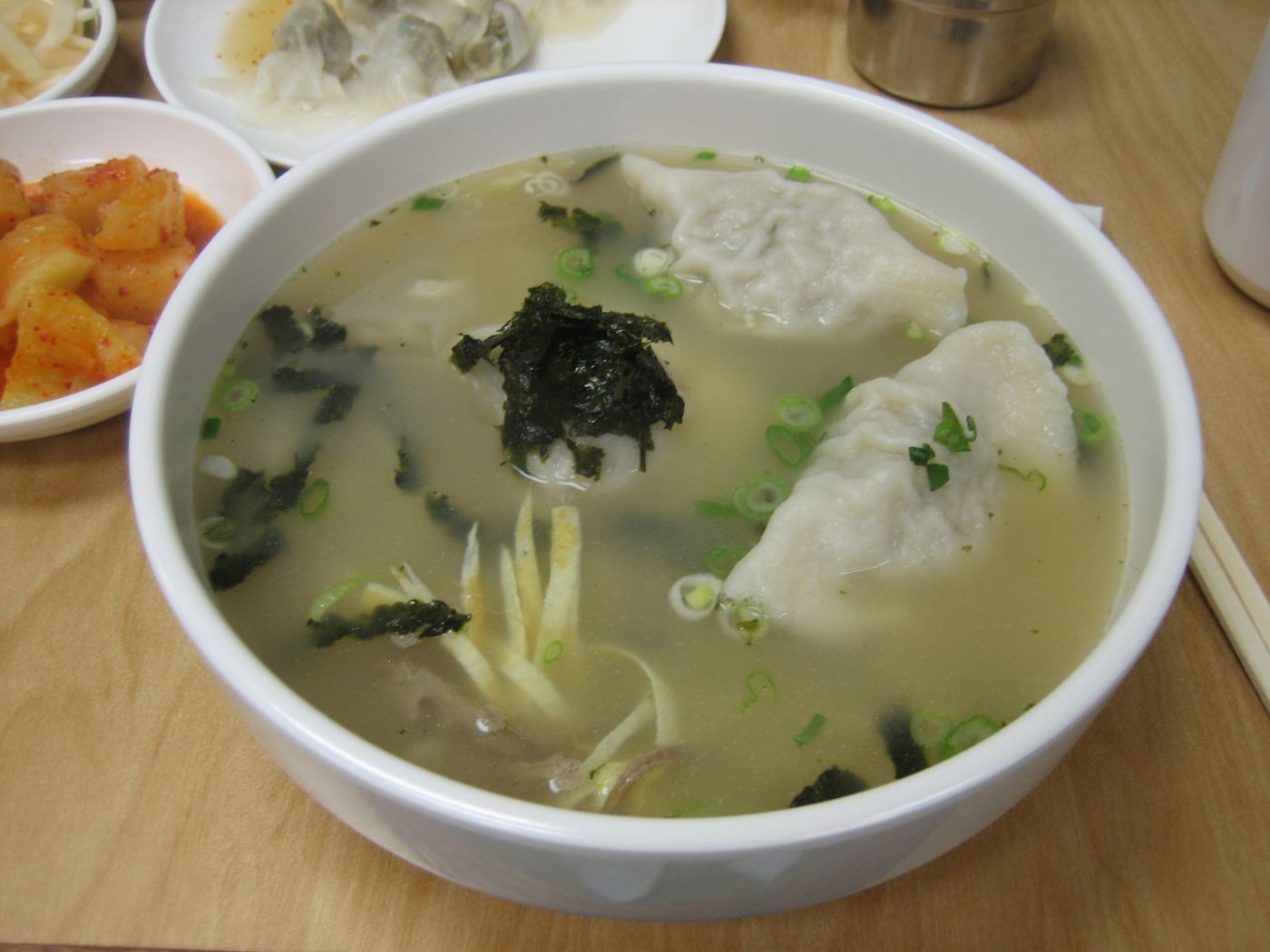 Manduguk (Dumpling Soup)만둣국Stuffed dumplings simmered in a clear, savory broth, usually beef-based and topped with egg strands and green onion. A winter and New Year dish with northern roots.
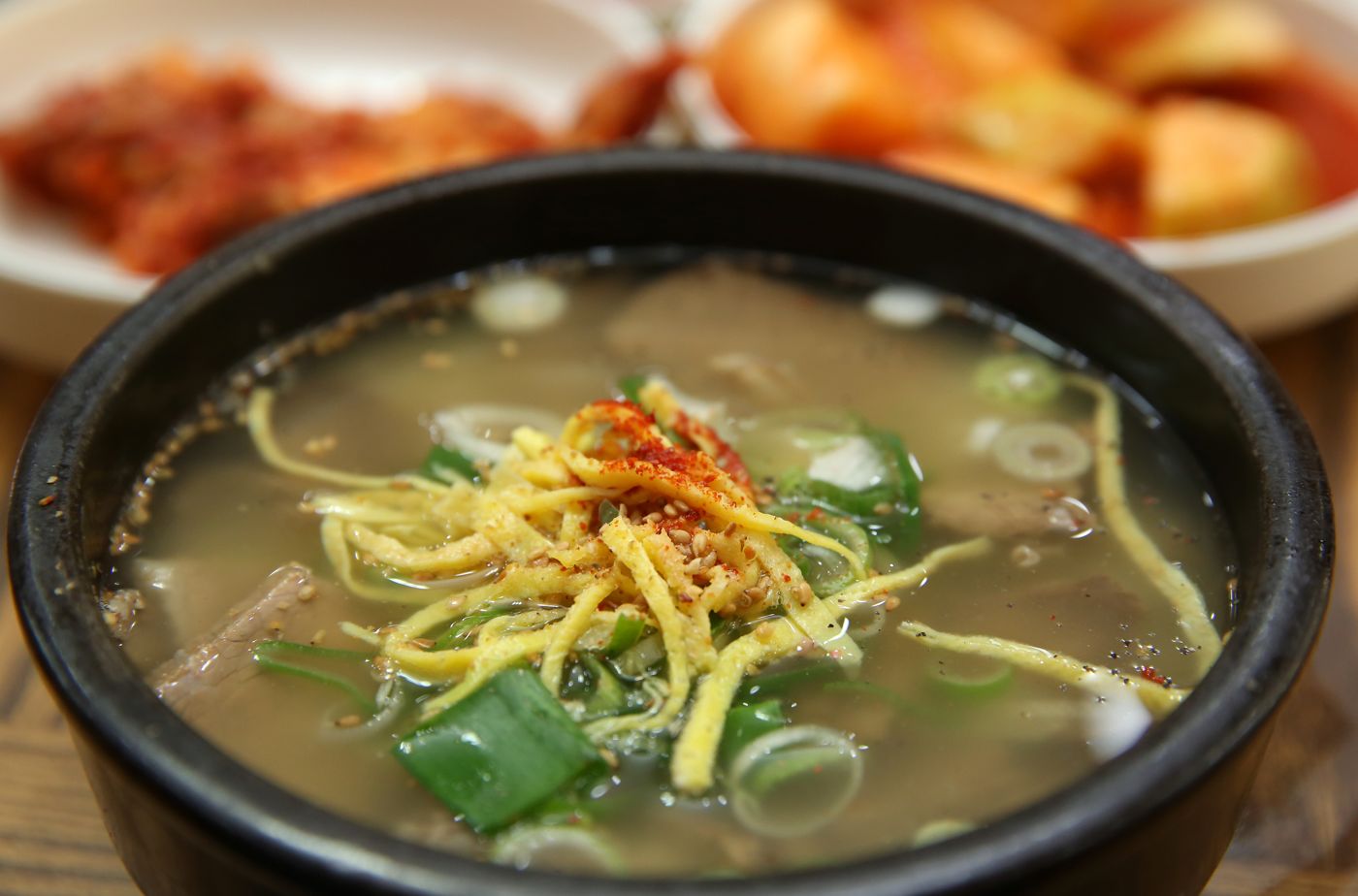 Naju Gomtang (Naju Clear Beef Soup)나주곰탕Brisket, shank and other beef cuts simmered into a clear, gently rich broth, poured over rice and topped with green onion — the market-day soup of Naju in South Jeolla.
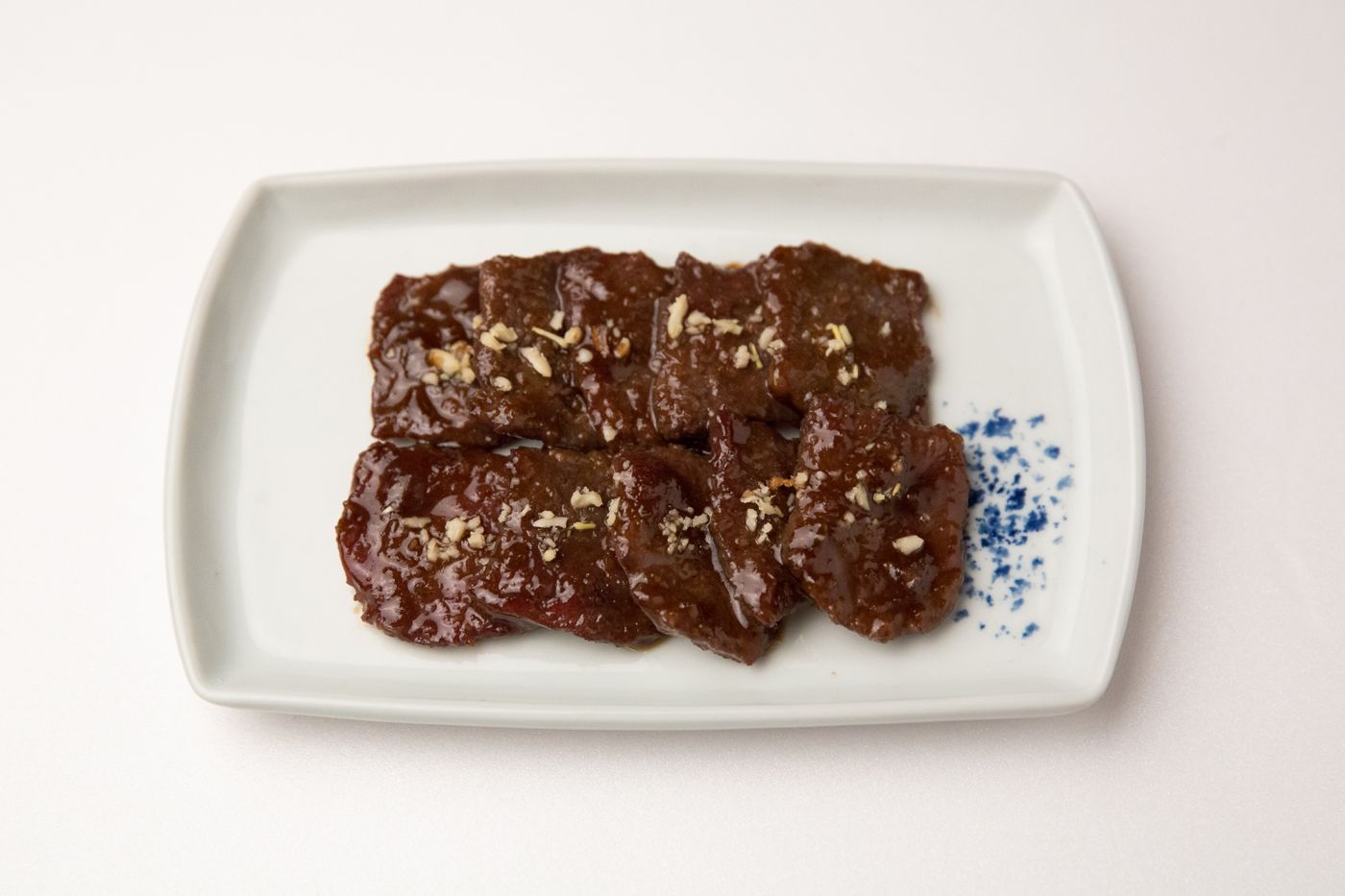 Neobiani (Court-Style Grilled Beef Slices)너비아니Broad, thin slices of beef marinated in soy, sugar, garlic and pear, then grilled lightly: the court and Seoul-household name for what is now usually called bulgogi.
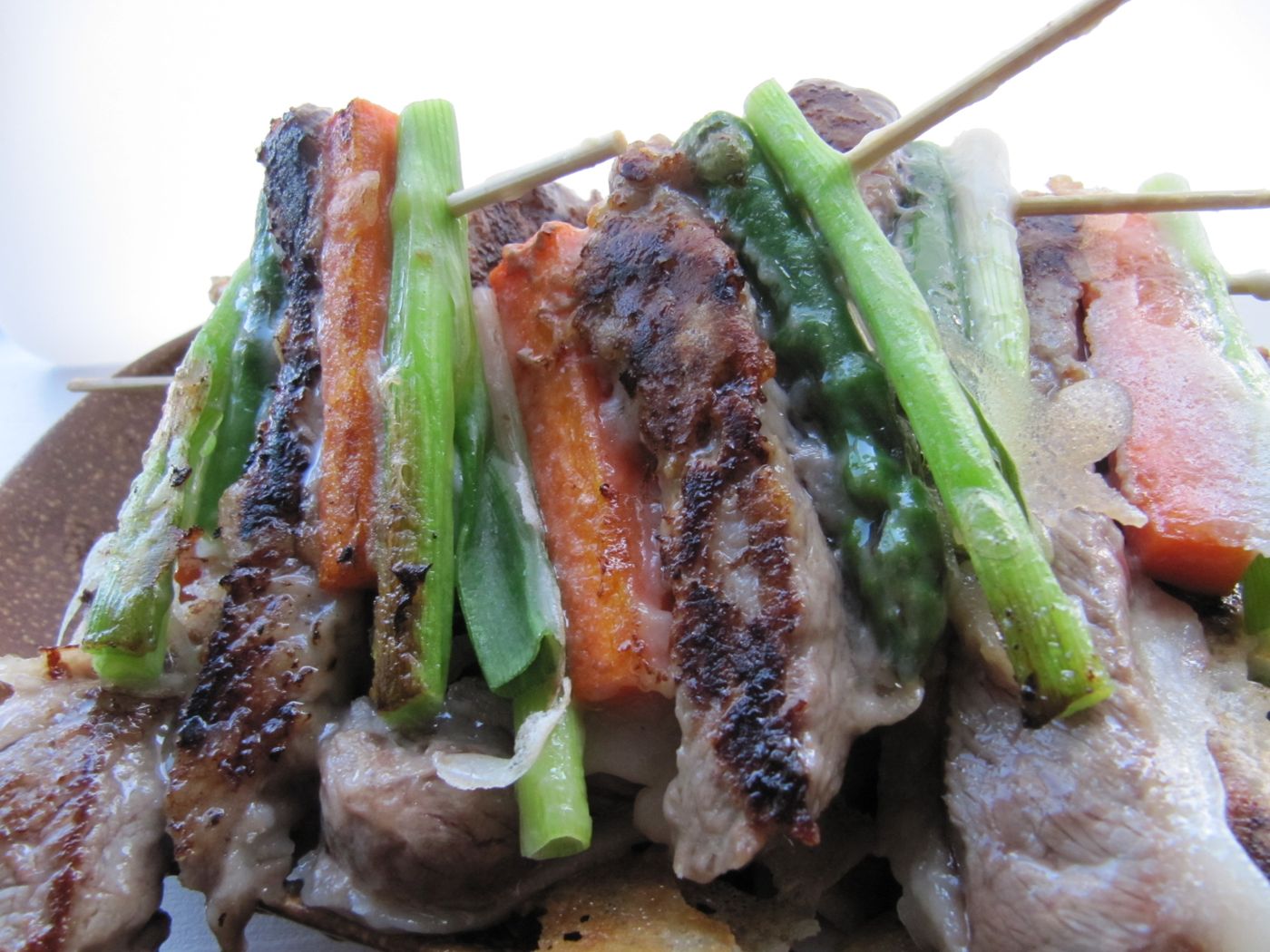 Pa-sanjeok (Green Onion and Beef Skewers)파산적Batons of marinated beef threaded on skewers with lengths of green onion and grilled — a classic sanjeok for holiday and ancestral-rite tables.
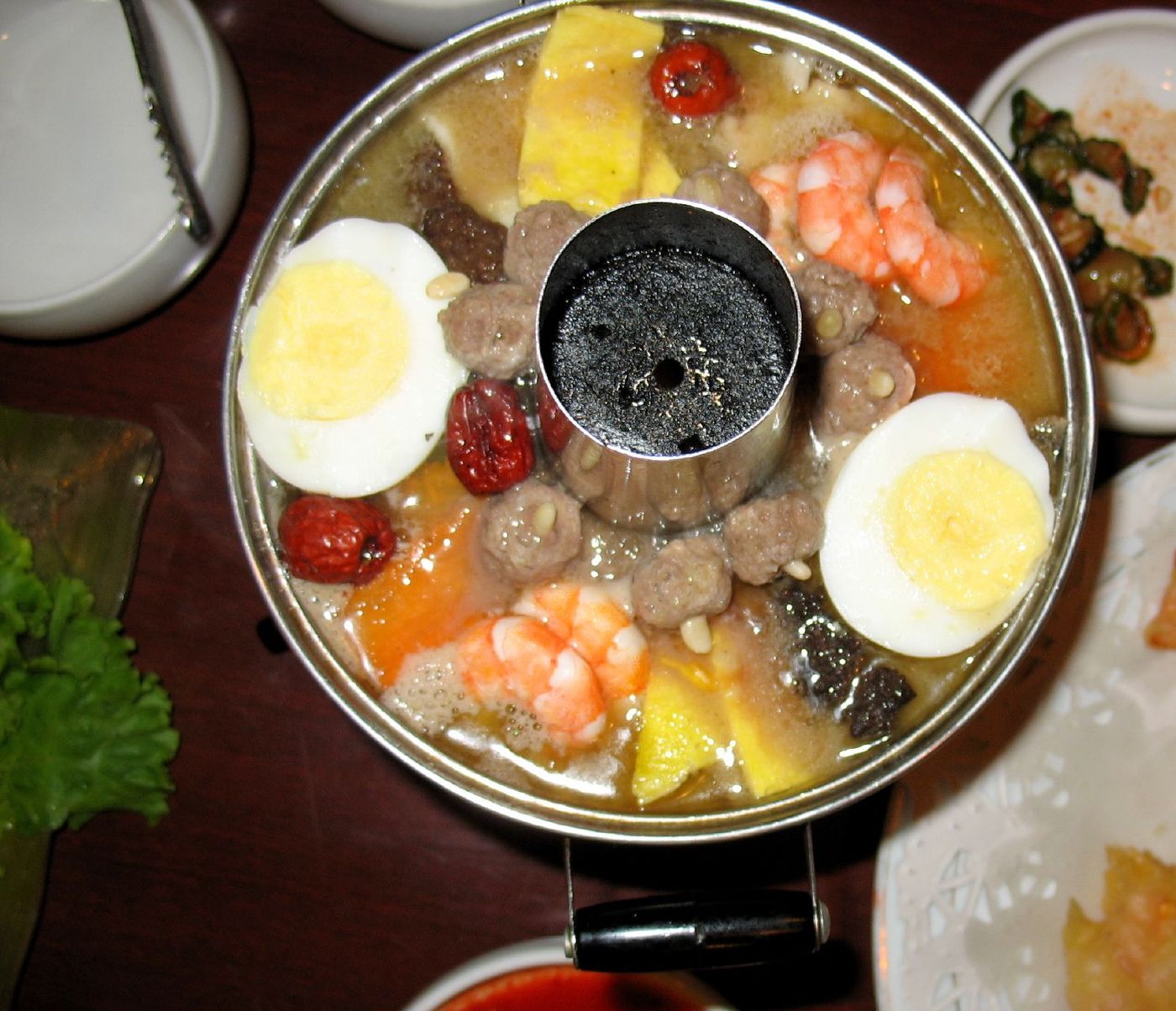 Sinseollo (Royal Hot Pot)신선로A court banquet dish of colorful beef, fish, egg, mushrooms and vegetables arranged in a chimney-centered brazier pot, with hot broth poured over and kept warm at the table.
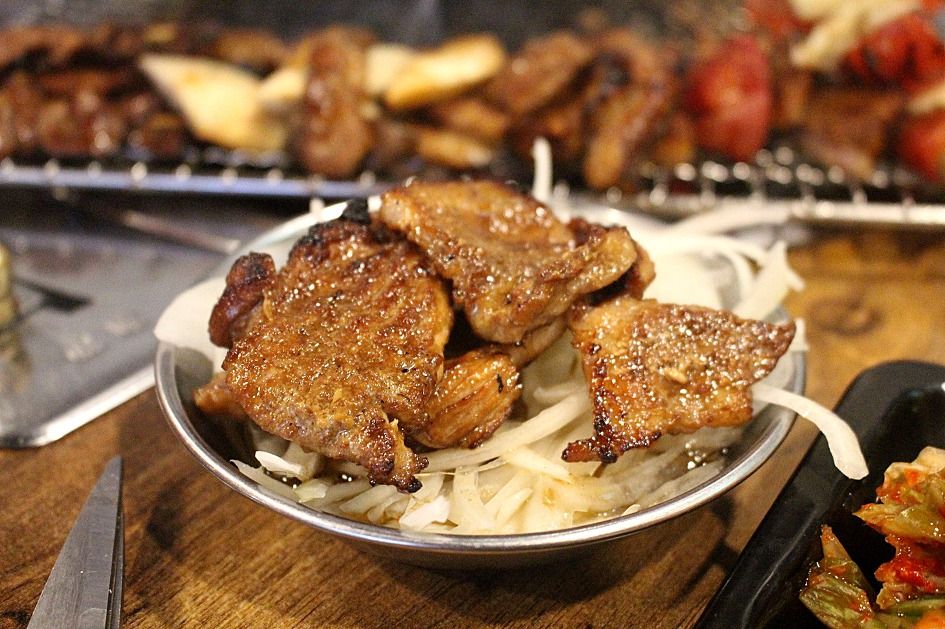 So-galbi-gui (Grilled Beef Short Ribs)소갈비구이Beef short ribs scored to the bone, marinated with soy, pear, garlic and sesame and grilled over charcoal — Korea's celebration barbecue, best known in Suwon's salt-seasoned style.
- Toran Guk (Taro Soup)토란국Parboiled taro simmered in a clear beef-and-kelp broth seasoned with soup soy sauce — a soft, gently slippery soup made for the Chuseok harvest table.
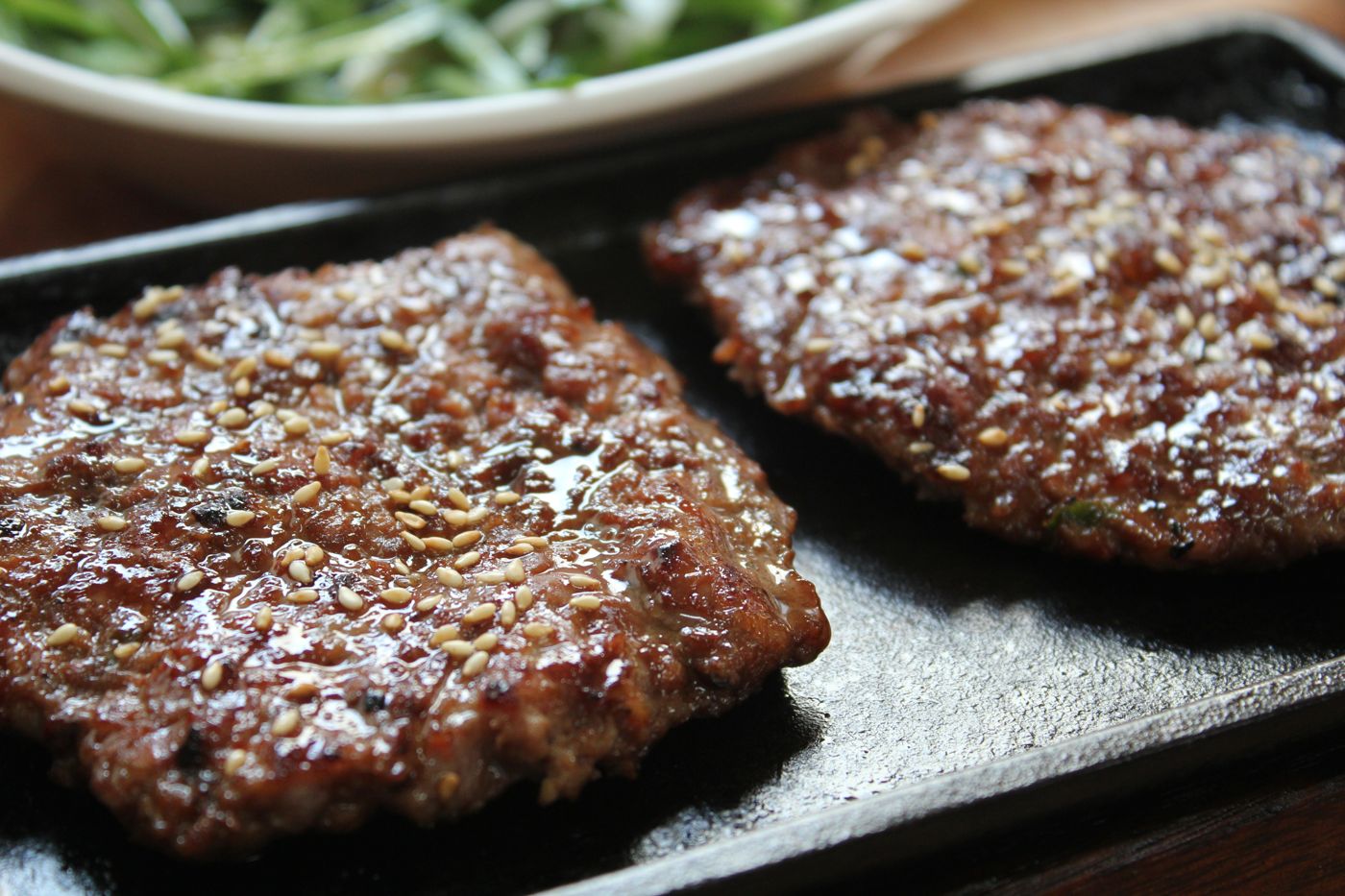 Tteokgalbi (Minced Short-Rib Patties)떡갈비Short-rib meat minced, seasoned sweet-savory and shaped into a patty, then grilled. Damyang presses it back onto the bone; Gwangju's Songjeong style is a flat boneless square.
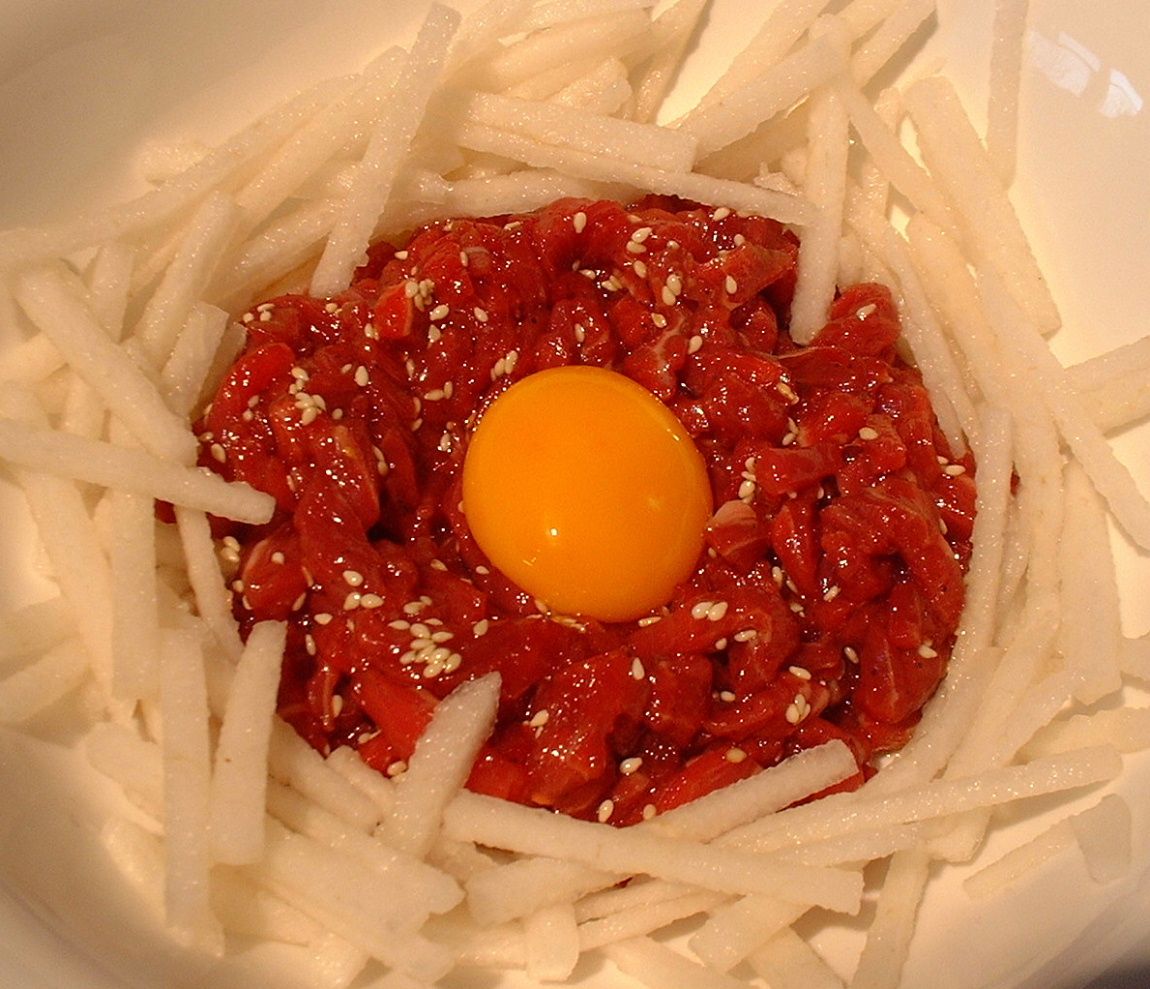 Yukhoe (Korean Seasoned Raw Beef)육회Thinly cut raw lean beef dressed with soy, sesame oil and garlic, served over Korean pear with an egg yolk. A festive, long-standing dish that needs the freshest meat and careful handling.
- Yukjeon (Beef Jeon)육전Thin slices of lean beef, lightly marinated, dipped in flour and egg and pan-fried — an ancestral-rite jeon that Gwangju has made into a specialty.
Sources
- 01Keys to production and processing of Hanwoo beef: a perspective of tradition and science (Animal Frontiers, 2018)
- 02A Comprehensive Review of the History and Breed Characteristics of Hanwoo Cattle (Food Sci Anim Resour, 2025)
- 03소고기 1++등급 근내지방도 번호 구분 표기 (1++ beef to display marbling number) — Korea.kr policy news
- 04Korean Food Composition Table — Beef meat, Hanwoo, Loin (Deungsim), Raw
- 05Cancer: Carcinogenicity of the consumption of red meat and processed meat — WHO Q&A