Wellness
Fermented Foods: Kimchi, Jang and Jeotgal
발효 음식
What fermentation does to kimchi, jang and jeotgal, and what research on fermented foods and the gut does, and does not yet, show.
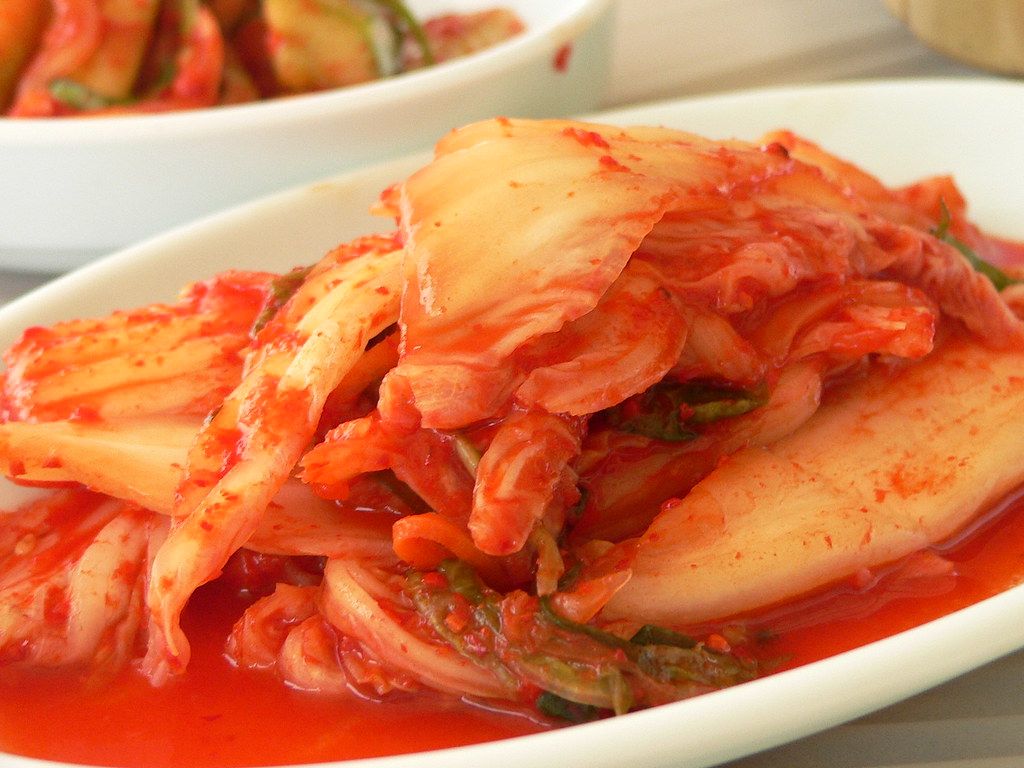 Photo: Nagyman, CC BY-SA 2.0, via Flickr
Fermentation runs through the Korean table. Napa cabbage becomes kimchi, soybeans become meju and then doenjang and ganjang, and small shrimp and anchovies become jeotgal such as saeujeot. Long before refrigeration, it was a way to carry the harvest through the year, and it remains one of the main ways Korean cooks build flavor.
What fermentation is
An expert panel convened by the International Scientific Association for Probiotics and Prebiotics (ISAPP) defines fermented foods as foods made through desired microbial growth and enzymatic conversions of food components. The key word is desired: fermentation is deliberate and controlled, which is what separates it from spoilage.
In kimchi, lactic acid bacteria do most of the work. They convert the vegetables' sugars into acids, and the souring that follows changes the flavor and helps keep unwanted microbes in check. The same panel notes that cabbage ferments around the world, whether called kimchi or sauerkraut, tend to follow a similar succession, typically started by Leuconostoc mesenteroides and followed by other lactic acid bacteria. A review of Korean fermented foods lists Leuconostoc, Lactobacillus and Weissella species among those regularly found in kimchi, and notes that ingredients such as green onion and garlic carry some of these microbes into the batch.
Jang works differently. For traditional ganjang, blocks of cooked soybean (meju) are dried for weeks, then steeped in salt brine in earthenware crocks; the dark liquid that separates is soy sauce, and the solids become doenjang. Gochujang adds chili powder and glutinous rice to fermented soybean. Jeotgal, salted and fermented seafood, is used mainly to season and to build savory depth rather than as a main dish. For more on the craft, see making jang and making kimchi.
Fermented is not the same as probiotic
The two words are often used interchangeably, but they mean different things. A probiotic, in the scientific sense, is a defined live microorganism shown to provide a health benefit at a given amount. A fermented food only has to be made by microbes. The microbes in a traditional kimchi are many, uncharacterized and present in unknown numbers, so the ISAPP panel is clear that such foods do not qualify as probiotics on that basis alone, even though they may contain plenty of living bacteria.
Live, pasteurized or not fermented at all
Whether a fermented food still contains live microbes depends on what happens after fermentation. The ISAPP panel groups non-heated fermented vegetables with foods that contain live microorganisms, while heat-treated or pasteurized fermented vegetables, and soy sauce, fall among fermented foods whose microbes are no longer alive. Vegetables simply pickled in brine or vinegar, and chemically produced soy sauce, are not fermented at all.
Stanford Medicine's nutrition educators offer practical cues: authentic ferments with live cultures usually need refrigeration, labels may say "live active cultures," and products made with vinegar are often acidified rather than truly fermented. Pasteurized ferments keep the flavor compounds and other by-products of fermentation but lose their active microbes. Many quick pickles, including some jangajji, are vinegar or soy brines rather than live ferments.
What the research shows
Interest in fermented foods and the gut is high, but the evidence is still developing.
- The big picture: The ISAPP panel notes that, apart from yogurt and other cultured dairy, few well-designed randomized controlled trials have tested fermented foods. Kimchi has been studied in at least one such trial, and the panel calls for more.
- The gut microbiome: In a 17-week randomized study at Stanford with 18 healthy adults per group, a diet high in fermented foods steadily increased gut microbiota diversity and lowered several inflammatory markers. It was small, and it tested a mix of fermented foods rather than kimchi alone.
- Digestive comfort: A 2025 systematic review and meta-analysis of 25 studies (4,328 participants) in healthy adults linked fermented food consumption with changes such as more regular bowel movements and fewer gastrointestinal symptoms, but rated the certainty of most of that evidence as low.
- Kimchi specifically: A 2025 meta-analysis of five kimchi intervention studies (205 participants) found a small reduction in fasting blood glucose, and four cohort studies (42,455 participants) reported favorable associations. The authors stress that the number of studies is limited and the results should be read cautiously.
Much of the earlier literature on kimchi's specific benefits comes from laboratory and animal studies, which suggest directions for research rather than proven effects in people.
Things to keep in mind
- Salt: Kimchi, jang and jeotgal are inherently salty, and the ISAPP panel lists salt as a reason to enjoy foods like soy sauce and kimchi in moderation. See sodium in Korean food.
- Biogenic amines: Some fermentations produce histamine, tyramine and similar compounds, which can bother sensitive people.
- Food safety: Home ferments rely on clean equipment, proper salting and cool storage; when in doubt, follow a tested recipe.
- Allergens: Jeotgal and many kimchi recipes contain shellfish or fish, and jang is made from soybeans; check labels on commercial products for other allergens.
Enjoyed as part of a varied meal, fermented foods bring flavor first. Any added benefit is an active area of research, not a settled fact.
Sources
- 01The International Scientific Association for Probiotics and Prebiotics (ISAPP) consensus statement on fermented foods (Marco et al., Nature Reviews Gastroenterology & Hepatology, 2021)
- 02Kimchi and Other Widely Consumed Traditional Fermented Foods of Korea: A Review (Patra et al., Frontiers in Microbiology, 2016)
- 03Gut-microbiota-targeted diets modulate human immune status (Wastyk et al., Cell, 2021)
- 04Effects of Fermented Kimchi Consumption on Anthropometric and Blood Cardiometabolic Indicators: A Systematic Review and Meta-Analysis (Ahn et al., Nutrition Reviews, 2025)
- 05Impact of fermented foods consumption on gastrointestinal wellbeing in healthy adults: a systematic review and meta-analysis (Mukherjee et al., Frontiers in Nutrition, 2025)
- 06How to Recognize Fermented Foods (Stanford Medicine, Fermenting the Facts)