Ingredient
Laver (gim)
김
Romanization: gim
Paper-thin sheets of dried red seaweed, toasted until crisp and fragrant. Gim wraps gimbap and rice, crumbles over noodles and soups, and — brushed with oil and salt — becomes the everyday side dish gim-gui.
Flavor
Toasty and oceanic with a gentle, almost sweet savoriness; crisp and shattering when fresh, softening quickly as it meets rice or moisture.
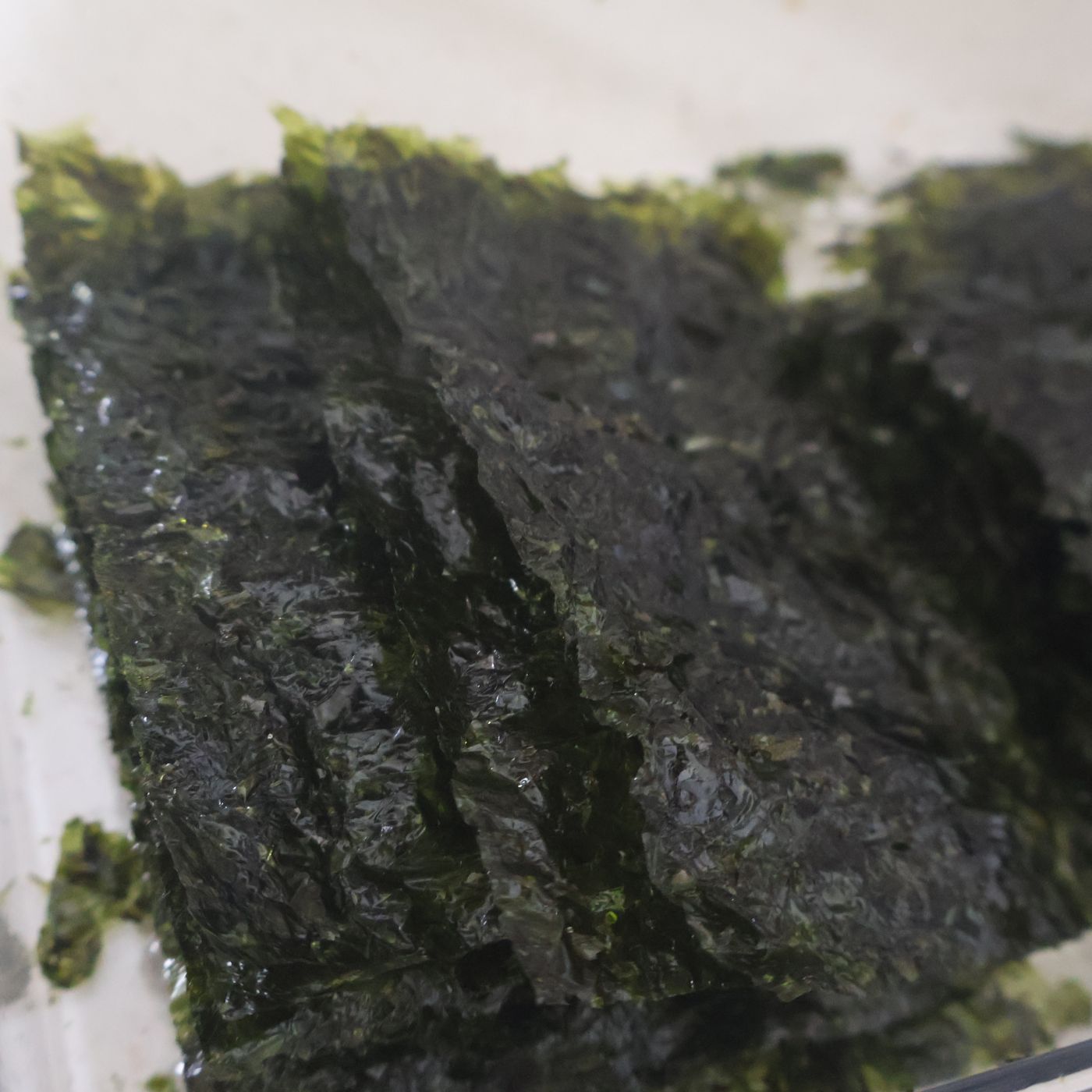 Photo: Startandstar, CC0, via Wikimedia Commons
Origin & History
Gim is laver, a red seaweed of the family Bangiaceae. Its blades are only one cell thick, shaped like a bamboo leaf or a rounded sheet, and they appear on the rocks in the cool water of autumn through spring. The Encyclopedia of Korean Culture counts around ten species in Korean waters. Older texts call it haeui or jachae; the term haetae is a Japanese-influenced usage.
Laver appears in Korean records as a local product in the 15th-century Gyeongsang-do jiriji and, by the 1530 Sinjeung dongguk yeoji seungnam, it was listed as a specialty of dozens of districts. Cultivation is the oldest form of aquaculture in Korea. Several stories credit its start to the 17th century; the best known names Kim Yeo-ik (1606–1660), who settled on Taein Island near Gwangyang in 1640 and is said to have noticed laver growing on driftwood branches and begun planting stakes in the tidal flats. Local tradition even holds that the name gim comes from his family name. His story survives in a family genealogy, and the site was designated a South Jeolla provincial monument in 1987.
Farming spread along the south coast in the late Joseon period, first on stakes and brushwood, then on bamboo screens first developed in Wando, and later on floating nets, which greatly raised yields. The industry grew rapidly in the colonial era, driven partly by strong Japanese demand, and today serves a large domestic market as well as overseas buyers.
Plain sheets are toasted and used for gimbap and for wrapping rice at the table. Brushed with sesame or perilla oil, salted and toasted, they become gim-gui; laver is also made into jaban and fried bugak. Folk custom held that wrapping rice in gim on Jeongwol Daeboreum, the first full moon of the lunar year, would keep the eyes bright.
Nutrition
| Calories | 182 kcal |
|---|---|
| Protein | 38.46 g |
| Fat | 2.82 g |
| Carbohydrates | 46.19 g |
| Fiber | 45.6 g |
| Sodium | 903 mg |
Notable forIodine (3,828 µg) · Vitamin K (1,391 µg) · Folate (1,155 µg) · Vitamin A (1,291 µg RAE)
Values copied from the Korean Food Composition Table (Rural Development Administration / National Institute of Crop Science) for this exact food, per 100 g edible portion. Gim is eaten a few grams at a time, so a serving supplies a small fraction of these per-100 g amounts. Seasoned, oil-toasted gim in the same table lists about 49 g fat and 1,299 mg sodium per 100 g. Actual values vary with ingredients, portion size and preparation.
Health Benefits
- Concentrated nutrients in a light food: Because it is dried, laver is dense in protein, fiber, vitamin A and folate by weight, although a typical serving is only a sheet or two.
- A source of iodine — mind the total: The Korean Food Composition Table lists about 3,800 µg of iodine per 100 g of dried gimbap laver. MedlinePlus notes that iodine is needed for thyroid hormones but that very high intakes can reduce thyroid function; people with thyroid conditions, or who take thyroid medicine, should ask a clinician how much seaweed is right for them.
- Vitamin B12 is under study: The table lists substantial vitamin B12, and a small 2024 trial in 30 vegetarians found that 5 g of nori a day for four weeks improved blood markers of B12 status. The evidence is still limited, so it should not replace medical advice on B12 for people who eat no animal foods.
- Vitamin K and blood thinners: Dried laver is rich in vitamin K. MedlinePlus advises people taking warfarin to eat consistent amounts of vitamin K–containing foods from week to week.
- Seasoned gim adds salt and oil: Snack-style and gim-gui sheets are brushed with oil and salt, so they contribute more sodium and fat than plain laver.
Informational, not medical advice. Talk to a qualified professional about your own health and diet.
Dishes with Laver (gim)
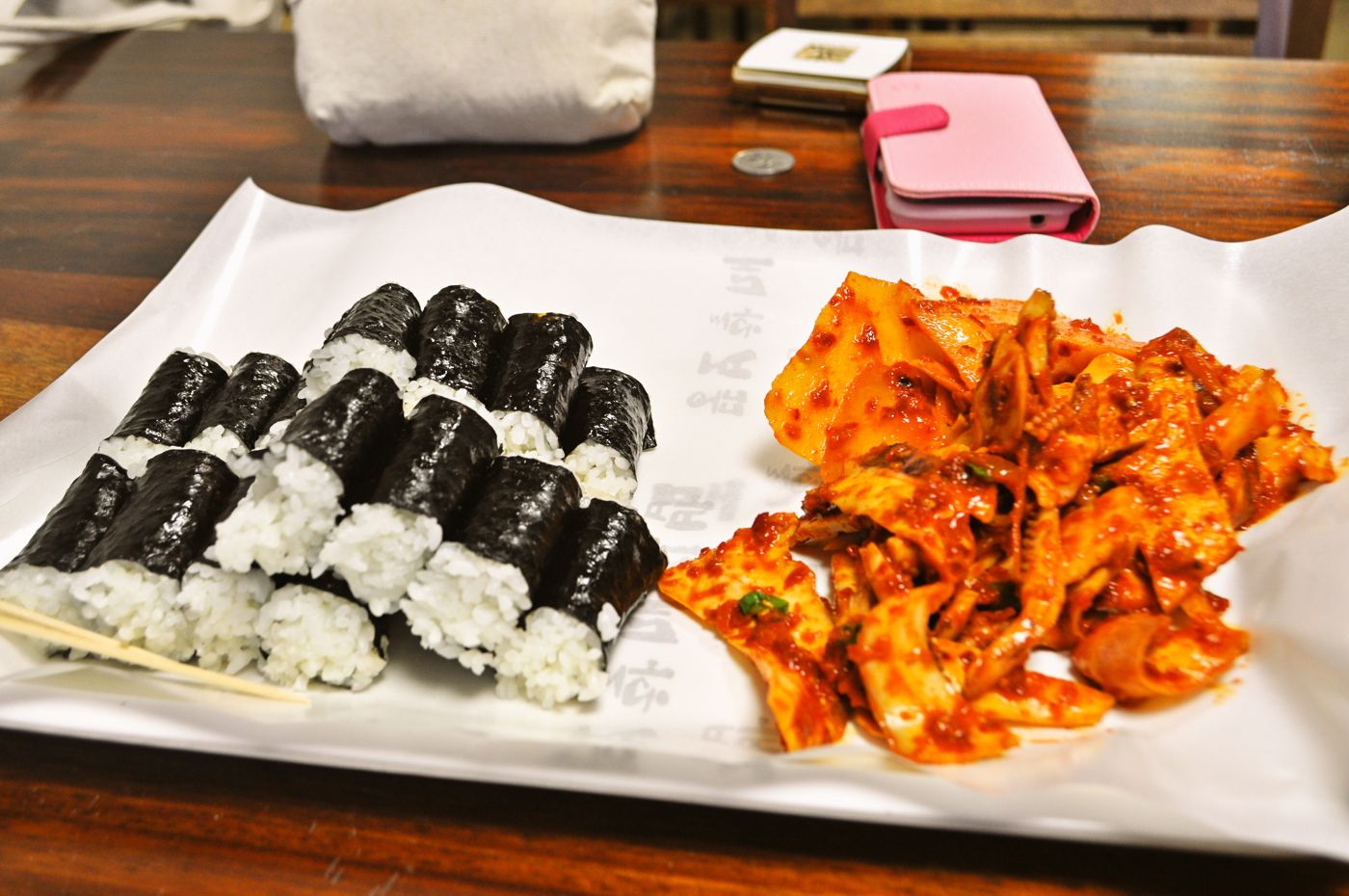 Chungmu Gimbap (Tongyeong Rice Rolls)충무김밥Finger-sized rolls of plain rice in laver, eaten with spicy squid and chunky radish kimchi on the side — Tongyeong's harbor food, built to survive summer heat.
- Dotori Muk Muchim도토리묵무침Slices of soft, faintly bitter acorn jelly tossed with crisp vegetables and a soy–chili–sesame dressing — a cool, light side dish and a favorite with drinks.
- Gim Bugak (Fried Laver Chips)김부각Sheets of laver pasted together with seasoned glutinous rice, dried, then fried until they puff into airy, crackling chips — a keeping banchan and a famous Namwon specialty.
- Gim Gui (Seasoned Roasted Laver)김구이Sheets of laver brushed with sesame or perilla oil, sprinkled with salt and toasted until crisp — eaten wrapped around spoonfuls of rice.
- Gim Muchim (Seasoned Laver Flakes)김무침Toasted laver crumbled into flakes and tossed with soy sauce, garlic, green onion and sesame oil — a savory, five-minute banchan that tastes of the sea.
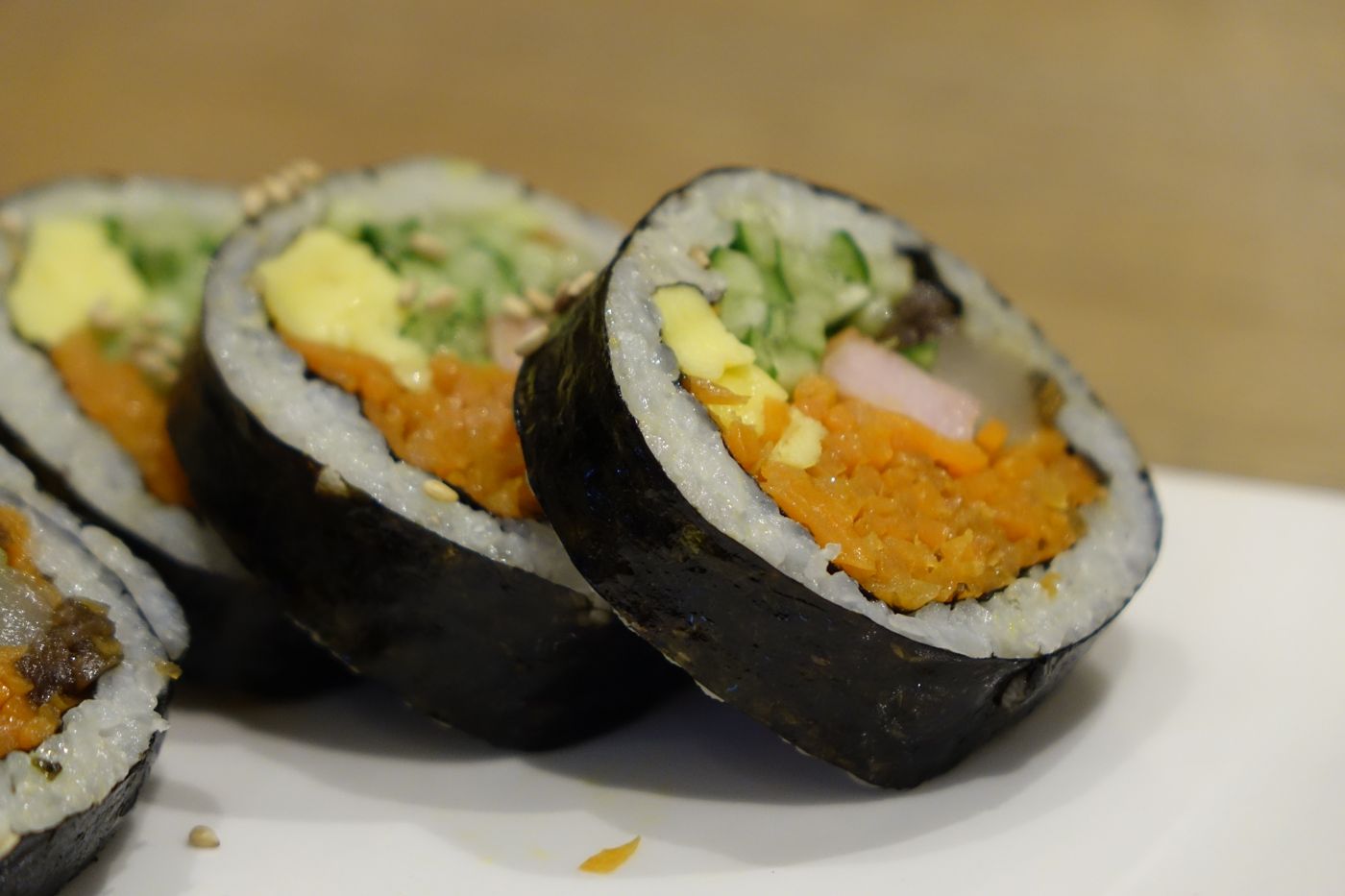 Gimbap (Seaweed Rice Rolls)김밥Rice seasoned with sesame oil and salt, rolled in laver around strips of spinach, egg, carrot and pickled radish, then sliced — Korea's classic picnic and lunchbox food.
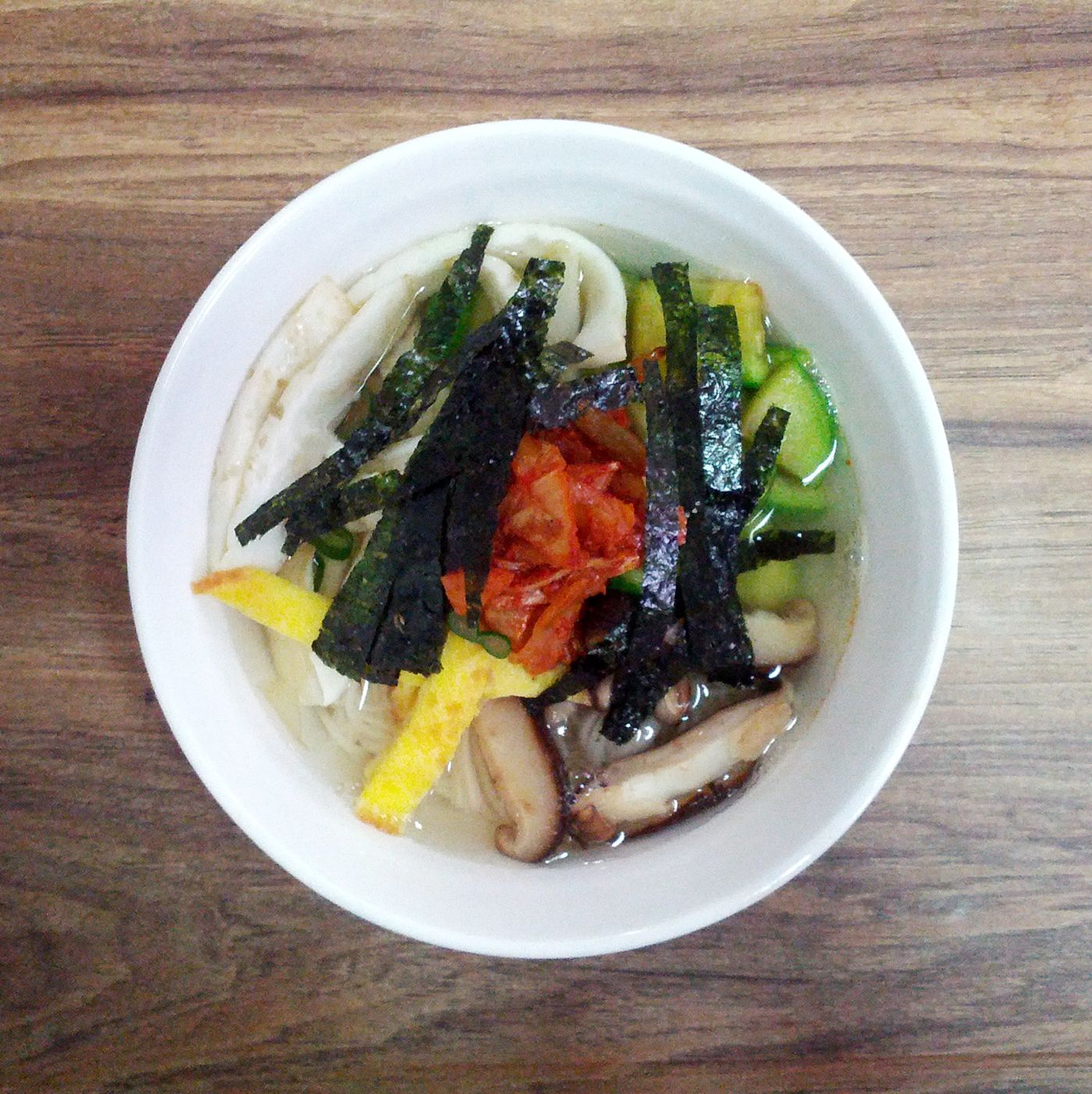 Janchi Guksu (Banquet Noodles)잔치국수Thin wheat noodles in a hot, clear anchovy or beef broth, topped with egg strips, zucchini and kimchi — the long-life noodles served at weddings and birthdays.
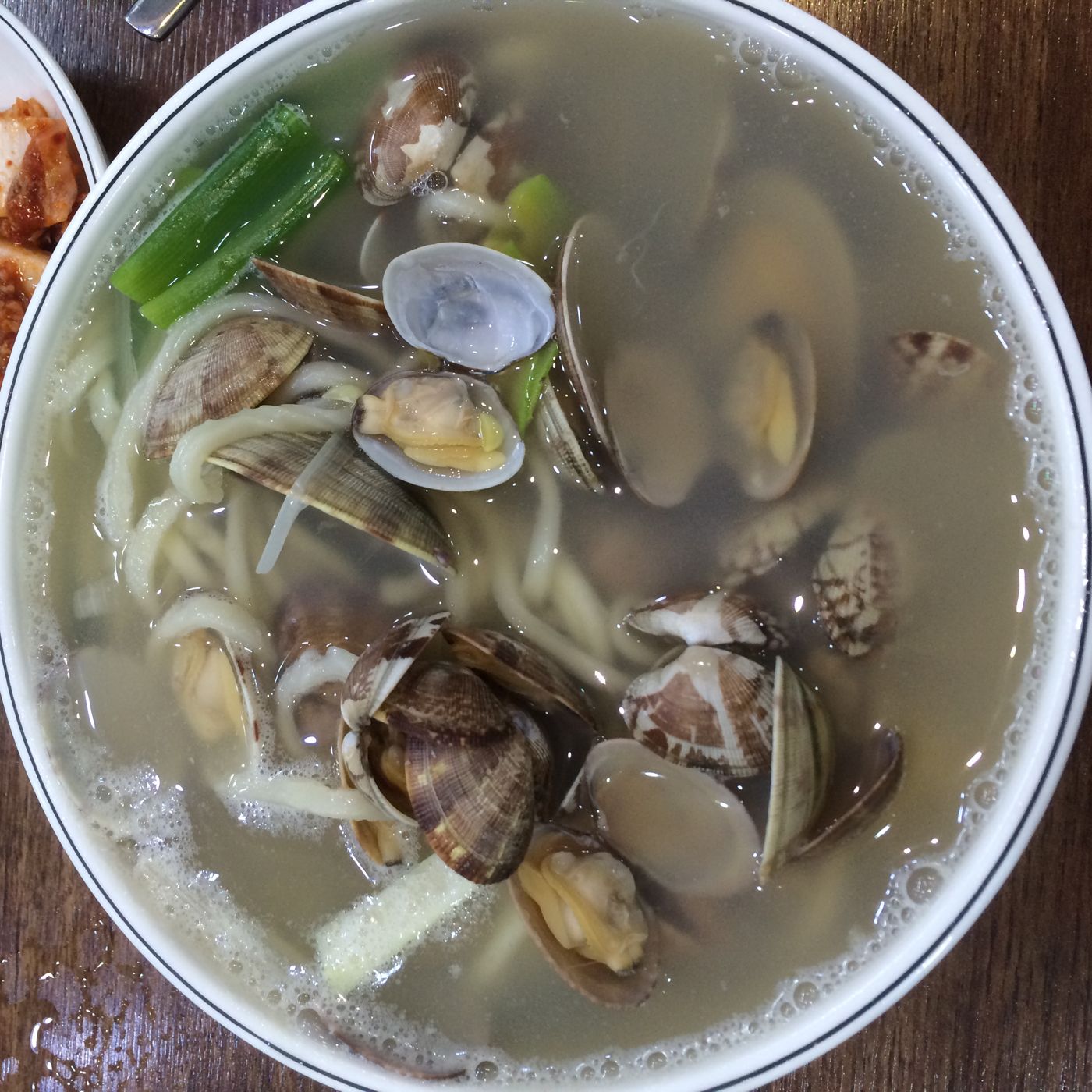 Kalguksu (Knife-Cut Noodle Soup)칼국수Hand-rolled wheat dough cut into ribbons with a knife and cooked right in anchovy, chicken or clam broth with potato and zucchini — Korea's homely noodle soup.
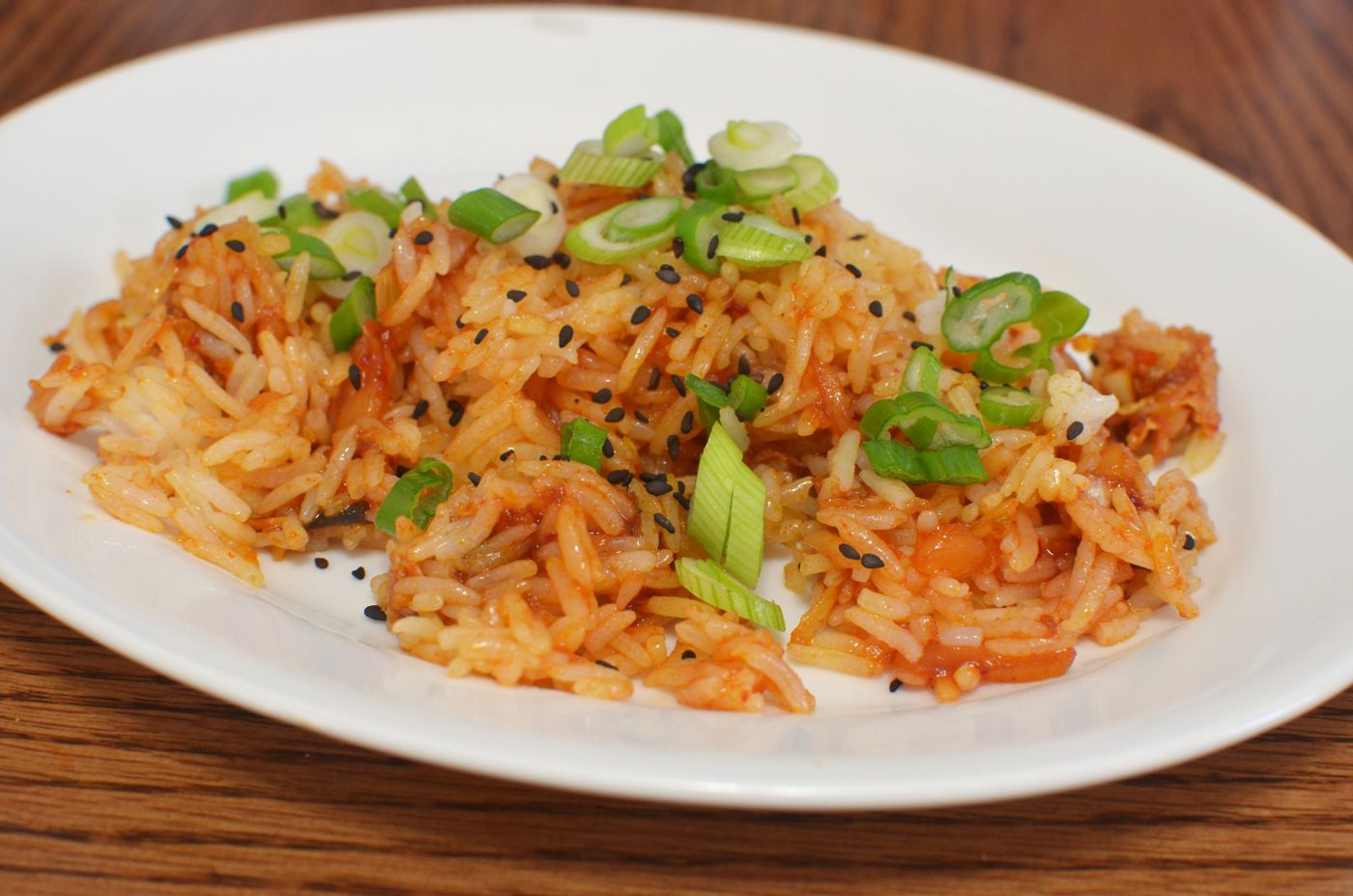 Kimchi-bokkeumbap (Kimchi Fried Rice)김치볶음밥Leftover rice stir-fried with sour, well-fermented kimchi and a little pork, usually topped with a fried egg — a home staple that spread with frying pans and cooking oil.
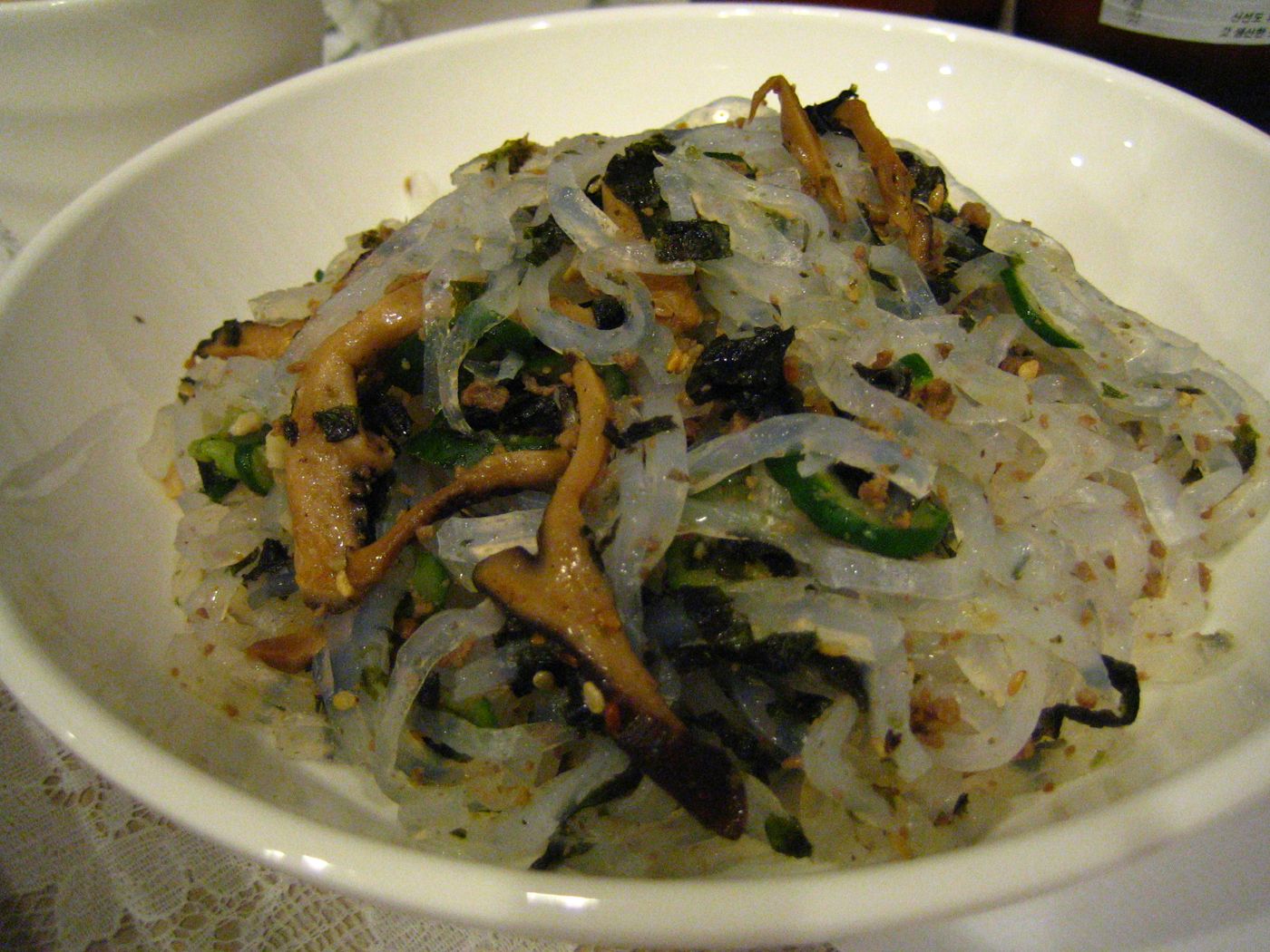 Tangpyeongchae탕평채Mung bean jelly tossed with beef, sprouts, water dropwort, egg and roasted gim in a soy-vinegar dressing — a classic spring dish named after a Joseon policy of political harmony.
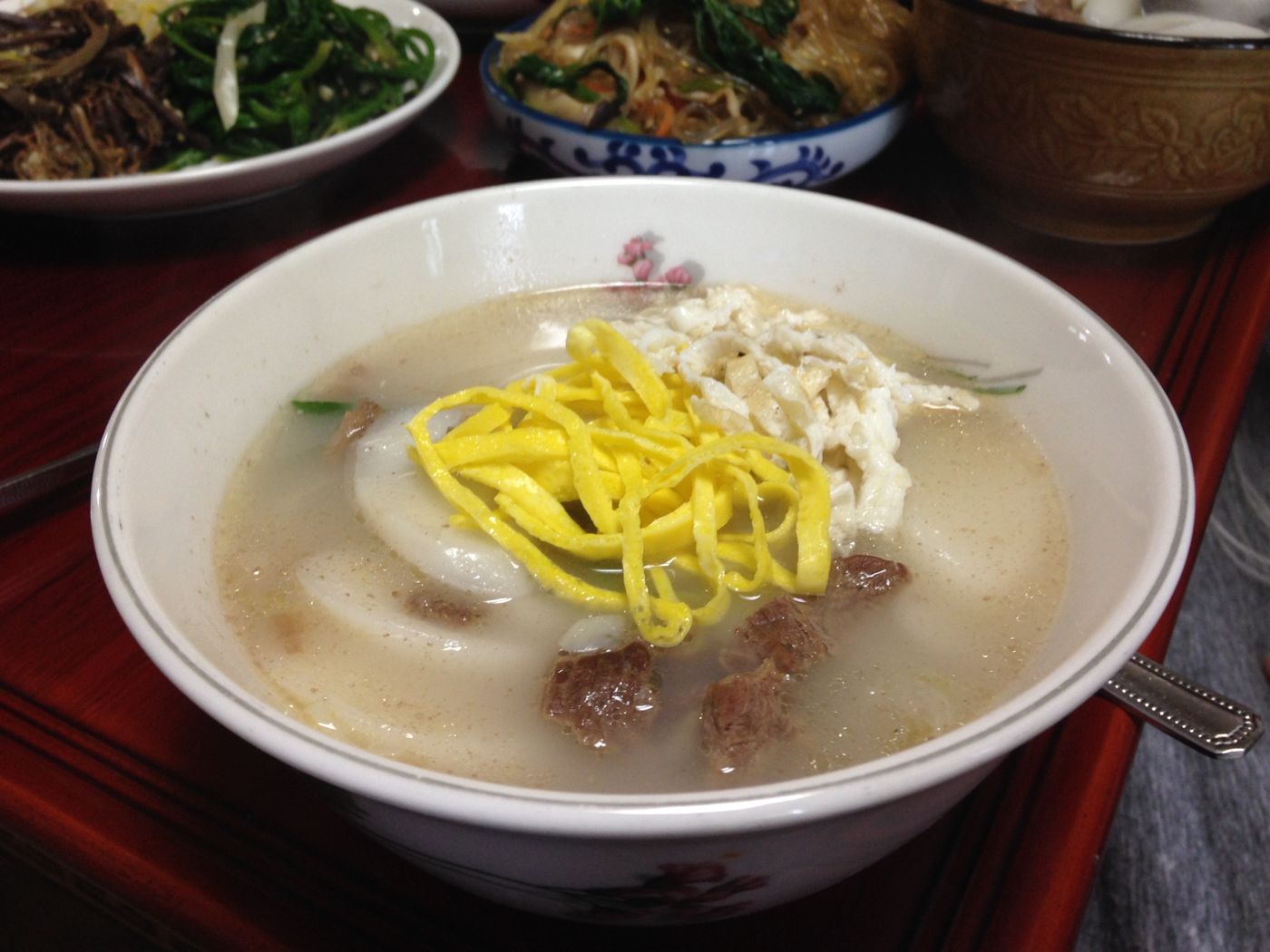 Tteokguk (Rice Cake Soup)떡국Thin ovals of white rice cake in clear beef broth, topped with egg ribbons and seaweed — the soup eaten on Seollal morning to greet the new year.
Sources
- 01김 (Laver) — Encyclopedia of Korean Culture
- 02광양 김 시식지 (Gwangyang laver cultivation site) — Encyclopedia of Korean Culture
- 03Korean Food Composition Table — Laver product, For Gimbap, Dried
- 04Iodine in diet — MedlinePlus Medical Encyclopedia
- 05Effect of roasted purple laver (nori) on vitamin B12 nutritional status of vegetarians: a dose-response trial (Eur J Nutr, 2024)
- 06Warfarin — MedlinePlus Drug Information