Ingredient
Cucumber
오이
Romanization: oi
Slender, thin-skinned Korean cucumbers, prized for their crunch. Stuffed and fermented as oi-sobagi, dressed quickly as oi-muchim, salted into oiji or floated in chilled summer soup.
Flavor
Cool, green and refreshing, with a firm, watery crunch and thin skin. Salting draws out water so the cucumber stays crisp in dressings and kimchi.
Origin & History
The cucumber (Cucumis sativus) is an annual vine of the gourd family, generally thought to have originated in northern India. It is believed to have reached Korea roughly 1,500 years ago.
Korean growers have developed their own cultivars. The Encyclopedia of Korean Culture describes the spiny Samcheok cucumber, which can grow longer than 30 centimeters, and shorter, bright- or pale-green types such as Cheongdae-madi and Seoul-madi. Cucumbers like warmth, growing best at about 25 to 30°C, and with greenhouse forcing and staggered field planting they are now harvested almost all year.
Cucumber pickles have a long written history. Jeungbo sallim gyeongje, an eighteenth-century household and farming manual, includes the earliest recorded recipe for stuffed cucumber kimchi, with a filling of chili and garlic. Today oi-sobagi, cucumbers slit and packed with a seasoning that often includes chives, is a favorite summer kimchi.
Cucumbers are also dressed with chili flakes and vinegar as oi-muchim, preserved in brine as oiji and sliced into chilled summer soups.
Nutrition
| Calories | 15 kcal |
|---|---|
| Protein | 0.65 g |
| Fat | 0.11 g |
| Carbohydrates | 3.63 g |
| Fiber | 0.5 g |
| Sodium | 2 mg |
Notable forVitamin K
Values from USDA FoodData Central (SR Legacy), "Cucumber, with peel, raw" (FDC ID 168409). That entry does not distinguish cultivars; Korean cucumbers may differ slightly. Actual values vary with ingredients, portion size and preparation.
Health Benefits
- Hydrating: Cucumbers are about 95 percent water and very low in calories.
- Vitamin K: They provide a modest amount of vitamin K.
- Light side dish: Fresh cucumber dishes add crunch and volume to a meal with very little energy.
- Sodium caveat: Oiji, oi-sobagi and other cucumber pickles are salted, so they are much higher in sodium than fresh cucumber.
Informational, not medical advice. Talk to a qualified professional about your own health and diet.
Dishes with Cucumber
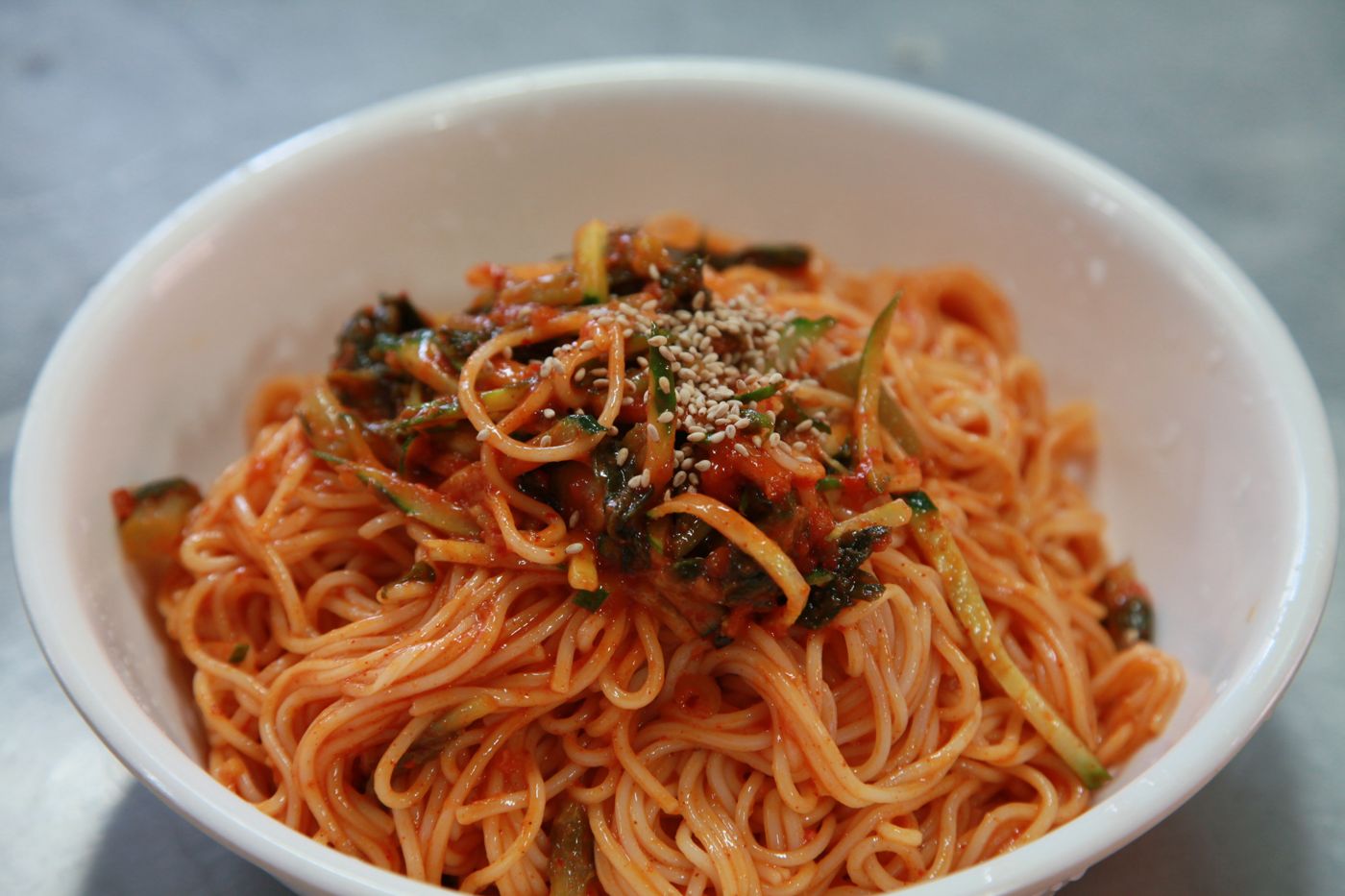 Bibim-guksu (Spicy Mixed Noodles)비빔국수Thin wheat noodles tossed cold in a sweet, sour and spicy gochujang dressing with cucumber, kimchi and egg — a modern turn on the soy-dressed goldongmyeon of Joseon.
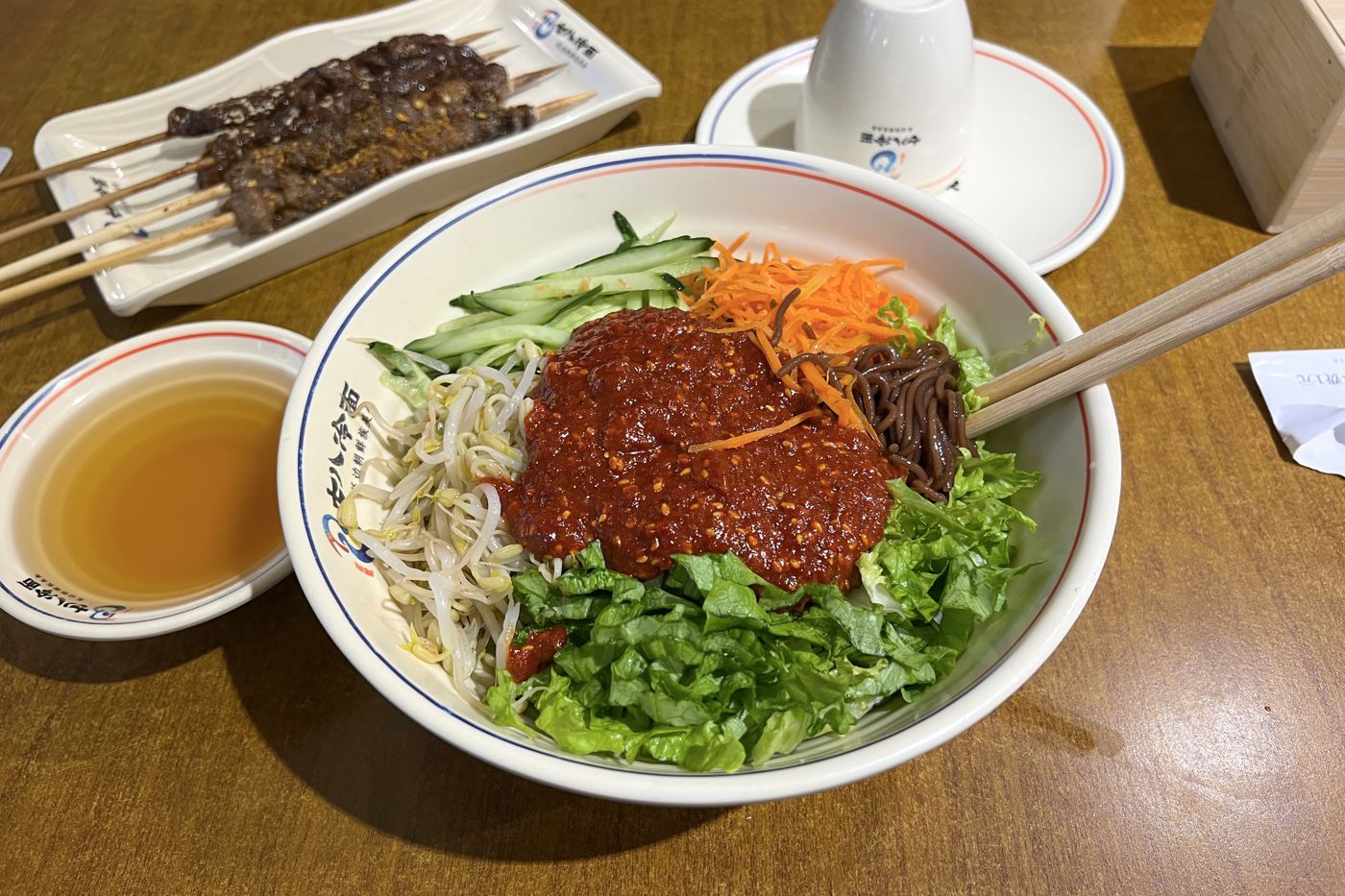 Bibim-naengmyeon (Spicy Mixed Cold Noodles)비빔냉면Chewy starch noodles tossed in a sweet, vinegary chili sauce, topped with cucumber, pear and egg — the Hamheung tradition of hoe-naengmyeon, carried south by refugees.
- Dotori Muk Muchim도토리묵무침Slices of soft, faintly bitter acorn jelly tossed with crisp vegetables and a soy–chili–sesame dressing — a cool, light side dish and a favorite with drinks.
- Gamja Salad (Korean Potato Salad)감자샐러드Mashed boiled potato folded with egg, cucumber, carrot and mayonnaise — a soft, mildly sweet modern banchan served alongside rice, kimchi and namul.
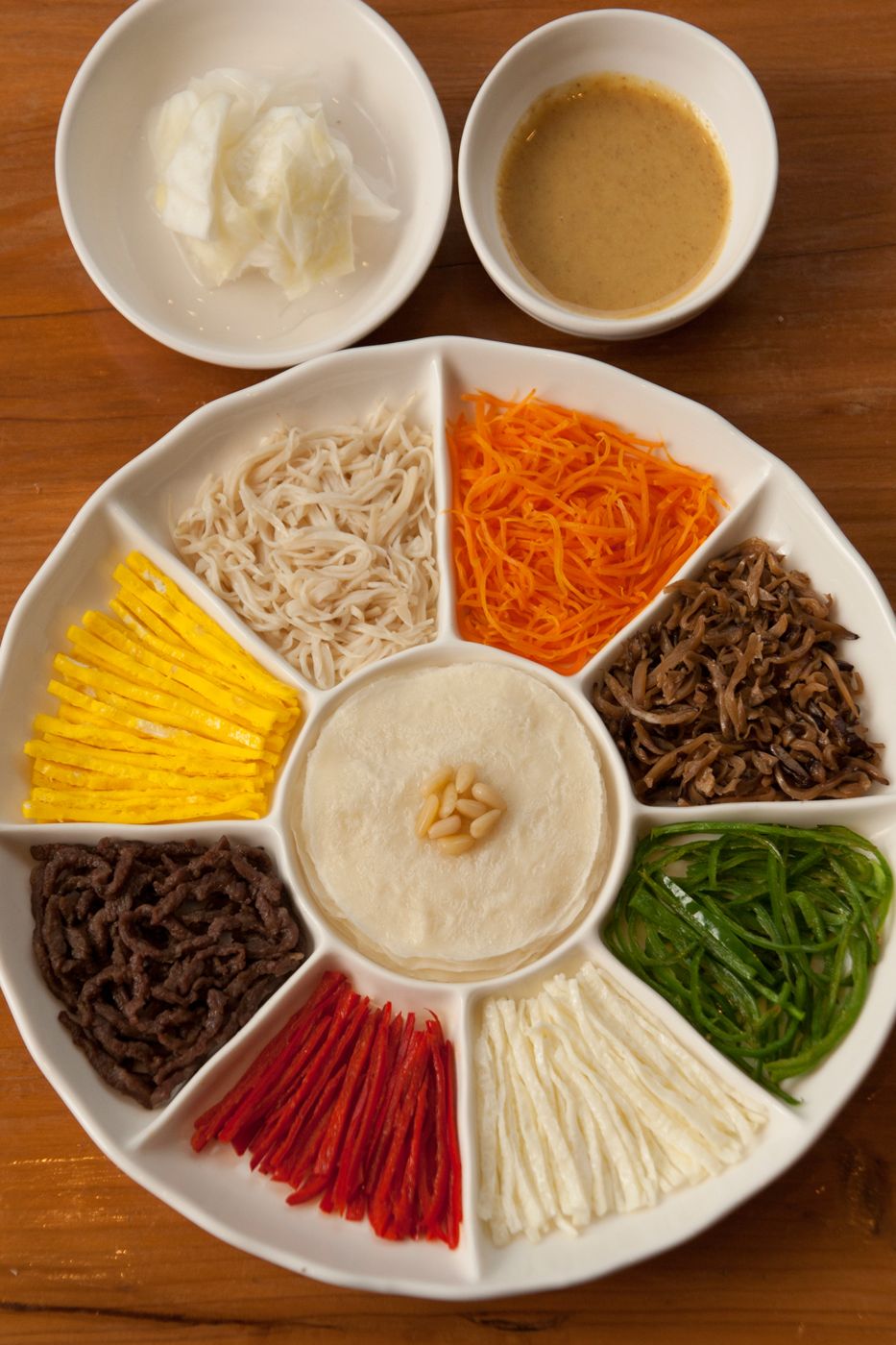 Gujeolpan (Platter of Nine Delicacies)구절판Eight finely cut fillings arranged by color around a stack of paper-thin crepes in a nine-compartment dish, wrapped at the table — an elegant banquet dish.
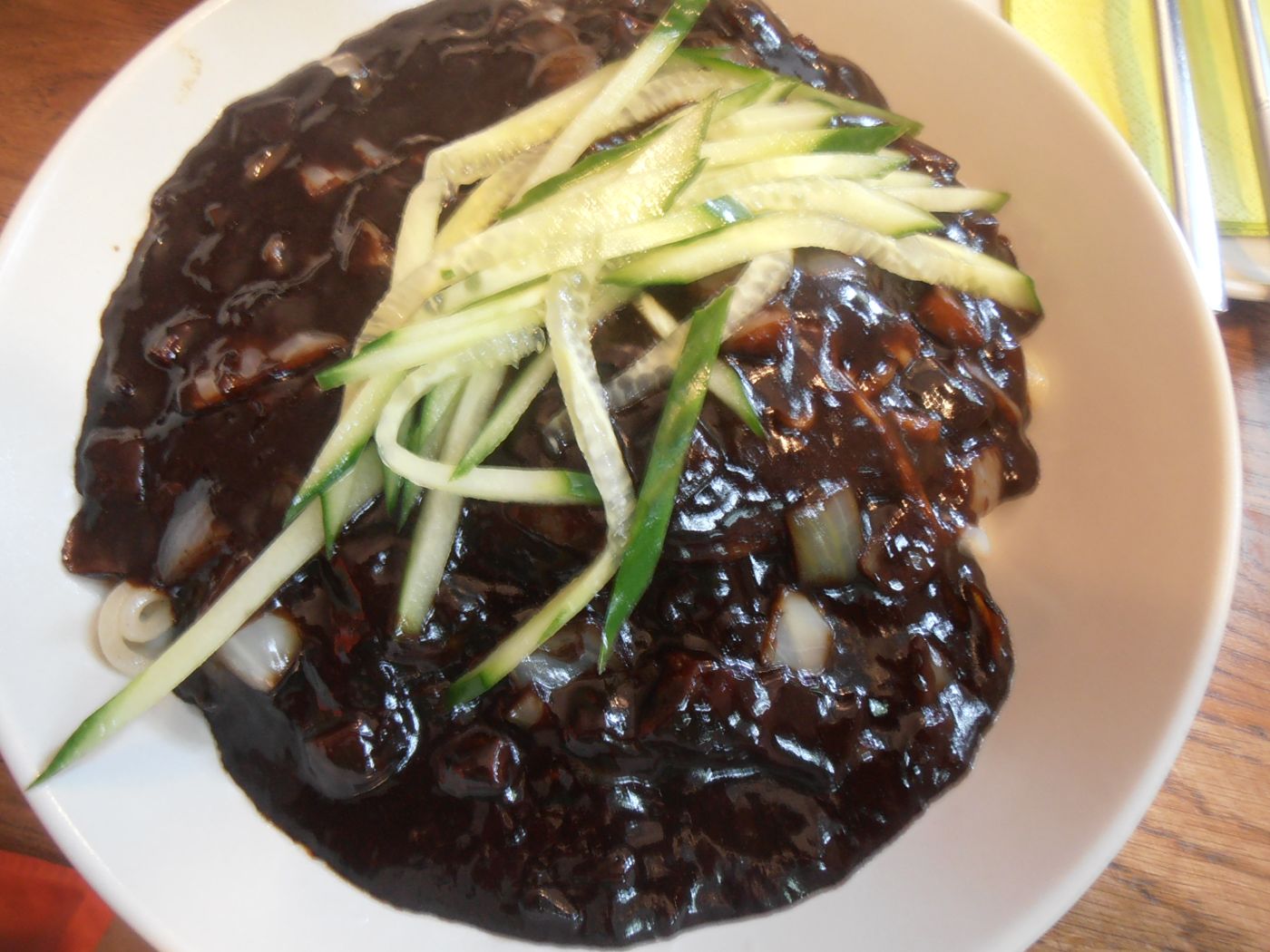 Jajangmyeon (Noodles in Black Bean Sauce)자장면Wheat noodles under a glossy sauce of chunjang fried with pork, onion and potato — the Korean-Chinese dish born among Shandong migrants in Incheon, contested origin claims and all.
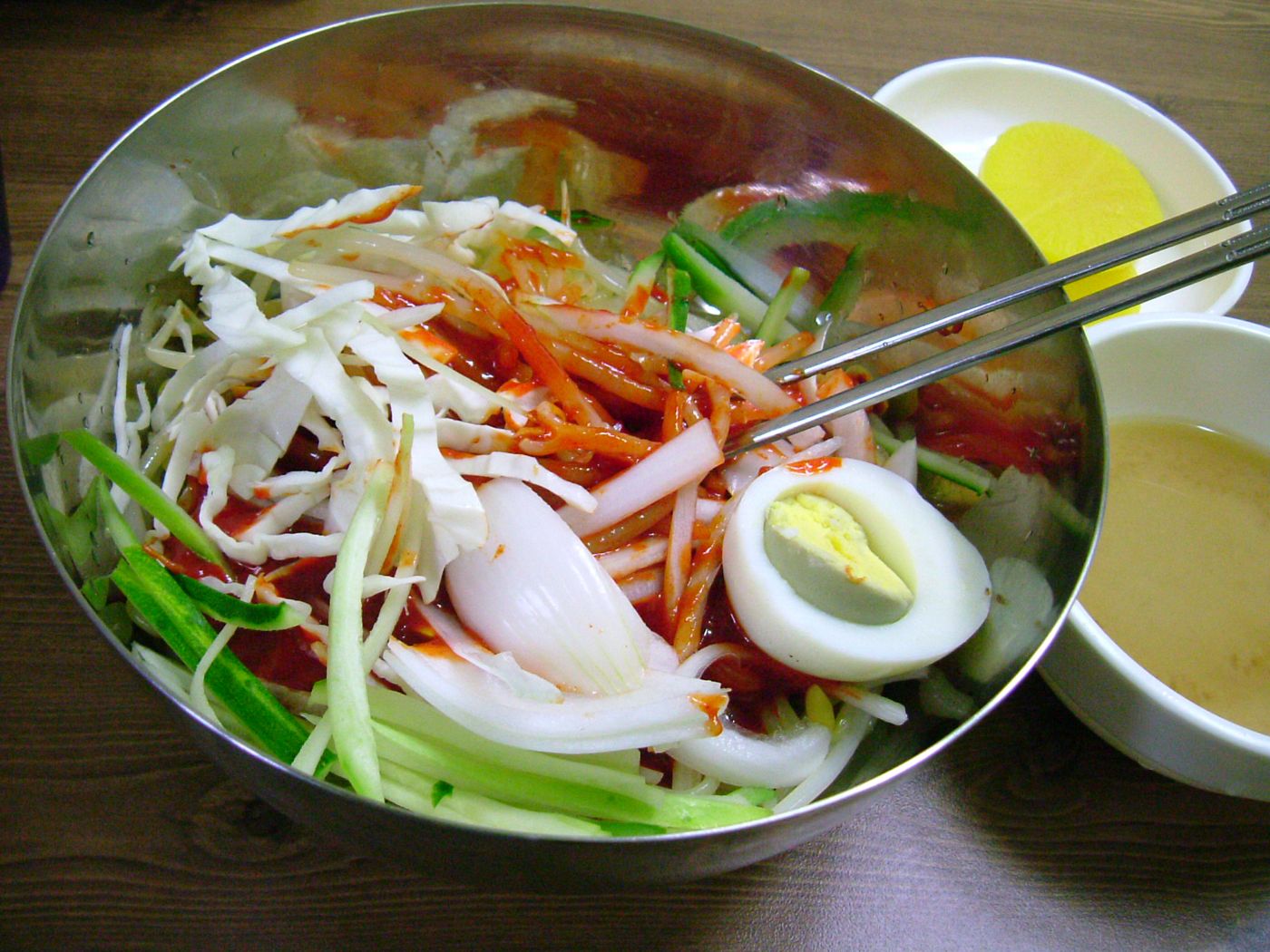 Jjolmyeon (Chewy Spicy Noodles)쫄면Thick, rubbery-chewy wheat noodles tossed cold in a sweet-sour gochujang sauce with cabbage, sprouts and egg — a snack-bar classic invented in 1970s Incheon.
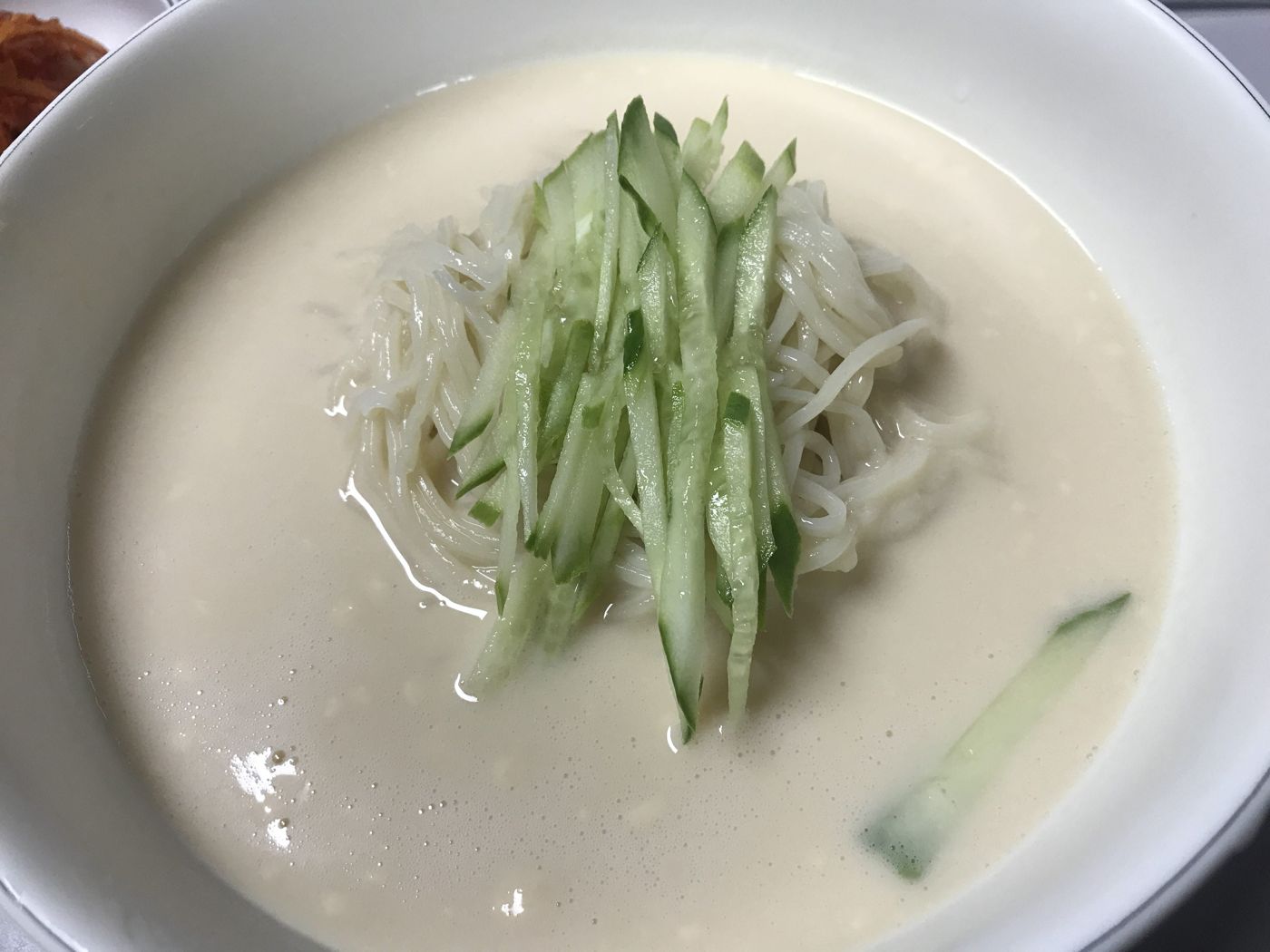 Kongguksu (Cold Soybean-Milk Noodles)콩국수Thin wheat noodles in a chilled, nutty broth of freshly ground soybeans, topped with cucumber — a protein-rich summer noodle traditionally eaten with yeolmu kimchi.
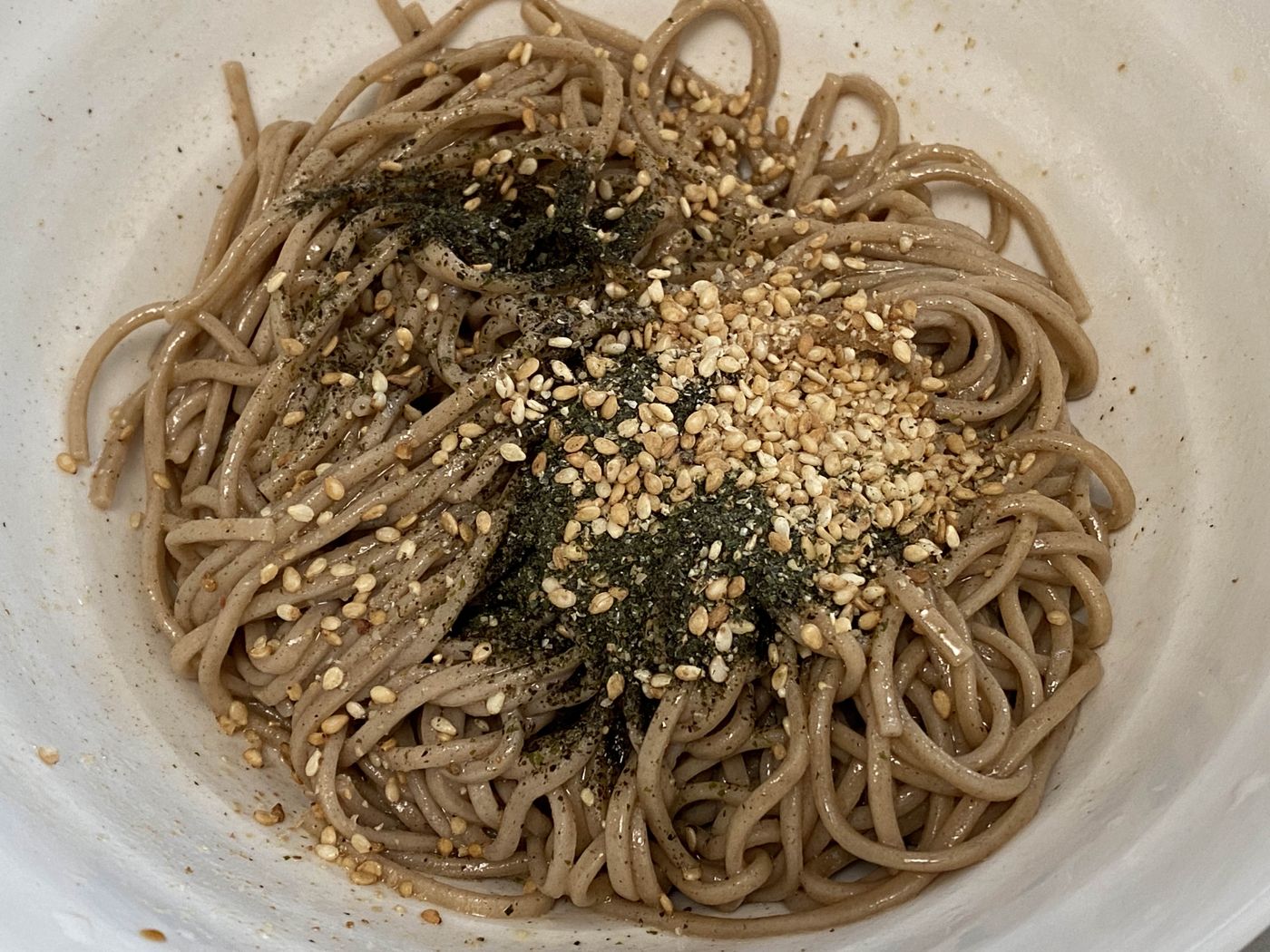 Makguksu (Gangwon Buckwheat Noodles)막국수Coarse, grayish buckwheat noodles served in cold dongchimi broth or tossed with spicy sauce — a Gangwon mountain dish most famously eaten in Chuncheon.
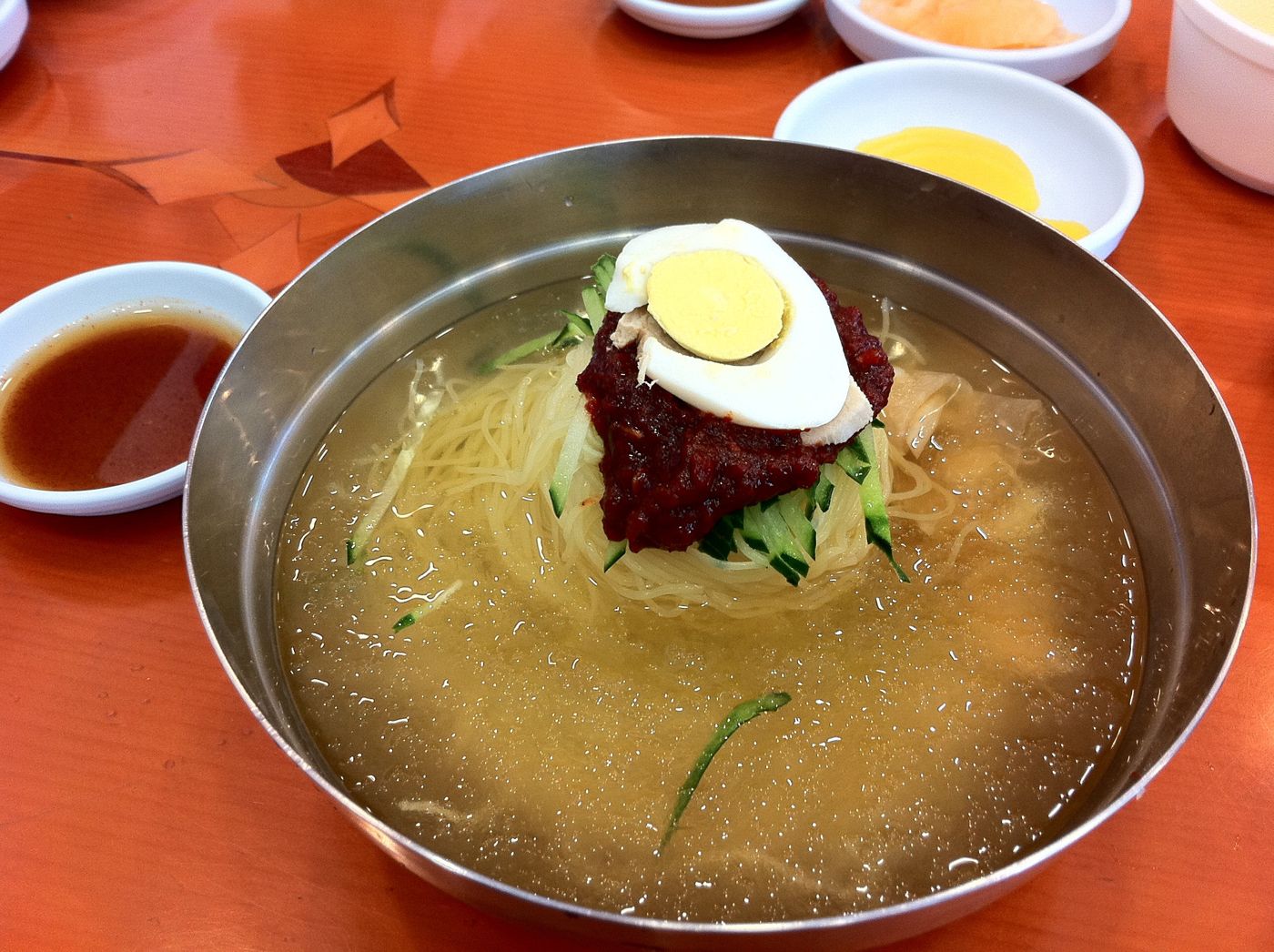 Milmyeon (Busan Wheat Cold Noodles)밀면Chewy wheat-and-starch noodles in an icy, sweet-sour beef broth or tossed in chili paste — Busan's refugee-era answer to northern naengmyeon.
- Miyeok Muchim미역무침Rehydrated wakame seaweed and cucumber in a light sweet-and-sour soy dressing — cool, slippery and refreshing, especially in summer.
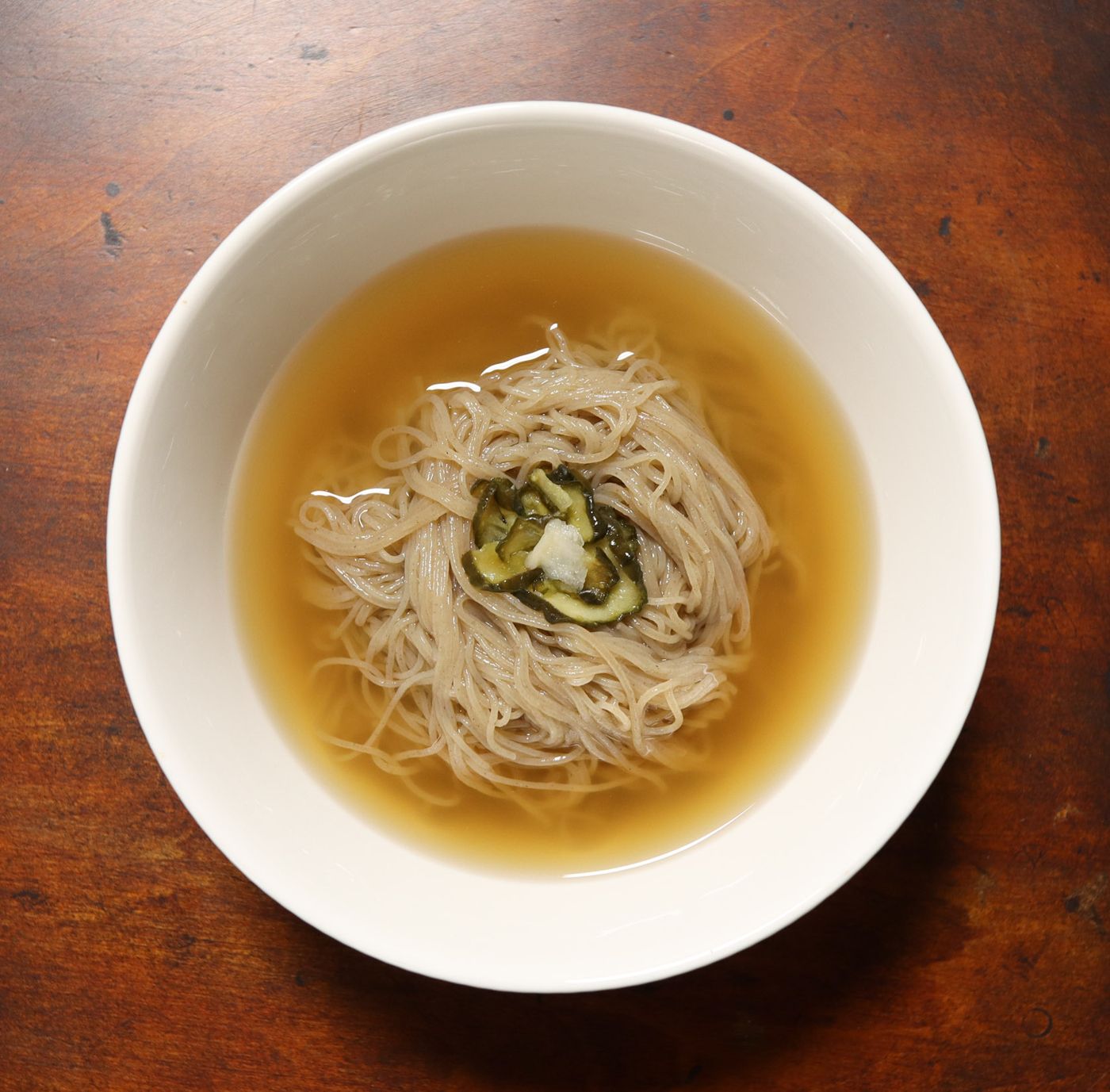 Mul-naengmyeon (Cold Buckwheat Noodles in Broth)물냉면Buckwheat noodles in an icy mix of beef broth and dongchimi, topped with sliced beef, pear, radish and egg — a Pyongyang winter dish now loved in summer.
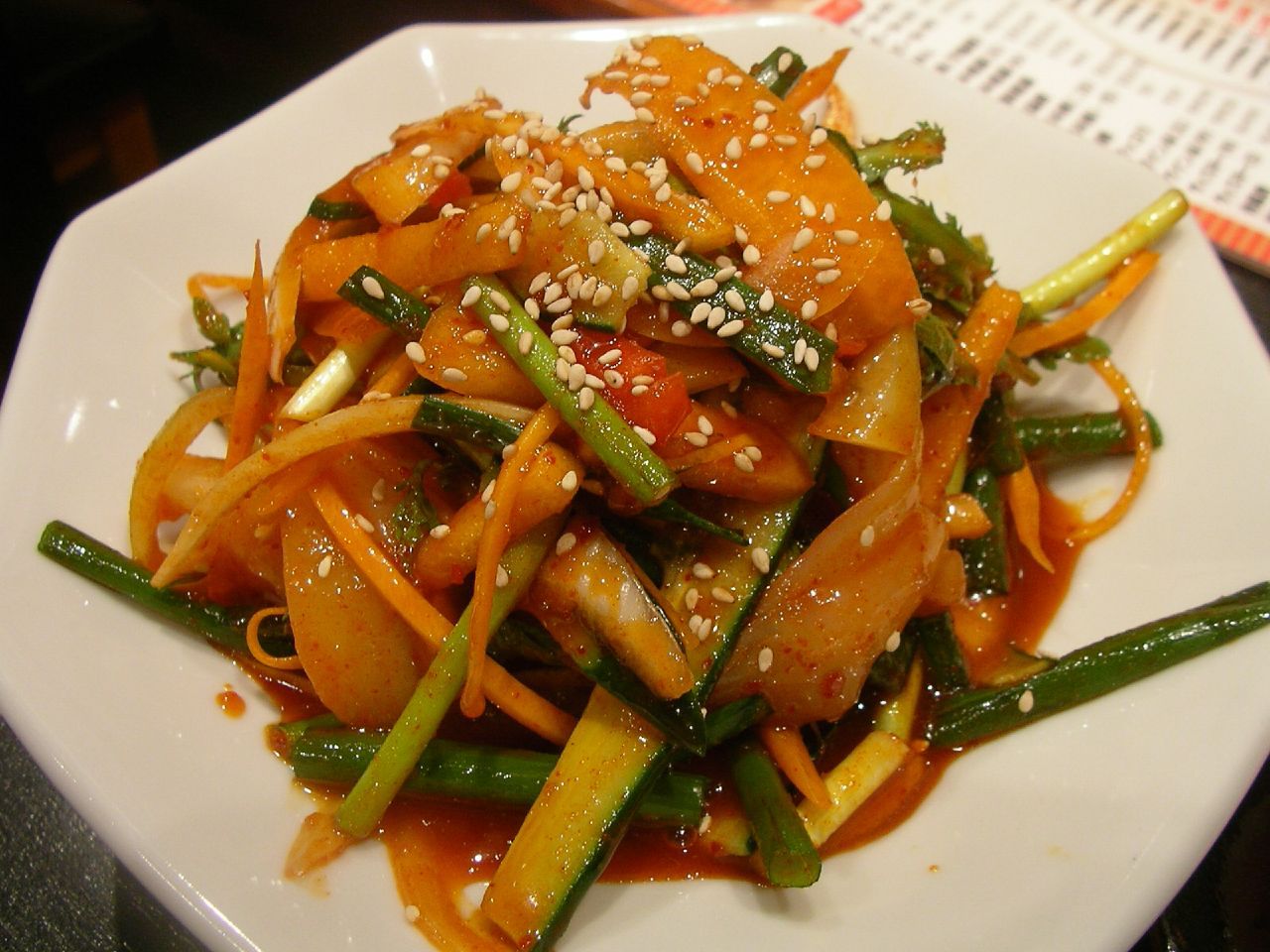 Oi Muchim오이무침Thin-sliced cucumber, briefly salted and tossed with chili flakes, vinegar and garlic — a cool, crunchy quick salad made in minutes, especially in summer.
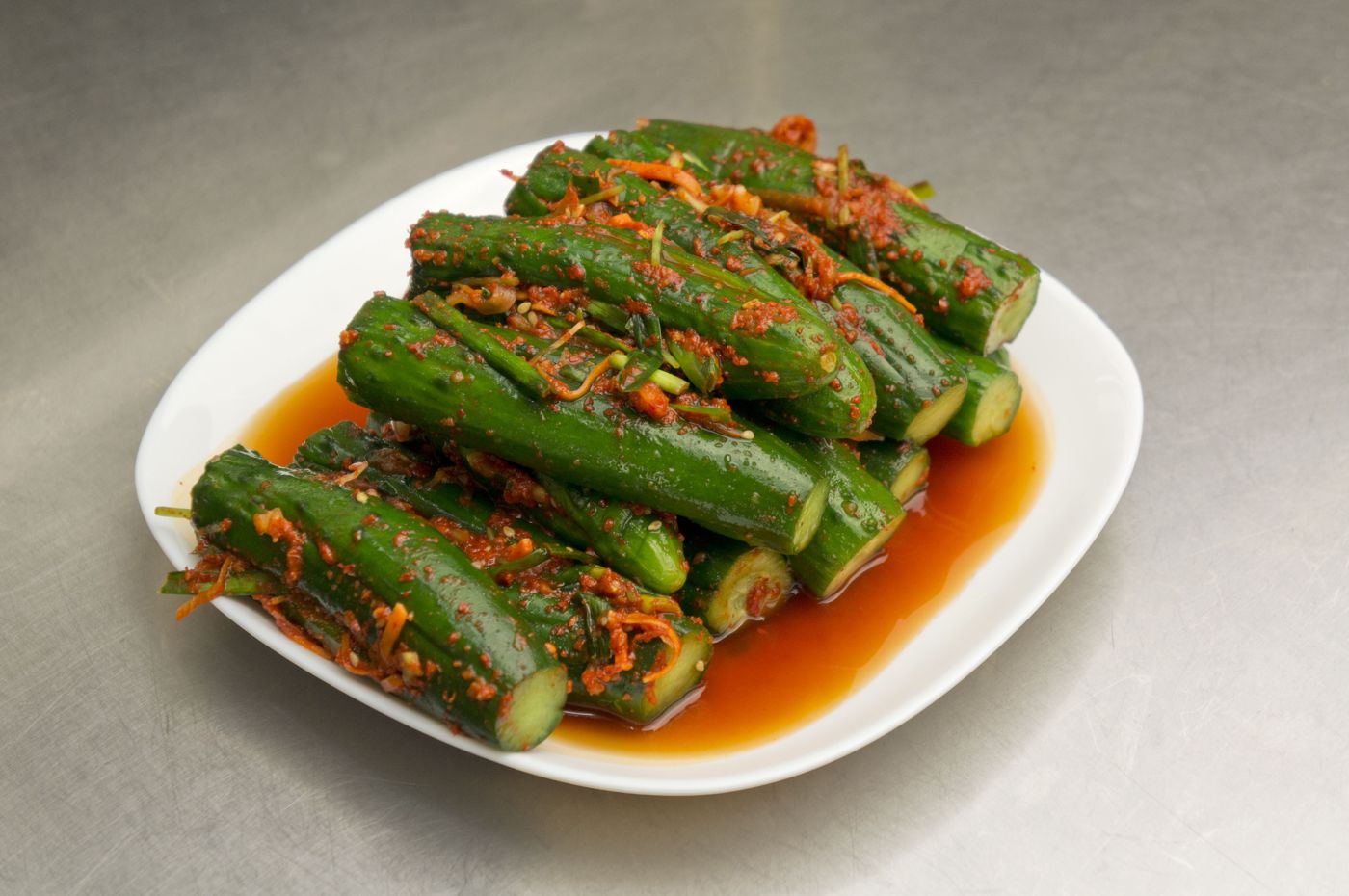 Stuffed Cucumber Kimchi오이소박이Cucumbers slit and stuffed with garlic chives, chili and garlic — a crisp, refreshing summer kimchi meant to be eaten young.
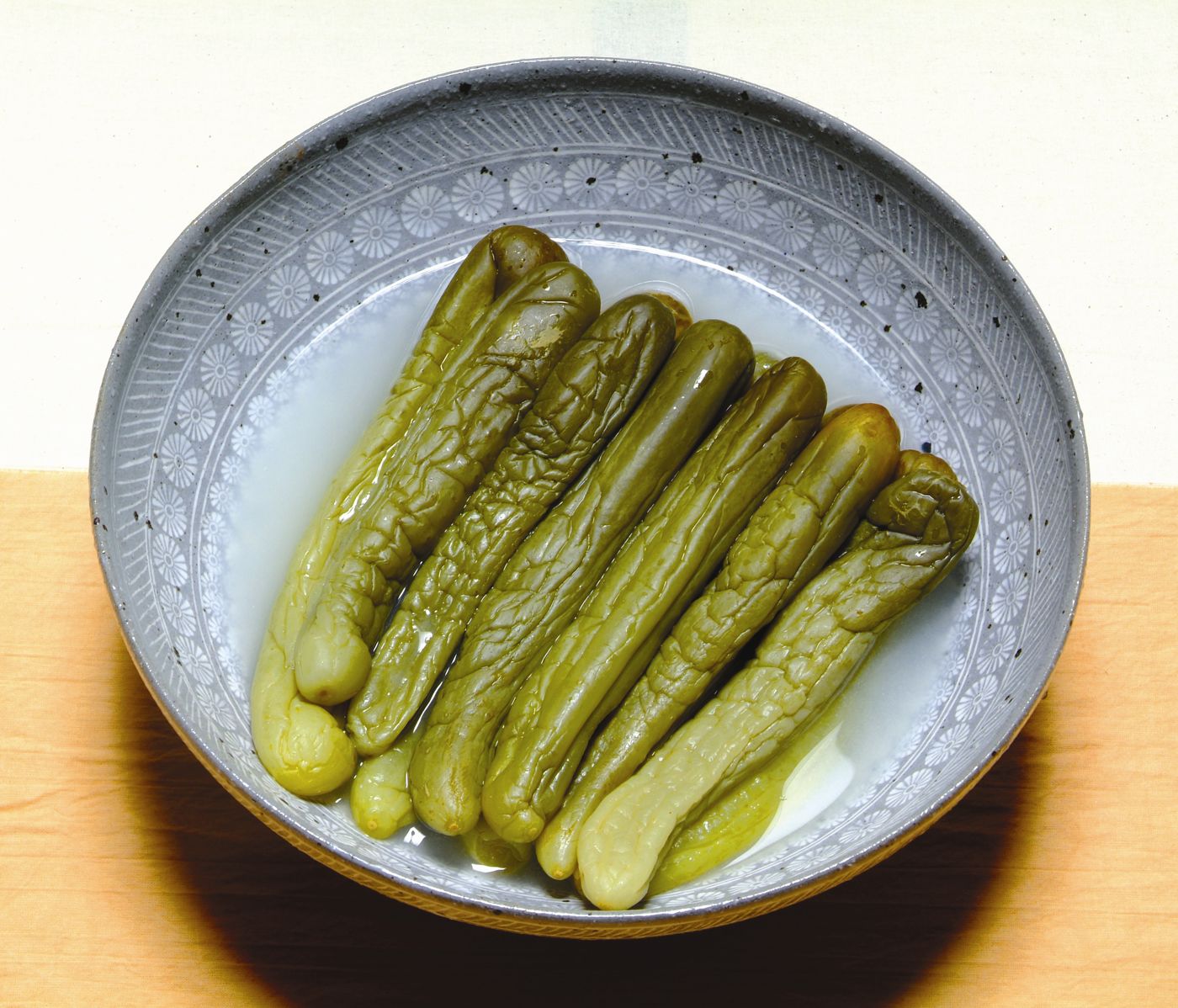 Salt-Brined Pickled Cucumbers오이지Whole cucumbers cured in a strong salt brine until golden and wrinkled — a summer staple that is soaked, sliced and served in cold water or dressed as oiji-muchim.
- Oiji Muchim (Seasoned Pickled Cucumber)오이지무침Salt-brined oiji cucumbers sliced thin, soaked, squeezed hard and dressed with chili, garlic and sesame — a crunchy, tangy summer banchan.
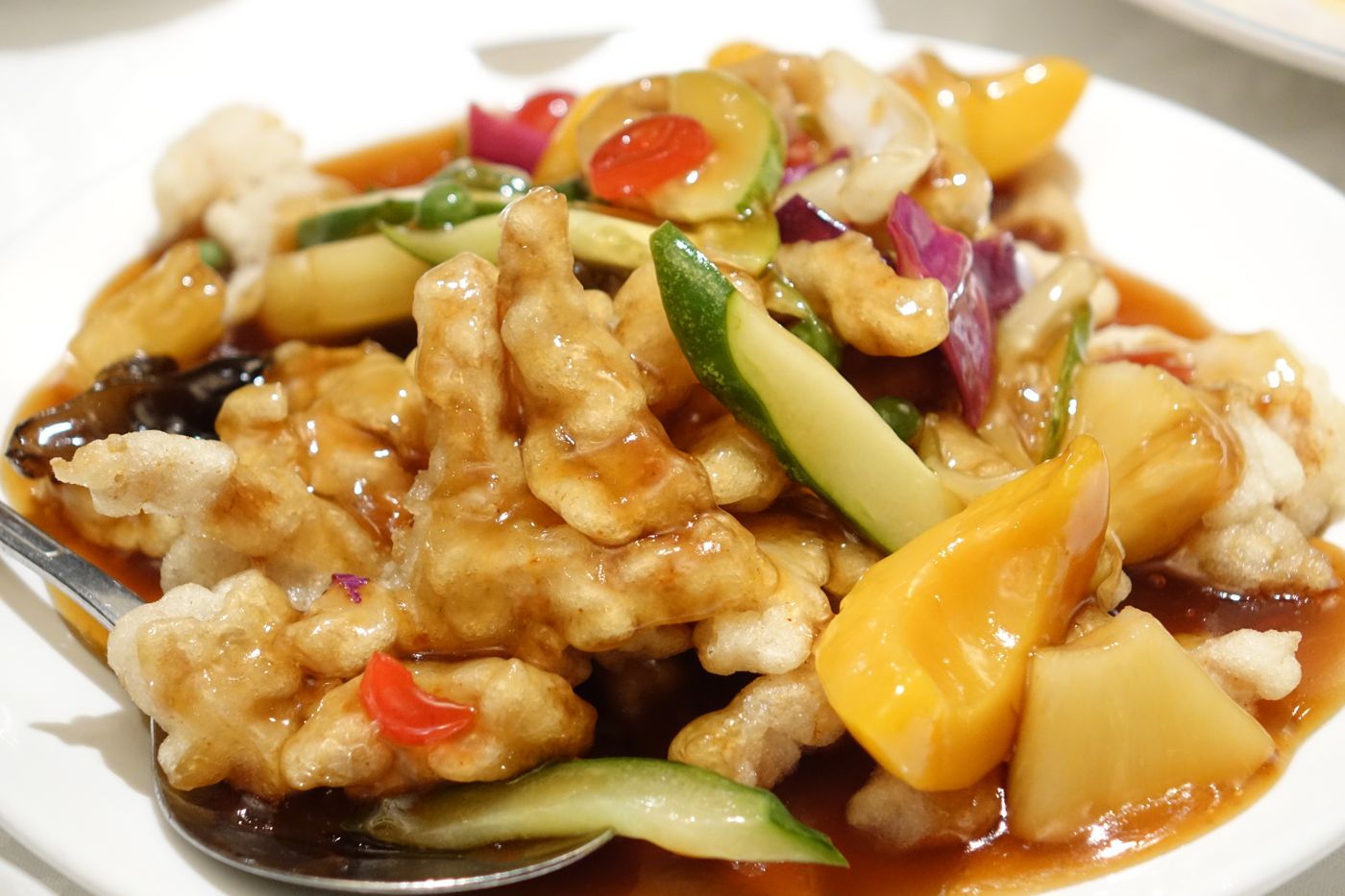 Tangsuyuk (Sweet and Sour Pork)탕수육Strips of pork in a crisp starch batter, fried twice and dressed with a glossy sweet-and-sour vegetable sauce — the shared platter of the Korean-Chinese restaurant.