Techniques
Making Gejang: Marinated Raw Crab
게장 담그기
Live crabs steeped in soy sauce that is boiled and cooled again and again, or cut and dressed in chili: how gejang is made, its Joseon roots, and why raw crab calls for caution.
Gejang is raw crab preserved in a marinade, eaten as a banchan and famous for the rich, custardy meat and roe inside the shell. The Encyclopedia of Korean Culture defines it as crab over which boiled-down soy sauce is poured and left to mature, and gives gejeot, crab jeotgal, as another name. Today there are two main styles: ganjang-gejang, marinated in soy sauce, and yangnyeom-gejang, dressed in a spicy chili seasoning. Both are eaten without cooking, and that shapes everything about how they should be made.
Old methods
Gejang appears in the Sallim gyeongje, Gyuhap chongseo, Jubangmun and Siuijeonseo, which the encyclopedia takes as evidence that it was part of Korean eating by the 1600s. Several methods are recorded, each named for its liquid: crabs packed in rice-wine lees with salt, vinegar and wine; in wine; in boiled brine; and in soy sauce. The Sallim gyeongje notes that ordinary gejeot changed taste if kept long, but the lees method lasted until the next spring. The encyclopedia's jeotgal entry quotes a soy version scaled for a hundred crabs, with soy sauce, black pepper and a large measure of wine. The Jubangmun describes a "medicinal" crab steeped in warm oil-soy with pepper, ginger and garlic and eaten after seven days.
The crab in most of these recipes was the freshwater mitten crab, chamge. The encyclopedia's entry on that species calls it the most famous edible crab in Korea's past and notes that the crab in the Gyuhap chongseo almost always seems to mean chamge. In Gyeongsang, the gejang entry adds, families made chamge-jang every autumn as a banchan for the following summer, prizing the roe-filled females caught in the rice paddies at harvest time.
Soy-marinated crab: the classic method
The encyclopedia's method starts with an absolute rule: the crabs must be alive. They are soaked in water to purge sand and grit, then packed into a jar. A mixture of dark, aged soy sauce and a lighter, slightly saltier soy sauce is poured over, about ten cups for fifty crabs, with garlic and whole dried chilies. After three days the soy is drained off, boiled, cooled completely and poured back. This is repeated three or four times. The Siuijeonseo gives the same rhythm: drain, boil, cool and return the soy every three days. The Gyuhap chongseo adds a couple of slices of beef and seeded Sichuan pepper to the jar. Each boiling concentrates the marinade and, as the old cooks knew, helps it keep.
Today the swimming crab, kkotge, is Korea's most widely used edible crab, and the encyclopedia lists gejang among its main uses. Modern home cooks build on the same boil-and-cool method, often simmering the soy with aromatics before pouring it over. See ganjang.
Spicy and regional styles
Spicy gejang has a regional ancestor. The encyclopedia describes Jeolla's beolddeok-gejang, sea crab cut into pieces while still alive (smaller ones left whole), covered with seasoning and eaten after a day or two. It is sweet and fresh but does not keep, and the name is said to come from having to eat it up beolddeok, "in a flash." Modern yangnyeom-gejang, dressed in a gochugaru-based seasoning, follows the same short-lived logic. Other local forms include Gangjin's kongge-jeot, tiny crabs ground on a millstone and seasoned with salt and chili, and Jeju's gingi-jeot. See Jeolla, Jeju and making jeotgal.
Safety: Vibrio and raw crab
Because gejang is never cooked, it carries the risks of raw seafood. Korea's Ministry of Food and Drug Safety names gejang, together with sliced raw fish and seasoned raw shellfish, among the foods behind Vibrio parahaemolyticus food poisoning, which peaks from June to October. Its advice: buy fresh, refrigerate at 5°C or below promptly, rinse thawed seafood under running tap water, use separate tools and avoid raw seafood where possible. Keep gejang refrigerated, eat spicy versions within a day or two, and treat it as a dish for healthy adults. Pregnant women, young children, older adults and anyone with liver disease or weakened immunity should skip it. See food safety at home and allergens in Korean food (crab is a shellfish allergen).
Freshwater crab and lung fluke
Freshwater crabs carry a separate and specific risk. The U.S. Centers for Disease Control and Prevention explains that the lung fluke Paragonimus infects people who eat raw or undercooked crab or crayfish, including pickled or salted crustaceans, and that P. westermani occurs in South Korea; the CDC advises cooking crabs and crayfish to at least 145°F (63°C). The Encyclopedia of Korean Culture notes that chamge is an intermediate host of the fluke and that catching or trading it was banned for that reason in 1924. A 2025 Korean study of soy-marinated freshwater crayfish found that many fluke larvae were still alive after two weeks in 10 percent salt soy sauce, and concluded that even salty, refrigerated marinating does not guarantee they are killed. Soy marinating should never be treated as a substitute for cooking freshwater crab.
Dishes using this technique
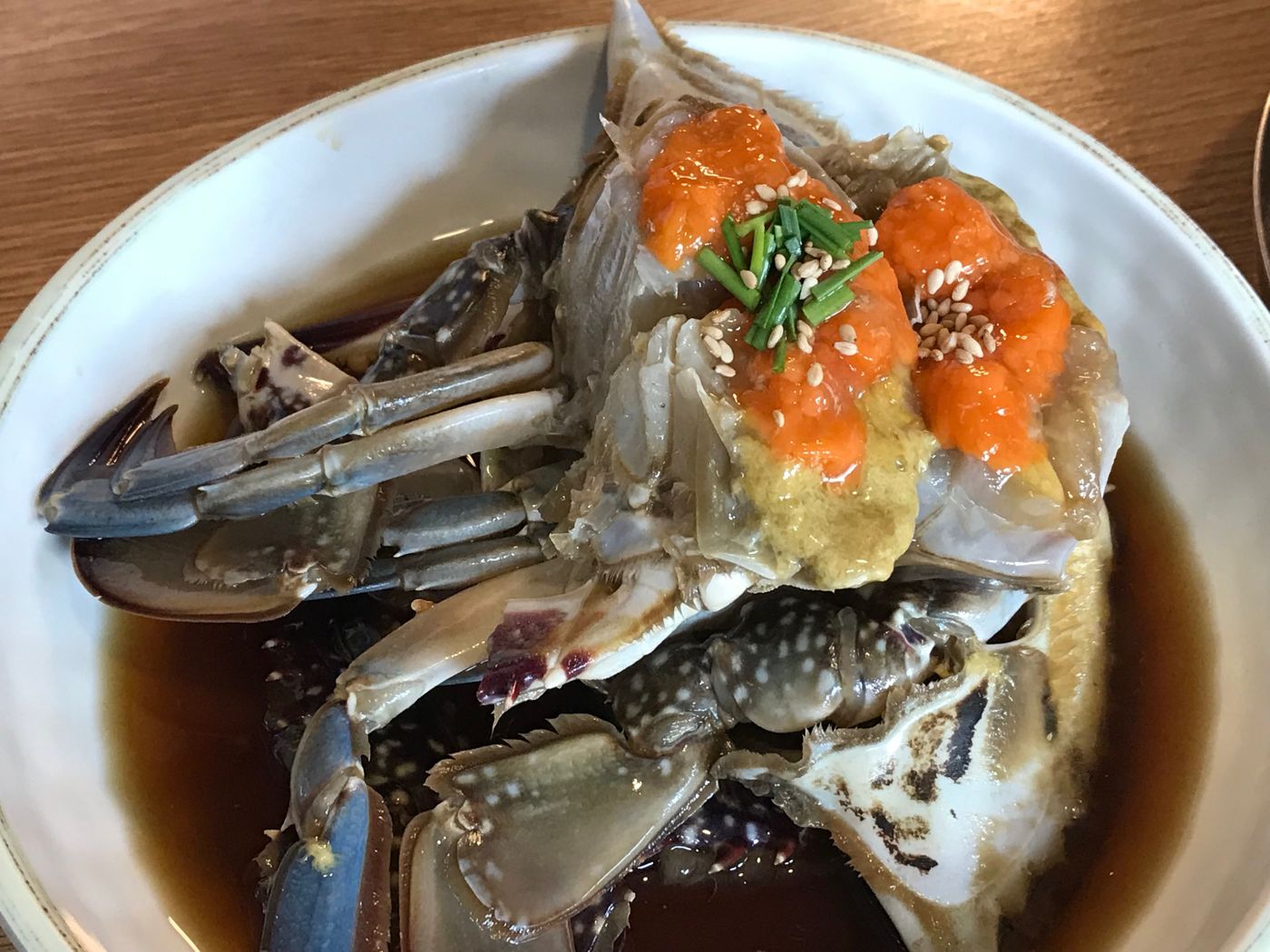 Soy-Marinated Raw Crab간장게장Raw crabs steeped in a boiled-and-cooled soy marinade until silky and savory — a centuries-old preserve, eaten by spooning rice into the shell.
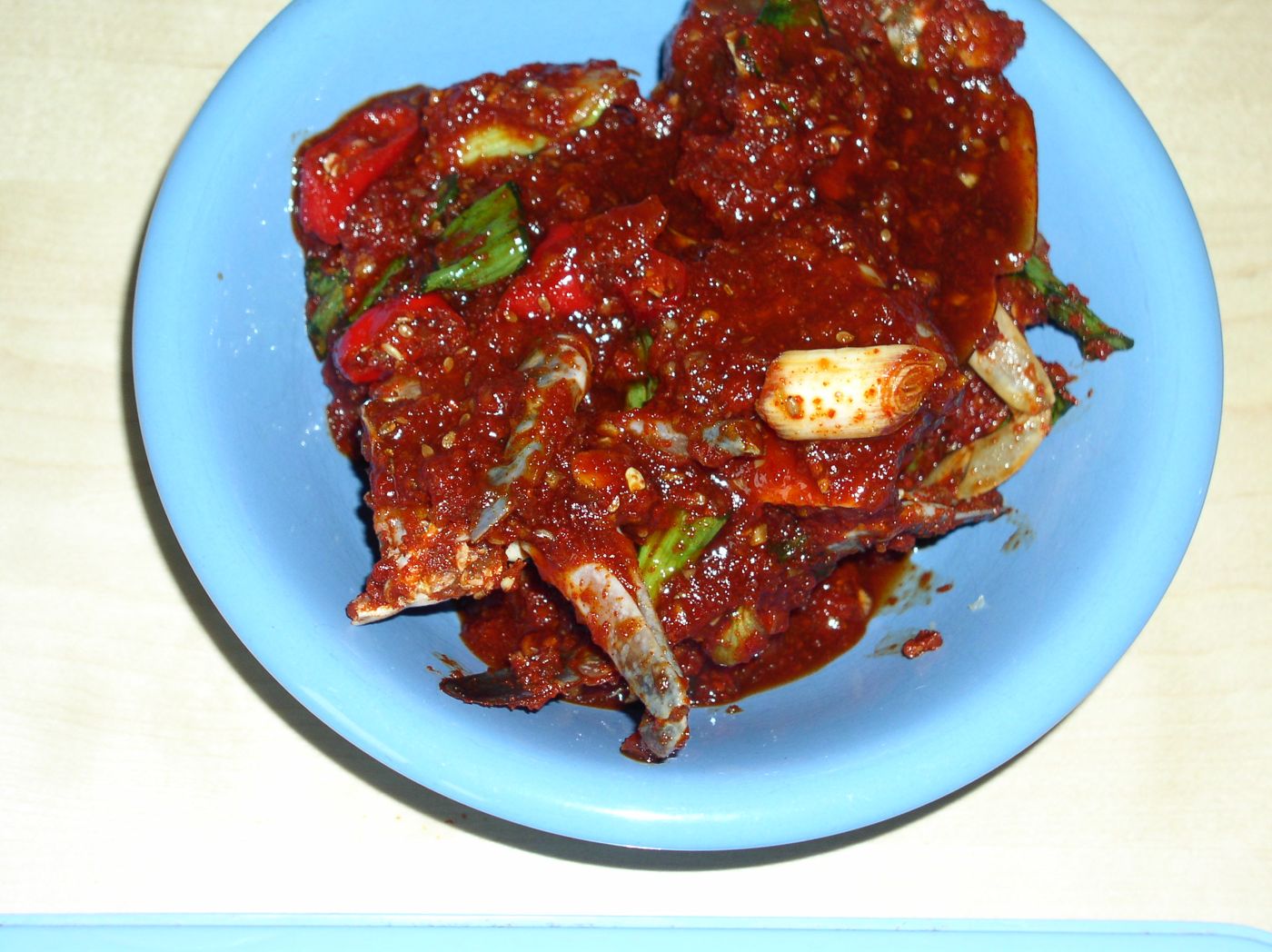 Spicy Marinated Raw Crab양념게장Raw crab pieces tossed in a glossy chili, garlic and soy dressing and eaten within days — sweet, fiery and a specialty of Yeosu's gejang restaurants.
Sources
- 01게장 (Gejang) — Encyclopedia of Korean Culture
- 02참게 (Mitten crab) — Encyclopedia of Korean Culture
- 03꽃게 (Swimming crab) — Encyclopedia of Korean Culture
- 04여름철, 4가지 식중독의 원인·예방법 — Korea.kr policy news (MFDS guidance, 2019)
- 05About Paragonimiasis — U.S. Centers for Disease Control and Prevention
- 06Survival and infectivity of Paragonimus westermani metacercariae in soy sauce-marinated crayfish — Food and Waterborne Parasitology (2025)