Ingredient
Danggeun (carrot)
당근
Romanization: danggeun
The orange root that brings color to the Korean table: julienned into japchae and gimbap, shredded into jeon batters, stir-fried with dakgalbi. Korea's sweetest winter carrots come from the volcanic fields of eastern Jeju.
Flavor
Sweet and earthy with a fresh, faintly herbal aroma; crisp and juicy raw, tender and sweeter still when cooked. Jeju winter carrots are prized for high sugar and strong fragrance.
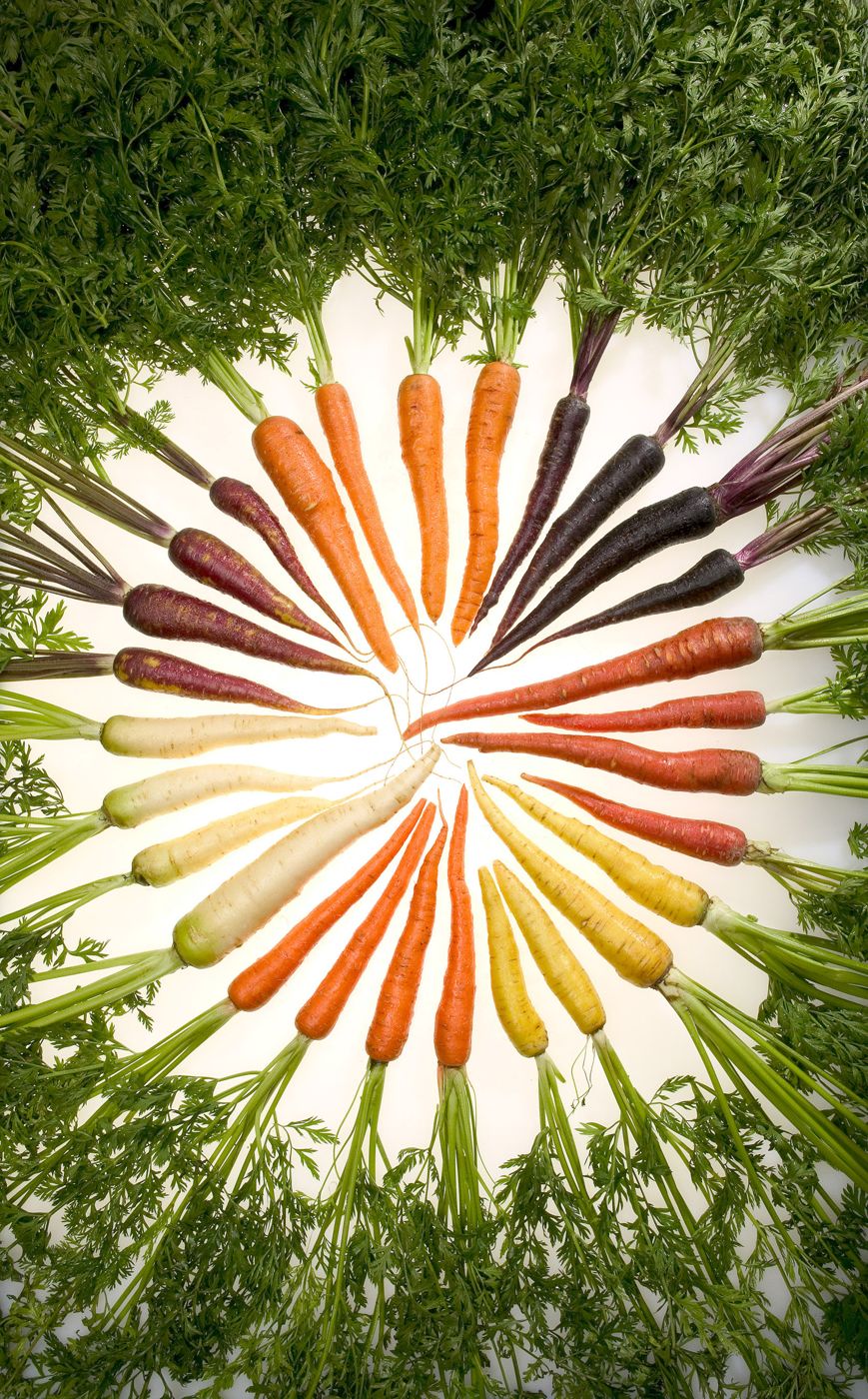 Photo: Stephen Ausmus, Public domain, via Wikimedia Commons
Origin & History
The carrot (Daucus carota subsp. sativus) is a biennial of the carrot family, native to Central Asia or Asia Minor. In Korean it is also called hongdangmu, and older texts used Sino-Korean names such as danglabok and honabok, "Tang radish" and "foreign radish." The Encyclopedia of Korean Culture suggests it began to be grown in Korea around the sixteenth century; it first appears in writing in the late-Joseon references Jaemulbo and Imwon gyeongjeji. For a long time it was thought of as horse fodder and little eaten, before it became a common raw and cooked vegetable.
Korean growers favor short and medium-length roots, the so-called three-chi and five-chi carrots. Carrots are grown in several mainland regions, but Jeju is the only place in Korea where they are harvested through the winter. Most come from Gujwa-eup on the island's northeast, where dark, free-draining volcanic ash soil and a long eight-to-nine-month growing season are credited with unusually sweet, fragrant roots. Korean press puts Jeju's share at around 60 percent of domestic production, almost all of it from Gujwa, with harvest running from about November to April and February considered the sweetest time. Imported carrots, mostly from China, account for a large part of the market.
In banchan and everyday dishes, carrot is used as much for color as for flavor. Thin matchsticks are stir-fried for japchae and gimbap, slipped into namul platters, chopped into egg rolls and pancake batters, and cut in chunks for braises such as galbi-jjim and for Chuncheon-style dakgalbi, where it is stir-fried with cabbage, sweet potato and rice cakes.
Nutrition
| Calories | 31 kcal |
|---|---|
| Protein | 1.02 g |
| Fat | 0.13 g |
| Carbohydrates | 7.03 g |
| Fiber | 3.1 g |
| Sodium | 23 mg |
Notable forVitamin A (as beta-carotene) · Potassium · Dietary fiber · Vitamin K
Korean Food Composition Table entry "Carrot (Danggeun), Root, Raw" (당근, 뿌리, 생것): also 5,516 µg beta-carotene (460 µg RAE vitamin A), 299 mg potassium, 14.46 µg vitamin K and 0.68 mg vitamin E per 100 g. Actual values vary with ingredients, portion size and preparation.
Health Benefits
- Beta-carotene: Carrots are one of the richest common sources of beta-carotene, which the body converts to vitamin A; per the Korean Food Composition Table, 100 g of raw carrot supplies about 460 µg RAE.
- Fiber and potassium: Carrots also provide dietary fiber and potassium for very few calories.
- Harmless color change: MedlinePlus notes that eating large amounts of beta-carotene can turn the skin yellow-orange; this is not dangerous and fades once intake drops.
- Cutting and vitamin C: Korean references note that carrots contain an enzyme that readily breaks down vitamin C once they are grated or cut, so prepare them shortly before use.
Informational, not medical advice. Talk to a qualified professional about your own health and diet.
Dishes with Danggeun (carrot)
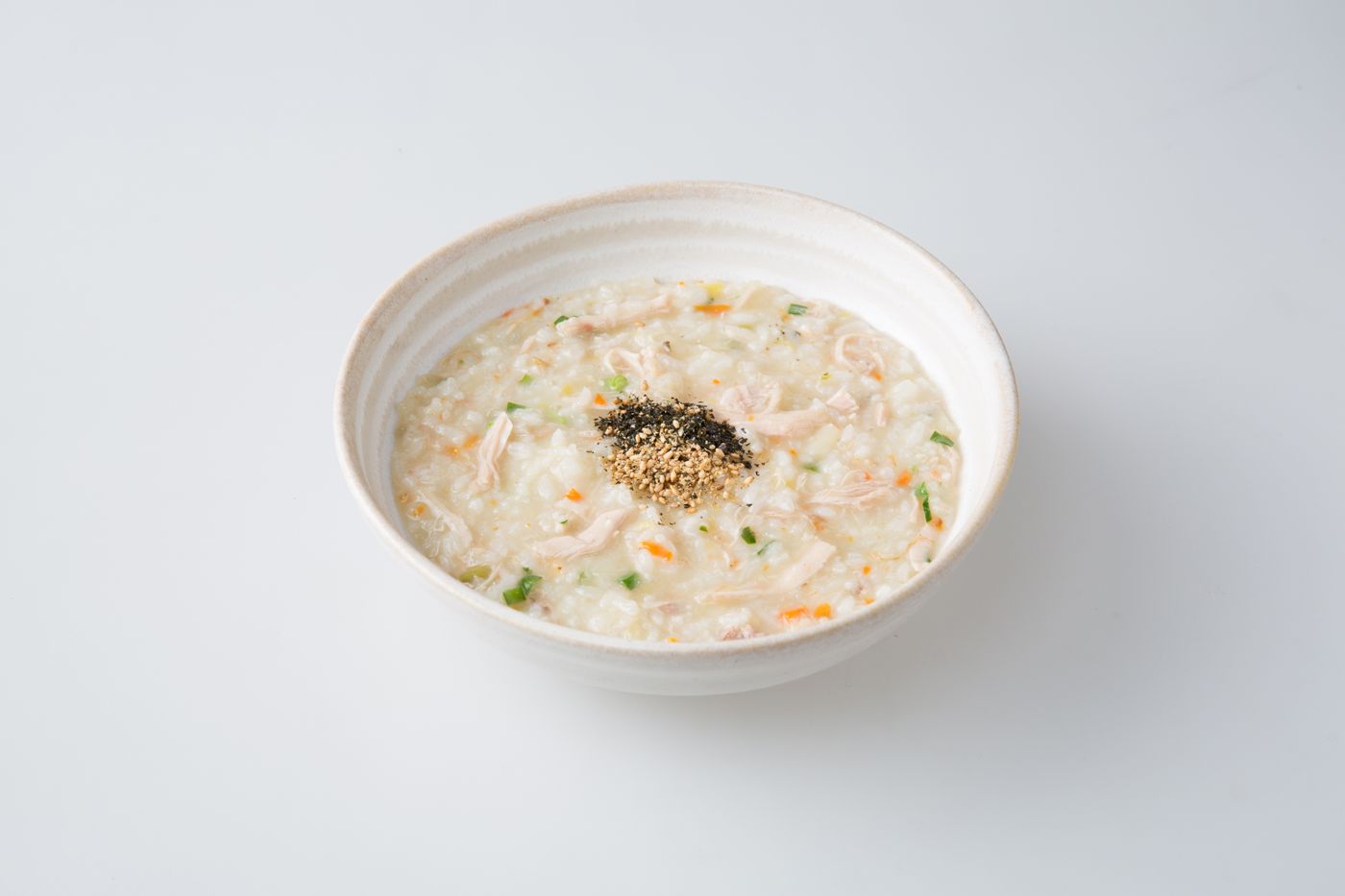 Dakjuk (Chicken Rice Porridge)닭죽Soft rice simmered in a clear chicken broth with shredded meat — a gentle, easy-to-digest porridge long served as summer restorative and sick-day food.
- Gamja Salad (Korean Potato Salad)감자샐러드Mashed boiled potato folded with egg, cucumber, carrot and mayonnaise — a soft, mildly sweet modern banchan served alongside rice, kimchi and namul.
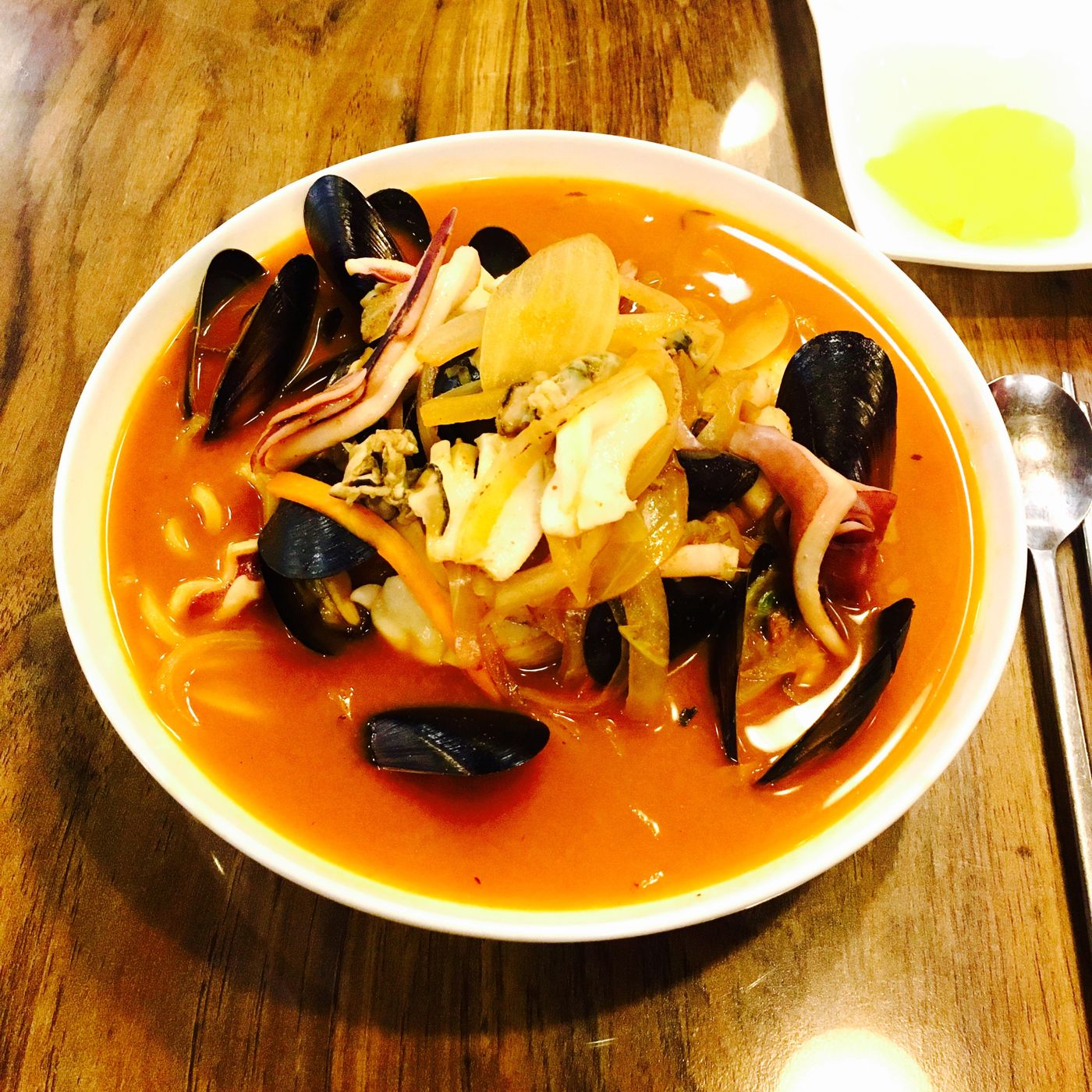 Jjamppong (Spicy Seafood Noodle Soup)짬뽕Thick wheat noodles in a fiery red broth of stir-fried pork, squid, shellfish and vegetables — the Korean-Chinese restaurant's spicy counterpart to jajangmyeon.
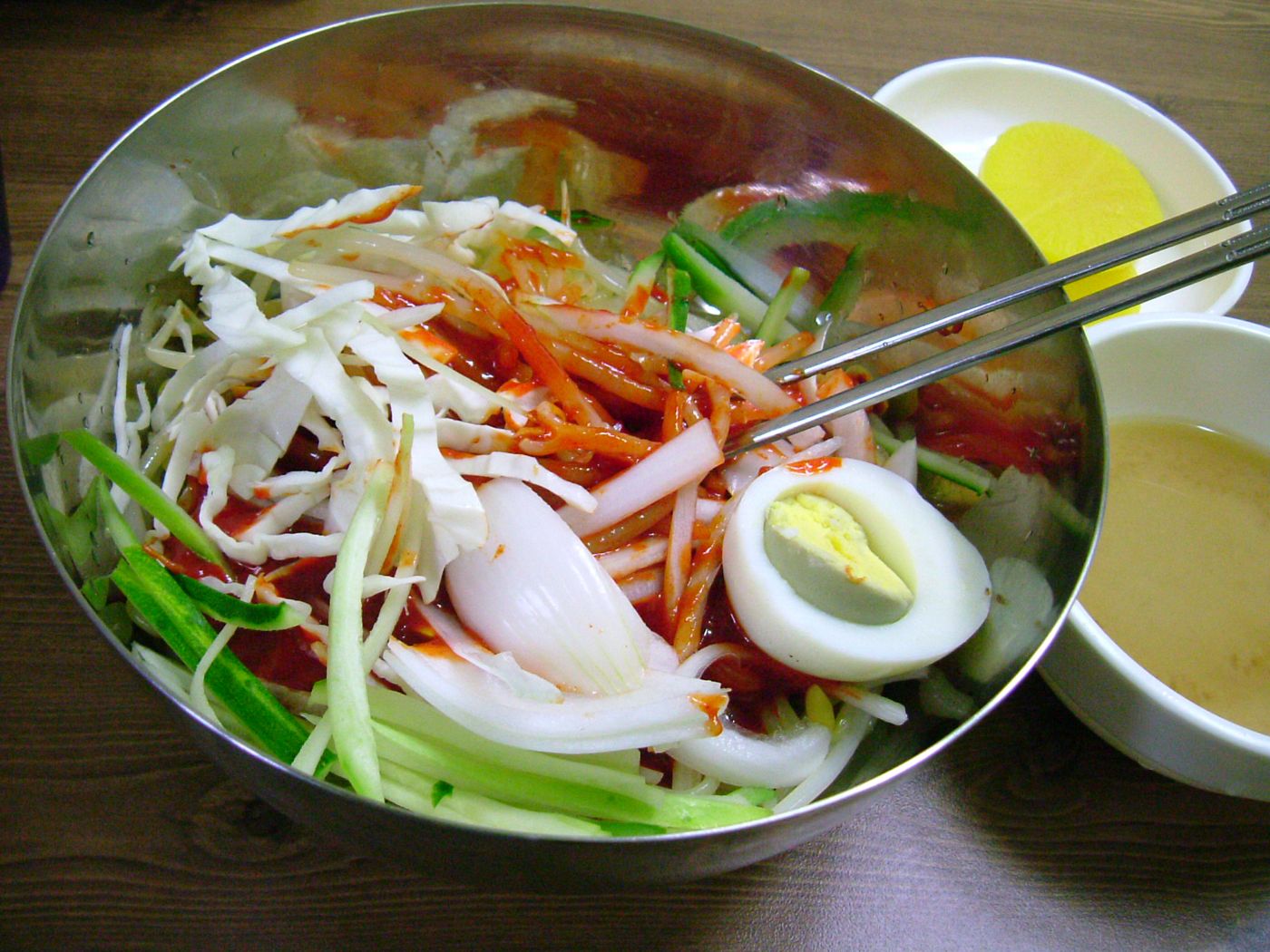 Jjolmyeon (Chewy Spicy Noodles)쫄면Thick, rubbery-chewy wheat noodles tossed cold in a sweet-sour gochujang sauce with cabbage, sprouts and egg — a snack-bar classic invented in 1970s Incheon.
- Kkaennip Jjim (Steamed Seasoned Perilla Leaves)깻잎찜Perilla leaves layered with a garlicky soy-chili sauce and steamed until soft — a fragrant banchan for wrapping around spoonfuls of rice.
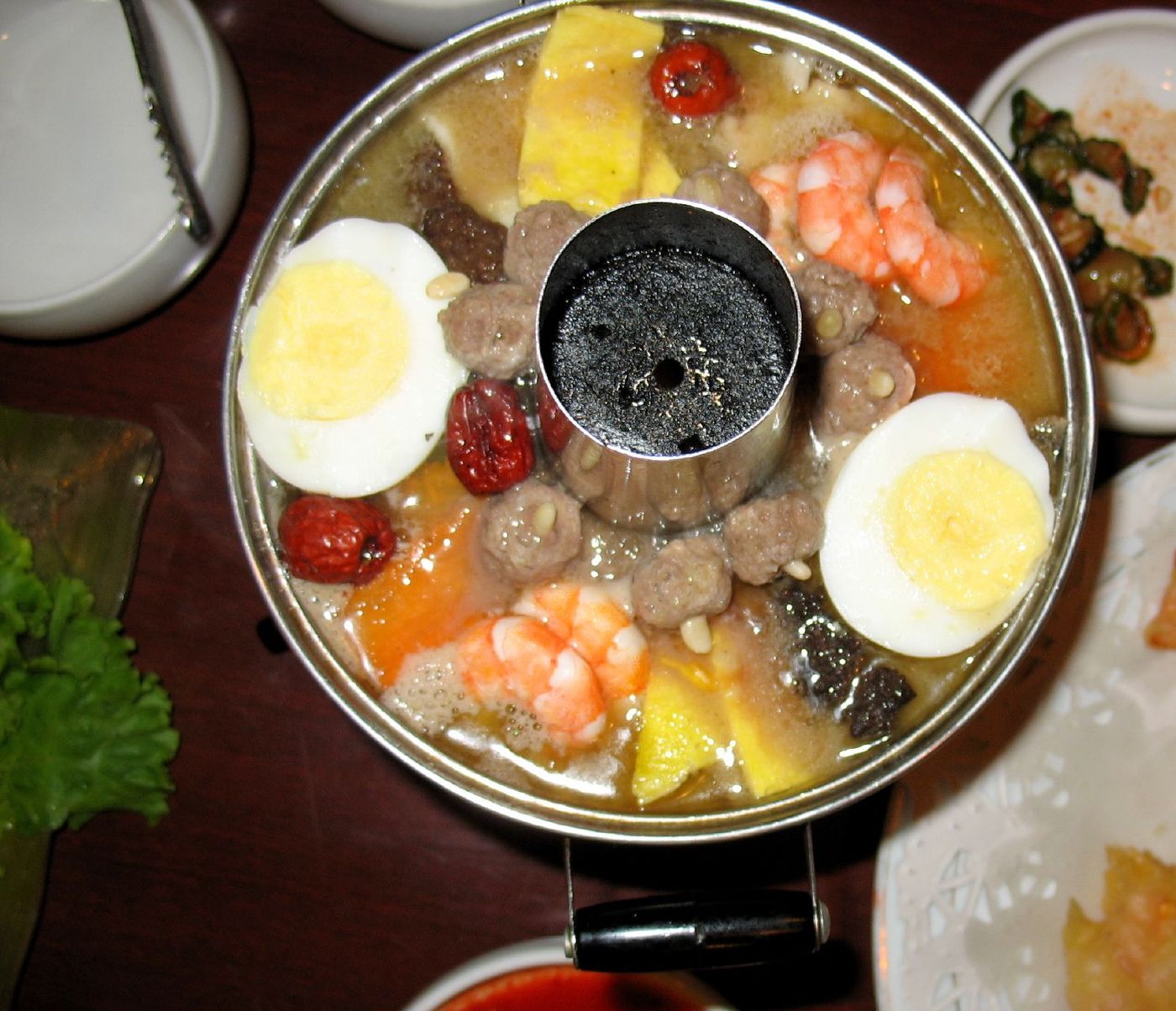 Sinseollo (Royal Hot Pot)신선로A court banquet dish of colorful beef, fish, egg, mushrooms and vegetables arranged in a chimney-centered brazier pot, with hot broth poured over and kept warm at the table.
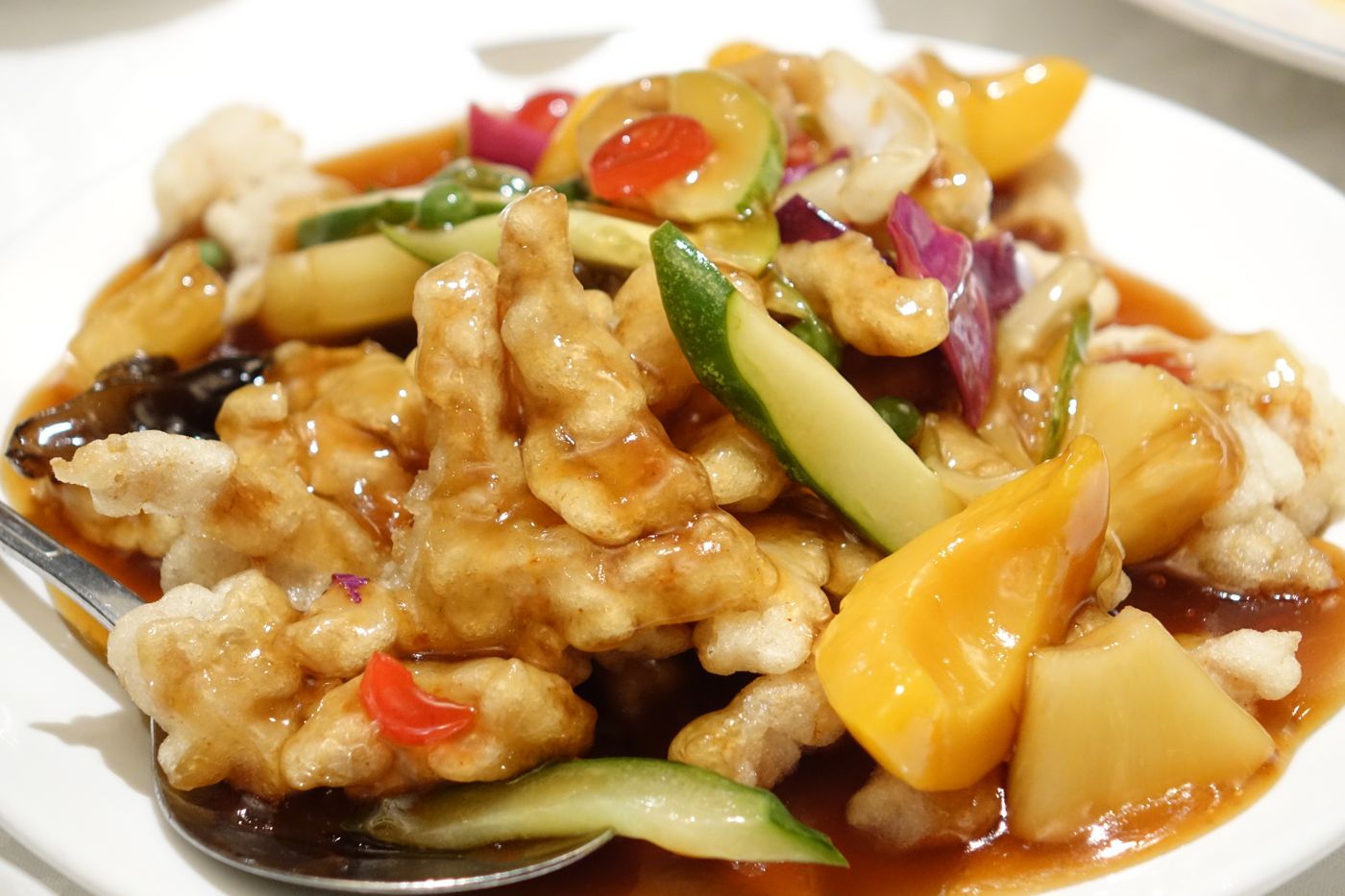 Tangsuyuk (Sweet and Sour Pork)탕수육Strips of pork in a crisp starch batter, fried twice and dressed with a glossy sweet-and-sour vegetable sauce — the shared platter of the Korean-Chinese restaurant.
- Green Cabbage Kimchi양배추김치Crisp, quick kimchi of round green cabbage — once South Korea's stand-in when napa ran short, and still an everyday summer kimchi in North Korea.