Techniques
Twigim: Korean Deep-Frying
튀김
Twigak and bugak from temple kitchens, gangjeong for feasts, battered twigim from the snack stall: how Korea came late to deep-frying, and how to fry safely at home.
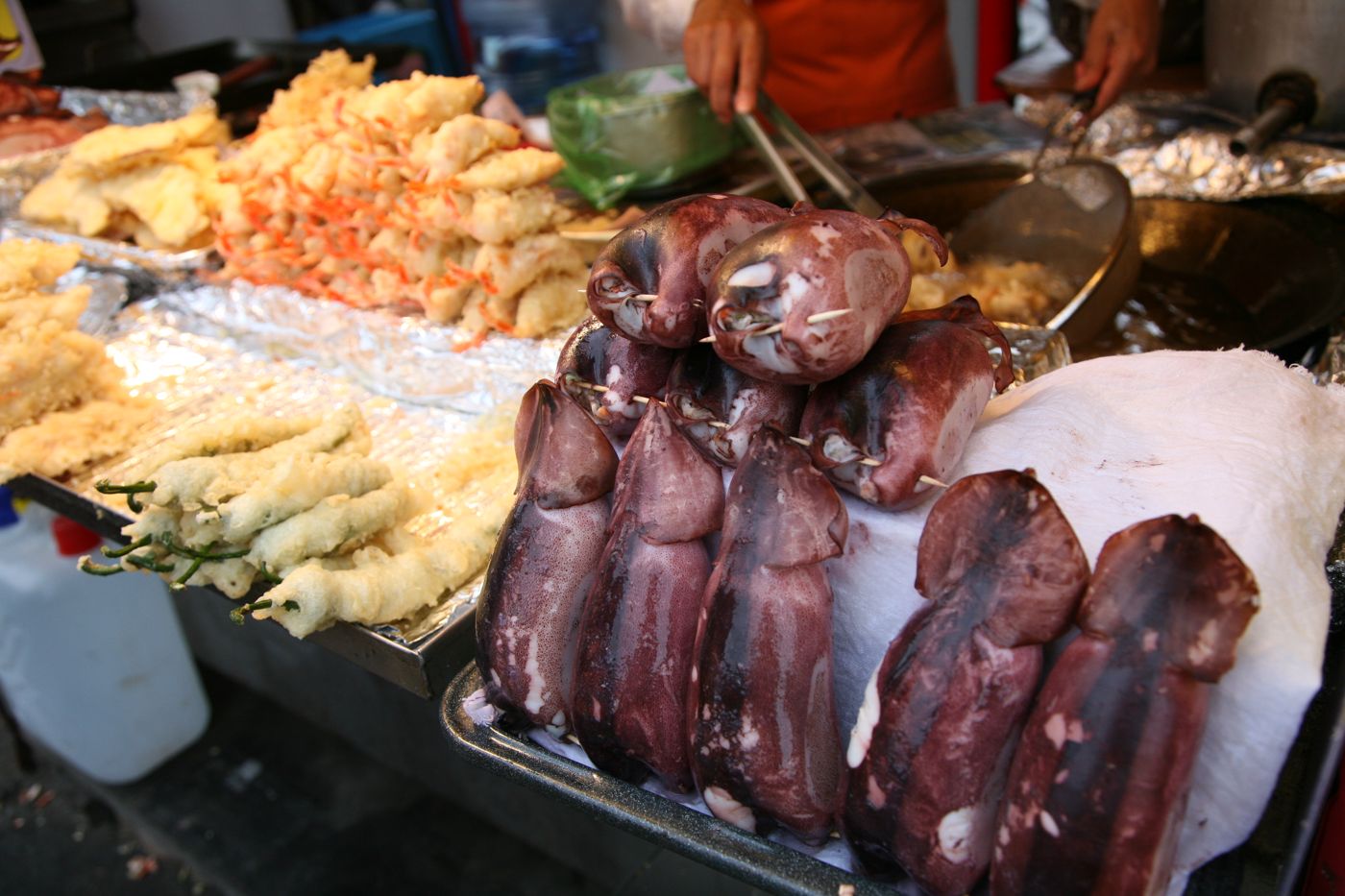 Photo: Junho Jung at Flickr from South Korea, CC BY-SA 3.0, via Wikimedia Commons
Twigim (튀김) is less a single dish than a method: food cooked by floating it in hot oil. The Encyclopedia of Korean Folk Culture points out that the word only names a dish when attached to an ingredient, as in squid twigim or potato twigim, and that most twigim are dipped first in a thin batter (twigim-ot) of wheat flour, frying mix, glutinous rice flour or starch. For the everyday table, deep-frying is a newcomer. Korean cooks long preferred to pan-fry with a film of oil, the method behind jeon.
Why Korea fried so little
Oil was precious. The folk encyclopedia notes that Joseon-era texts have a word for pan-frying, jeon (煎), but none for deep-frying, and that dishes using plenty of oil, such as bugak, twigak, yakgwa and yugwa, were special-occasion foods. Animal fat was scarce while meat itself was a luxury, and pressing enough sesame or perilla oil was hard work (sesame and perilla oils). The Encyclopedia of Korean Culture likewise describes Korea's frying repertoire as narrow: confections like yakgwa and gangjeong, and the crisp side dishes bugak and twigak.
Buddhism shaped what frying there was. The encyclopedia's entry on twigak calls deep-frying a technique much used in monasteries, where twigak is still regarded as a signature dish, and suggests that monks, barred from many foods, developed oil-rich cooking to compensate (temple food).
Twigak and bugak: frying dried things
The two oldest savory fried banchan both start with something dry.
- Twigak (튀각): thick, stone-free dashima cut to size and fried, with no coating, until it puffs and shatters. The encyclopedia says a soggy piece counts as a failure, and that cooks sometimes tie kelp into bows around a peppercorn or pine nut before frying.
- Bugak (부각): leaves or vegetables brushed with glutinous rice paste, dried, then fried as needed in perilla or soybean oil, so the paste puffs into a crisp, nutty shell. The encyclopedia lists perilla leaves and seed clusters, chrysanthemum and burdock leaves, green chilies, potato and gim among the bases, and notes that grasshoppers were used in Jeolla. Songgwangsa temple's potato bugak is sliced thin, blanched in salt water and sun-dried before frying. See gim bugak.
Because both are dried first, they keep. The practical rule from the encyclopedia applies to both: store the dried pieces sealed against moisture, and fry just before serving.
Gangjeong: frying for feasts
Gangjeong (강정) belongs to the world of hangwa, the traditional confections. The Encyclopedia of Korean Culture describes a dough of fine glutinous rice flour mixed with rice wine and a little honey, steamed, beaten to work in air, cut into small bars and dried thoroughly. The bars are soaked in wine overnight, briefly dried, then fried so they swell hollow; frying twice, it says, leaves no hard core. The puffed pieces are coated in syrup made from melted white yeot and honey and rolled in sesame, pine nuts, cinnamon or puffed rice. A crisp, hollow gangjeong is the ideal, hence the Korean idiom sok-bin gangjeong, "a gangjeong empty inside," for something impressive on the outside only. Gangjeong were essential on ceremonial and wedding tables. See making yeot and jocheong and yakgwa.
The name later moved to the street. The folk encyclopedia explains that dakgangjeong, fried chicken glazed in syrup, borrowed the confection's logic: a coat of sticky syrup keeps fried food crisp even after it cools. The same idea runs through dubu-gangjeong.
Twigim goes mainstream
The folk encyclopedia traces modern twigim to the twentieth century. Cookbooks of the 1910s and 1920s describe denbura (from Japanese tempura): food coated in flour and egg and "floated" in oil. The Korean word twigim replaced it from 1949, during a campaign to purge Japanese terms from shop signs. Oil became plentiful with American aid after the Korean War and, from 1975, mass-produced soybean oil. Twigim then became snack-stall food, eaten above all with tteokbokki, and the stage was set for Korean fried chicken and tangsuyuk. See also Korean street food.
Frying safely at home
A pot of hot oil deserves full attention. The U.S. Fire Administration advises cooks to stay with the pan and turn the burner off before leaving the kitchen, to switch it off if the oil starts to smoke, to turn pot handles toward the back of the stove, and to keep a lid or baking sheet within reach: sliding it over a pan that catches fire smothers the flames. Never use water. Florida Atlantic University's fire-safety guidance warns that spraying water on burning grease, or carrying the pan to a sink, makes the fire flare and spread. Use a deep, heavy pot filled no more than partway, lower food in gently, and let used oil cool completely before straining or discarding it. For the health side of fried foods, see the balanced Korean meal.
Dishes using this technique
- Dubu Gangjeong (Crispy Glazed Tofu)두부강정Cubes of tofu coated in starch, fried until crisp and tossed in a sticky soy-gochujang glaze — a sweet, savory banchan built on the fried-chicken gangjeong idea.
- Gim Bugak (Fried Laver Chips)김부각Sheets of laver pasted together with seasoned glutinous rice, dried, then fried until they puff into airy, crackling chips — a keeping banchan and a famous Namwon specialty.
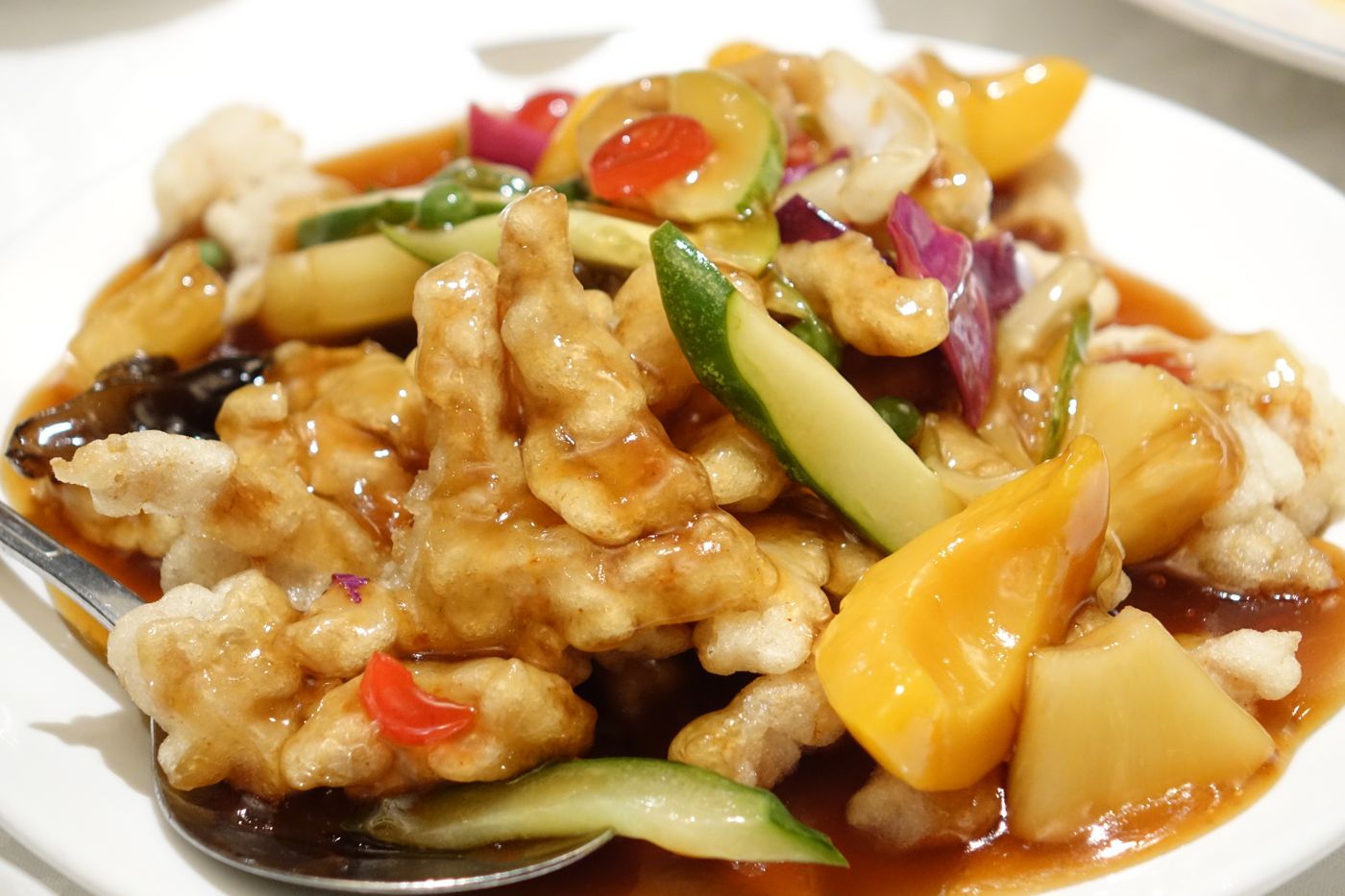 Tangsuyuk (Sweet and Sour Pork)탕수육Strips of pork in a crisp starch batter, fried twice and dressed with a glossy sweet-and-sour vegetable sauce — the shared platter of the Korean-Chinese restaurant.
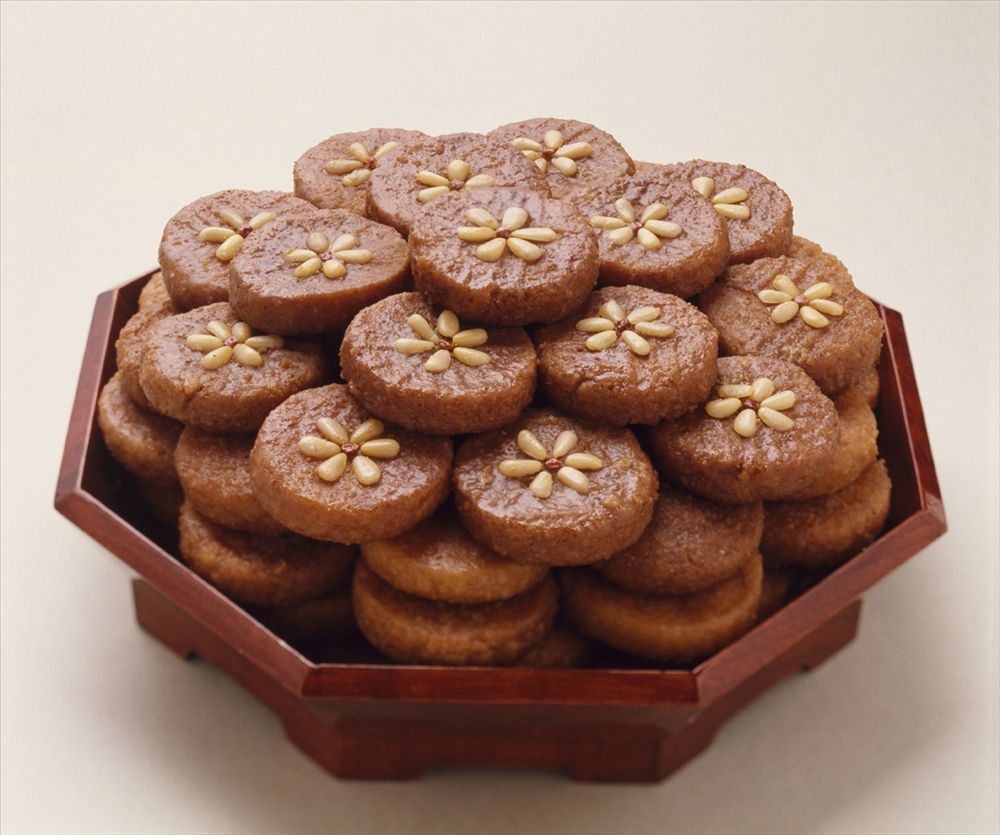 Yakgwa (Honey Cookies)약과Wheat dough rubbed with sesame oil and bound with honey, pressed into a carved mold, slow-fried and soaked in syrup — the best-known of Korea's honey-and-oil pastries.
Sources
- 01튀김 (Twigim) — Encyclopedia of Korean Folk Culture, National Folk Museum of Korea
- 02튀각 (Twigak) — Encyclopedia of Korean Culture
- 03부각 (Bugak) — Encyclopedia of Korean Culture
- 04강정 (Gangjeong) — Encyclopedia of Korean Culture
- 05Cooking Fire Safety — U.S. Fire Administration (FEMA)
- 06Avoiding Grease Fires — Florida Atlantic University Housing and Residential Education