Regions
Naju
나주
The old capital of southern Jeolla on the Yeongsan River, known for clear-broth Naju gomtang and for Yeongsanpo, the river port where skate from Heuksando turned pungent.
Naju lies on the Yeongsan River in South Jeolla, at the edge of one of Korea's great rice plains. The Encyclopedia of Korean Culture describes it as a mok, a major provincial seat, through the Goryeo and Joseon periods and the political, economic and cultural center of southern Jeolla; the city still calls itself moksa-gol, "the town of the magistrate." Two foods carry its name today: a clear beef soup, Naju gomtang, and the fermented skate of its old river port, Yeongsanpo. For the wider region, see Jeolla.
River and plain
The encyclopedia records two local lists that show how much the river and fields fed Naju. The "eight delicacies of fish" (eo-paljinmi) drew on the Yeongsan and its tributaries: mitten crab from the creeks, mullet, whitebait, grenadier anchovy, carp and softshell turtle, eel and pufferfish. The "eight delicacies of vegetables" (so-paljinmi) named the best local produce, including water dropwort from inside the east gate, garlic, tofu, mung bean jelly, ginger, sesame oil and young summer radish. Naju is also pear country: the city has a pear museum, and orchards in blossom are a local sight. See korean pear.
Naju gomtang
The encyclopedia notes that the soup now famous as Naju gomtang began as gukbap, rice in soup, the everyday meal of ordinary people. What sets it apart, according to reporting by the news agency Newsis, is the broth. Most gomtang is simmered from beef bones, which makes the soup milky. Naju gomtang is made mainly from meat cuts such as brisket, chuck and shank, simmered for hours, so the broth stays clear and clean-tasting. The rice is warmed by toryeom, pouring hot broth over it in the bowl and draining it several times, and the soup comes with radish kimchi and well-aged cabbage kimchi (kkakdugi, baechu-kimchi).
There is a widely told origin story. Newsis reports that during the colonial period a Japanese-owned factory in Naju canned beef for the Japanese military, and that local merchants bought the heads and other parts it discarded, boiled them in cauldrons in the market and sold the result as soup with rice. Accounts differ on the details, including the date, so treat this as local history in the telling rather than settled fact. Long-running gomtang restaurants remain a draw; Newsis describes one as four generations old. For the dish, see naju-gomtang; for its milky cousin, seolleongtang; and for technique, making guk and jjigae.
Yeongsanpo: the river port
Yeongsanpo, on the south bank of the Yeongsan, was Naju's port. The encyclopedia explains that it sat at the upper end of the river's tidal reach, deep enough for large boats, and that grain collected as tax from the Naju plain was once shipped from here around the west coast to the capital, until the tax shipments were moved to Beopseongpo in the reign of King Jungjong. It remained a trading hub, and in the early twentieth century motor boats to Mokpo and the new Honam railway made it boom. By the 1960s, as roads and rail took over and silt made the river shallow, its days as a port were over. An inland lighthouse, registered as heritage in 2004, and a quarter of rice mills, warehouses and Japanese-era houses remain.
Fermented skate
Yeongsanpo is the reason Naju is linked with hongeo, skate. The encyclopedia explains that skate caught around Heuksando fermented on the long boat journey up the river, so that by the time it reached Yeongsanpo it had the sharp, ammonia-tinged bite that connoisseurs prize; skate from Heuksando became famous as Yeongsanpo skate through the port's trade. The old wharf area is now a skate street of restaurants that ship fermented skate across the country.
The encyclopedia lists many ways to eat it: sliced raw or fermented and dipped in vinegared chili paste or mustard soy; grilled; with makgeolli as hongtak; as samhap, layered with boiled pork and cabbage kimchi; or simmered with young barley shoots and the innards in winter soup. Fermented skate tossed with minari in seasoned chili paste is hongeo-hoe-muchim. See hoe culture and anju and drinking culture.
Dishes from this region
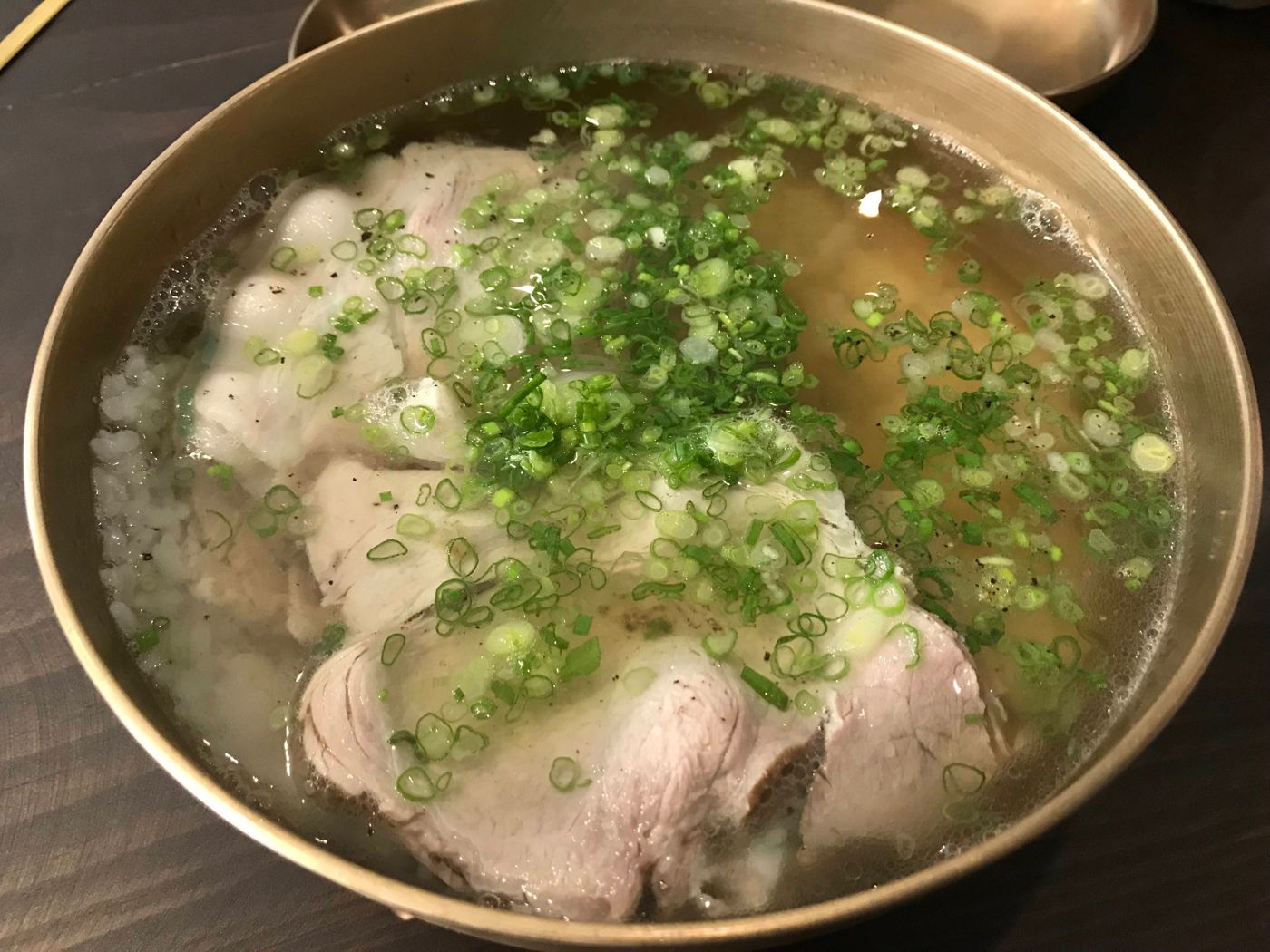 Gomtang (Beef Bone and Brisket Soup)곰탕A long-simmered beef soup, usually built on brisket, shank and offal and served over rice, with a broth that is lightly salted at the table. A pillar of the Korean gukbap tradition.
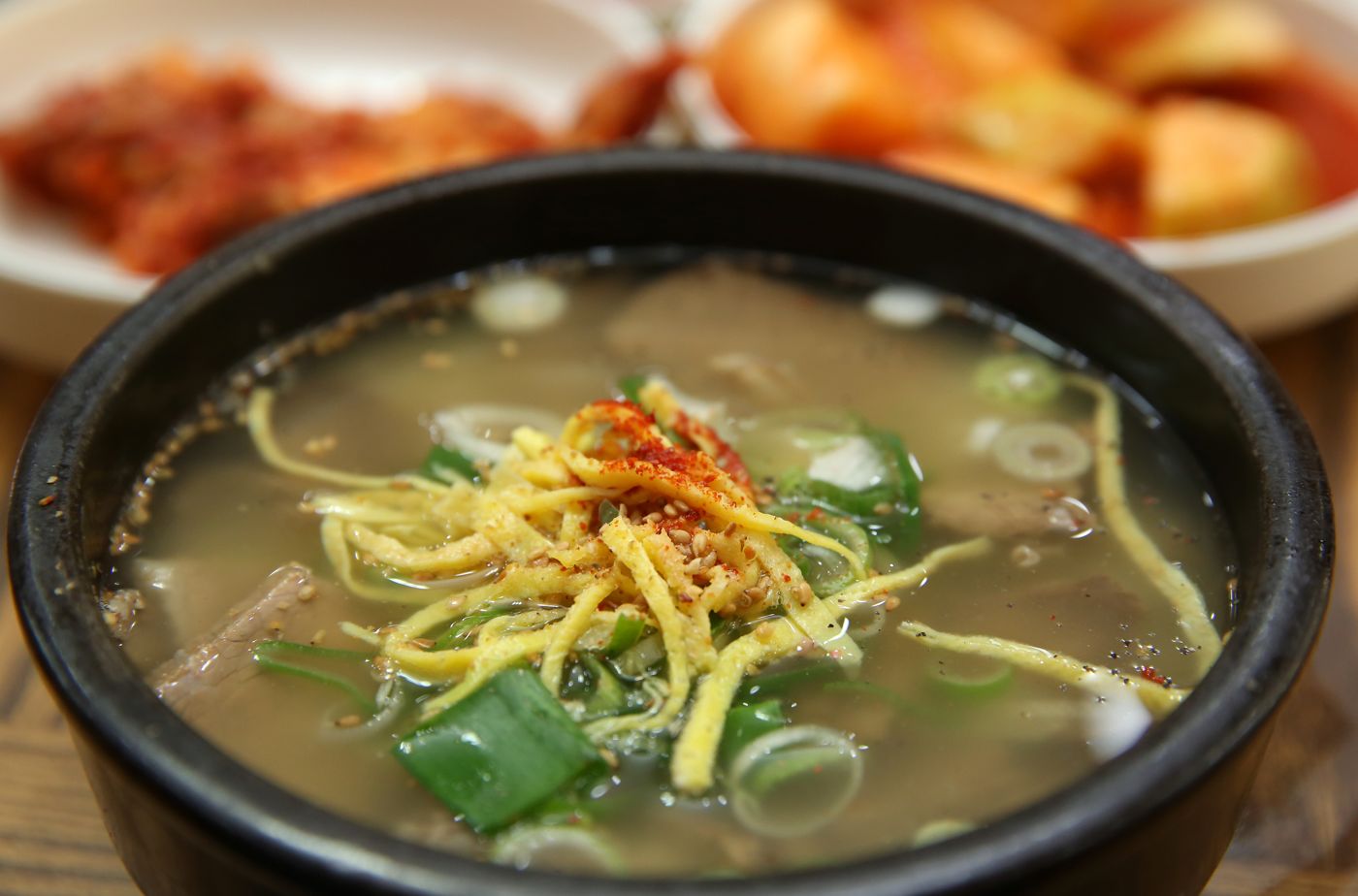 Naju Gomtang (Naju Clear Beef Soup)나주곰탕Brisket, shank and other beef cuts simmered into a clear, gently rich broth, poured over rice and topped with green onion — the market-day soup of Naju in South Jeolla.
- Spicy Skate Salad홍어회무침Strips of raw or lightly fermented skate, firmed in vinegar and tossed with minari, radish and a sweet-sour gochujang dressing — Jeolla's feast-day salad.