History & Culture
Dosirak: The Korean Lunchbox
도시락
From woven lunch baskets to dented aluminum tins warmed on a classroom stove and today's convenience-store meals, the Korean lunchbox tells the story of modern eating.
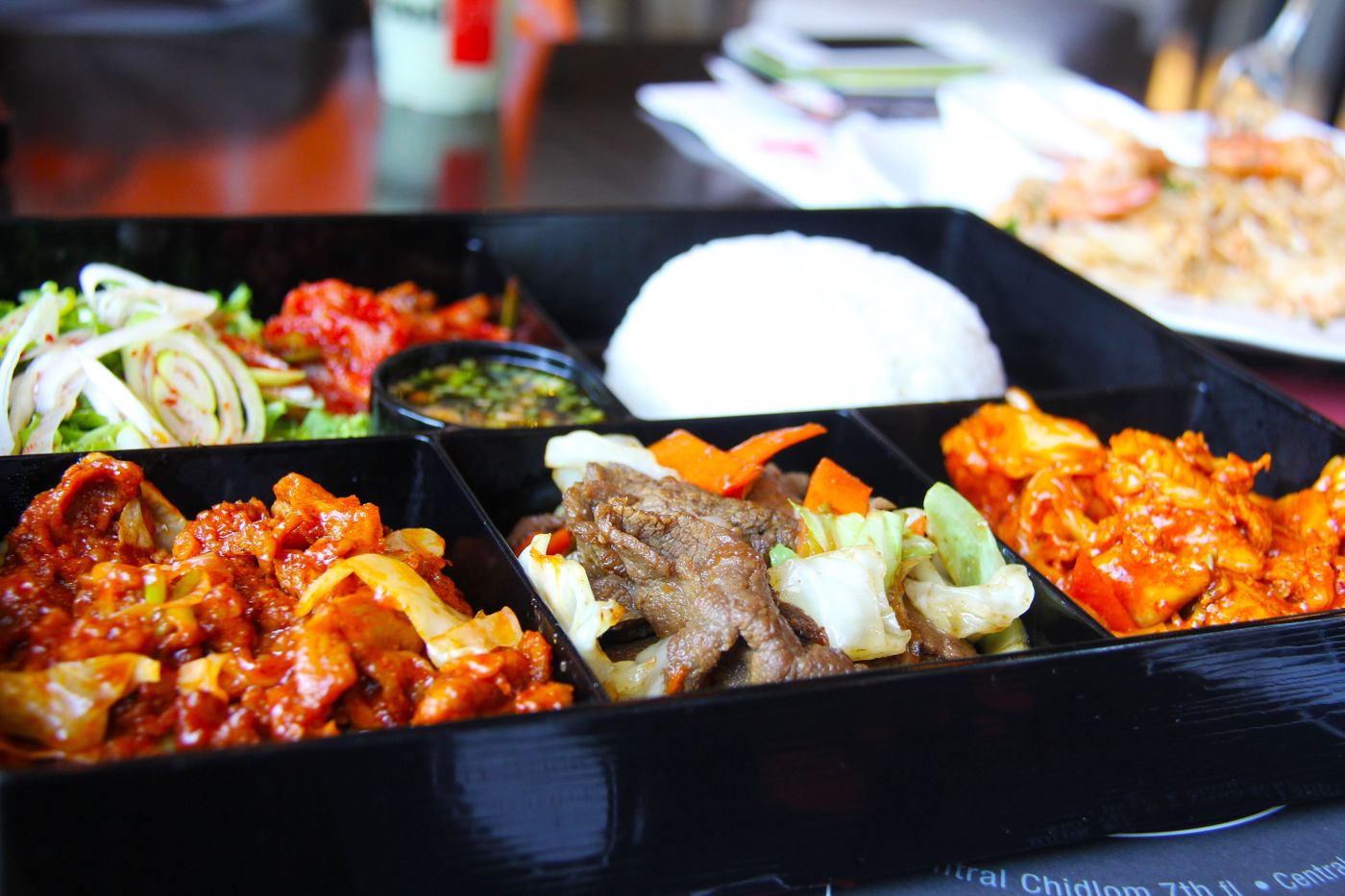 Photo: Sharon Ang, CC0, via Wikimedia Commons
Dosirak (도시락) means both a lunchbox and the packed meal inside it: rice with a few side dishes, made to be carried to school, work or an outing. It is one of the most ordinary objects in Korean life, and one of the most revealing, because what went into it, and who packed it, changed with every decade of the twentieth century.
Before the lunchbox
Carrying food from home is an old practice. When family members worked in the fields or away from the house, food was set out on a gonggosang, a portable tray table with hand-holds on its sides, and carried on the head to wherever they were. For outings and travel, those who could afford it used chanhap, stacked lidded boxes of porcelain or wood that held rice, side dishes and drinking snacks in separate tiers.
The individual lunchbox followed. Early dosirak were small woven containers of willow or split bamboo, or thin wooden boxes. The Encyclopedia of Korean Culture notes that the side dishes were dry, so nothing would leak, and seasoned on the salty side to keep, a description that still fits classic lunchbox banchan such as stir-fried anchovies, stir-fried fish cake and soy-braised beef.
The aluminum tin
Packed lunches became an everyday habit in the colonial period, when modern schools, offices and factories created a new population of students and wage workers eating away from home. For much of the century the standard container was a flat tin of aluminum or alumite. Generations of schoolchildren remember setting these tins on the classroom stove in winter so the rice would be warm by lunchtime, and kimchi juice leaking through the cloth wrapping into schoolbags.
Contents were modest. Kimchi, stir-fried fish cake and bean sprouts were common; a fried egg was a sign of a comfortable household. Shaking a closed tin to mix rice, kimchi and sesame oil into a rough bibimbap became one of the most fondly remembered lunchbox habits, and restaurants now sell nostalgic versions under names such as yennal dosirak, "old-days lunchbox."
Lunchbox inspections
The dosirak also became an instrument of national policy. Because rice was scarce, governments from the colonial period onward pushed Koreans to eat less of it, and from 1967 to 1976 annual administrative orders required restaurants to mix at least a quarter barley or noodles into the rice they served. In schools, teachers inspected pupils' lunchboxes to check that the rice was mixed with barley or other grains, a way of carrying the campaign into family kitchens. Students of that era recall the ratio of white rice to barley being checked at their desks. The campaign is described more fully in food in modern Korea and rice in Korean culture.
School lunch replaces the lunchbox
School meals in South Korea began after the Korean War, in 1953, with foreign aid from UNICEF and U.S. agencies, mostly in the form of bread. As incomes rose and more mothers worked outside the home, packing a lunch every morning came to be seen as a burden, and concerns shifted from undernutrition to unbalanced diets. The School Meals Act of 1981 set the framework; lunches were served in every elementary school from 1998, and from 2003 school meals were in place across elementary, middle and high schools. For most Korean children, the homemade dosirak became an occasional treat for field trips and picnics rather than a daily task.
The convenience-store dosirak
The lunchbox did not disappear; it moved to the shop shelf. Convenience-store chains now sell packaged dosirak built on the old pattern of rice and several banchan, often with a meat main dish, alongside triangle kimbap and sandwiches. Demand has grown with the rise of single-person households and with high restaurant prices, a trend Korean media call lunchflation. In the first half of 2025, CU reported dosirak sales up 22.9 percent year on year and 7-Eleven about 20 percent, as office workers looked for lunches cheaper than restaurant meals that commonly cost more than 10,000 won.
What makes a good dosirak
Whether packed at home or bought, a dosirak follows the logic of the balanced Korean meal: rice plus several contrasting side dishes. The old advice to keep side dishes dry and well seasoned still holds for food that will sit for hours, though modern guidance favors lighter seasoning, a cold pack and plenty of vegetables such as spinach namul and rolled omelet. Salty preserved banchan are worth eating in moderation; see sodium in Korean food.
Sources
- 01도시락 (Dosirak) — Encyclopedia of Korean Culture
- 02학교급식 (School meals) — Encyclopedia of Korean Culture
- 03혼분식 장려운동 (Mixed-grain and flour campaign) — Encyclopedia of Korean Culture
- 04추억의 '양은 도시락', 도시락이 말하는 것 — Kyunghyang Shinmun (Sept. 17, 2016)
- 05'런치플레이션'에 웃은 편의점…간편식 두 자릿수 성장 — Digital Daily (Aug. 12, 2025)