Techniques
Making Tteok
떡 만들기
Steamed, pounded, boiled and pan-fried: the four classic ways Korean cooks turn rice and rice flour into tteok, and the siru steamer at the heart of them.
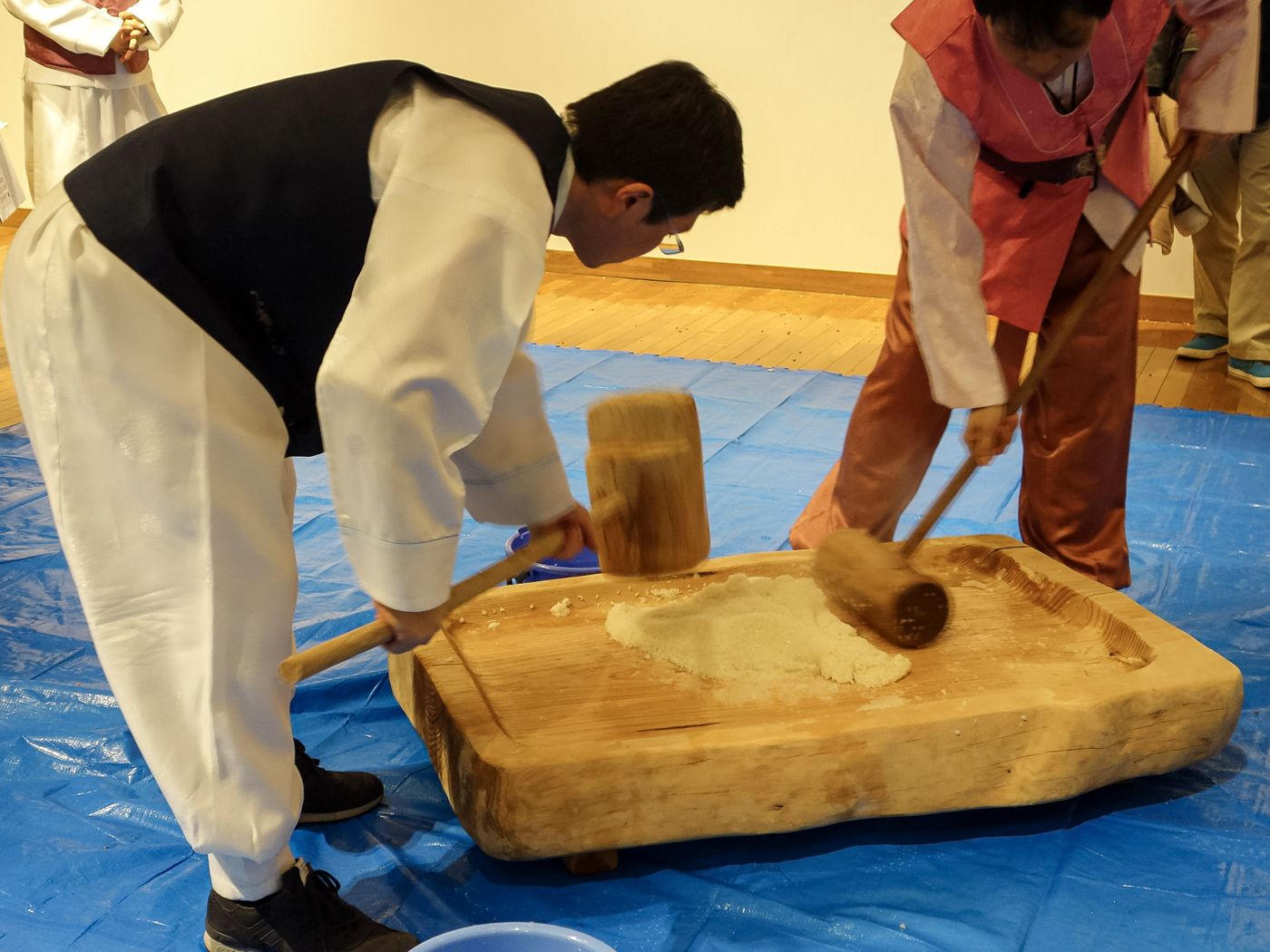 Photo: KQuhen, CC BY-SA 4.0, via Wikimedia Commons
Tteok, Korean rice cakes, are defined by the Encyclopedia of Korean Culture simply as grain flour steamed in a siru or boiled, then shaped. Behind that short definition sits one of the oldest and most varied branches of Korean cooking. This page looks at how tteok is made; for its place in ritual and seasonal life, see tteok and life-ritual foods.
The siru: where tteok began
The siru is a round earthenware steamer with several holes in its base. It sits on top of a pot of boiling water, and steam rising through the holes cooks whatever is inside. The encyclopedia lists finds from a Bronze Age shell mound and from Three Kingdoms tombs, and kitchen scenes with a siru painted in Goguryeo tombs such as Anak. Its argument is practical: early earthenware was too porous for long boiling, which tainted porridge with the taste of clay, so steaming ground grain was the better option. With the grains available then, such as millet and barley, a steamed cake of flour is the likeliest result.
Using a siru well takes a few tricks that the encyclopedia records. A mat goes on the bottom so the flour does not fall through, and a thick woven straw cover goes on top. The pot is chosen to fit the siru closely, and the joint between them is sealed with siruppeon, a thin rope of wheat or rice-flour dough pressed around the rim so steam cannot escape. Most siru were fired clay, but households that steamed often and in quantity used unbreakable brass ones.
Preparing the rice
Good tteok starts with well-soaked rice. Two grains do different jobs: non-glutinous rice (ssal) gives a firmer, cleaner cake, while glutinous rice gives the stretch of injeolmi. The encyclopedia's entry on injeolmi stresses that the glutinous rice must be pure, with no ordinary rice mixed in, and soaked until fully swollen, so that it cooks through completely and pounds without lumps. The nineteenth-century Gyuhap chongseo asked for rice polished white, washed a hundred times and soaked for days, which shows how seriously the step was taken. For steamed cakes, soaked rice is ground to flour and moistened before it goes into the siru. Grinding used to be a household chore; the encyclopedia notes that the spread of neighborhood mills (bangatgan) in the modern era took over the work, from milling the flour to steaming the cakes, and that families increasingly bought tteok ready-made.
Four ways to make tteok
Joseon-era cookbooks, the encyclopedia says, sorted tteok by method, and those categories still work:
- Steamed (jeungbyeong, 시루떡): moistened rice flour steamed in the siru. The encyclopedia treats this as the oldest form and names baekseolgi, plain white steamed cake, as its most basic version. Endless variations followed by layering or mixing in beans, chestnuts, jujubes, mugwort, radish or dried persimmon. Red-bean siru-tteok topped with pat crumbs was also the cake of shamanic rites.
- Pounded (dobyeong, 친떡): grain or flour is steamed first, then beaten with a wooden mallet on a board or in a mortar. Injeolmi is the classic example: steamed glutinous rice pounded until no grains remain, cut and rolled in toasted soybean or bean-paste coatings. With ordinary rice, the same process gives jeolpyeon and garaetteok, the long white cylinders once rolled by hand and now extruded by machine, which are sliced for tteokguk or cut for tteokbokki.
- Boiled (danja, 단자): glutinous-rice dough shaped into balls, cooked in boiling water and rolled in coatings. The Imwon gyeongjeji describes rounds the size of an acorn or a chestnut; coatings included bean flour, cinnamon, mung bean, black sesame and ground pine nuts.
- Pan-fried (yujeonbyeong, 지진떡): rounds of glutinous dough fried in oil. In spring, azalea petals pressed onto the top turn them into hwajeon, flower cakes. A related fried tteok, jueok, is filled, fried, brushed with honey and used to crown stacked rice cakes.
The encyclopedia also cites the reference work Joseon sangsik, which contrasted the three East Asian traditions: Chinese cakes centered on baked wheat, Japanese on pounded glutinous rice, and Korean on steamed non-glutinous rice flour.
Shaped and filled tteok
Many tteok combine methods. Songpyeon, the half-moon cakes of Chuseok, are shaped from rice dough around a filling and steamed, and the encyclopedia records that their shape was once read as an omen, of a future husband or of an unborn child. Decorated cakes for banquets were pressed in carved wooden molds. And because tteok is so tied to sharing, the encyclopedia notes, households that made it usually made far more than they needed, to send to neighbors and relatives. For festive and seasonal sweets, see hangwa, and for a sweet rice dish steamed with nuts and jujubes, yaksik.
Tips for the home kitchen
A bamboo or metal steamer lined with cloth stands in well for a clay siru. Sieving moistened flour makes steamed cakes lighter, and a firm seal keeps steam from escaping. Fresh tteok hardens as it cools; the encyclopedia describes the winter pleasure of toasting stiff injeolmi over a brazier and dipping it in grain syrup (jocheong). Chewy rice cakes are a known choking hazard for young children and older adults, so cut them small and eat them slowly; see food safety at home.
Dishes using this technique
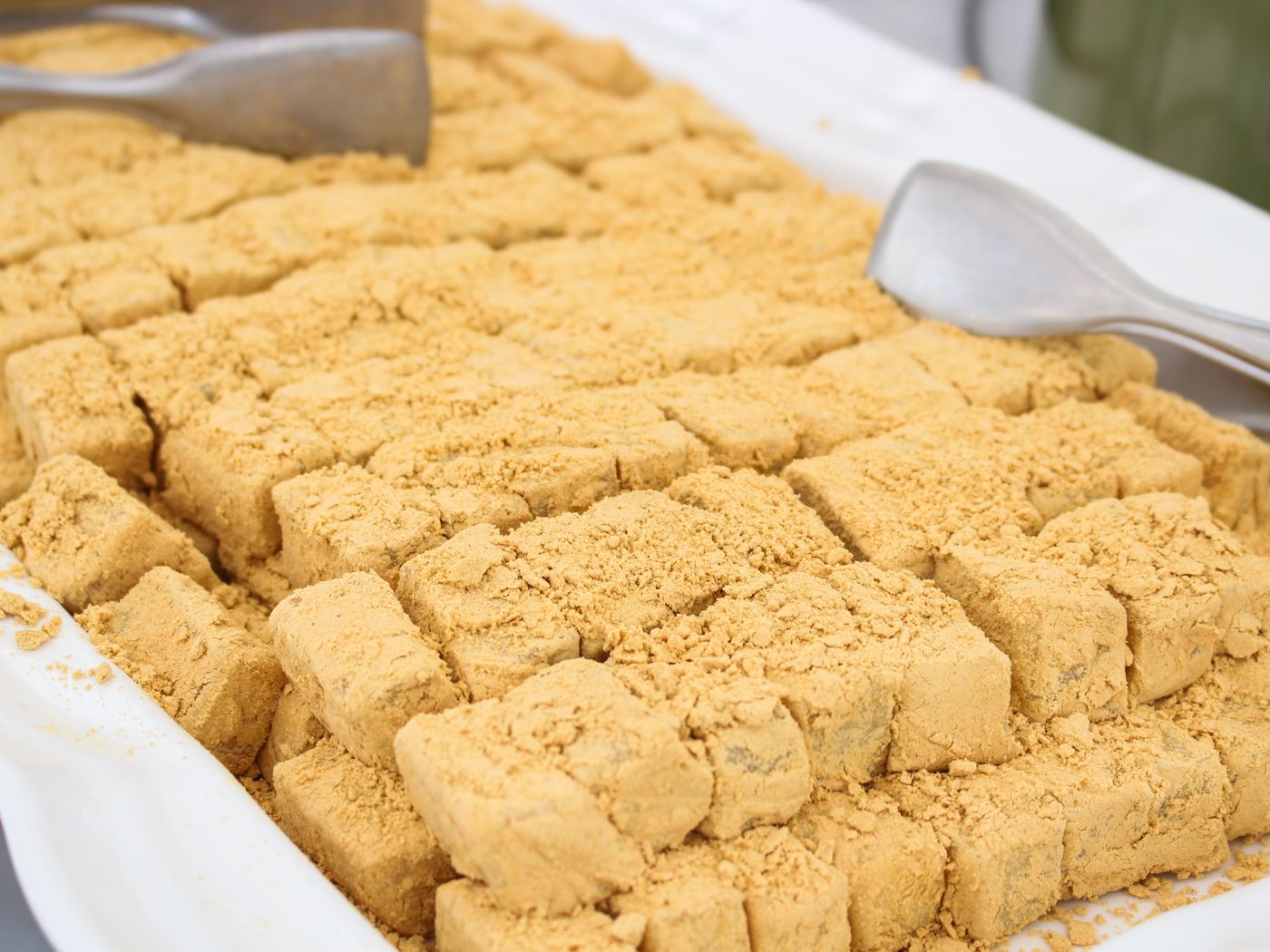 Injeolmi (Pounded Sticky Rice Cake with Bean Powder)인절미Steamed glutinous rice pounded until smooth and elastic, cut into pieces and rolled in roasted soybean powder — the chewy, nutty rice cake of markets, weddings and harvest time.
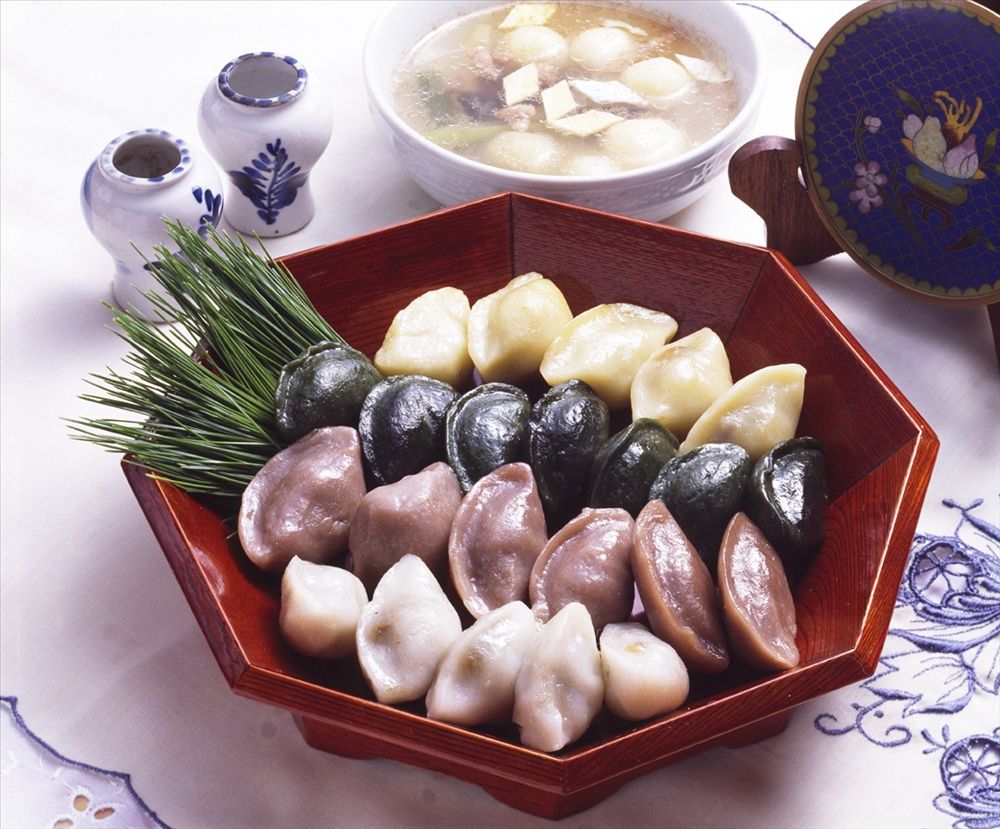 Songpyeon (Half-Moon Rice Cakes)송편Small half-moon cakes of rice dough filled with sweet sesame, beans or chestnut and steamed on a bed of pine needles — the rice cake of Chuseok, made with the new harvest.
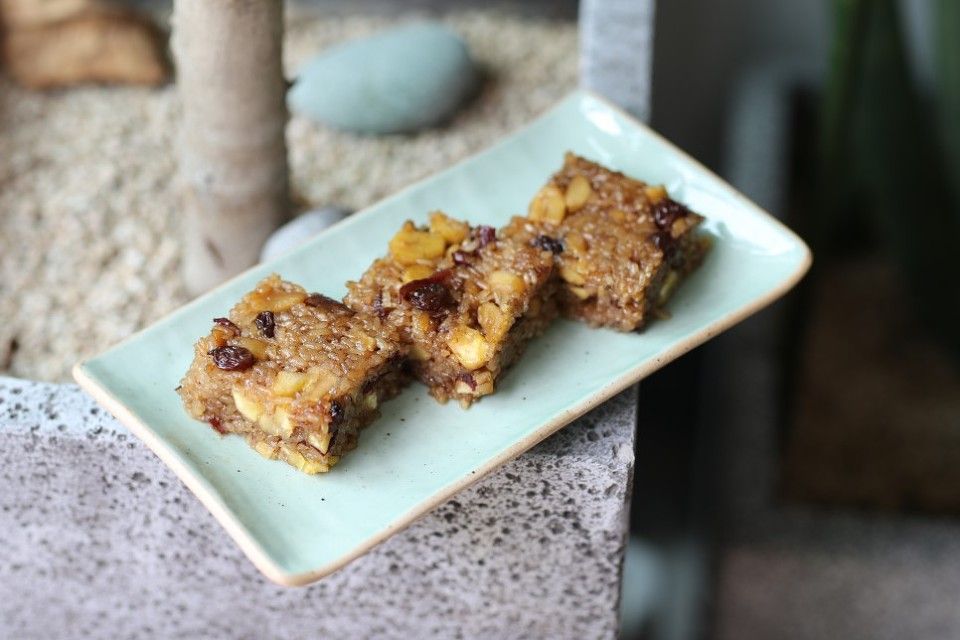 Yaksik (Sweet Rice with Chestnuts, Jujubes and Pine Nuts)약식Steamed glutinous rice darkened with soy sauce, brown sugar and honey and studded with chestnuts, jujubes and pine nuts — a full-moon festival food also called yakbap.
Sources
- 01떡 (Tteok) — Encyclopedia of Korean Culture
- 02시루 (Siru) — Encyclopedia of Korean Culture
- 03시루떡 (Siru-tteok) — Encyclopedia of Korean Culture
- 04인절미 (Injeolmi) — Encyclopedia of Korean Culture
- 05가래떡 (Garaetteok) — Encyclopedia of Korean Culture
- 06웃기 (Utgi, decorative toppings) — Encyclopedia of Korean Culture