History & Culture
Hangwa: Traditional Korean Confections
한과
Honey-soaked yakgwa, puffed rice gangjeong, pressed dasik, candied jeonggwa and yeot: the grain-and-honey sweets that Korea stacked high on its ritual tables.
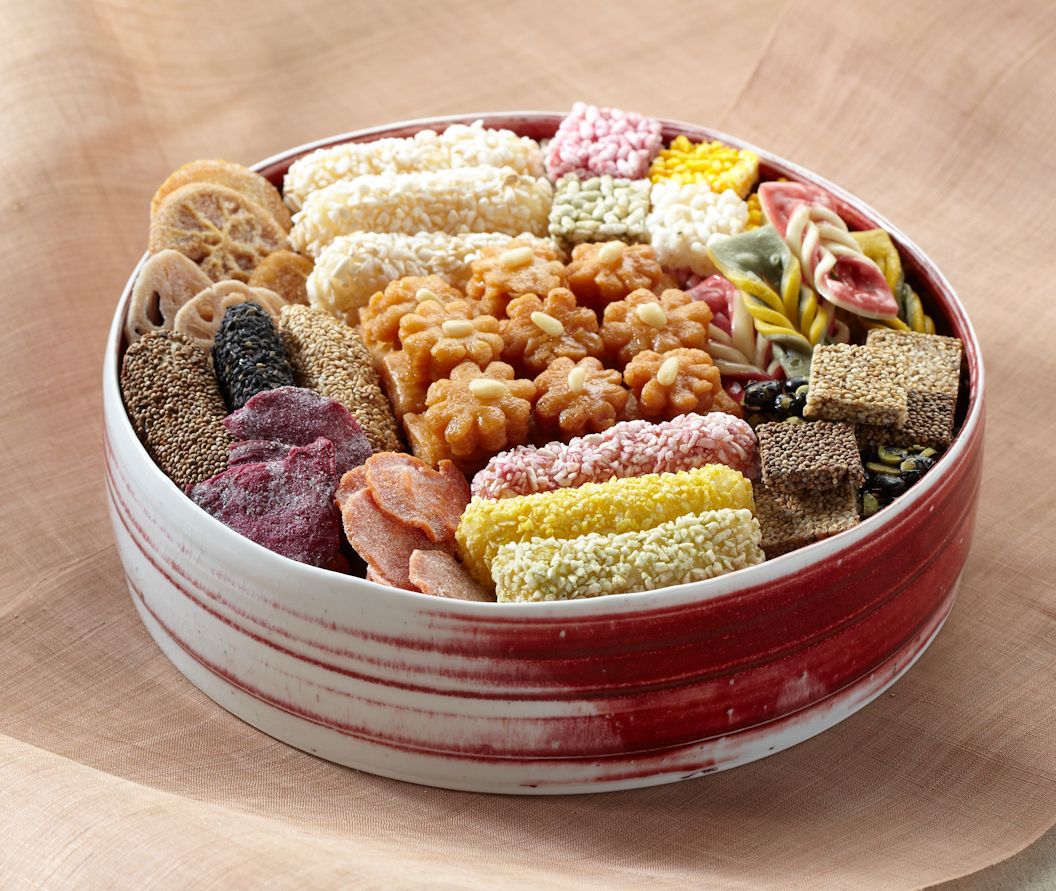 Photo: 국립국어원, CC BY-SA 2.0 kr, via Wikimedia Commons
Hangwa (한과) is the modern umbrella word for Korea's traditional confections, used in contrast to yanggwa, Western-style sweets. Older texts more often call them jogwa (조과, 造菓), literally made fruit, because many began as imitations of real fruit for tables where fresh fruit was scarce or out of season. The Encyclopedia of Korean Culture counts some seventy kinds, which fall into a handful of families: honey-and-oil pastries (yumilgwa), puffed rice confections (gangjeong and sanja, often grouped together as yugwa), pressed sweets (dasik), candied fruits and roots (jeonggwa) and grain syrup candy (yeot).
Origins and the Goryeo boom
The oldest Korean documents that clearly mention confections date from Goryeo (918–1392), though historians infer that fried and puffed sweets existed earlier, in the Three Kingdoms period, partly by comparison with early Japanese food. Goryeo was a Buddhist state, and the restraint on meat, the custom of offering food at temples and a flourishing tea culture all favored sweets made from grain, honey and oil. Confections appeared at the great state festivals, the Lantern Festival (Yeondeunghoe) and the Palgwanhoe, as well as at banquets, royal processions and weddings.
They were also expensive. Flour, honey and sesame oil were luxury goods, and Goryeo's legal records include bans on yumilgwa in 1192 and again in 1353, ordering people to use nuts and fruit instead. The pastry's reputation traveled abroad: when King Chungnyeol went to the Yuan court in 1296 for his son's wedding, the yumilgwa served at the feast reportedly impressed his hosts for the way it melted in the mouth.
Yakgwa and the yumilgwa family
Yakgwa (약과) is the best known of the honey pastries. Wheat flour is rubbed with sesame oil, bound with honey, ginger juice and rice wine, pressed into a carved wooden mold, fried slowly at a fairly low heat and then soaked in grain syrup or honey flavored with cinnamon, finished with ground pine nuts. The yak in the name, meaning medicine, refers to the honey, in the same sense as yaksik (sweet rice with honey) and yakju (refined rice wine). One nineteenth-century glossary describes yumilgwa as having begun as false fruit, shaped like jujubes, chestnuts, pears and persimmons, for ancestral rites. In Goryeo the pastries were made as birds, fish and fruit; by Joseon they were more often cut into squares or pressed with chrysanthemum patterns, shapes that stacked better. Large square mo-yakgwa went on the ancestral table, while smaller pieces were everyday treats.
Gangjeong, dasik, jeonggwa and yeot
- Gangjeong and sanja: dough of glutinous rice flour and rice wine is steamed, beaten until airy, cut, dried, then fried twice so that it balloons and turns hollow and crisp. The pieces are brushed with syrup and rolled in sesame, puffed rice, pine nuts or pine pollen. The shape of gangjeong was likened to a silkworm cocoon, and the Korean expression for something impressive outside but empty within, sokbin gangjeong, comes from it.
- Dasik: powders of roasted rice, chestnut, black sesame, soybean or pine pollen are kneaded with honey and pressed in a dasikpan, a mold carved with characters such as longevity and blessing. A poem in the collected works of the Goryeo scholar Yi Saek praises the dasik served at the Palgwanhoe, and the Joseon scholar Yi Ik suggested the name, tea food, survives from pressed tea cakes that were later imitated in grain.
- Jeonggwa: fruits and roots such as quince, yuja, ginger, lotus root and doraji simmered or steeped in honey until glossy, a way of keeping seasonal produce through the year.
- Yeot: cooked rice or other starch is broken down with barley malt, strained and boiled to a syrup; boiled further, it sets into hard candy, which turns pale and brittle when pulled repeatedly. Goryeo writing already mentions malt candy. Regions developed their own versions, including corn yeot in Gangwon, radish yeot in Chungcheong, sweet potato yeot in Jeolla and, in Jeju, yeot cooked with chicken or pheasant.
The ceremonial table
Through the Joseon dynasty (1392–1910), confections remained indispensable at weddings, ancestral rites and birthday banquets for elders, and later law codes threatened punishment for serving them on other occasions. On the great celebration table, the keunsang, they were stacked into tall cylinders, sometimes with colored dasik arranged to spell auspicious characters. Stacking was a skill in its own right, and households hired specialists to do it. Wedding tables mixed yellow pine-pollen, green bean, black sesame and pink starch dasik for color. How these tables were laid out is described in life ritual foods and jesa food; the court versions appear in royal court cuisine.
Decline and revival
Western confectionery reached Korea in the late nineteenth century, and the first Western-style bakeries opened in Seoul around the early 1920s. After the Korean War, cheap wheat flour and the government's flour-food campaigns of the 1960s and 1970s made biscuits the everyday snack, and homemade hangwa nearly vanished outside holidays. From the 1980s interest returned, and confectioners began producing hangwa commercially, though many families still buy yakgwa and yugwa mainly for Seollal, Chuseok and ancestral rites. Many of the same rice-based techniques are shared with tteok, the rice cakes that usually sit beside hangwa on a festive table.