Ingredient
Pine nuts
잣
Romanization: jat
Creamy, ivory seeds of the Korean pine, scattered as a finishing garnish on punches, porridges and braises, or ground into the delicate porridge jatjuk. Gapyeong in Gyeonggi-do is the country's pine-nut capital.
Flavor
Buttery, sweet and resinous, with a soft crunch; toasting deepens the nuttiness, and ground pine nuts give porridges and sauces a rich, creamy body.
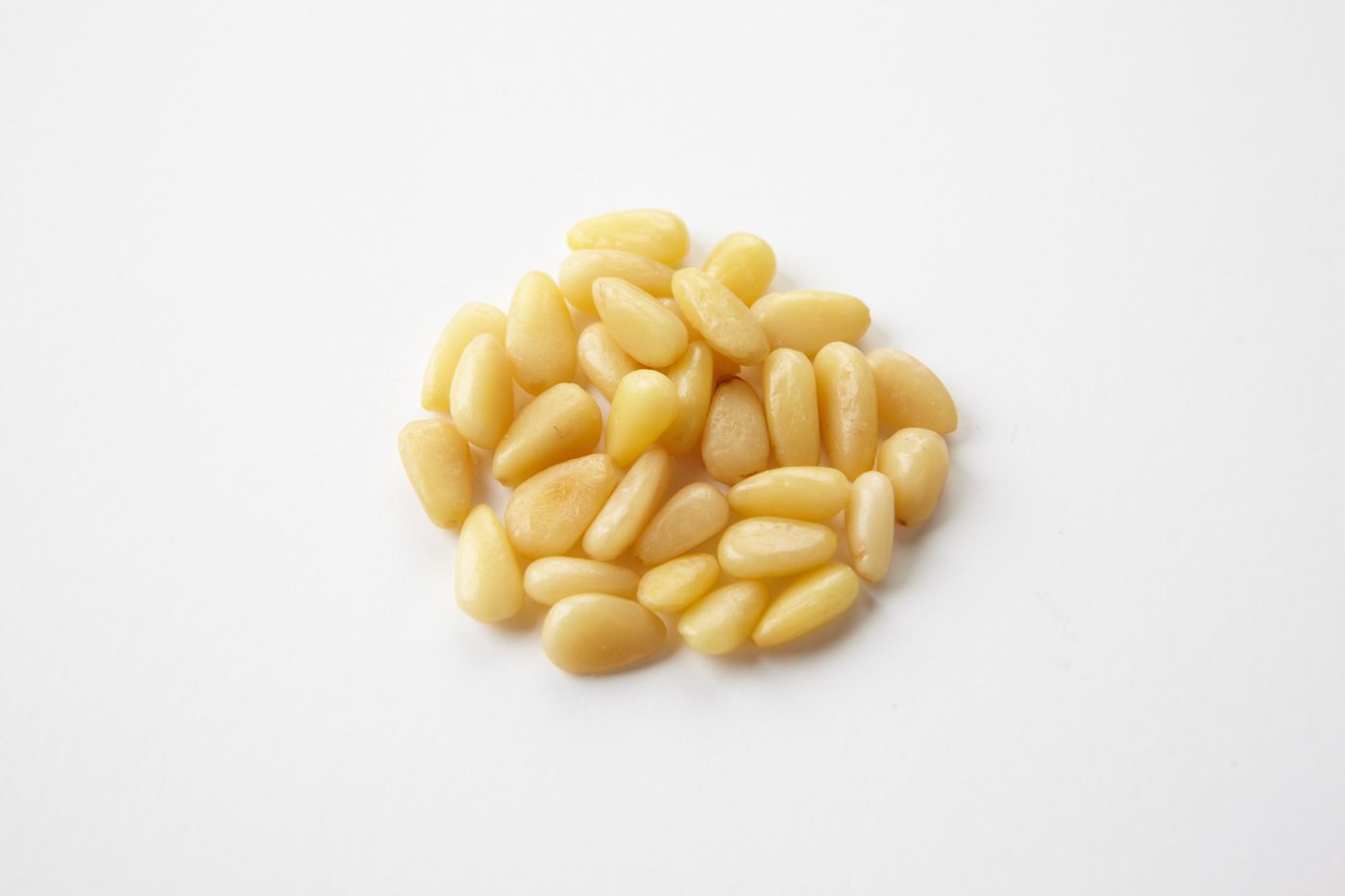 Photo: 국립국어원, CC BY-SA 2.0 kr, via Wikimedia Commons
Origin & History
Jat are the seeds of the Korean pine, Pinus koraiensis, a tall evergreen with needles in bundles of five and large cones holding some eighty to ninety wingless seeds each. Older names include baekja and silbaek. Chinese herbals from the Tang and Ming dynasties recorded pine nuts as a product of Silla — the Ming Bencao gangmu calls them "Silla pine seeds" — and Silla sent them to China as gifts.
Gapyeong pine nuts appear as a local product of Gapyeong county in the 15th-century geography of the Sejong sillok and were sent as royal tribute; the Joseon court gave pine nuts to China and Japan by the hundreds of geun. Harvesting is still hard work. Pickers climb the trees and pull cones down with hooked poles, then the cones are dried, threshed for the hard-shelled seeds, dried again and shelled to free the white kernels. Gapyeong, where roughly a quarter of the forest is Korean pine, produced an average of about 1,600 tons a year between 2010 and 2021 — close to 39 percent of the national harvest — though yields are falling with hotter summers, pests and aging trees.
Pine nuts are mostly a garnish in Korean cooking: floated on sujeonggwa and sikhye, set on gujeolpan, sinseollo and braises, pressed into yaksik, and bound with syrup into yeot-gangjeong. Ground with rice they make jatjuk, long given to the sick and elderly, and there is a Jeongwol Daeboreum custom of threading twelve nuts on a needle and lighting them to read the luck of each month by how brightly they burn.
Nutrition
| Calories | 658 kcal |
|---|---|
| Protein | 16.62 g |
| Fat | 65.69 g |
| Carbohydrates | 12.5 g |
| Fiber | 6.6 g |
| Sodium | 3 mg |
Notable forManganese (13.0 mg) · Magnesium (259 mg) · Vitamin E (9.33 mg) · Zinc (6.05 mg)
Values copied from the Korean Food Composition Table (Rural Development Administration / National Institute of Crop Science) for this exact food, per 100 g edible portion. Pine nuts are usually eaten a few grams at a time as a garnish. Actual values vary with ingredients, portion size and preparation.
Health Benefits
- Mostly unsaturated fat: Pine nuts are about two-thirds fat by weight, largely unsaturated fatty acids such as oleic and linoleic acid, and are energy-dense.
- Minerals and vitamin E: The Korean Food Composition Table lists them as very high in manganese and rich in magnesium, zinc and vitamin E.
- A labeled allergen in Korea: Pine nuts are classed as a tree nut in Korea and must be declared on food labels; they are among the triggers of food allergy in Korean children.
- "Pine mouth": Some people develop a bitter or metallic taste lasting days to weeks, starting a day or two after eating pine nuts. An FDA investigation of 501 U.S. reports linked it to nuts from the Chinese white pine (Pinus armandii), not the Korean pine; it resolved without lasting harm, and the cause is still unknown.
Informational, not medical advice. Talk to a qualified professional about your own health and diet.
Dishes with Pine nuts
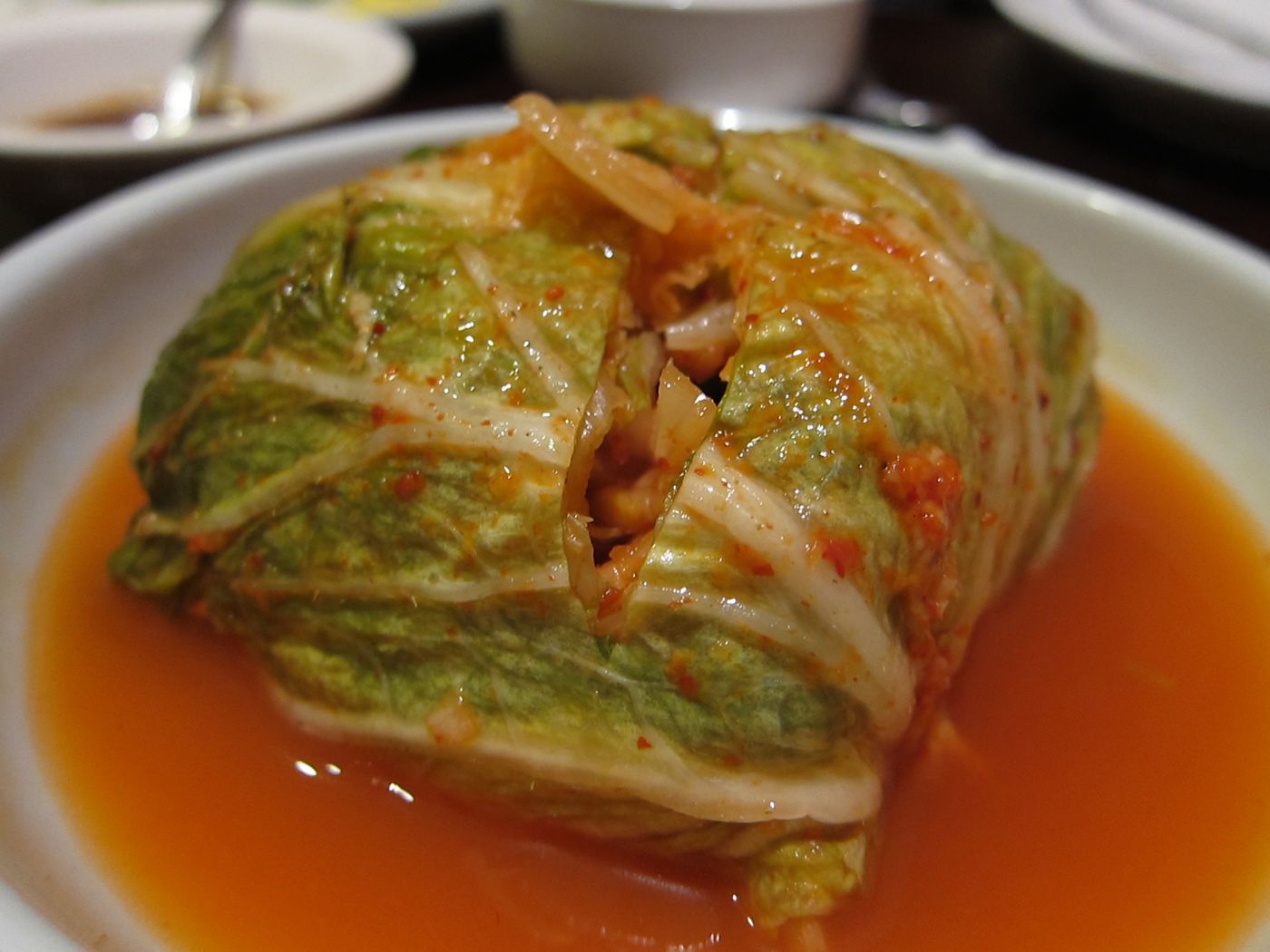 Wrapped Kimchi보쌈김치Cabbage, radish, fruit, nuts and seafood bundled inside whole cabbage leaves — the lavish wrapped kimchi of Gaeseong, made for honored guests.
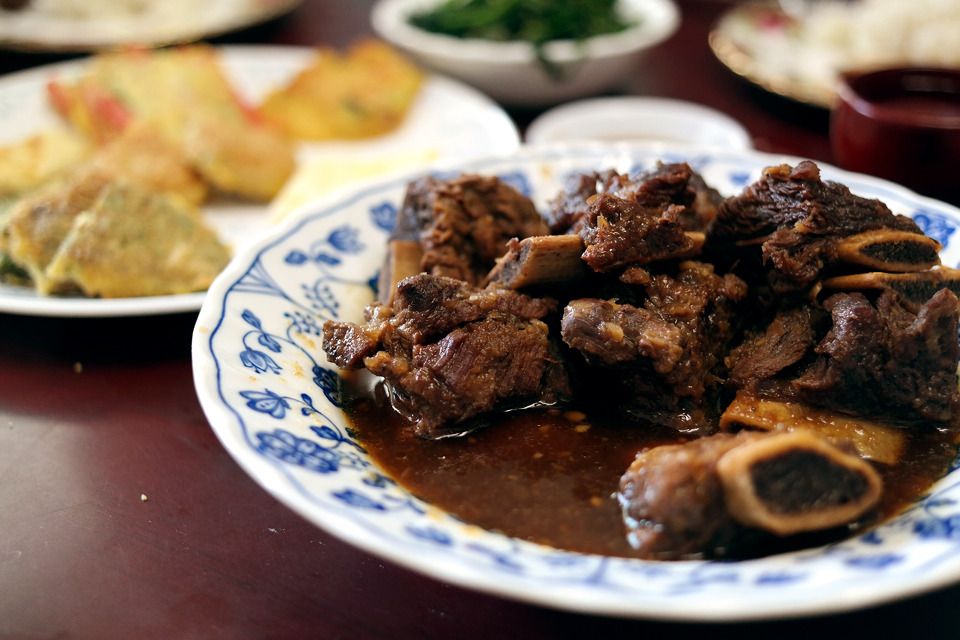 Galbi-jjim (Braised Beef Short Ribs)갈비찜Beef short ribs simmered slowly in soy sauce, pear and garlic with radish, carrot, chestnuts and jujubes until glossy and tender — a dish for holidays and honored guests.
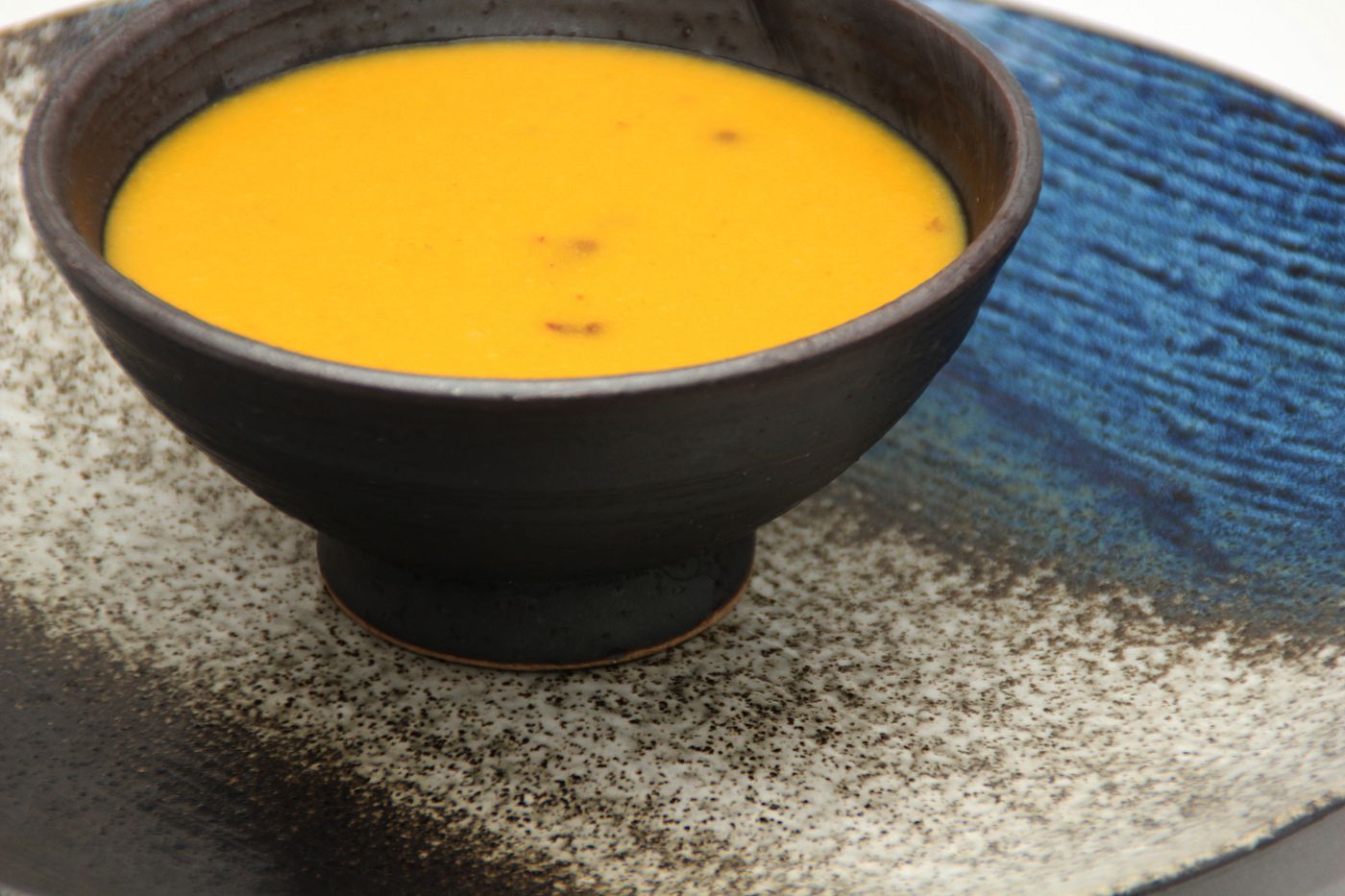 Hobak-juk (Pumpkin Porridge)호박죽Ripe winter pumpkin cooked to a purée and thickened with glutinous rice, often with red beans — a smooth, gently sweet porridge for cold days and convalescence.
- Soy Sauce Water Kimchi장김치Cabbage and radish cured in soy sauce instead of salt, floated in a lightly sweet soy brine with pear, chestnut and pine nuts — a court and gentry kimchi.
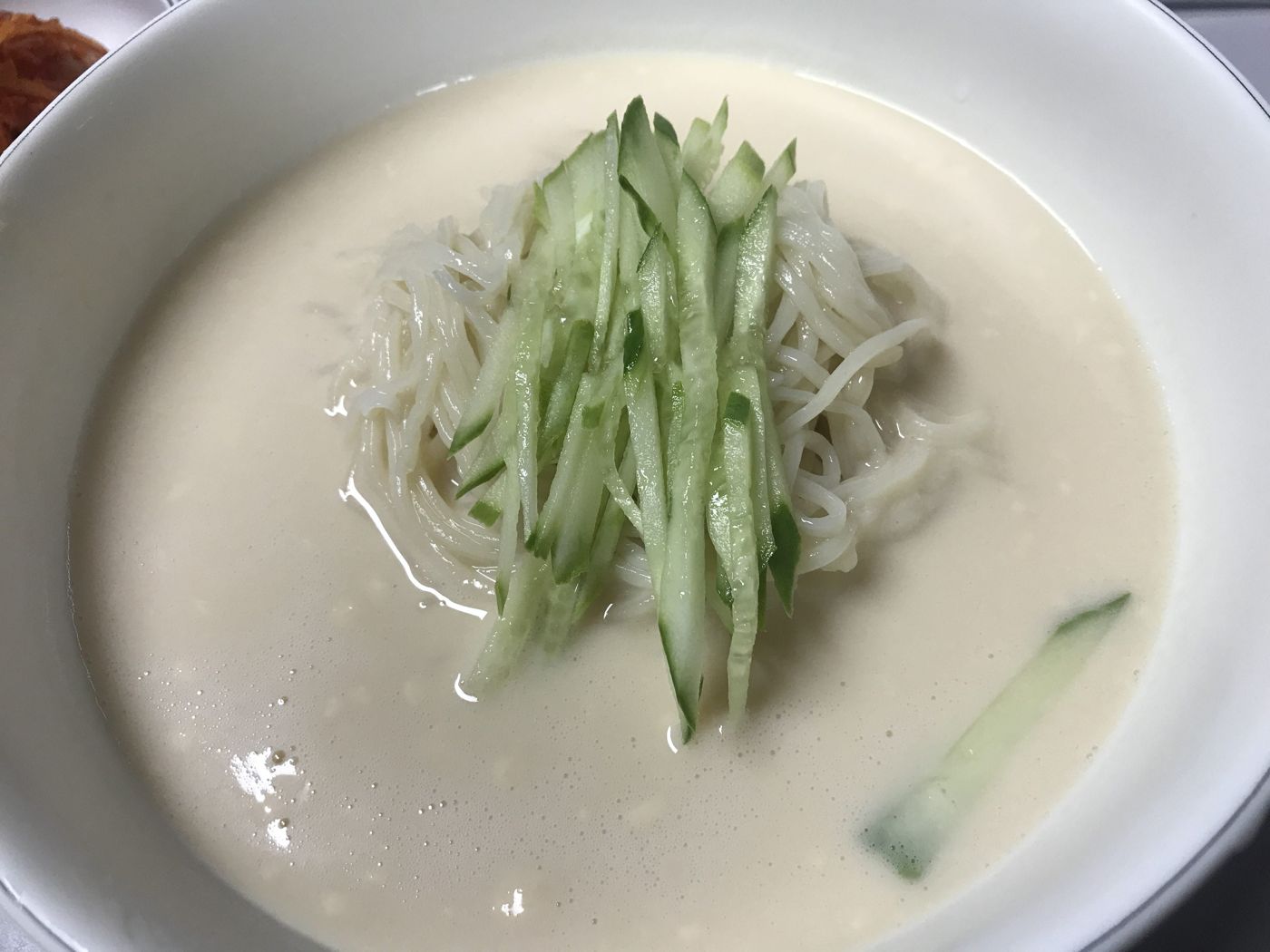 Kongguksu (Cold Soybean-Milk Noodles)콩국수Thin wheat noodles in a chilled, nutty broth of freshly ground soybeans, topped with cucumber — a protein-rich summer noodle traditionally eaten with yeolmu kimchi.
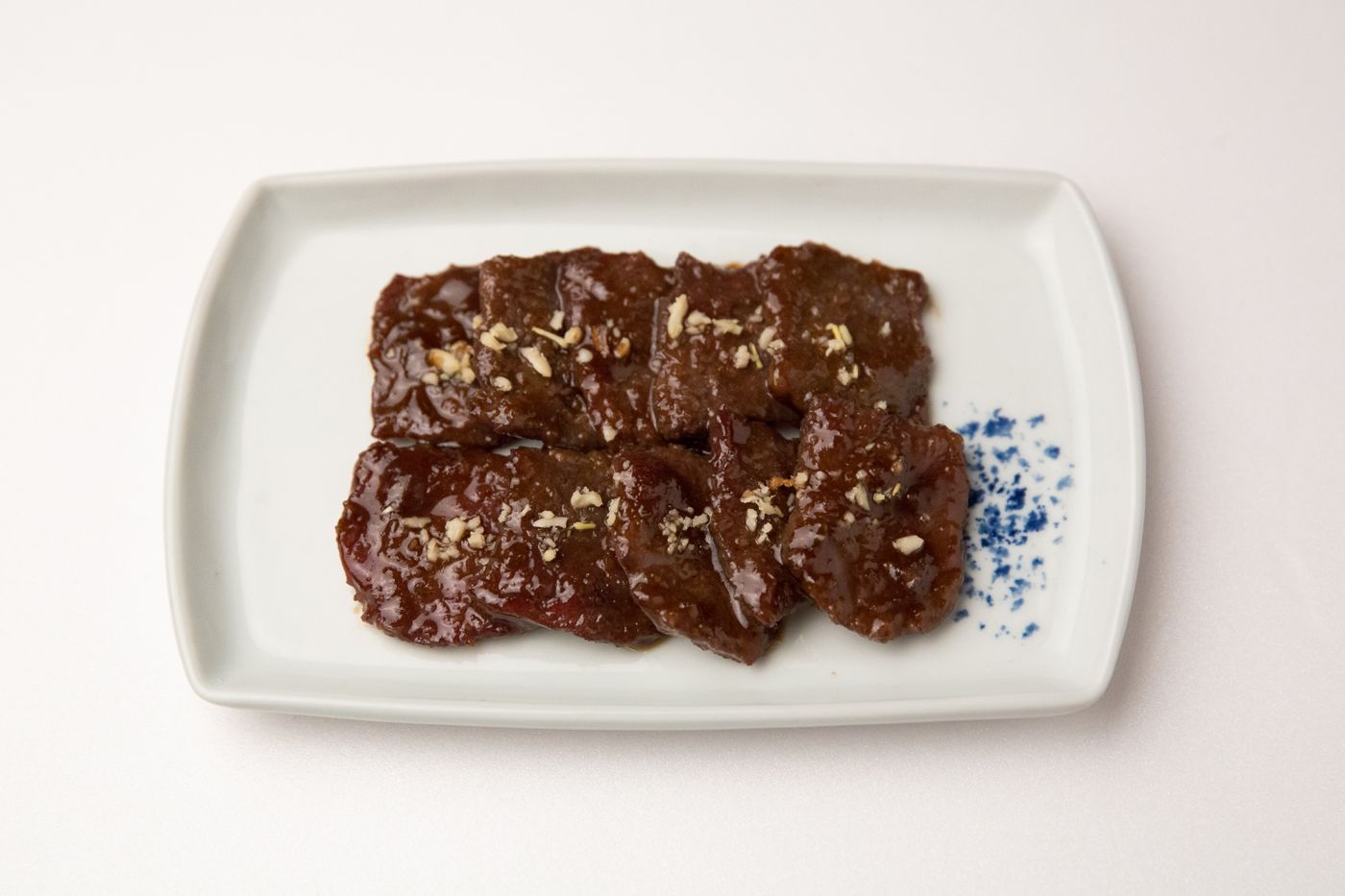 Neobiani (Court-Style Grilled Beef Slices)너비아니Broad, thin slices of beef marinated in soy, sugar, garlic and pear, then grilled lightly: the court and Seoul-household name for what is now usually called bulgogi.
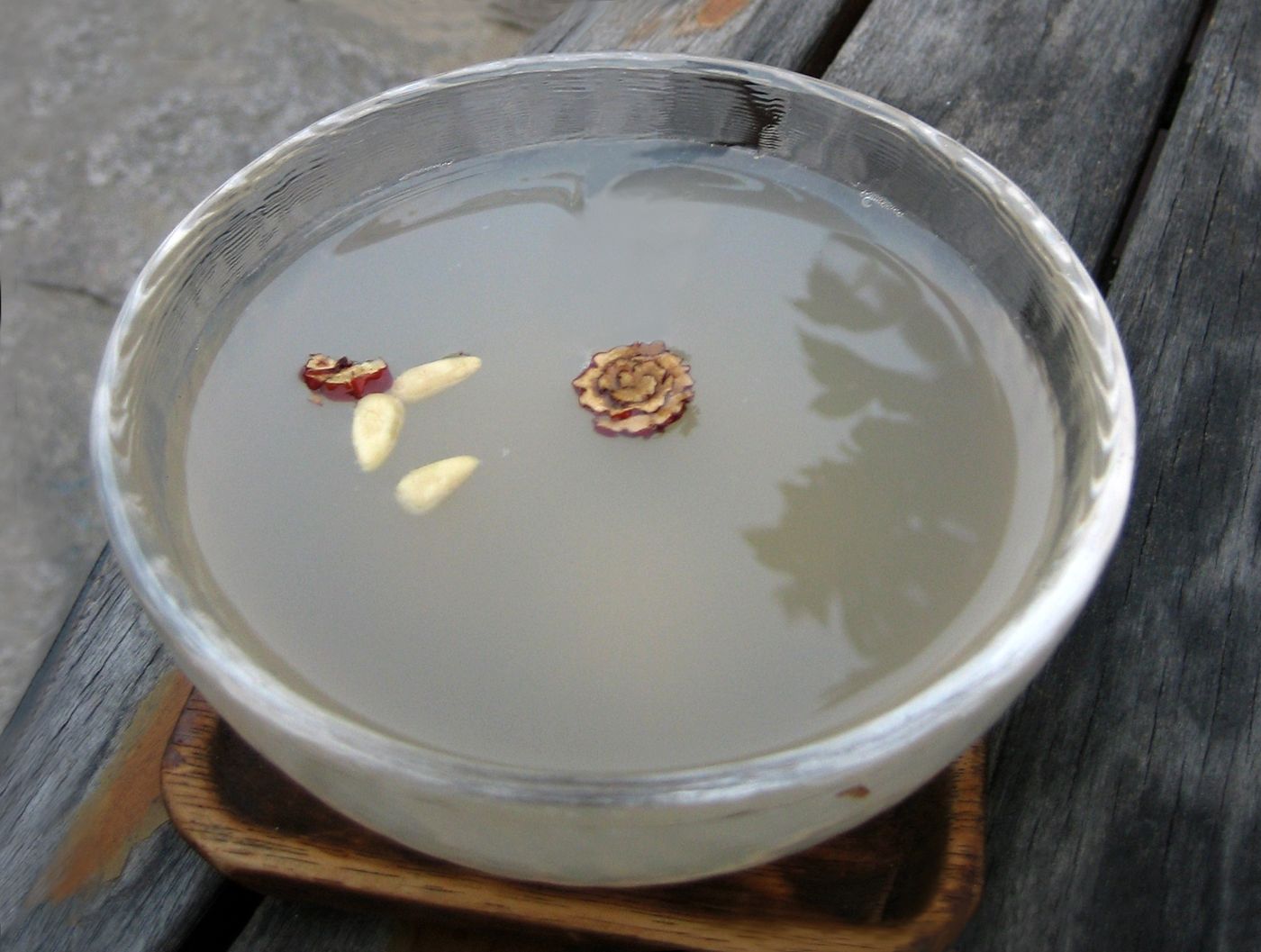 Sikhye (Sweet Malted Rice Drink)식혜Cooked rice steeped in barley-malt water until it sweetens and the grains float, then chilled — the traditional after-feast drink of Korean holidays.
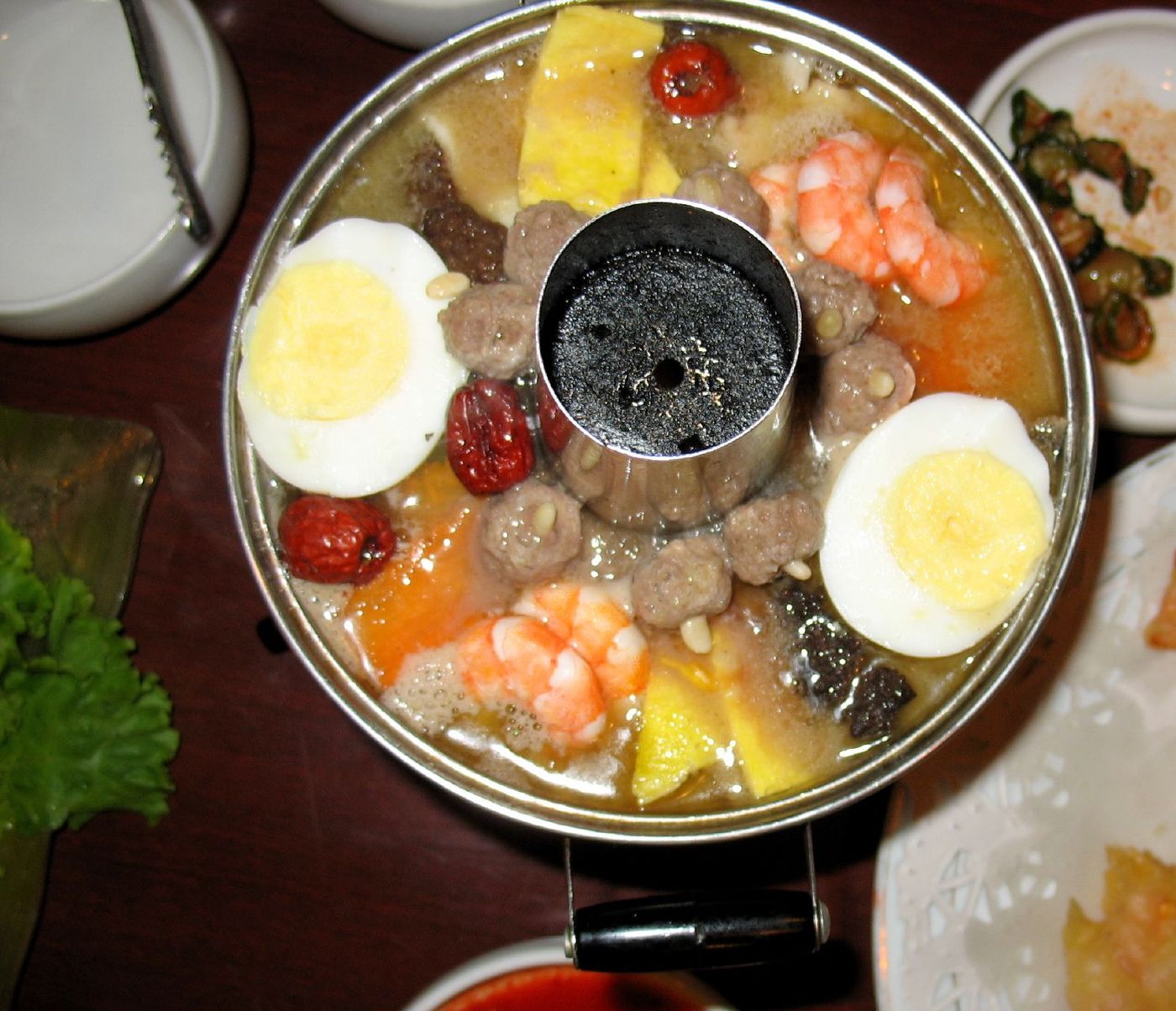 Sinseollo (Royal Hot Pot)신선로A court banquet dish of colorful beef, fish, egg, mushrooms and vegetables arranged in a chimney-centered brazier pot, with hot broth poured over and kept warm at the table.
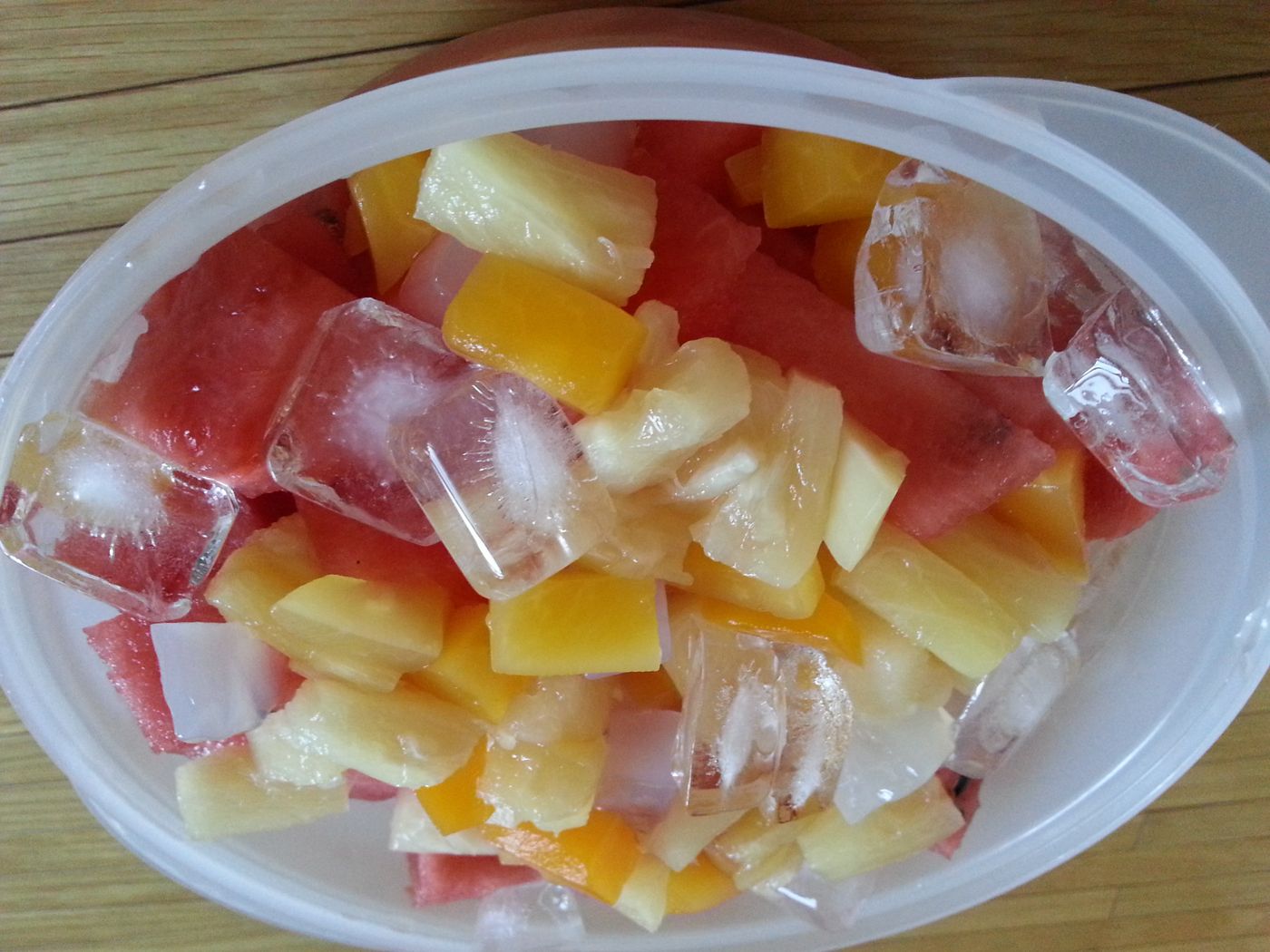 Subak-hwachae (Watermelon Punch)수박화채Scooped watermelon floating in its own sweetened juice, or in fizzy soda over ice — the most familiar member of the hwachae family of cold fruit punches.
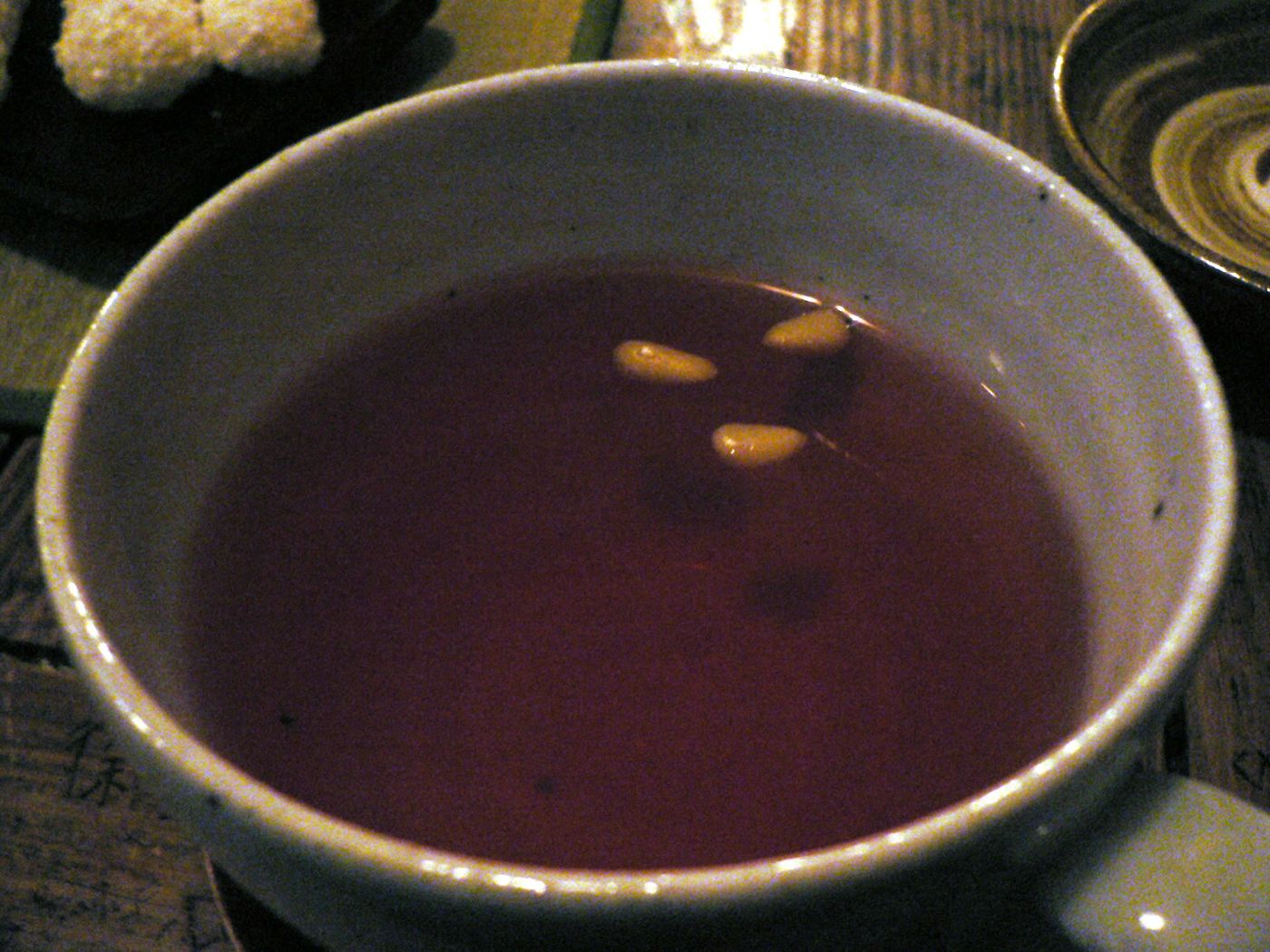 Sujeonggwa (Cinnamon-Ginger Punch with Dried Persimmon)수정과A cold, spicy-sweet punch of ginger and cinnamon simmered separately, sweetened, and served with softened dried persimmons and pine nuts — a New Year drink for guests.
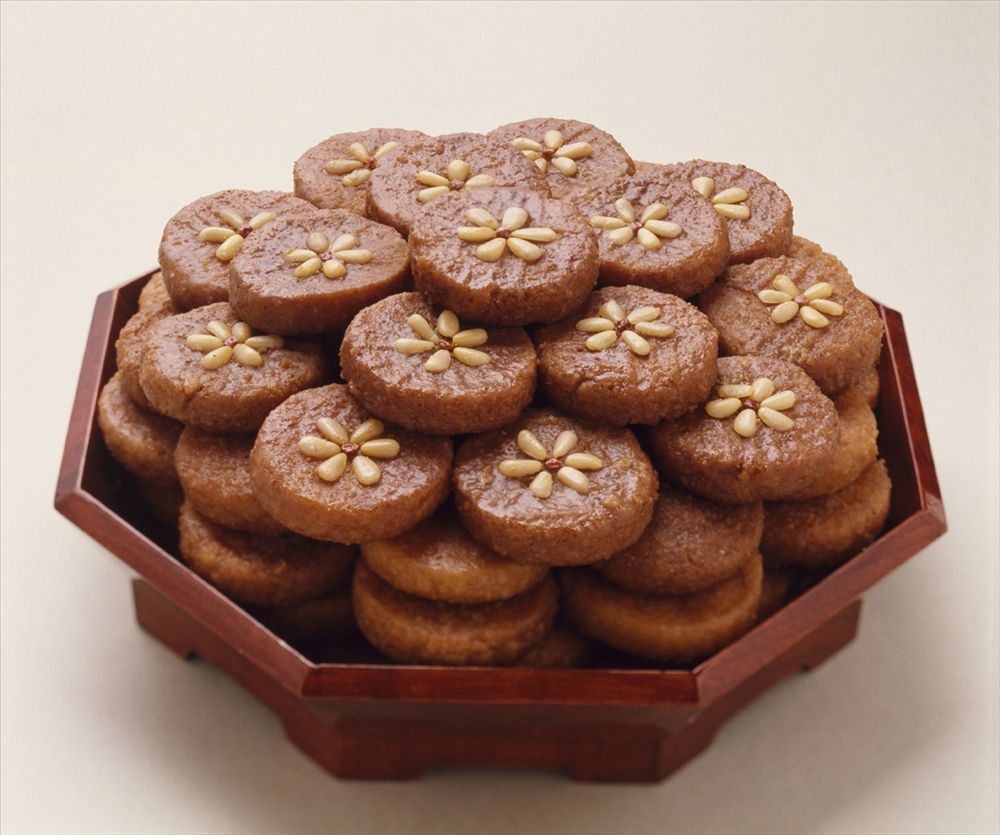 Yakgwa (Honey Cookies)약과Wheat dough rubbed with sesame oil and bound with honey, pressed into a carved mold, slow-fried and soaked in syrup — the best-known of Korea's honey-and-oil pastries.
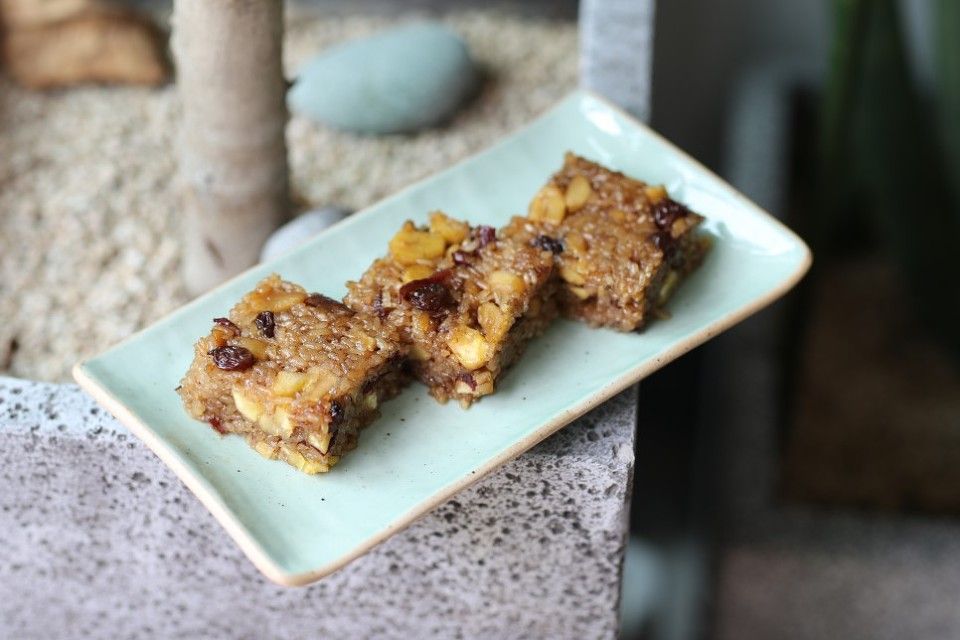 Yaksik (Sweet Rice with Chestnuts, Jujubes and Pine Nuts)약식Steamed glutinous rice darkened with soy sauce, brown sugar and honey and studded with chestnuts, jujubes and pine nuts — a full-moon festival food also called yakbap.
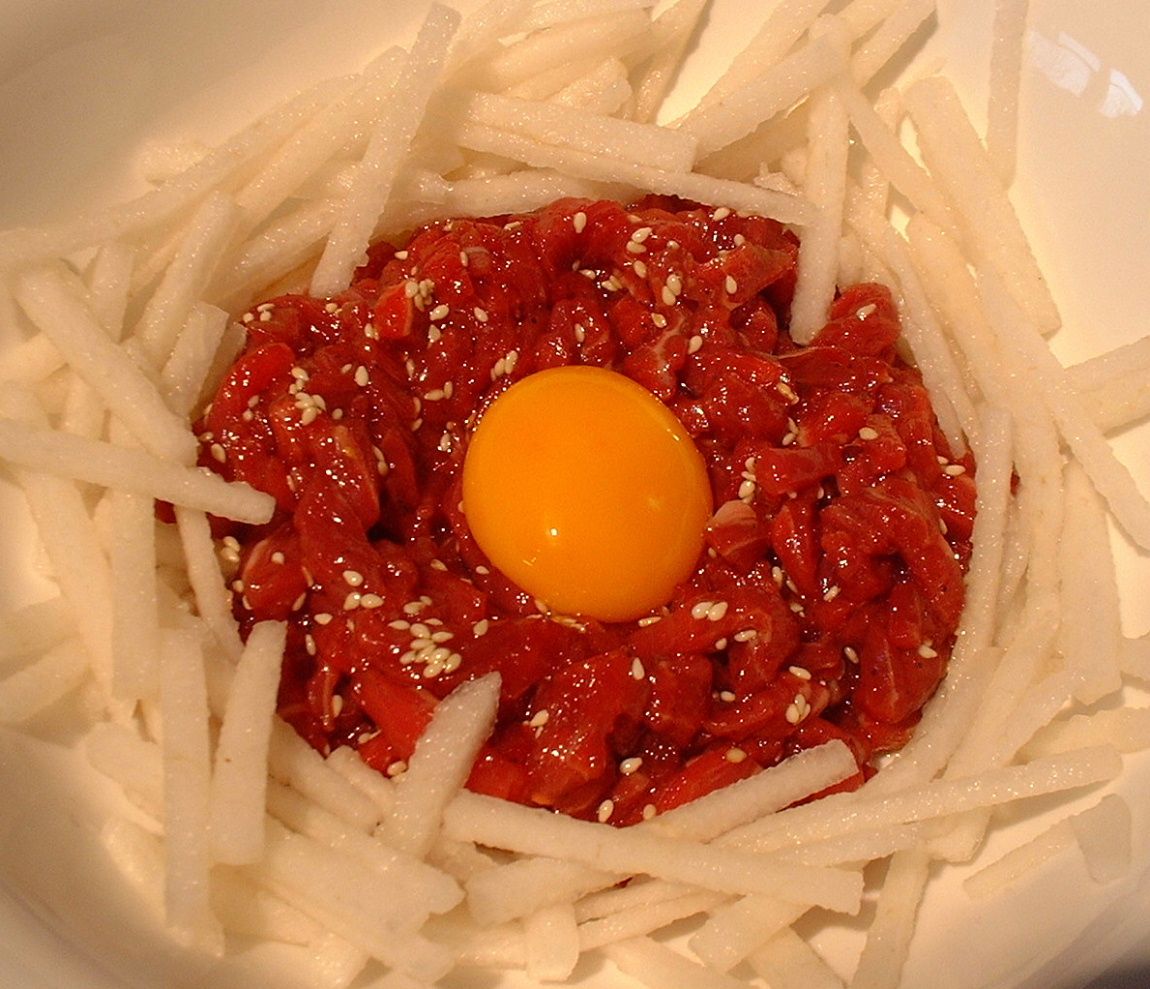 Yukhoe (Korean Seasoned Raw Beef)육회Thinly cut raw lean beef dressed with soy, sesame oil and garlic, served over Korean pear with an egg yolk. A festive, long-standing dish that needs the freshest meat and careful handling.
Sources
- 01잣 (Pine nut) — Encyclopedia of Korean Culture
- 02가평잣 (Gapyeong pine nuts) — Encyclopedia of Korean Culture
- 03잣나무 (Korean pine) — Encyclopedia of Korean Culture
- 04Korean Food Composition Table — Pine nut (Jat), Raw
- 05Global Perspectives on Allergen Labeling: Harmonization of Regulations and Practices (Allergy Asthma Immunol Res, 2025)
- 06An investigational report into the causes of pine mouth events in US consumers (Food Chem Toxicol, 2013)