History & Culture
Tteok: Korean Rice Cakes
떡
Steamed, pounded, pan-fried or boiled, tteok are the foods of Korean rites and celebrations, from a baby's hundredth day to the new year's rice-cake soup.
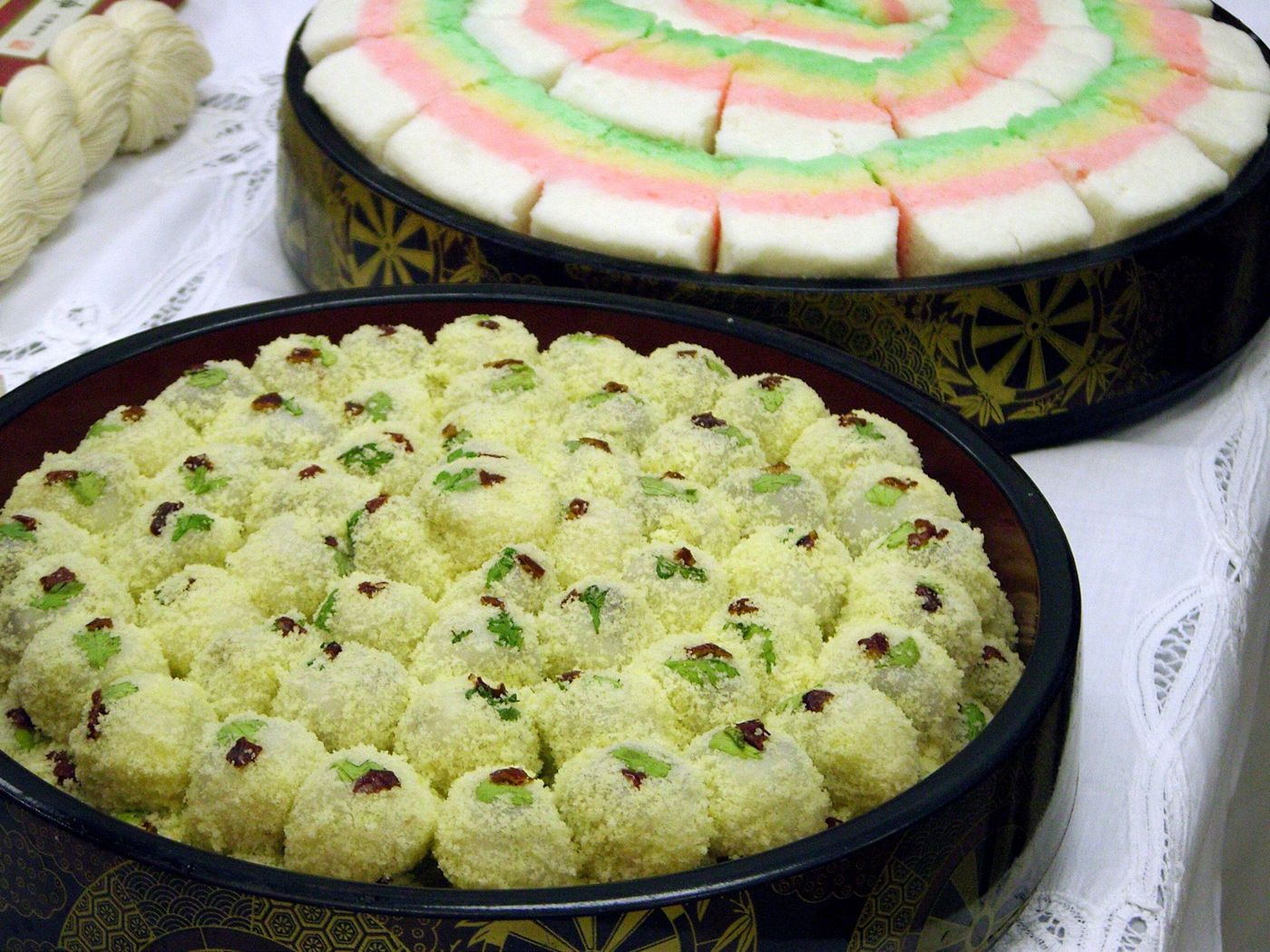 Photo: lesterhead, CC BY 2.0, via Wikimedia Commons
Tteok (떡) are cakes made from grain, most often rice, that has been steamed, pounded, pan-fried or boiled and then shaped. Everyday bap is the staple; tteok are what Koreans make when something needs marking. They appear at ancestral rites and shamanic rituals, birthdays and weddings, harvest festivals and housewarmings, and the old saying for an unlucky, quarrelsome household was that it was a house that ought to make tteok, meaning it needed to hold a rite for the household spirits.
Ancient steamers
No one knows exactly when Koreans began making tteok, but the earliest evidence is the steamer. Bronze and earthenware siru have been found at sites from the Lelang commandery period, and a mural in the Goguryeo tomb at Anak shows food being steamed in a kitchen. Since the main grains of the time were millet, barley and other dry-field crops, historians reason that the first tteok were simple steamed cakes of grain flour, the ancestor of today's siru-tteok. A Three Kingdoms legend in which a prince proves his maturity by the toothmarks he leaves in a rice cake suggests that pounded, chewy cakes also existed early.
In Goryeo, larger harvests and the spread of Buddhism, which discouraged meat and encouraged tea drinking, are credited with making rice cakes and sweets more elaborate. A Goryeo chestnut cake even appears in a Yuan Chinese household manual. By the Joseon period, writers classified tteok by method, and most of the types made today were established.
Four families of tteok
- Steamed (jeungbyeong, siru-tteok): rice flour steamed in a siru, plain or layered with beans, nuts, fruit or mugwort. The most basic is baekseolgi, plain white rice-flour cake, and the best-known for ritual is red-bean siru-tteok, layered with adzuki beans.
- Pounded (dobyeong): grain or flour steamed and then beaten in a mortar or on a board. Injeolmi (인절미) is steamed glutinous rice pounded smooth, cut and rolled in toasted soybean flour or bean paste; the eighteenth-century scholar Yi Ik described it, and food historians regard it as the oldest form of pounded tteok. Garaetteok (가래떡), long white cylinders of nonglutinous rice, is the base of new year's rice-cake soup and of tteokbokki.
- Pan-fried (jeonbyeong): rice dough fried in oil, such as hwajeon, small cakes topped with azalea or chrysanthemum petals in season.
- Boiled (danja and gyeongdan): balls of glutinous rice dough boiled and rolled in coatings such as bean powder, sesame or cinnamon.
Songpyeon (송편), half-moon cakes of rice dough filled with sesame, beans or chestnut and steamed over pine needles, sit between these families; they are the defining food of Chuseok and are described in seasonal foods.
Tteok through a life
Particular cakes mark particular moments. Pure white baekseolgi, regarded as clean and sacred, is the traditional food for a baby's twenty-first day, hundredth day (baegil) and first birthday, and it is also used in Buddhist services and mountain-spirit rites. On the first birthday, families make susu-pat-danja, sorghum dumplings rolled in red-bean coating, because red was believed to drive away harmful spirits; the custom was to make them every birthday until age ten and share them with neighbors. Red-bean siru-tteok is the classic offering for gosa, household rites performed when moving house or opening a business. At ancestral rites, steamed cakes are stacked high on footed stands, a practice described in jesa food.
On the seasonal calendar, sliced garaetteok goes into tteokguk at Seollal, and until fairly recently families queued at neighborhood mills before dawn in the days before the new year to have their rice pressed into garaetteok.
Tteok today
From the late nineteenth century, Western sweets and baked goods cut into the role of tteok, and making them moved out of the home: neighborhood mills (bangatgan) began grinding, steaming and pressing rice to order, and many families now buy tteok ready-made. Rice cakes have also found a second life. Shops sell individually wrapped cakes and modern variations, tteokbokki is one of the country's most popular street foods, and food manufacturers' use of rice for rice cakes rose by about a third in 2025, according to the national grain survey reported in rice in Korean culture.
Ingredients worth knowing
Tteok draw on the same pantry as banchan. Mung beans and adzuki beans become fillings and coatings, black soybeans and jujubes stud steamed cakes, and sesame fills songpyeon. Steaming, the oldest of the techniques, connects tteok to the wider family of Korean steamed dishes.
Sources
- 01떡 (Tteok) — Encyclopedia of Korean Culture
- 02시루떡 (Siru-tteok) — Encyclopedia of Korean Culture
- 03인절미 (Injeolmi) — Encyclopedia of Korean Culture
- 04가래떡 (Garaetteok) — Encyclopedia of Korean Culture
- 05백설기 (Baekseolgi) — Encyclopedia of Korean Culture
- 06수수팥단자 (Susu-pat-danja) — Encyclopedia of Korean Culture