Ingredient
Ssuk (Korean mugwort)
쑥
Romanization: ssuk
A silvery-backed, intensely aromatic wild herb that colors rice cakes green and perfumes spring soups. Young leaves go into ssuk-tteok, ssuk-beomuri and ssuk-guk; dried mugwort has long served for moxibustion and smudging.
Flavor
Strongly herbal and bittersweet, with a camphor-like, almost sage-and-chrysanthemum perfume. Cooked into rice cakes it turns soft, grassy and comforting; in soup it is fresh and slightly bitter.
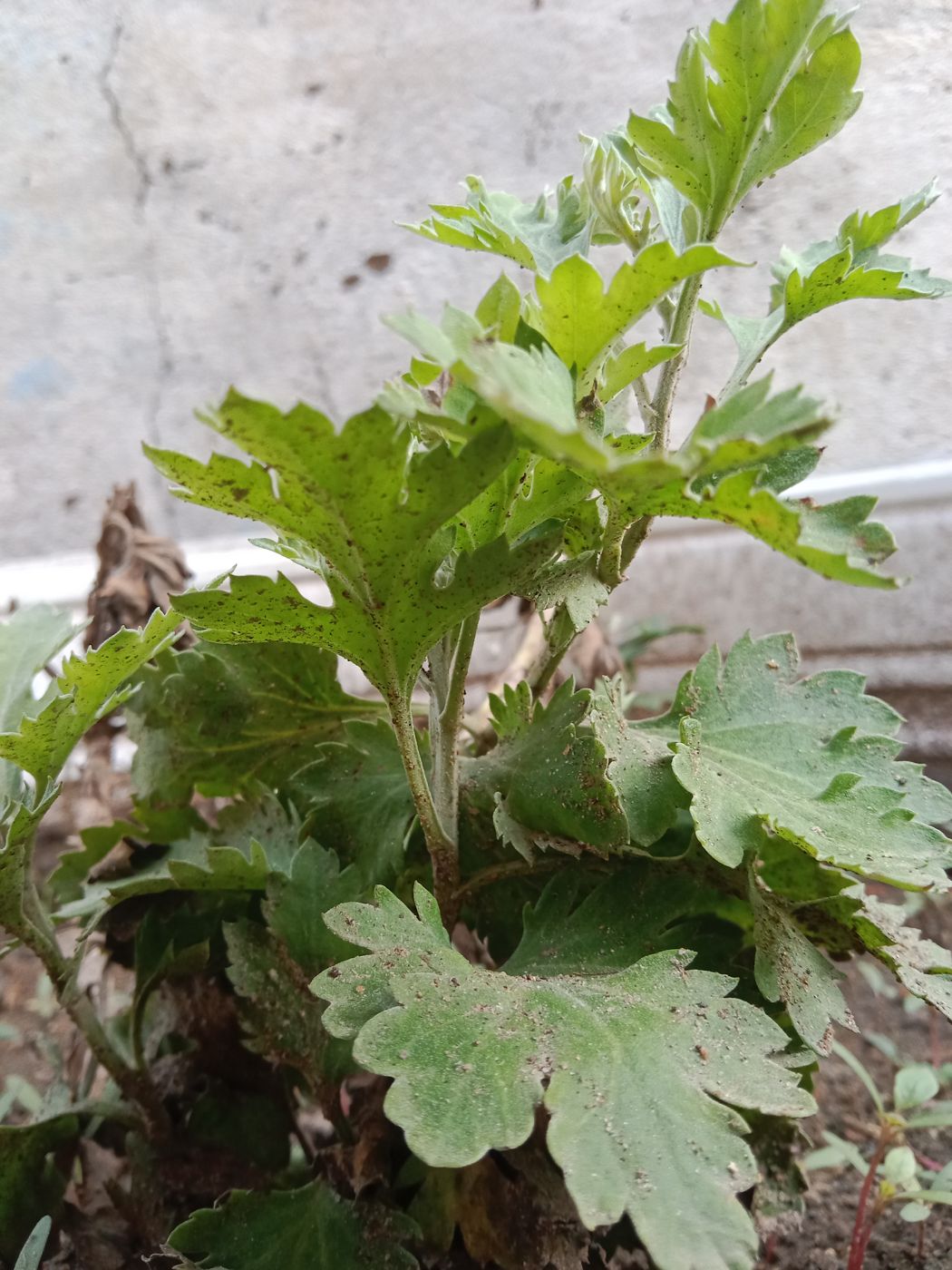 Photo: Tamilselvi v, CC BY-SA 4.0, via Wikimedia Commons
Origin & History
Ssuk is Korean mugwort (Artemisia princeps), a creeping perennial of the daisy family (Asteraceae) that spreads by underground stems into dense patches along field edges, embankments and hillsides. The deeply lobed leaves are green above and covered with white, cobwebby hairs beneath, which gives a patch of mugwort its pale shimmer; the plant can grow over a meter tall and flowers inconspicuously in late summer.
Few plants are as old in Korean culture. In the founding myth of Gojoseon recorded in Samguk yusa, the heavenly prince Hwanung gives a bear and a tiger a bundle of mugwort and twenty cloves of garlic, telling them they will become human if they eat these and stay out of the sunlight for a hundred days; the bear endures, becomes a woman and gives birth to Dangun, the legendary founder. Mugwort also belonged to the Dano festival of the fifth lunar month: households hung bundles by the door to ward off misfortune, and surichwi-jeolpyeon, rice cakes stamped with a cartwheel pattern and colored with mugwort or a related wild herb, were made for the holiday and presented at court.
Young leaves are picked in spring, when they are tender and fragrant; older leaves become tough and bitter and were instead dried for moxibustion, tinder and smoke to drive away summer mosquitoes. In Korean herbal medicine, mugwort leaf is a familiar warming remedy, and it is still made into tea.
In the kitchen, blanched mugwort is pounded with steamed rice for ssuk-tteok and ssuk-jeolpyeon, tossed raw with rice flour and steamed as ssuk-beomuri (recorded in a cookbook of the 1940s but eaten long before), and simmered in clear broth, sometimes rolled into little beef-and-mugwort dumplings, for ssuk-guk or aetang, an early-spring dish noted in several Joseon texts. Mugwort is also cultivated today, so mugwort rice cakes can be made year-round.
Nutrition
| Calories | 37 kcal |
|---|---|
| Protein | 3.4 g |
| Fat | 0.38 g |
| Carbohydrates | 7.04 g |
| Fiber | 5.9 g |
| Sodium | 3 mg |
Notable forVitamin K · Vitamin A · Iron · Potassium
Korean Food Composition Table entry "Mugwort (Ssuk), Raw" (쑥, 생것): also 605.91 µg vitamin K, 346 µg RAE vitamin A (4,153 µg beta-carotene), 8.14 mg iron, 652 mg potassium and 2.57 mg manganese per 100 g. Actual values vary with ingredients, portion size and preparation.
Health Benefits
- Concentrated green: Per the Korean Food Composition Table, raw mugwort is high in fiber, beta-carotene, iron and potassium, though it is usually eaten in small amounts.
- Very high in vitamin K: At about 606 µg per 100 g raw, mugwort is one of the richest vitamin K sources among Korean greens. People taking warfarin are advised to keep their intake of such foods consistent and to talk with their doctor.
- Food versus medicine: Mugwort's place in Korean herbal medicine and moxibustion reflects traditional practice; concentrated herbal preparations are not the same as culinary amounts and should be discussed with a health professional, especially during pregnancy.
- Wash well: Korea's food-safety ministry advises soaking spring greens, including mugwort, and rinsing them under running water at least three times. Avoid picking mugwort beside busy roads or sprayed fields.
Informational, not medical advice. Talk to a qualified professional about your own health and diet.
Dishes with Ssuk (Korean mugwort)
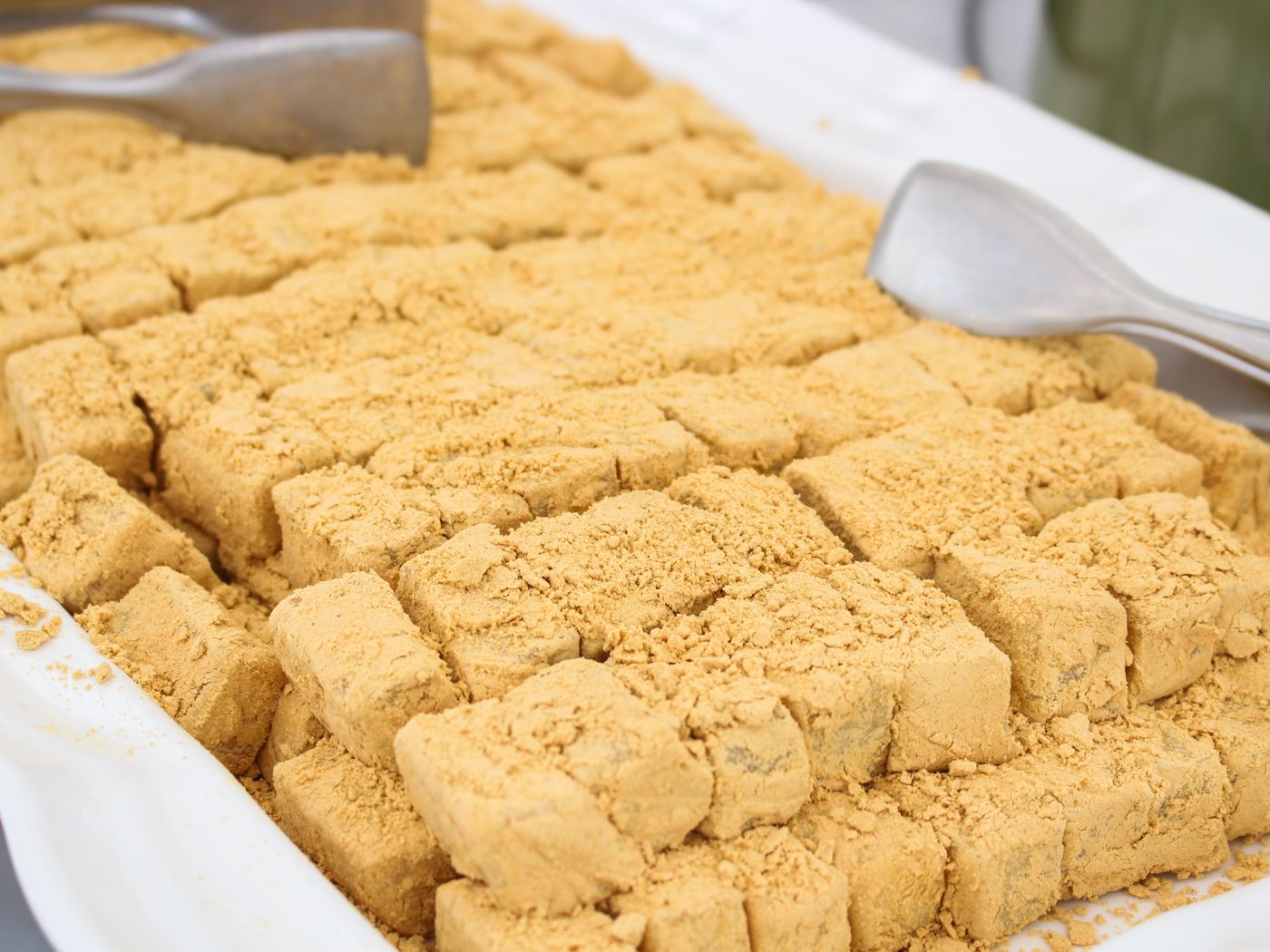 Injeolmi (Pounded Sticky Rice Cake with Bean Powder)인절미Steamed glutinous rice pounded until smooth and elastic, cut into pieces and rolled in roasted soybean powder — the chewy, nutty rice cake of markets, weddings and harvest time.
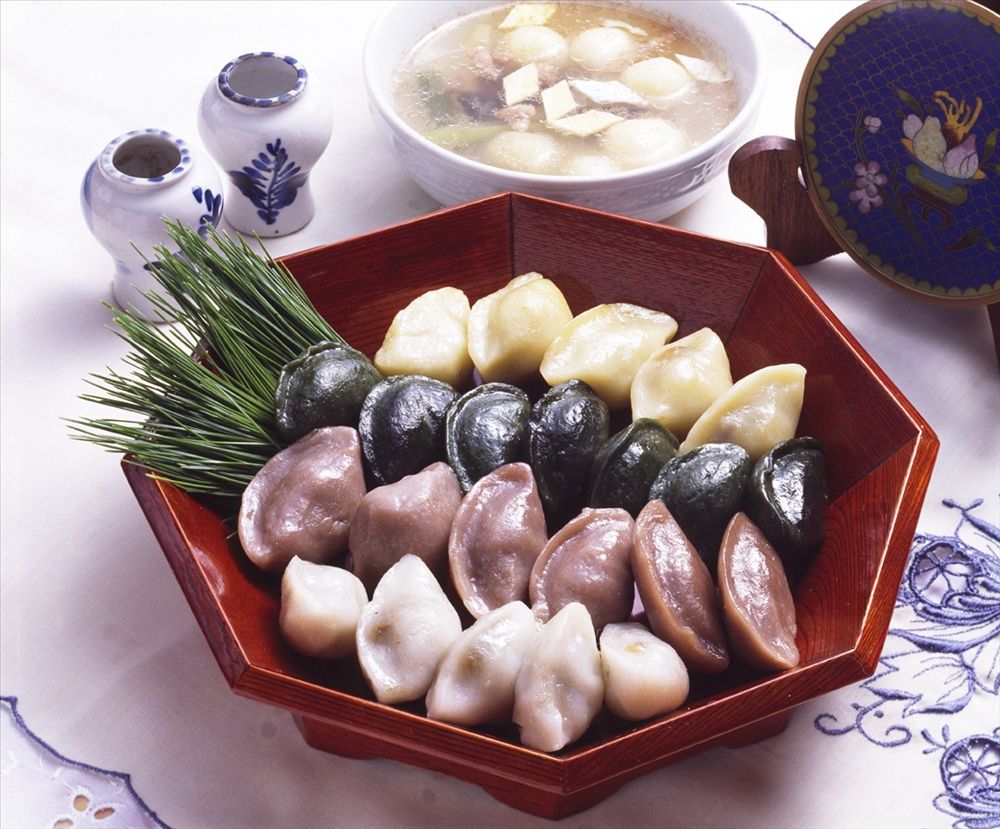 Songpyeon (Half-Moon Rice Cakes)송편Small half-moon cakes of rice dough filled with sweet sesame, beans or chestnut and steamed on a bed of pine needles — the rice cake of Chuseok, made with the new harvest.