Ingredient
Chestnuts
밤
Romanization: bam
Glossy brown nuts with a pale, starchy kernel, roasted on winter street corners, cooked into rice and yaksik, and stacked on the ancestral-rite table. Gongju in South Chungcheong is the best-known growing region.
Flavor
Sweet, mealy and mildly nutty when cooked, like a cross between sweet potato and nut; raw kernels are crisp and faintly astringent.
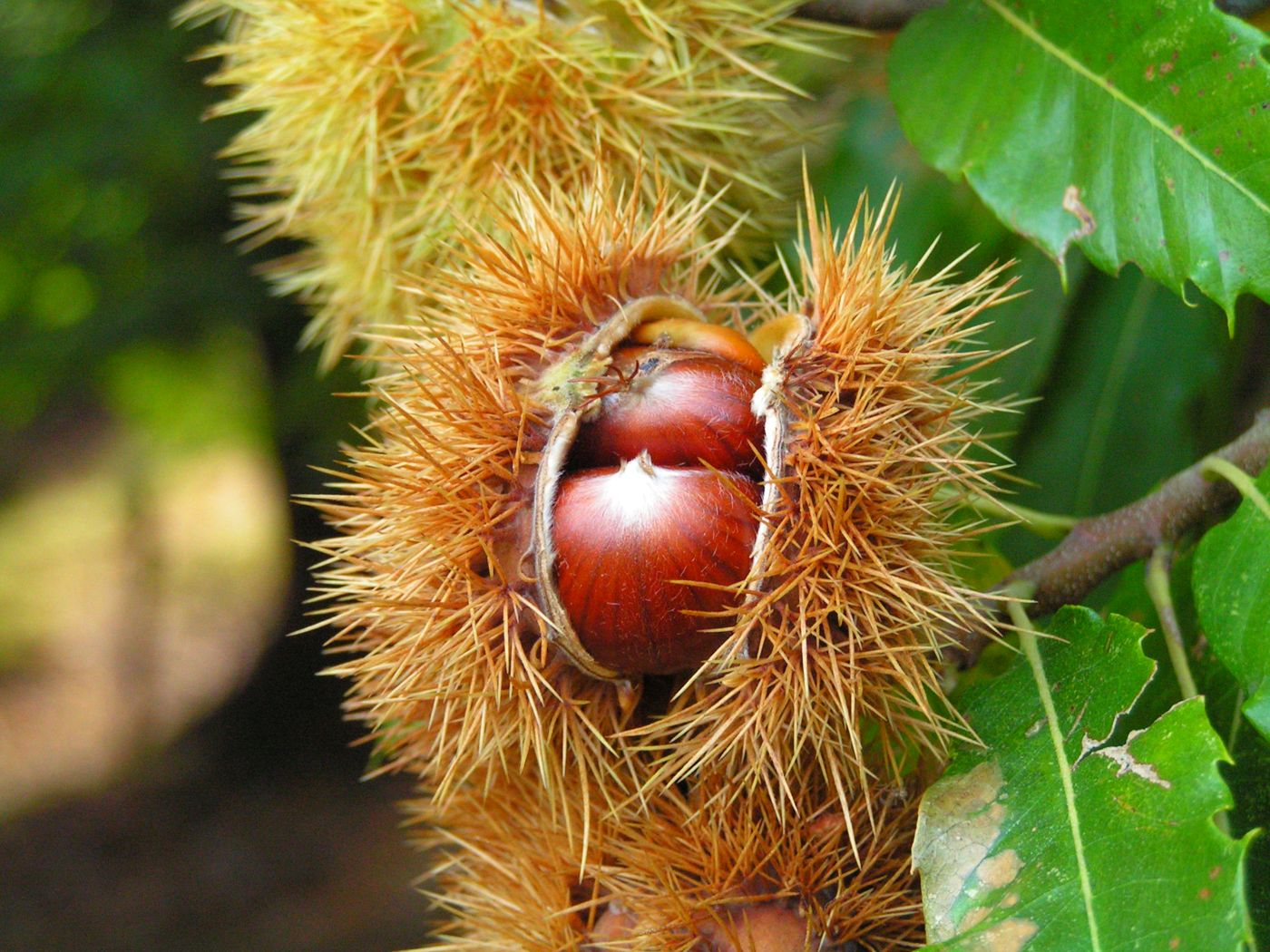 Photo: Benjamin Gimmel, BenHur, CC BY-SA 3.0, via Wikimedia Commons
Origin & History
Bam is the nut of the Korean chestnut tree, Castanea crenata, a deciduous tree of the beech family. Korean chestnuts were noted abroad very early: Chinese chronicles describing the third-century Mahan confederacy in the southwest report chestnuts as large as pears, and later histories say the same of Baekje.
Chestnuts are woven into Korean ritual. Peeled and trimmed into neat faceted shapes, they are piled high on the jesa table for ancestors, and at the pyebaek ceremony after a wedding the groom's parents toss chestnuts and jujubes to the bride as a wish for many children. In the cold months, vendors selling roasted chestnuts (gunbam) from street carts are a familiar sight.
Traditional native orchards were nearly wiped out by the chestnut gall wasp from around 1958, and growers replanted with resistant Korean and Japanese varieties; plantings expanded dramatically through the 1970s and 80s. The Encyclopedia of Korean Culture names Hadong, Hamyang and Sancheong in South Gyeongsang, and parts of South Jeolla and North Jeolla, as major growing areas. Gongju, the old Baekje capital, markets its chestnuts as a specialty with some two thousand years of history; a Korean government culture webzine puts the city's harvest at about 8,000 tons a year, roughly 17 percent of the national crop, and notes local chestnut makgeolli and rice cakes.
In the kitchen chestnuts are boiled or roasted as snacks and cooked into bambap (rice with chestnuts), yaksik, and a porridge of chestnut and rice flour described in Joseon-period texts such as Sallim gyeongje.
Nutrition
| Calories | 153 kcal |
|---|---|
| Protein | 3.16 g |
| Fat | 0.74 g |
| Carbohydrates | 33.46 g |
| Fiber | 6 g |
| Sodium | 1 mg |
Notable forVitamin C (19.4 mg) · Potassium (442 mg) · Manganese (2.03 mg) · Folate (62 µg)
Values copied from the Korean Food Composition Table (Rural Development Administration / National Institute of Crop Science) for this exact food, per 100 g edible portion. Actual values vary with ingredients, portion size and preparation.
Health Benefits
- Starchy rather than oily: Unlike most nuts, chestnuts are low in fat and mostly carbohydrate, with useful fiber, per the Korean Food Composition Table.
- Vitamin C and potassium: Raw chestnuts supply a fair amount of vitamin C — unusual for a nut — and potassium; some vitamin C is lost in cooking.
- Allergies: Chestnuts are tree nuts, and people with a tree-nut allergy should ask an allergist whether chestnuts are safe for them.
- Sweetened forms: Candied and syrup-preserved chestnuts carry substantial added sugar.
Informational, not medical advice. Talk to a qualified professional about your own health and diet.
Dishes with Chestnuts
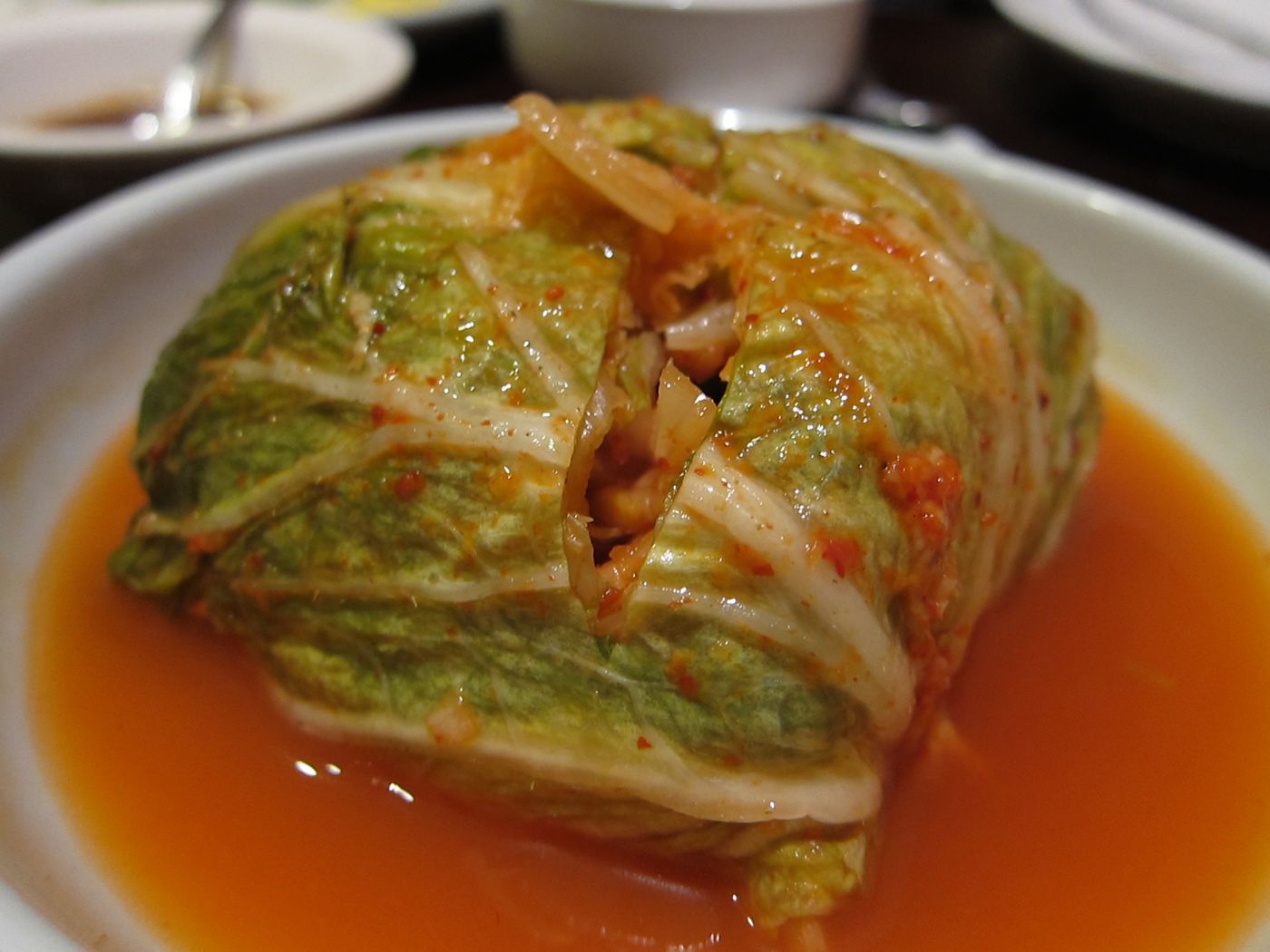 Wrapped Kimchi보쌈김치Cabbage, radish, fruit, nuts and seafood bundled inside whole cabbage leaves — the lavish wrapped kimchi of Gaeseong, made for honored guests.
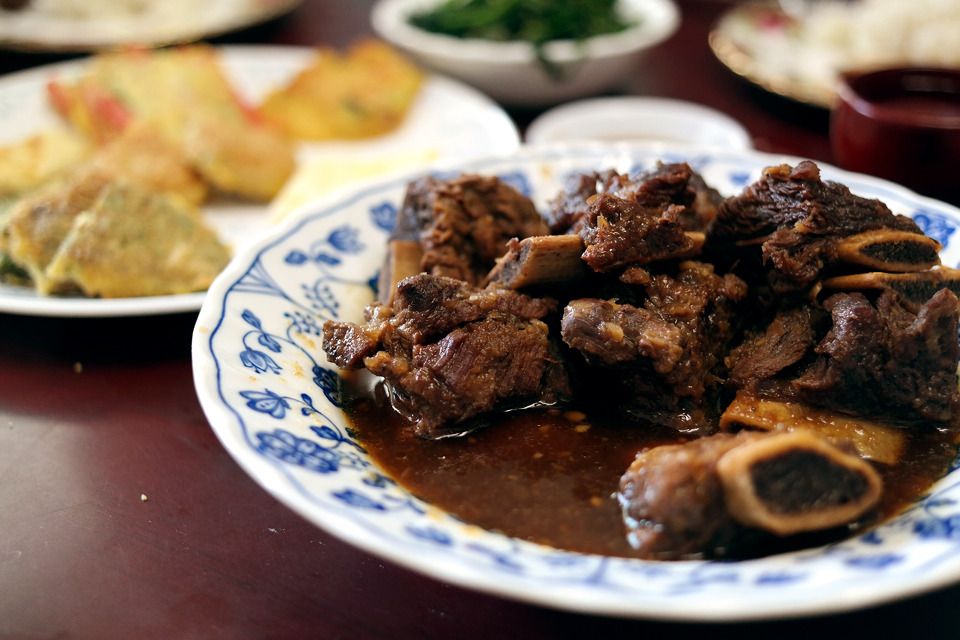 Galbi-jjim (Braised Beef Short Ribs)갈비찜Beef short ribs simmered slowly in soy sauce, pear and garlic with radish, carrot, chestnuts and jujubes until glossy and tender — a dish for holidays and honored guests.
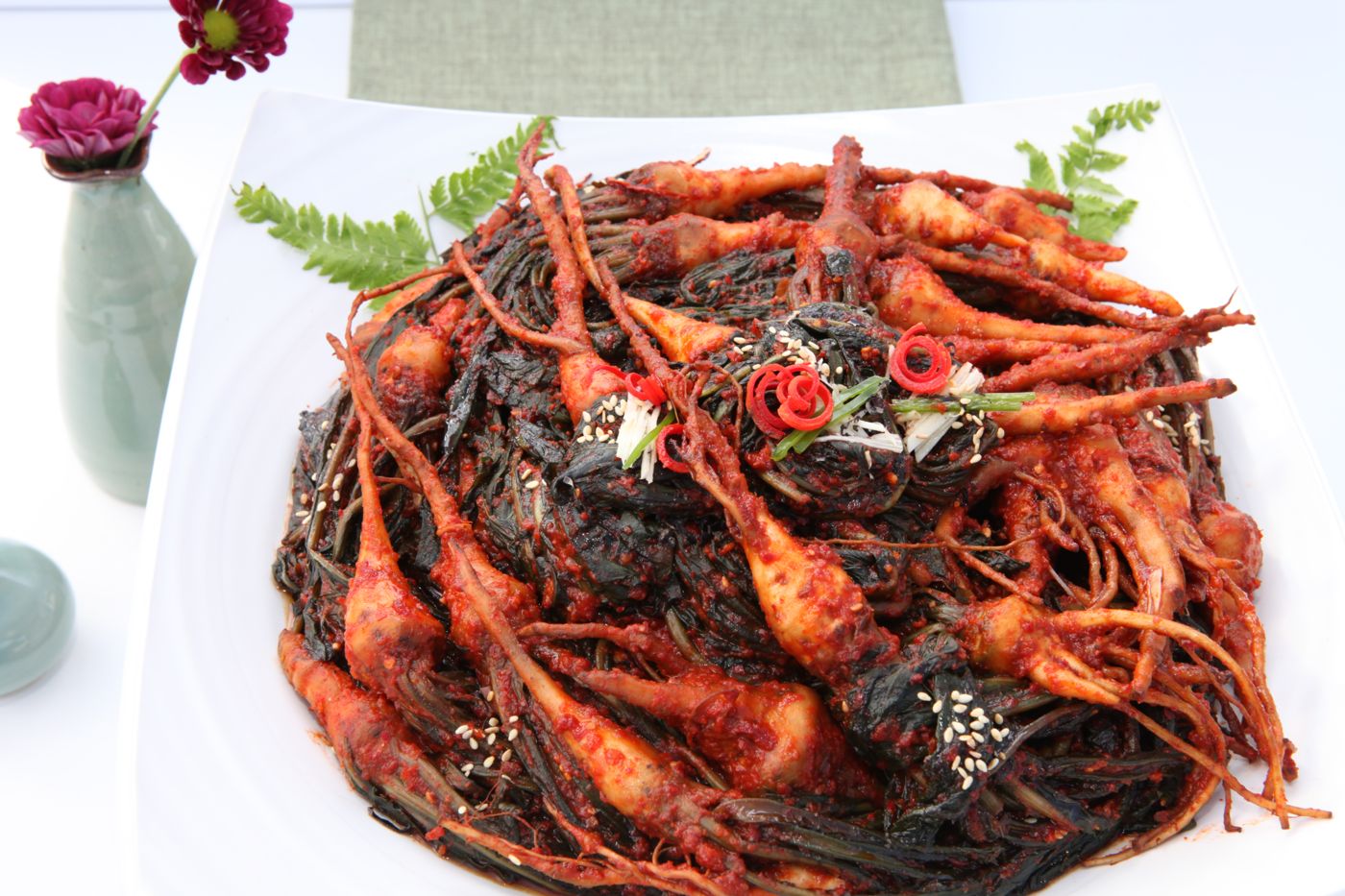 Bitter Godeulppaegi Kimchi고들빼기김치A bittersweet Jeolla kimchi of whole godeulppaegi greens and roots, soaked for days to tame the bitterness and dressed with anchovy jeotgal and chili.
- Soy Sauce Water Kimchi장김치Cabbage and radish cured in soy sauce instead of salt, floated in a lightly sweet soy brine with pear, chestnut and pine nuts — a court and gentry kimchi.
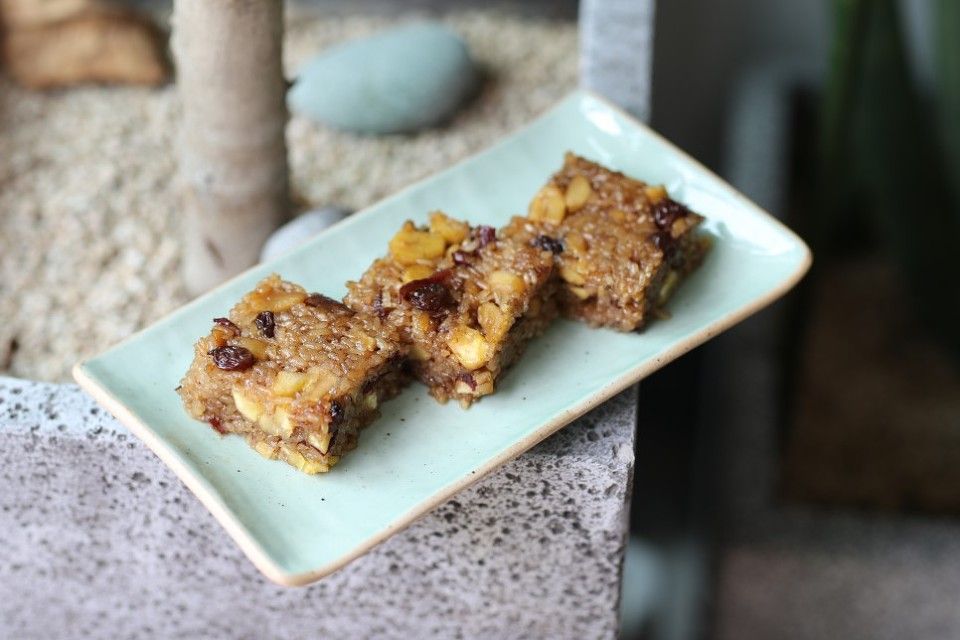 Yaksik (Sweet Rice with Chestnuts, Jujubes and Pine Nuts)약식Steamed glutinous rice darkened with soy sauce, brown sugar and honey and studded with chestnuts, jujubes and pine nuts — a full-moon festival food also called yakbap.
Sources
- 01밤 (Chestnut) — Encyclopedia of Korean Culture
- 02밤나무 (Chestnut tree) — Encyclopedia of Korean Culture
- 03밤죽 (Chestnut porridge) — Encyclopedia of Korean Culture
- 04Local Dining: Gongju — Webzine Korea, May 2023 (Korean Culture and Information Service)
- 05Specialty Products — Gongju City (English site)
- 06Korean Food Composition Table — Chestnut (Bam), Raw