History & Culture
Korean Temple Food
사찰음식
The plant-based cooking of Korean Buddhist monasteries: no meat, none of the five pungent vegetables, and a deep reliance on the seasons and on fermentation.
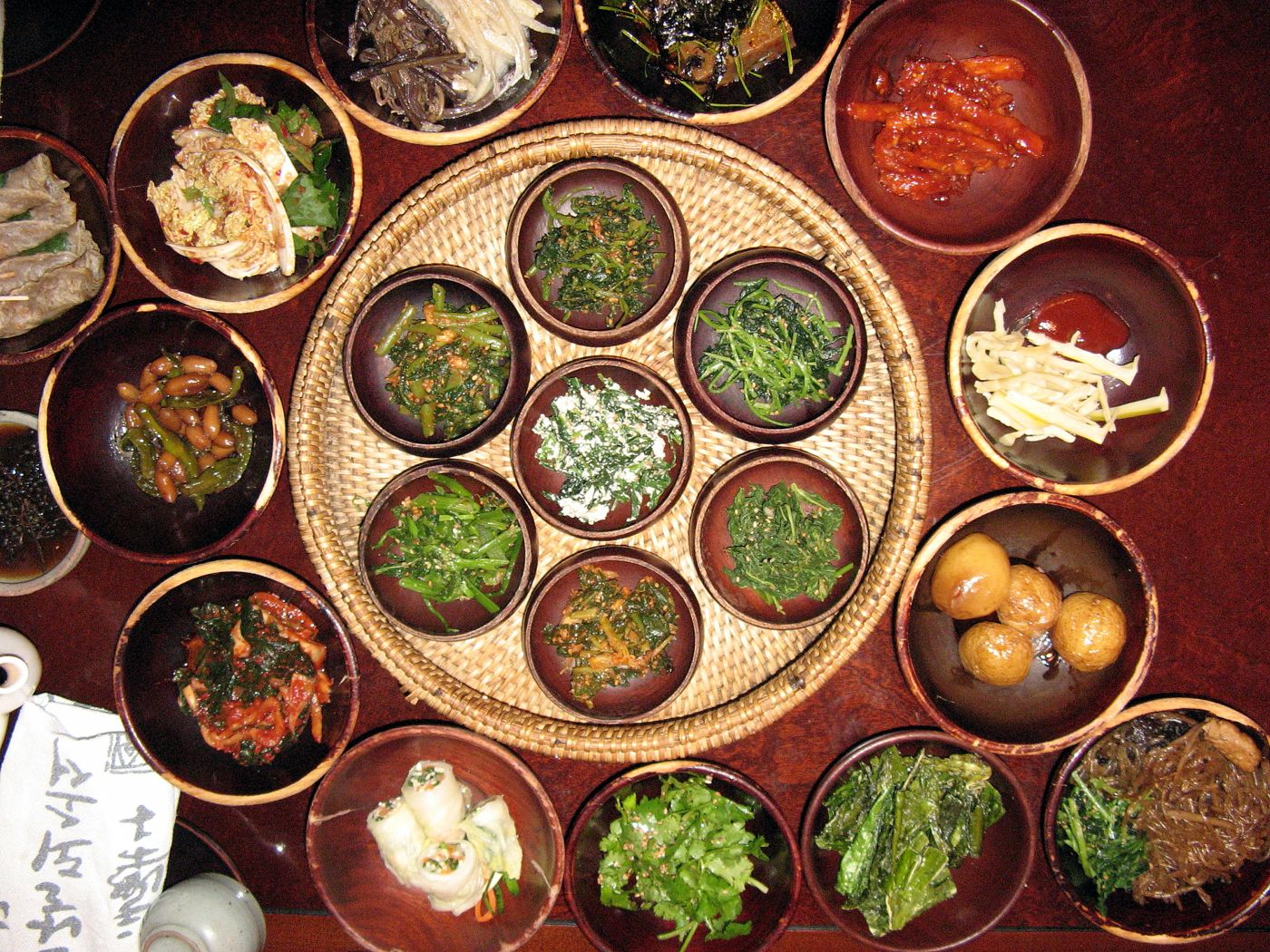 Photo: Richy! at flickr, CC BY-SA 2.0, via Wikimedia Commons
Sachal eumsik (사찰음식), temple food, is the cooking of Korea's Buddhist monasteries. It is vegetarian, but it is defined as much by what it leaves out and by the attitude behind it as by its ingredients. For monks and nuns, preparing and eating food is part of practice: a meal should sustain the body for study and meditation, waste nothing and show gratitude for what nature and other people have provided.
Origins of the rules
In the Buddha's time, monastics ate whatever was placed in their bowls on the alms round. Vegetarian discipline developed later and became especially strict as Mahayana Buddhism spread through China, Korea and Japan. Two principles shaped the Korean tradition. The first is the precept against taking life, which rules out meat and fish. The second is the avoidance of the osinchae (오신채), the five pungent vegetables.
The five pungent vegetables
The osinchae are a group of strong-smelling plants of the onion family and their relatives. Korean sources commonly list garlic, green onion, Chinese chives (buchu), wild chive (dallae) and asafoetida, though the exact membership varies from list to list, and some modern explanations substitute onion or leek. The traditional reasoning is that these plants overstimulate: eaten raw they are said to provoke anger, and cooked they are said to stir desire, both of which disturb a calm mind.
For anyone who knows ordinary Korean cooking, this is a striking omission. Garlic and green onion are in nearly every lay banchan. Temple cooks build flavor in other ways.
How temple cooks season
- Stocks from the mountains and sea: broths made from dashima (kelp) and dried mushrooms supply depth where anchovy or meat stock would otherwise be used.
- Jang: soy sauce, doenjang and other fermented soybean sauces are the backbone of seasoning, and many temples are known for making their own.
- Seeds and powders: ground perilla seed, sesame, bean powder and mushroom powder add body and savoriness.
- Aromatics that are permitted: ginger, Korean pepper (sancho) and herbs replace the forbidden alliums.
Temple kimchi is made without garlic and without salted seafood, relying on salt, chili and other seasonings for its fermentation and character.
Seasons and preservation
Monastery kitchens have traditionally depended on what grows nearby, so the menu follows the year: wild greens and shoots in spring, cucumbers and squash in summer, roots and mushrooms in autumn. The surplus is preserved by drying, pickling in soy sauce or doenjang in the manner of jangajji, and fermenting. Dried greens and pickles carry the kitchen through winter, the same logic that underlies lay dishes like bracken namul and perilla leaf pickles.
The formal meal
The ritual monastic meal, baru gongyang (발우공양), is eaten from a nested set of wooden bowls, usually four: one each for rice, soup, side dishes and clean water. Diners take only what they will eat, and at the end the bowls are rinsed with the water, which is then drunk, so that not a grain is wasted.
Temple food today
Temple cuisine has drawn growing public interest in South Korea and abroad, helped by temple-stay programs and by cooking classes such as those at the Korean Temple Food Center in Seoul. Its appeal to modern diners is easy to understand: it is plant-based, seasonal and built on fermented seasonings, and it offers a clear philosophy of eating with attention.