History & Culture
Rice in Korean Culture
한국인의 밥과 쌀
Bap is the center of the Korean meal: how rice farming spread, why mixed-grain rice was the norm for centuries, and how fast rice consumption is falling today.
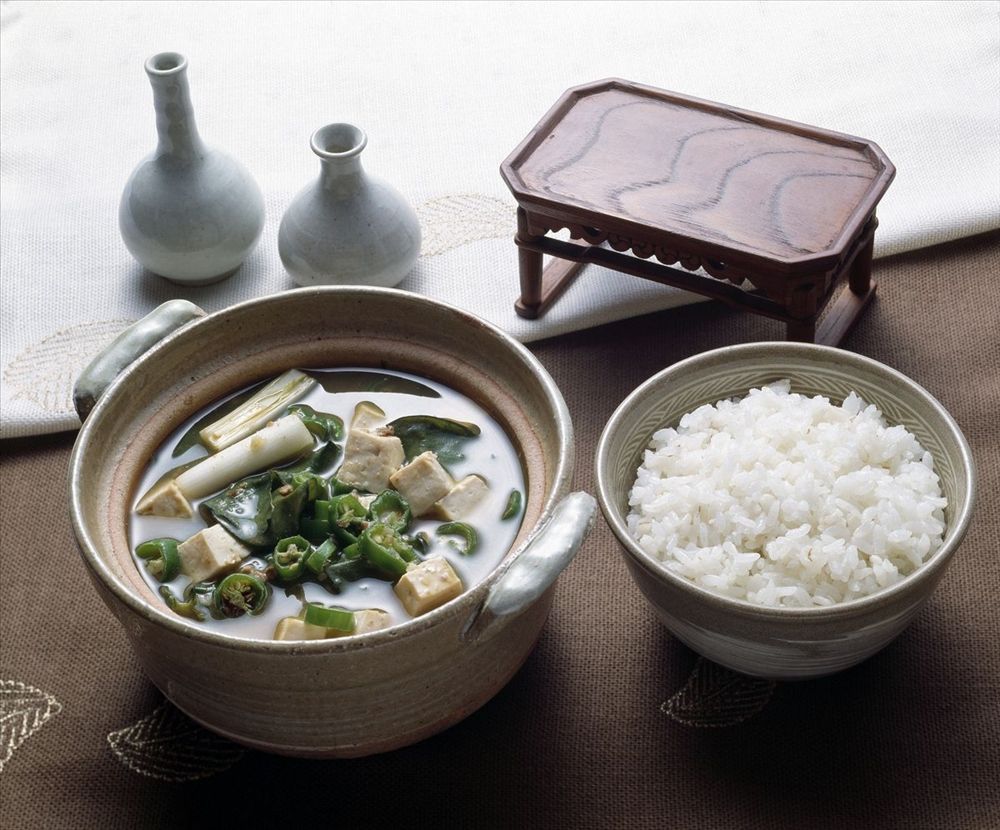 Photo: Korea.net / Korean Culture and Information Service, CC BY-SA 2.0, via Wikimedia Commons
In Korean, bap (밥) means cooked rice, and it also means a meal. The overlap says a great deal. A traditional Korean meal is built around a bowl of rice, with soup, kimchi and banchan arranged to accompany it, and the Encyclopedia of Korean Culture observes that in the old way of eating a person could make a meal of rice with nothing more than soy sauce or chili paste, a sign of how much more weight the rice carried than the dishes around it.
Words for rice
Rice has a vocabulary of respect. Ordinary rice is bap; served to an elder it is jinji; at the royal table it was sura, the root of the king's surasang; and rice offered at ancestral rites is me or jemme. The verb changed too, from the plain "eat" to honorific forms for elders and the king. These distinctions mirror the graded table settings described in the Korean table.
How rice came to the peninsula
Rice reached Korea from China, though historians still debate the route: overland from the north, by sea from the Shandong peninsula, or from southern China to the southern coast. Carbonized rice found at Heunam-ri in Yeoju, Gyeonggi Province, dates to roughly the sixth or fifth century BCE, and the Encyclopedia of Korean Culture places the start of rice farming at least as early as the late Neolithic. Chinese and Korean chronicles mention rice cultivation in the southern states around the turn of the first millennium, and the great Byeokgolje reservoir in today's Gimje, built around 330 CE, shows rice paddies being engineered on a large scale.
Cooking methods followed the tools. Early grain was probably boiled into porridge in fragile earthenware or steamed in a siru; iron cauldrons, known from Silla tombs, made it possible to cook rice into the separate, glossy grains of modern bap. Joseon writers took pride in the result. A nineteenth-century household text quoted in the Encyclopedia of Korean Culture claims Korean rice-cooking was famous throughout the world, and gives careful advice on washing, water levels and gentle heat.
Rice for some, grain for most
For most of history, white rice was a luxury. Rice was the staple of the yangban, but the majority of people ate japgokbap (잡곡밥), rice stretched with or replaced by barley, millet, sorghum, beans and adzuki beans. The range of grains grew over time: millet and sorghum in the Three Kingdoms period, oats in Goryeo, and peas in Joseon. Mixed-grain rice became ritual food too: on the first full moon of the lunar year, households cooked ogokbap, five-grain rice, and shared it with neighbors, a custom described in seasonal foods.
The twentieth century brought both scarcity and abundance. Under Japanese rule, large quantities of Korean rice were shipped to Japan, and in the war years harvests were requisitioned while many Koreans were issued Manchurian soybean cake instead. After liberation and the Korean War, chronic shortages led the government to promote mixed grains and wheat flour, a campaign told in food in modern Korea. Only in the 1970s, with high-yielding Tongil rice varieties bred from crosses of indica and japonica types, did the country become self-sufficient, and only then did most Koreans eat white rice every day.
Rice on the modern table
Rice remains the anchor of the balanced Korean meal, but Koreans eat much less of it. According to the national grain consumption survey, average consumption in the 2025 grain year was 53.9 kg of rice per person, about 148 g a day and the lowest since records began in 1962. That is roughly half the level of the mid-1990s; the 2024 figure, 55.8 kg, compared with 120.5 kg thirty years earlier. Reporting on the survey connects the decline to the growth of single-person and dual-income households.
Rice is not vanishing so much as changing form. The same survey found that food and beverage manufacturers used about 932,000 tonnes of rice in 2025, up 6.7 percent, with rice-cake makers among the fastest-growing users. Shelf-stable cooked rice, convenience-store meals and frozen rice dishes have absorbed part of what the home rice cooker once did.
Mixed grains today
Japgokbap, once the food of necessity, has been recast as a choice. Many households now cook rice with brown rice, barley, black rice or beans for flavor and fiber. The Encyclopedia of Korean Culture notes that pairing rice with legumes and millet supplies protein and other nutrients that polished white rice alone lacks, which is part of why mixed-grain rice has found a place in health-minded home cooking.