Regions
Sokcho
속초
A northern East Sea port shaped by wartime refugees from Hamgyeong: Abai Village sundae, squid stuffed in place of intestines, and the raw-fish stalls of Daepo port.
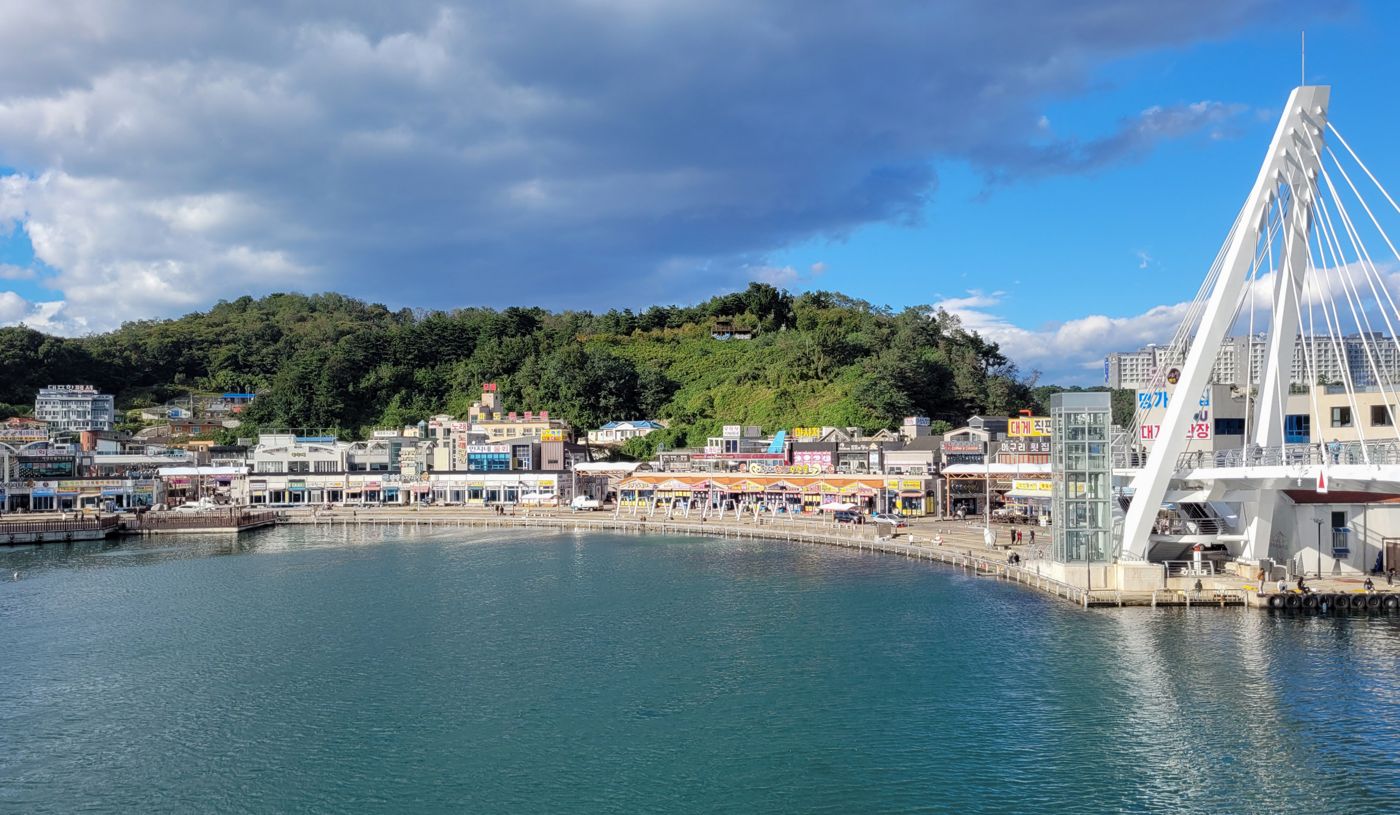 Photo: Bernard Gagnon, CC0, via Wikimedia Commons
Sokcho is a port city on Korea's northeast coast, between the peaks of Seoraksan and the East Sea. The Encyclopedia of Korean Culture describes it as the central fishing port of the northernmost fishing grounds in South Korea, where cold and warm currents meet and bring pollack, squid, sand lance, saury and octopus. Its food culture carries an unusual history: much of it was brought by people who fled the North during the Korean War and could never go home. For the province, see Gangwon; for the coast to the south, Gangneung.
A city on the border
Sokcho lies north of the 38th parallel. The encyclopedia records that after liberation in 1945 it came under North Korean rule, until South Korean forces took it in 1951. It became a city in 1963. During and after the war, refugees from the northeastern provinces, above all South Hamgyeong, settled here. For the food of those provinces, see the northern provinces.
Abai Village
Abai Village is the heart of that story. The encyclopedia explains that people from Hamgyeong who had come south in the war heard that others from their hometowns were gathering in Sokcho, and joined them, building a settlement of shacks on the sand bar of Cheongho-dong. The Korea Tourism Organization notes that abai is Hamgyeong dialect for a kindly old man, like a grandfather, and that residents lived from fishing and manual labor. Most of the first generation has since died, and their descendants live there now. An engineless ferry, the gaetbae, still crosses the roughly 50-meter channel between downtown and the village, moved by passengers hauling on a steel cable; the encyclopedia notes that the city museum displays a gaetbae mast as a symbol of the displaced. The village became a national attraction after it appeared in the 2000 television drama Autumn in My Heart.
Abai sundae and squid sundae
The village's signature dish is abai sundae. The encyclopedia describes pork large intestine stuffed with sticky rice, foxtail millet, blood, bracken, cabbage leaves and mung bean sprouts, then steamed. It traces the dish to Hamgyeong-style sundae, which used glutinous rice and glass noodles and was generously seasoned, adapted by refugees in Sokcho. See sundae, jopssal and mung bean sprouts.
Squid sundae (ojingeo-sundae) is the coastal improvisation. According to the encyclopedia, refugees used squid, plentiful on the East Sea, in place of pig intestines. Its entry on the dish describes the method: the body is kept whole and the innards pulled out through the opening, the skin is peeled, and the legs are blanched and chopped. They are mixed with pressed tofu, blanched mung bean sprouts, chili, green onion, garlic and beaten egg. The body is filled about two-thirds full, so it will not burst, closed with a skewer and steamed over high heat for about twenty minutes, then cooled and sliced into rounds about a centimeter thick. The encyclopedia counts it as a Gangwon local dish and notes a Gyeonggi version made from dried squid.
Other refugee foods, the encyclopedia says, include gajami-sikhae, flounder fermented with grain, and myeongnan-jeot, salted pollack roe. In Abai Village's restaurant alley, the Korea Tourism Organization lists Hamheung-style cold noodles, stuffed squid and North Korean-style sundae soup (sundaeguk).
Daepo port
Daepo, at the southern edge of the city, is older than Sokcho itself. The Korea Tourism Organization notes that maps published just after the Korean War mark Daepo among notable ports while leaving Sokcho off, and that after Sokcho Port opened in 1942, Daepo became a quiet harbor with few boats. The encyclopedia records that a market for seafood once met there every five days, until it closed in 1976, and that seaweed is farmed offshore. The rise of Seoraksan as a destination brought it back: today Daepo is known for its raw-fish market, where fish is chosen and sliced in front of the customer. See preparing hoe and hoe culture.
Pollack and the changing sea
Sokcho's other foods follow the catch, and the encyclopedia lists pollack first among the city's major fish, ahead of squid, sand lance and saury. For pollack dishes, see bugeo-guk and saengtae-jjigae.
Dishes from this region
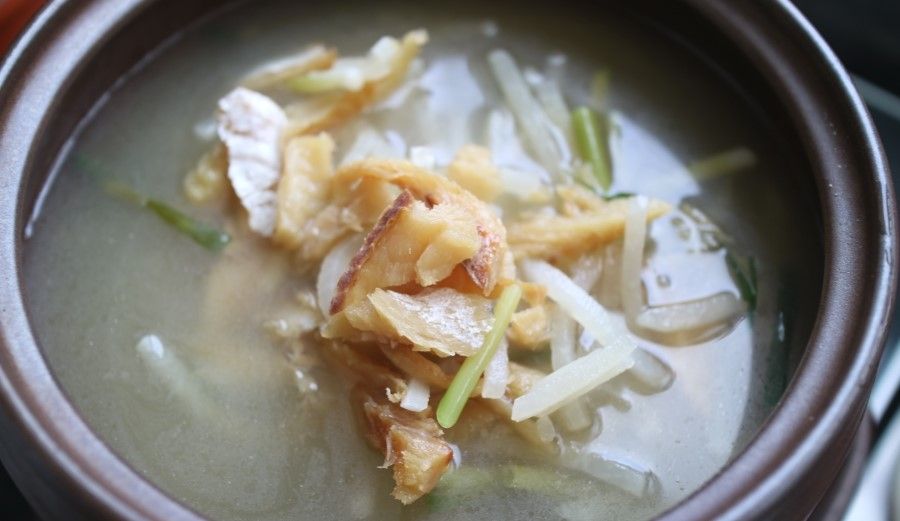 Bugeo Guk (Dried Pollock Soup)북엇국Shredded dried pollock sautéed in sesame oil and simmered into a milky, savory broth with radish, tofu and a ribbon of egg — Korea's favorite morning-after soup.
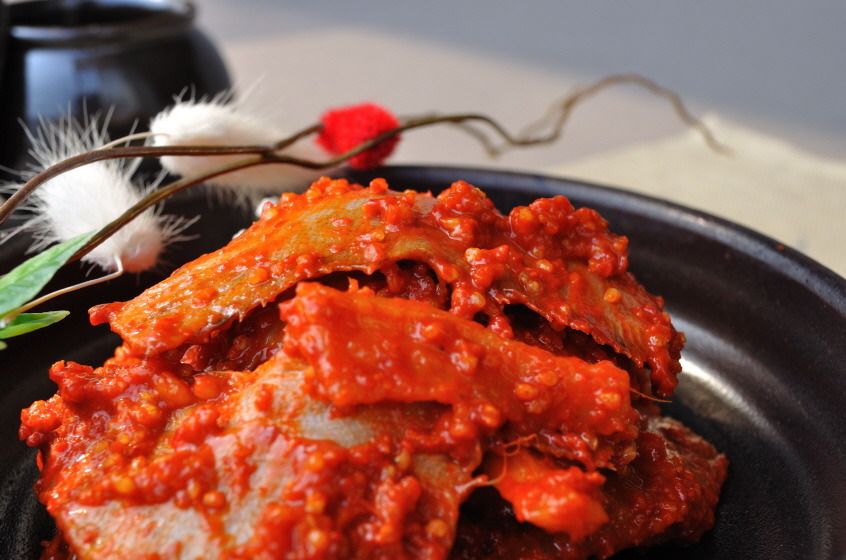 Fermented Flatfish with Millet가자미식해Salted flatfish fermented with foxtail millet, malt, radish and chili — the tangy, spicy sikhae of Hamgyeong, carried south to the Gangwon coast.
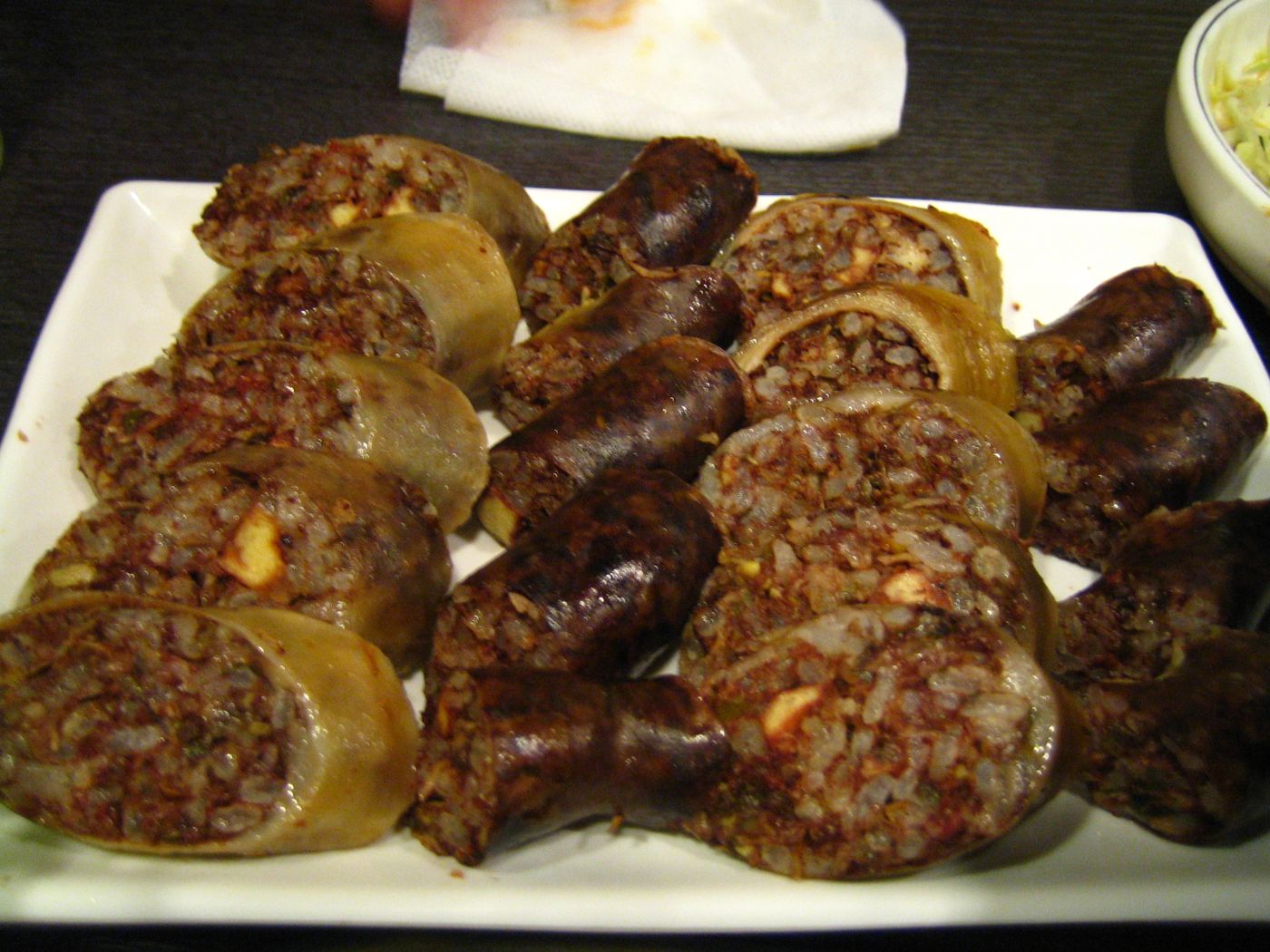 Sundae (Korean Blood Sausage)순대Pork intestine stuffed with pig's blood, glutinous rice, glass noodles and vegetables, then steamed — a northern farmhouse food that became a nationwide street snack.