Ingredient
Foxtail millet
좁쌀
Romanization: jopssal
Tiny, round, golden grains of hulled foxtail millet, the grain of the plant Koreans call jo. Once a staple second only to rice, it now appears as a sunny fleck in mixed-grain rice, in five-grain rice for the first full moon, and in the fermented fish of the far northeast.
Flavor
Mild, sweet and slightly nutty, with a fine, bead-like texture; non-glutinous *mejo* stays separate and fluffy in rice, while glutinous *chajo* turns soft and clinging.
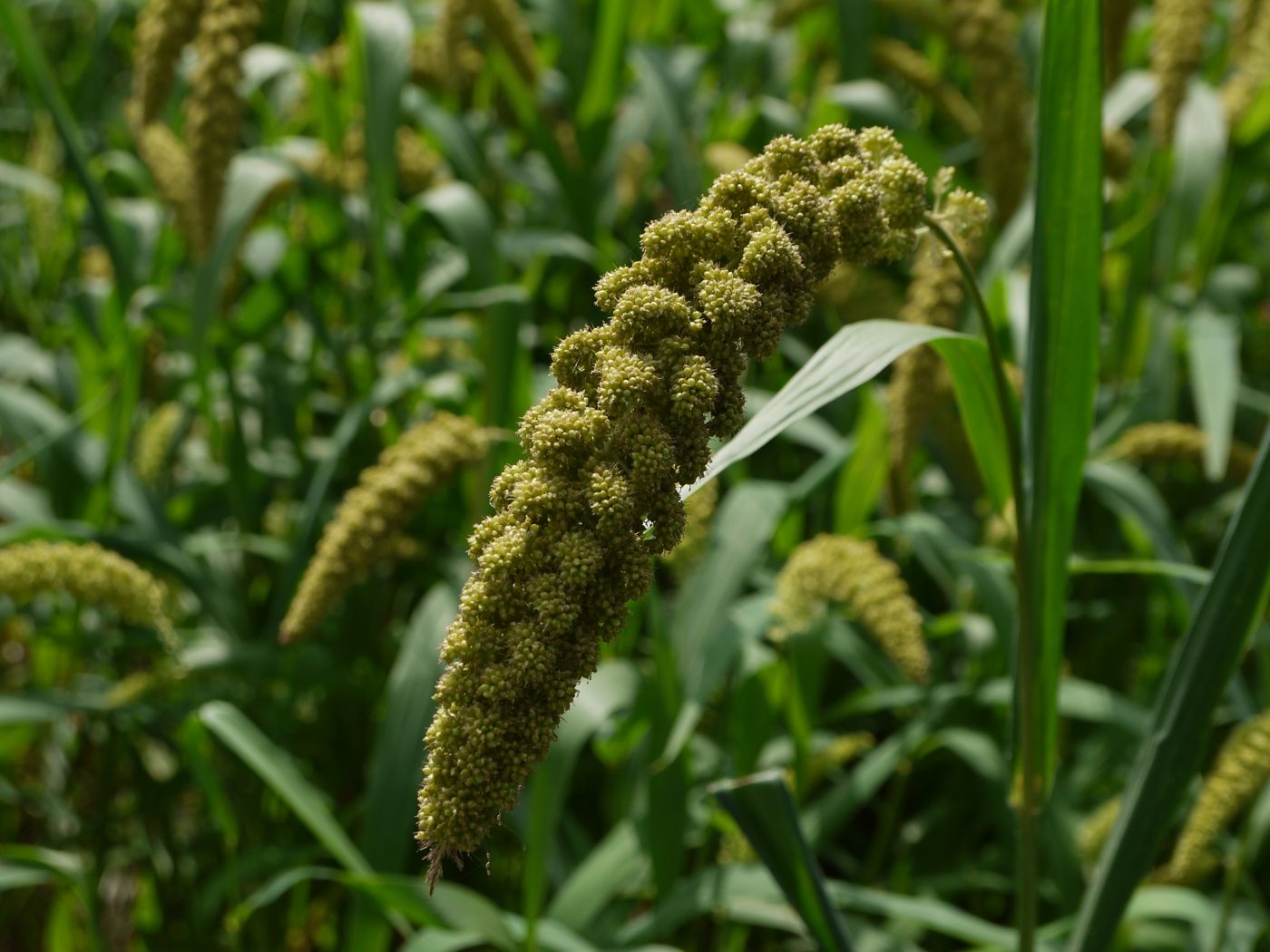 Photo: STRONGlk7, CC BY-SA 3.0, via Wikimedia Commons
Origin & History
Jopssal is the hulled grain of foxtail millet, Setaria italica (jo is the plant; ssal means hulled grain). Its wild ancestor is green foxtail, a common weed that still crosses readily with the crop. Like rice, foxtail millet comes in two starch types: non-glutinous mejo, with larger, yellower and less sticky grains, and glutinous chajo. It thrives in warm, dry conditions and poor soil, and it grows well with little fertilizer.
Millet is among the oldest grains eaten in Korea. Carbonized millet has been recovered from the Neolithic site of Namgyeong-ri near Pyongyang, and by the era of the early tribal states it counted among the five grains alongside other millets and sorghum. In the Goryeo period it was the most widely produced grain and the leading staple after rice, and the early Joseon farming manual Geumyang japnok lists fifteen varieties. Korean millet was well enough regarded that it was exported to Russia around the turn of the twentieth century.
The modern decline was abrupt. According to the Encyclopedia of Korean Culture, the area planted to foxtail millet fell from about 138,600 hectares in 1963 to roughly 1,500 hectares by 1983 — a loss of 99 percent in twenty years — because its yields and returns were low and it lost out to soybeans as the crop sown after barley. Gangwon, North Gyeongsang, South Jeolla and Jeju remained the main growing areas.
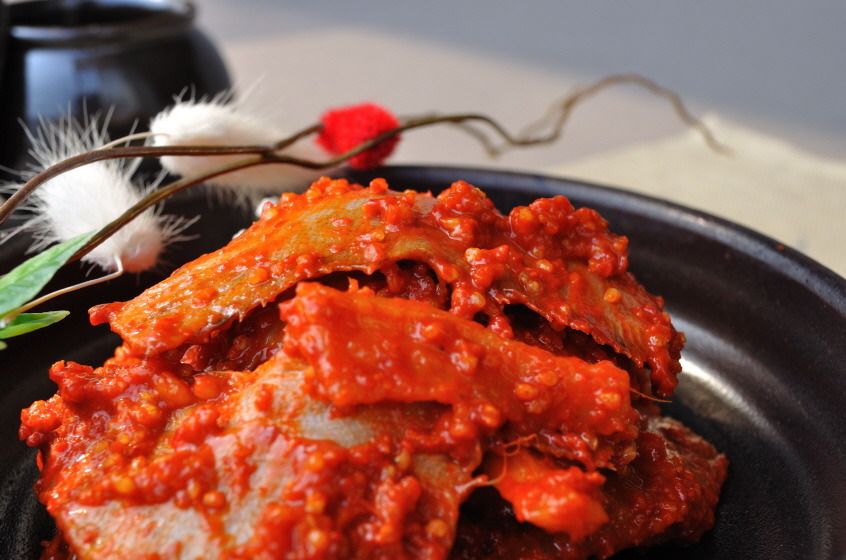
Today jopssal is mostly cooked with rice as jobap or as one of the grains in ogokbap, the five-grain rice shared on Jeongwol Daeboreum (see whole grains and japgokbap). In Hamgyeong cooking, thick-cooked millet rice mixed with malt, garlic and chili is layered with salted flounder to make gajami-sikhae; the malt converts the millet starch to sugars as it ferments. Millet has also been used for tteok, taffy, liquor and paste.
Nutrition
| Calories | 373 kcal |
|---|---|
| Protein | 11.48 g |
| Fat | 3.91 g |
| Carbohydrates | 71.7 g |
| Fiber | 6 g |
| Sodium | 6 mg |
Notable forThiamin (0.87 mg) · Magnesium (141 mg) · Iron (3.45 mg) · Zinc (3.56 mg)
Values copied from the Korean Food Composition Table (Rural Development Administration / National Institute of Crop Science) for this exact food, per 100 g edible portion. Values are for dry grain. Glutinous millet (차조) lists very similar figures, with 4.9 g fiber. Actual values vary with ingredients, portion size and preparation.
Health Benefits
- More protein and fiber than white rice: Per the Korean Food Composition Table, polished foxtail millet carries noticeably more protein, fat and dietary fiber than polished white rice, which is why it is valued as a mixing grain.
- A source of B vitamins and minerals: The same table lists millet as notably rich in thiamin, with useful amounts of magnesium, iron and zinc.
- Naturally gluten-free, with a caveat: The Celiac Disease Foundation lists millet among naturally gluten-free grains, but warns that such grains can pick up gluten through shared harvesting and processing; people with celiac disease should look for products tested below 20 ppm and avoid bulk bins.
- Watch what it is cooked with: Mixed-grain rice blends often include barley, which contains gluten, and gajami-sikhae is salty and made with barley malt.
Informational, not medical advice. Talk to a qualified professional about your own health and diet.
Sources
- 01조 (Foxtail millet) — Encyclopedia of Korean Culture
- 02조밥 (Jobap) — Encyclopedia of Korean Culture
- 03잡곡밥 (Japgokbap) — Encyclopedia of Korean Culture
- 04가자미식해 (Gajami-sikhae) — Encyclopedia of Korean Culture
- 05Korean Food Composition Table — Millet (Jo), Polished, Raw
- 06Gluten-Free Foods — Celiac Disease Foundation