Ingredient
Skate (hongeo)
홍어
Romanization: hongeo
A broad, diamond-shaped ray famous in Jeolla for being eaten fermented, when its flesh gives off a sharp blast of ammonia. Fresh or fermented, hongeo is a centerpiece of southwestern feasts.
Flavor
Fresh skate is mild, faintly sweet and pleasantly chewy, with crunchy cartilage; fermented hongeo hits the nose and palate with a sharp, ammonia sting over a savory, tender flesh. It is famously an acquired taste.
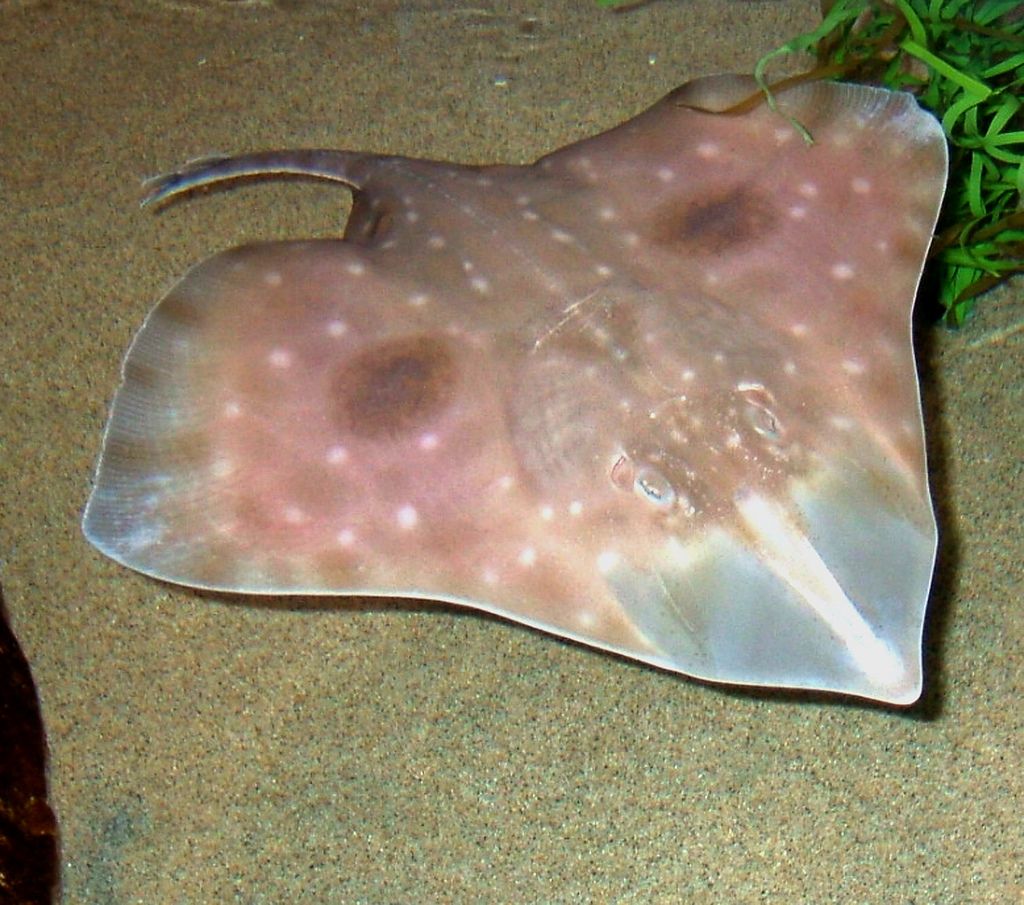 Photo: valerie mayers, CC BY 2.0, via Wikimedia Commons
Origin & History
Hongeo is the skate, a flat, diamond-shaped cartilaginous fish. The Encyclopedia of Korean Culture gives the scientific name Okamejei kenojei and notes that it is common off Busan, Mokpo, Yeonggwang and Incheon, living 20 to 80 m deep. The most prized fish for fermenting is the larger mottled skate, cham-hongeo (Beringraja pulchra), and skate from the waters around Heuksando, off South Jeolla, is ranked the finest and best in winter. Much of the skate sold today is imported; one 2025 study, for example, used American skate bought as sashimi in Mokpo.
Koreans have long caught skate. It appears as a local tribute product of Ulsan in the 15th-century Gyeongsang-do jiriji and is recorded as hongeo in the Sejong sillok geography. Its famous fermentation is tied to a river port: Yeongsanpo, in Naju, became known for skate because fish caught around Heuksando had fermented by the time boats carried them up the Yeongsan River, and the old harbor district is now a street of fermented-skate restaurants.
Skate keep high levels of urea and trimethylamine oxide in their flesh to balance seawater. As the fish ferments at low temperature, these break down into ammonia and trimethylamine, the pH climbs to roughly 9, and the meat develops its eye-watering pungency while resisting ordinary spoilage. Microbiological studies of hongeo show the bacterial community shifting dramatically as fermentation proceeds.
In Mokpo, the encyclopedia records, fresh skate was left overnight in a jar to develop its bite, then skinned, cut into strips, kneaded with vinegar and tossed with blanched minari and chili-pepper paste as hongeo-hoe. Outside Mokpo, cooks often used the skate as soon as it was bought, adding salted radish or pear, and in Jeolla fermented skate is widely considered indispensable at ceremonial occasions. It is famously served as samhap, sliced with boiled pork and aged kimchi, and with makgeolli as hongtak.
Nutrition
| Calories | 87 kcal |
|---|---|
| Protein | 19.6 g |
| Fat | 0.5 g |
| Carbohydrates | 0 g |
| Fiber | 0 g |
| Sodium | 222 mg |
Notable forProtein (19.6 g) · Calcium (305 mg) · Phosphorus (250 mg)
Values copied from the Korean Food Composition Table (Rural Development Administration / National Institute of Crop Science) for this exact food, per 100 g edible portion. The table leaves dietary fiber blank; it is shown as 0 because fish and shellfish contain none. These are values for fresh skate; fermented hongeo was not found in the table. Actual values vary with ingredients, portion size and preparation.
Health Benefits
- Lean protein: Fresh skate supplies about 20 g of protein per 100 g with very little fat, and the Korean Food Composition Table lists notable calcium.
- Ammonia is part of the dish: Fermented hongeo is strongly alkaline and releases ammonia. Researchers have raised safety concerns about its high ammonia levels and possible bacterial contamination, which is one reason to buy it from established producers.
- Don't apply the rule elsewhere: For ordinary cooked seafood, the FDA treats any ammonia smell as a sign of spoilage. Hongeo's controlled fermentation is the exception, not a reason to eat other fish that smells of ammonia.
- Low in mercury: The FDA/EPA advice lists skate among its "Best Choices."
- Fish allergy: Skate is a fish, one of the nine major food allergens under U.S. law.
Informational, not medical advice. Talk to a qualified professional about your own health and diet.
Dishes with Skate (hongeo)
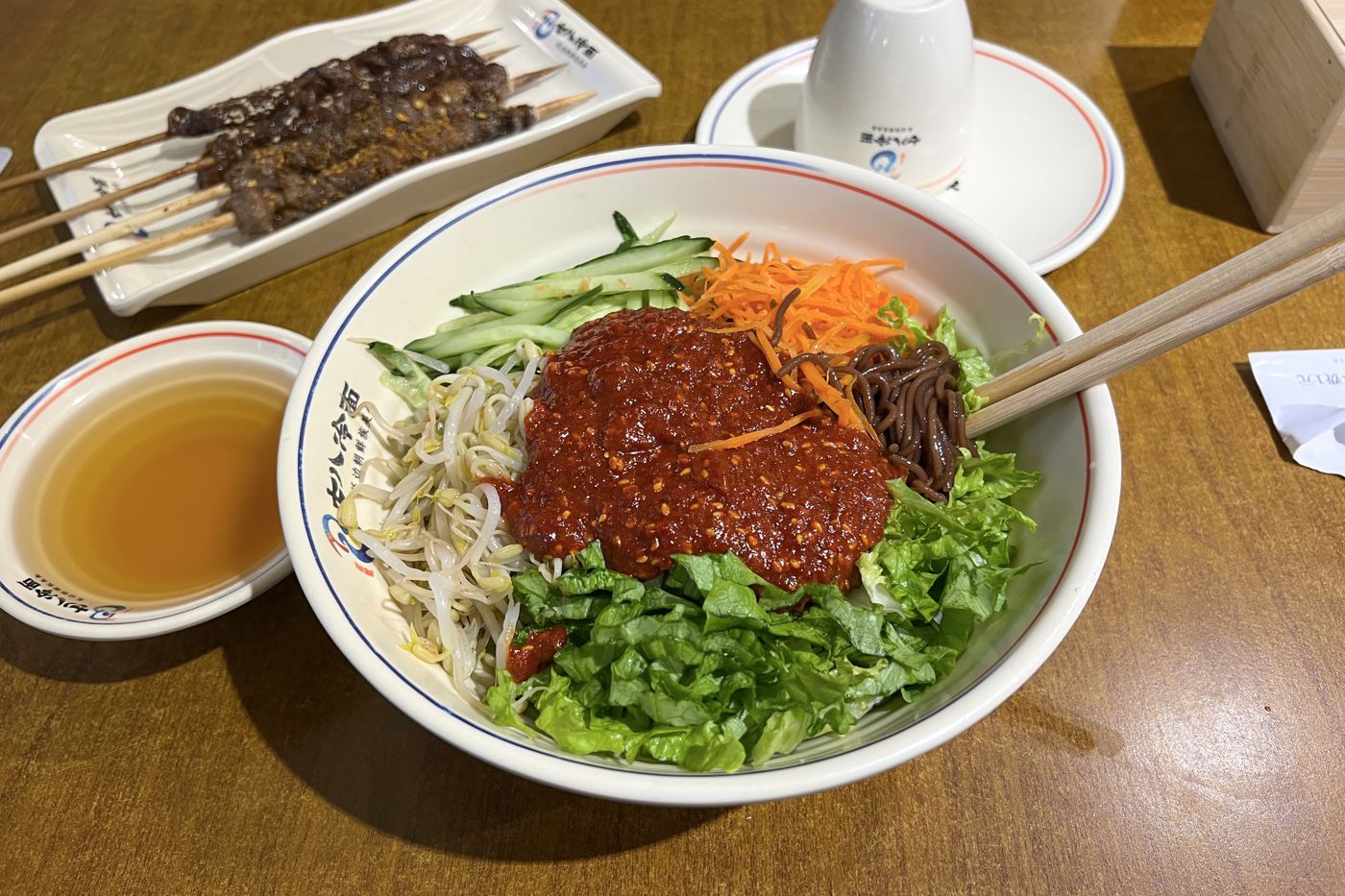 Bibim-naengmyeon (Spicy Mixed Cold Noodles)비빔냉면Chewy starch noodles tossed in a sweet, vinegary chili sauce, topped with cucumber, pear and egg — the Hamheung tradition of hoe-naengmyeon, carried south by refugees.
- Spicy Skate Salad홍어회무침Strips of raw or lightly fermented skate, firmed in vinegar and tossed with minari, radish and a sweet-sour gochujang dressing — Jeolla's feast-day salad.
Sources
- 01홍어 (Skate) — Encyclopedia of Korean Culture
- 02홍어회 (Hongeo-hoe) — Encyclopedia of Korean Culture
- 03영산포 (Yeongsanpo) — Encyclopedia of Korean Culture
- 04Changes in the Microbial Community of the Mottled Skate (Beringraja pulchra) during Alkaline Fermentation (J Microbiol Biotechnol, 2020)
- 05Development of Freshness Indicator (FI) for Skate Sashimi (Zearaja chilensis) to Detect Trimethylamine Content During Storage (Biosensors, 2025)
- 06Korean Food Composition Table — Skate ray, Raw