Ingredient
Flatfish (gajami)
가자미
Romanization: gajami
Right-eyed flatfish of the East Sea, grilled, braised and dried, and best known in gajami-sikhae, the Hamgyeong-style flatfish fermented with millet, radish and chili.
Flavor
Mild, sweet and delicate white flesh with tender bones; in sikhae it turns tangy, chewy and sweet-spicy, the softened bones edible.
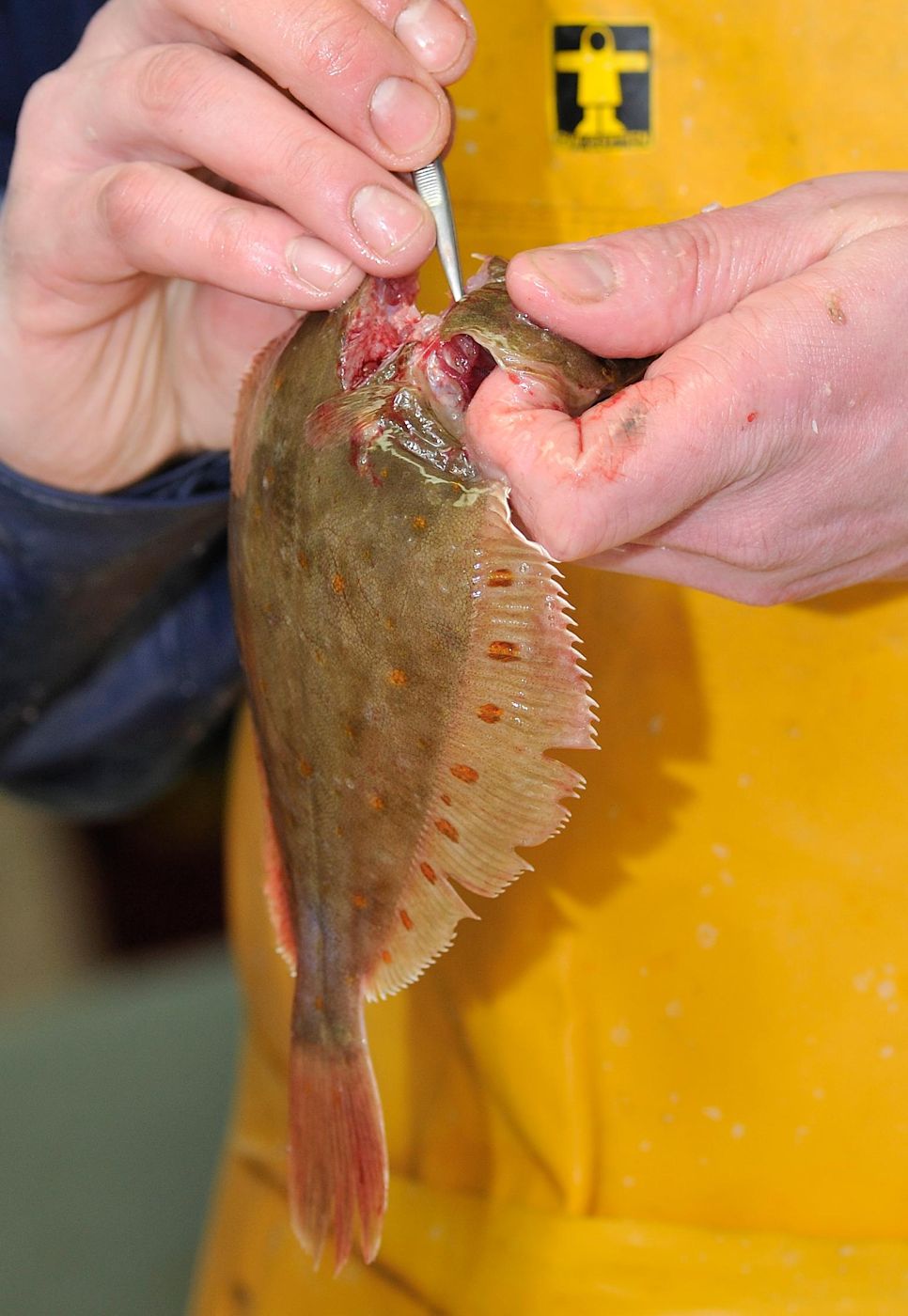 Photo: Olivier Dugornay (IFREMER, Pôle Images, Centre Bretagne - ZI de la Pointe du Dia, CC BY 4.0, via Wikimedia Commons
Origin & History
Gajami is a broad name for the flatfishes: flattened, bottom-dwelling fish with both eyes on one side and a pale, unpigmented underside. The Encyclopedia of Korean Culture counts about 50 species in Korean waters across four families. In everyday usage, gajami means the right-eyed flounders, as opposed to left-eyed gwangeo (olive flounder) and the long, narrow soles (seodae). Fishmongers remember the difference with the rhyme jwagwang udo, "left gwangeo, right dodari," after the dodari, a right-eyed cousin prized in spring. The Korean Food Composition Table lists more than ten gajami, from the stone flounder (dol-gajami) to the willowy and blackfin flounders.
Flatfish have shaped how Koreans pictured their own country. Old texts called them bimogeo, "fish that must pair up to see," after a Chinese belief that each had only one eye; Jeong Yak-jeon's Jasan eobo rejected this from direct observation, noting that each fish swims alone with both eyes on one side. Because these fish were said to come from the East Sea, Korea was once poetically called jeobyeok, "the land of flatfish." The Dongui bogam considered gajami strengthening, and the encyclopedia notes that most right-eyed flatfish are landed in the East Sea, while left-eyed flounders and soles come mainly from the south.
On the east coast gajami is grilled, braised and simmered into soups. Its most famous form is gajami-sikhae, mentioned in the 19th-century Oju yeonmun jangjeon sango as a dish of East Sea shore dwellers and today the signature preserve of Hamgyeong Province. Small, yellowish flounders are salted, pressed, then packed with millet rice, garlic, ginger, gochugaru and malt powder and left to ferment for several days; julienned salted radish is mixed in for the final ripening. The malt converts the grain's starch to sugar, giving the dish its sweet-sour edge. Cooks outside Hamgyeong often use barley or white rice instead of millet.
Nutrition
| Calories | 129 kcal |
|---|---|
| Protein | 22.1 g |
| Fat | 3.7 g |
| Carbohydrates | 0.3 g |
| Fiber | 0 g |
| Sodium | 230 mg |
Notable forPotassium (377 mg) · Niacin (4.3 mg) · Phosphorus (196 mg)
Values copied from the Korean Food Composition Table (Rural Development Administration / National Institute of Crop Science) for this exact food, per 100 g edible portion. Blank fields in the table are shown as not reported. The table also lists individual species, such as stone flounder (가자미, 돌가자미, 생것). Actual values vary with ingredients, portion size and preparation.
Health Benefits
- Lean protein: Raw gajami has about 22 g of protein and under 4 g of fat per 100 g in the Korean table, with potassium and niacin.
- Low mercury: The FDA/EPA advice on eating fish lists flounder among its "Best Choices," the lowest-mercury group.
- Sikhae is salty: Gajami-sikhae is salted, fermented and seasoned, so it adds sodium well beyond the fish's own 230 mg per 100 g; it is eaten in small portions as a banchan.
- Fish allergy: Fish is one of the nine major food allergens under U.S. law, which requires the fish species to be named on labels.
Informational, not medical advice. Talk to a qualified professional about your own health and diet.
Dishes with Flatfish (gajami)
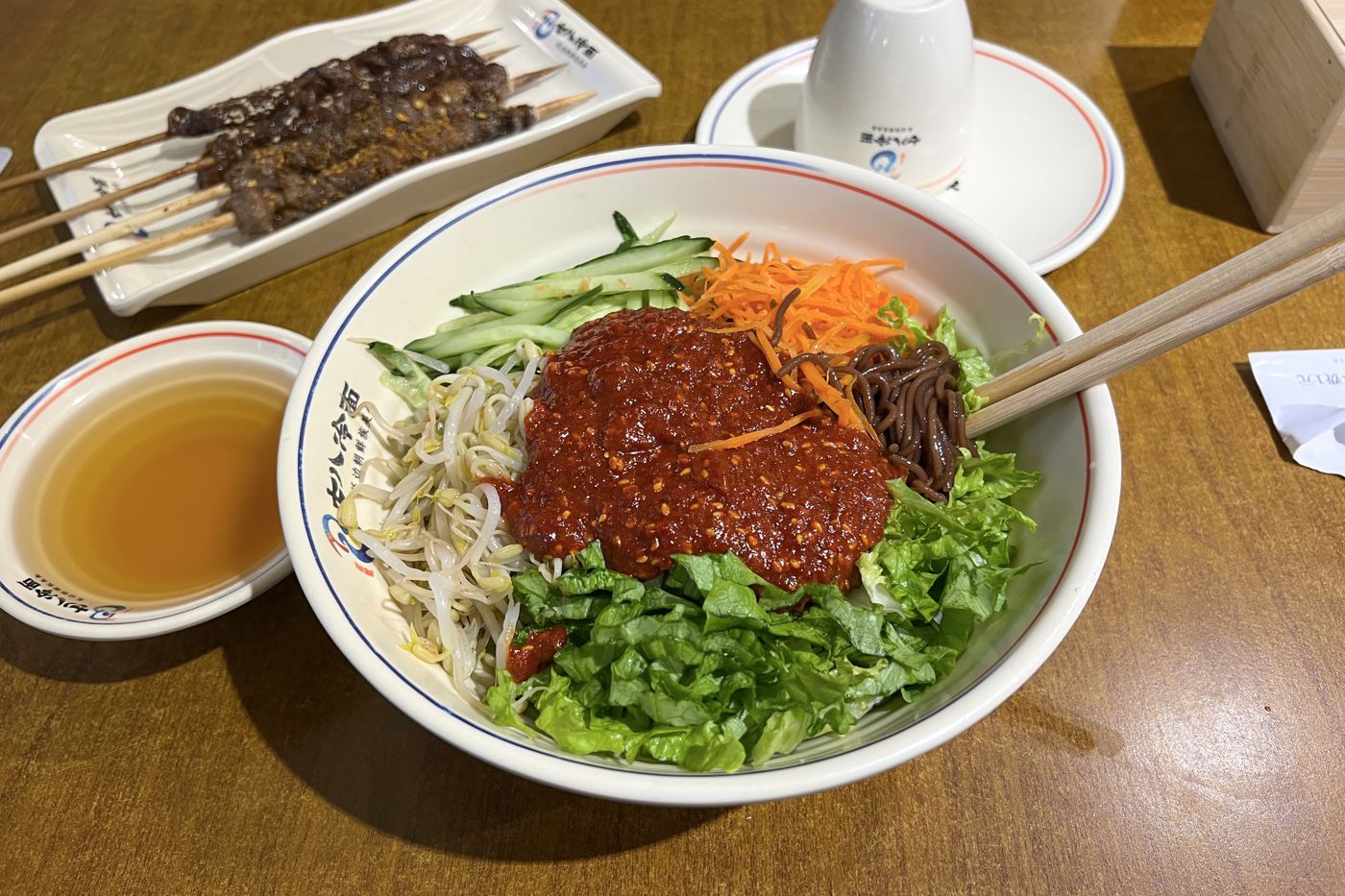 Bibim-naengmyeon (Spicy Mixed Cold Noodles)비빔냉면Chewy starch noodles tossed in a sweet, vinegary chili sauce, topped with cucumber, pear and egg — the Hamheung tradition of hoe-naengmyeon, carried south by refugees.
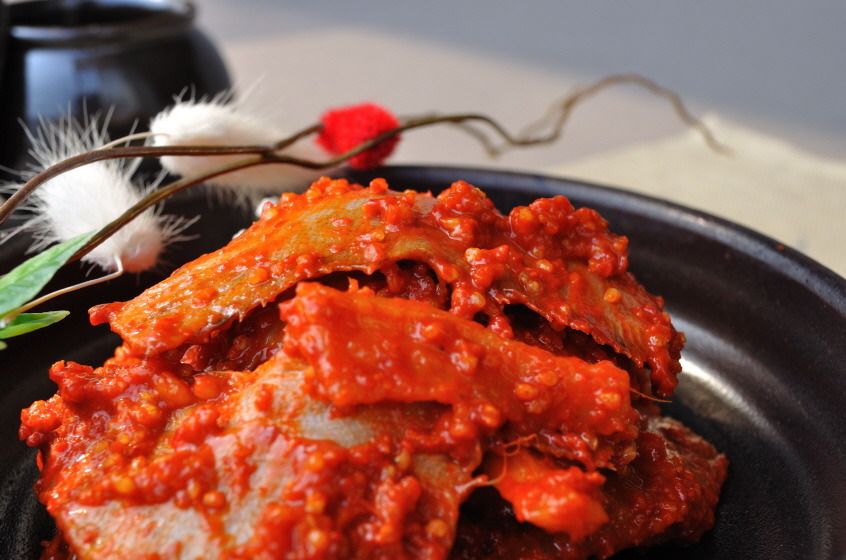 Fermented Flatfish with Millet가자미식해Salted flatfish fermented with foxtail millet, malt, radish and chili — the tangy, spicy sikhae of Hamgyeong, carried south to the Gangwon coast.
Sources
- 01가자미 (Flatfish) — Encyclopedia of Korean Culture
- 02가자미식해 (Gajami-sikhae) — Encyclopedia of Korean Culture
- 03가자미식해 (Gajami-sikhae) — Encyclopedia of Korean Folk Culture, National Folk Museum of Korea
- 04도다리 (Dodari) — Encyclopedia of Korean Culture
- 05Korean Food Composition Table — Flounder, Raw
- 06Advice about Eating Fish — U.S. Food and Drug Administration / EPA