Jeon · Pan-fried 전
Gul-jeon (Pan-Fried Oysters)
굴전
Romanization: gul-jeon
Plump oysters dusted with flour, dipped in beaten egg and pan-fried until golden: a briny, tender jeon for banquet tables and everyday banchan.
- Serves
- 4
- Prep
- 15 min
- Cook
- 15 min
RegionTongyeong
Jump to recipeRecipe
Ingredients · Serves 4
- 200 gShucked oystersfresh, from a reliable source
- 4 tbspFlour
- 2 Eggsbeaten
- 2 tbspCooking oil
- ¼ tspSalt
- 1 tbspRice wine (mirin or cheongju)
- ¼ tspSesame oil
- 1 pinchGround black pepper
- 1 tbspSoy saucefor dipping, optional
- 1 tspVinegarfor dipping, optional
Method
Technique: Jeon: Pan-Frying in Flour and Egg
Step 1: Rinse the oysters gently in lightly salted water and drain in a colander for 5 to 10 minutes.
Step 2: Season the oysters with the salt, rice wine, sesame oil and pepper.
Step 3: Coat the oysters lightly in flour, shaking off the excess, then dip in the beaten egg.
Step 4: Heat half the oil in a nonstick pan over medium-low heat. Fry the oysters in a single layer until golden on the underside, 2 to 3 minutes.
Step 5: Turn carefully and cook the other side until the egg is set and the oysters are hot through; the centers should be firm, not translucent. Add more oil for a second batch.
Step 6: Serve hot with the dipping sauce.
Origin & History
Jeon is the family of foods that are sliced or shaped, dusted with flour, dipped in beaten egg and fried in a shallow layer of oil. The Encyclopedia of Korean Culture lists shellfish, including hard clam, oyster and scallop adductor, among the standard jeon ingredients, and says these were served on banquet and drinking tables and as ritual food. Hansik institute writing likewise notes that cookbooks from the Joseon era to the present include sea-flavored jeon of oyster, shrimp and clam.
Oysters themselves were mostly a raw food in the old cookbooks. According to the Encyclopedia of Korean Culture's entry on oyster rice, three Joseon sources (Eumsik dimibang, Gyuhap chongseo and Jeungbo sallim gyeongje) describe only raw preparation, and the Yorok records an oyster porridge. The entry does not point to a specific early recipe for gul-jeon, so the exact origin of the dish is unclear.
Oyster farming was a twentieth-century development. The main oyster entry in the same encyclopedia says that cultivation began around 1908 at the Seomjin River estuary in Gwangyang Bay, and that its boom years in the 1970s centered on Chungmu, now part of Tongyeong. Today oysters turn up in jeon, rice, porridge, soup and salted seafood (see gul, gul-guk and gul-kkakdugi).
Key Ingredients
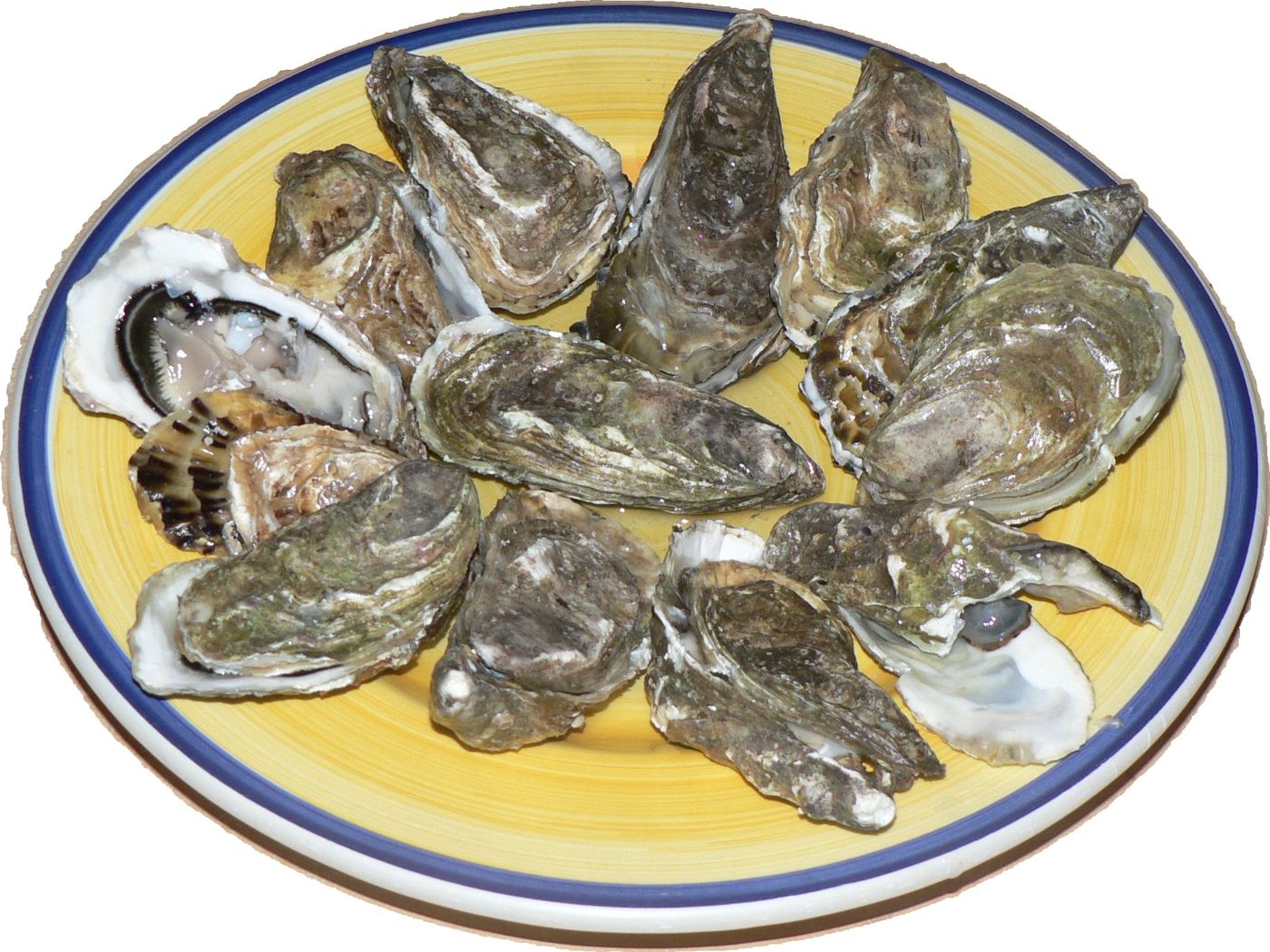 Oyster (gul)굴Plump, briny oysters, many of them grown on hanging lines in the bays around Tongyeong. Koreans eat them raw, cooked into rice, porridge, soup and pan-fried jeon, or salted with chili as eoriguljeot.
- Egg (gyeran)계란The everyday protein of the Korean table: rolled into gyeran-mari, steamed into puffy gyeran-jjim, simmered in soy for gyeran-jangjorim, and cut into thin yellow and white ribbons of jidan to garnish soups and noodles.
 Soy sauce간장Korean soy sauce, in two main kitchen forms: pale, salty guk-ganjang (soup soy sauce) brewed the traditional way from meju, and darker, sweeter jin-ganjang for braises and marinades.
Nutrition
| Calories | ~137 kcal |
|---|---|
| Protein | ~8.7 g |
| Fat | ~7.4 g |
| Carbohydrates | ~8.4 g |
| Fiber | ~0.2 g |
| Sodium | ~234 mg |
Notable forZinc · Vitamin B12
Raw Pacific oyster, egg, flour, salt and sesame oil use USDA FoodData Central values, divided by four; about half of the frying oil is counted as absorbed. USDA lists about 16.6 mg zinc and 16 µg vitamin B12 per 100 g of raw Pacific oyster, so even a 50 g portion of oyster per serving is a meaningful source. The optional dipping sauce is not counted. Actual values vary with ingredients, portion size and preparation.
Health Benefits
- Zinc and B12: USDA data for raw Pacific oysters list roughly 16.6 mg of zinc and 16 µg of vitamin B12 per 100 g.
- Cooked rather than raw: pan-frying through is a safer way to enjoy oysters than eating them raw, which the CDC advises against for many people.
- Modest portions: as a banchan or a drinking snack, a few pieces add protein and minerals without a heavy meal.
Regional Variations
- Plain flour-and-egg: the classic form described by the Hansik institute, with oysters seasoned lightly with salt, rice wine, sesame oil and pepper.
- Mixed seafood jeon: oysters pan-fried alongside shrimp or clams, as the Hansik institute notes of the seafood jeon family.
- Coastal oyster country: the main farming areas named by the encyclopedia are the southern coast around Tongyeong, Gwangyang Bay and nearby estuaries.
Pairings
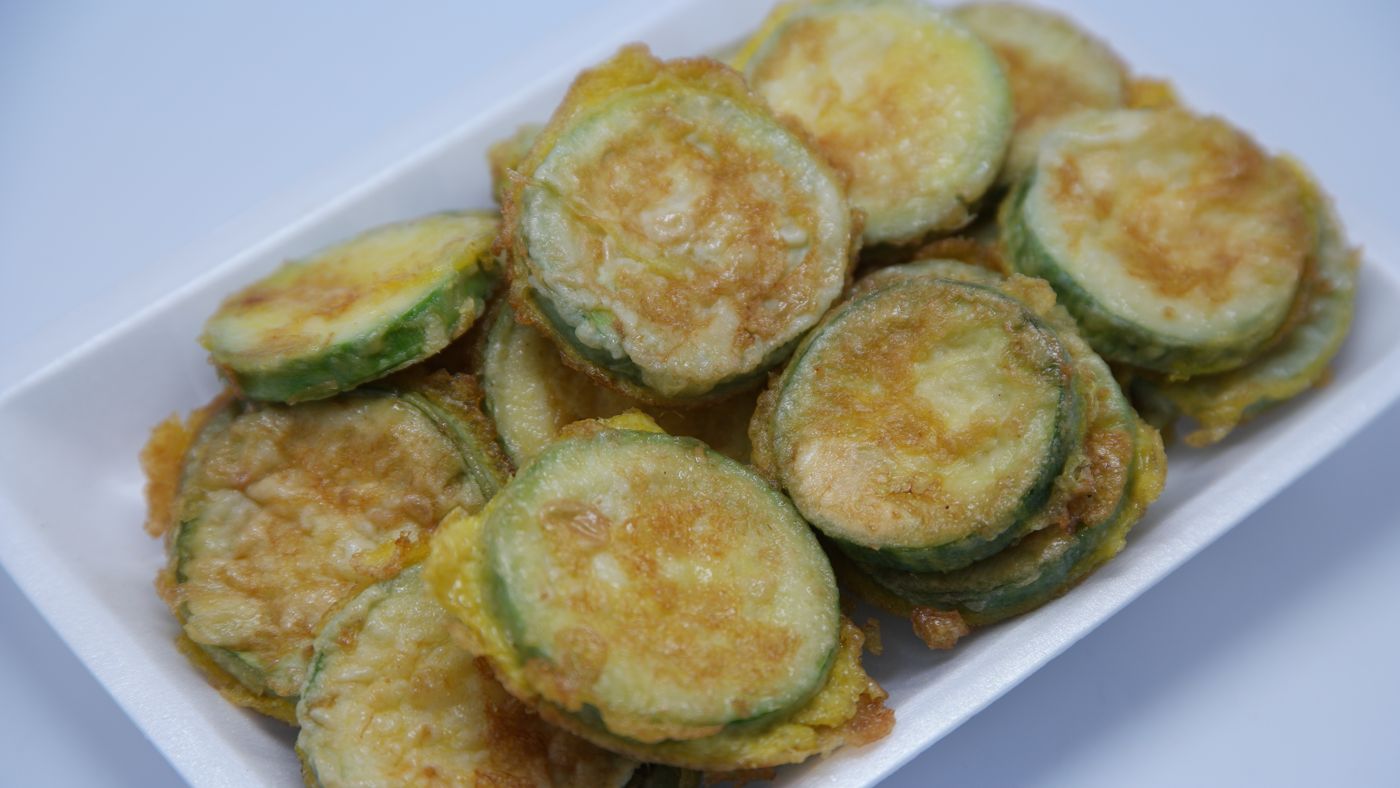 Hobak Jeon (Pan-Fried Zucchini)호박전Rounds of Korean zucchini dusted with flour, dipped in egg and pan-fried until golden — a soft, sweet jeon for holidays and everyday meals.
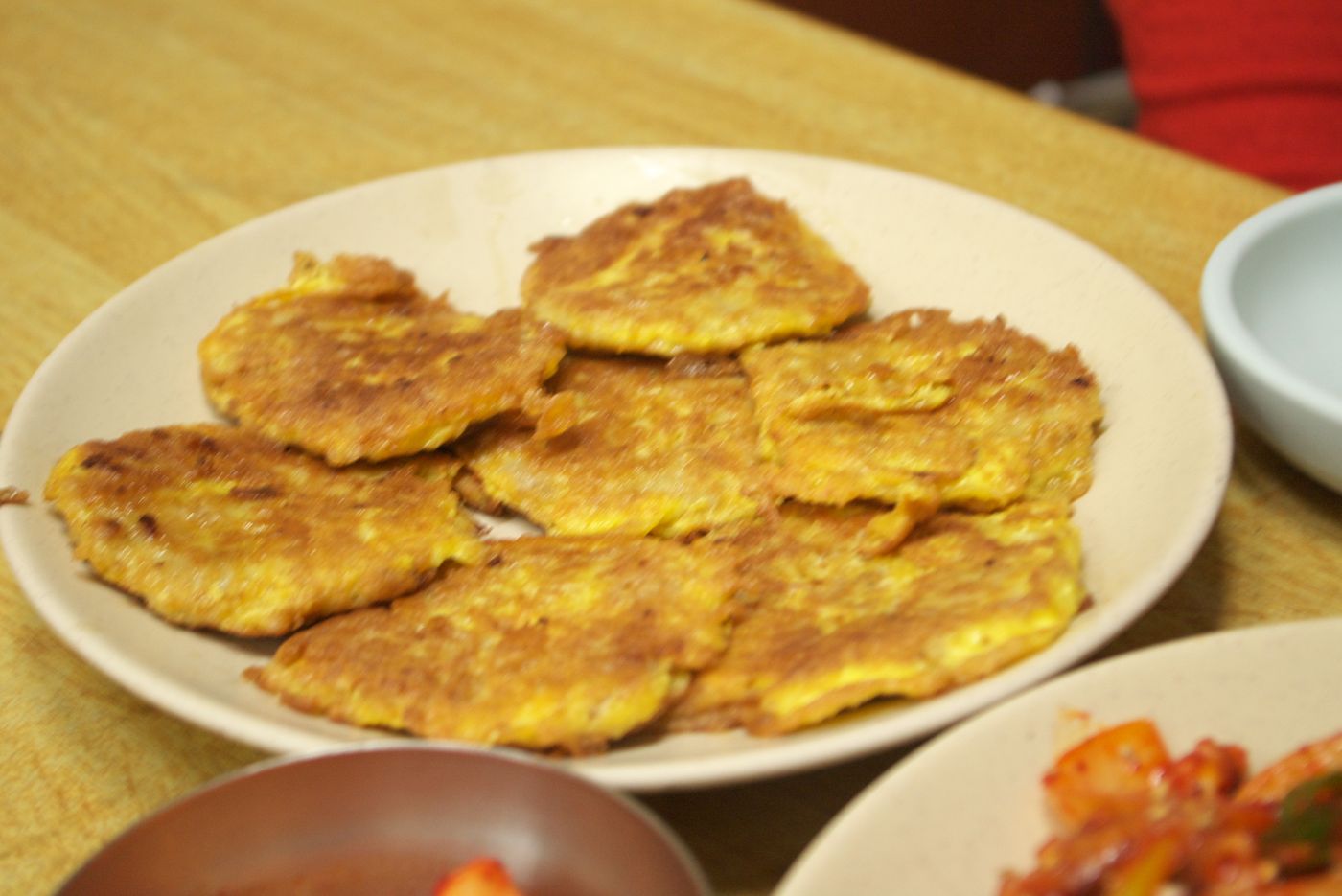 Saengseon Jeon (Pan-Fried Fish)생선전Thin slices of mild white fish dusted with flour, dipped in egg and gently pan-fried — a classic of holiday and ancestral-rite tables.
- Gul Guk (Oyster Soup)굴국Fresh oysters dropped into a clear radish broth with tofu and green onion and cooked for barely a minute — a delicate cold-season soup of the south and west coasts.
- Oyster Radish Kimchi굴깍두기Cubed radish kimchi folded through with fresh raw oysters — a short-lived winter kimchi, eaten within days while the oysters are still sweet.
Sources
- 01전 (Jeon) — Encyclopedia of Korean Culture
- 02굴 (Oyster) — Encyclopedia of Korean Culture
- 03굴밥 (Oyster rice) — Encyclopedia of Korean Culture
- 04재료로 구분하는 전의 종류 — Hansik Reading Day, Korean Food Promotion Institute
- 05About Vibrio — Centers for Disease Control and Prevention
- 06About Norovirus — Centers for Disease Control and Prevention
Last updated