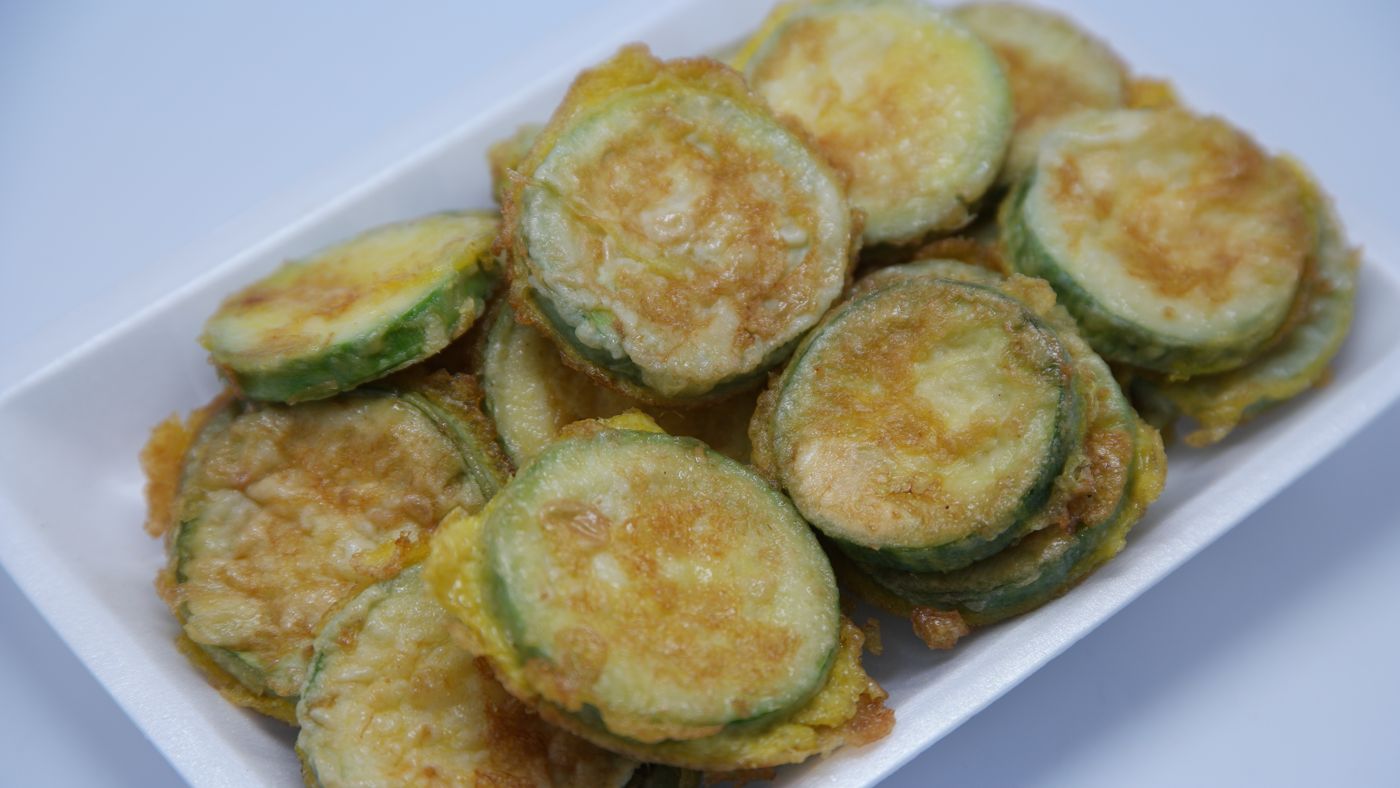
 Photo: hyun chun kim, CC0, via Wikimedia Commons
Jeon · Pan-fried 전
Hobak Jeon (Pan-Fried Zucchini)
호박전
Romanization: hobak-jeon
Rounds of Korean zucchini dusted with flour, dipped in egg and pan-fried until golden — a soft, sweet jeon for holidays and everyday meals.
- Serves
- 4
- Prep
- 15 min
- Cook
- 15 min
Recipe
Ingredients · Serves 4
- 1 mediumKorean zucchini (aehobak)about 300 g; regular zucchini works
- ¼ tspSalt
- 25 gAll-purpose flourabout 3 tbsp, for dusting
- 2 largeEggs
- 2 tbspNeutral cooking oilfor frying, added as needed
- 1 tbspSoy saucefor the dipping sauce
- 1 tbspRice vinegarfor the dipping sauce
Method
Technique: Jeon: Pan-Frying in Flour and Egg
Step 1: Trim the zucchini and cut it into rounds about 5 mm thick.
Step 2: Spread the rounds on a tray, sprinkle lightly with the salt and leave for 10 minutes. Pat dry with paper towels.
Step 3: Beat the eggs in a shallow bowl. Put the flour in another shallow dish or a zip-top bag and coat the zucchini lightly, shaking off the excess.
Step 4: Heat a little oil in a large skillet over medium-low heat. Dip each floured round in egg, let the excess drip off, and lay it in the pan.
Step 5: Cook for 1½–2 minutes per side, until the egg is set and pale golden and the squash is just tender. Keep the heat moderate so the egg does not brown too fast; add oil between batches as needed.
Step 6: Drain briefly on a rack or paper towel. Mix the soy sauce and vinegar for dipping and serve warm.
Origin & History
Jeon is the Korean name for foods that are sliced thin, coated in flour and beaten egg, and pan-fried in oil. The Encyclopedia of Korean Culture lists many older and alternate names for the category, including jeonyueo in court cuisine, jeonya and jijimgae in everyday speech, and gannam for jeon placed on the ancestral-rite table.
Jeon have long been a food for gatherings. Historical cooking texts, as summarized by the Korean Food Promotion Institute, place them at weddings, funerals, ancestral rites, birthdays, banquets and drinking tables. Fish, meat and shellfish were the prestige versions; vegetable jeon such as those made from zucchini, mushrooms and green onion supplied endless everyday variety.
Hobak-jeon is made with aehobak, the pale green Korean summer squash that is milder and more tender than Western zucchini. It remains one of the simplest jeon to make and is a familiar part of the spread of pan-fried foods prepared for holidays such as Seollal and Chuseok, as well as a quick weeknight banchan. See also jeon pan-frying.
Key Ingredients
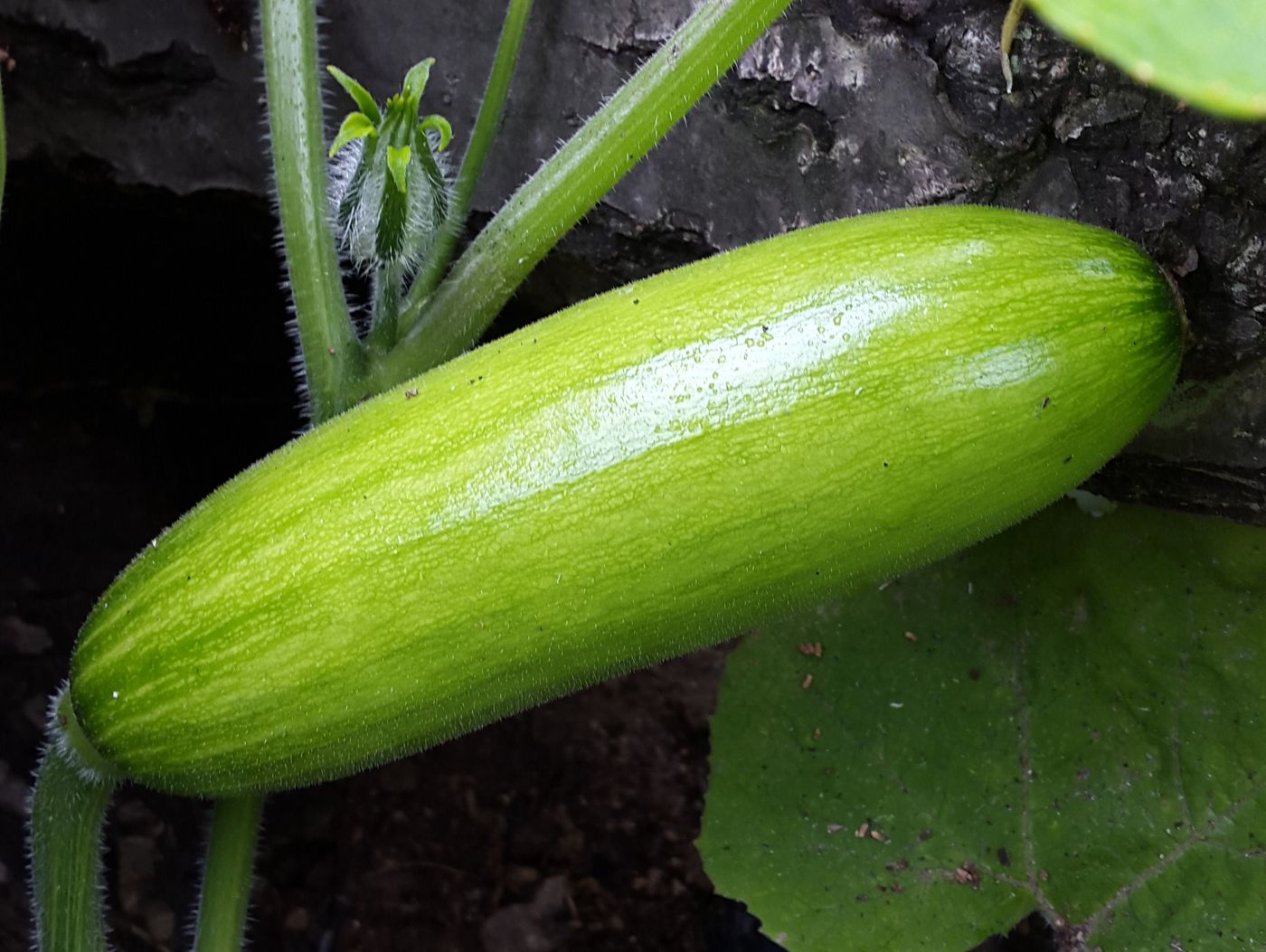 Korean zucchini애호박A pale-green young squash with thin, smooth skin and tender flesh. Sliced into rounds for hobak-jeon, sautéed as namul and added to doenjang stews.
 Soy sauce간장Korean soy sauce, in two main kitchen forms: pale, salty guk-ganjang (soup soy sauce) brewed the traditional way from meju, and darker, sweeter jin-ganjang for braises and marinades.
Nutrition
| Calories | ~131 kcal |
|---|---|
| Protein | ~4.7 g |
| Fat | ~9.4 g |
| Carbohydrates | ~7.3 g |
| Fiber | ~0.9 g |
| Sodium | ~190 mg |
Notable forVitamin C · Selenium · Folate
Estimated by summing USDA FoodData Central (SR Legacy) values for raw zucchini with skin (FDC 169291, used for Korean aehobak), enriched all-purpose flour, raw whole egg, table salt and cooking oil, divided by 4. Assumes all the oil is absorbed and excludes the dipping sauce (about 220 mg sodium per serving if all of it is used). Some vitamin C is lost in cooking. Actual values vary with ingredients, portion size and preparation.
Health Benefits
- Summer squash: zucchini is mostly water and is low in calories, contributing vitamin C, potassium and some fiber.
- Egg coating: the egg adds protein along with nutrients such as selenium and choline.
- A vegetable-forward jeon: compared with meat or seafood jeon, hobak-jeon is light and mild, and it brings a vegetable to a holiday table often heavy with richer dishes.
Regional Variations
- Rounds or half-moons: most cooks slice the squash into rounds; some cut half-moons or thin lengthwise planks.
- Coated or battered: the classic method uses a flour dusting and an egg dip; an everyday shortcut mixes julienned zucchini into a flour batter (hobak-buchim) and fries it as a pancake.
- Garnishes: a slice of red chili, a few strips of green onion or a sesame seed pressed into each round adds color, especially for holiday platters.
- Dipping sauce: served with soy sauce sharpened with vinegar (chogan-jang), sometimes with a little gochugaru.
Pairings
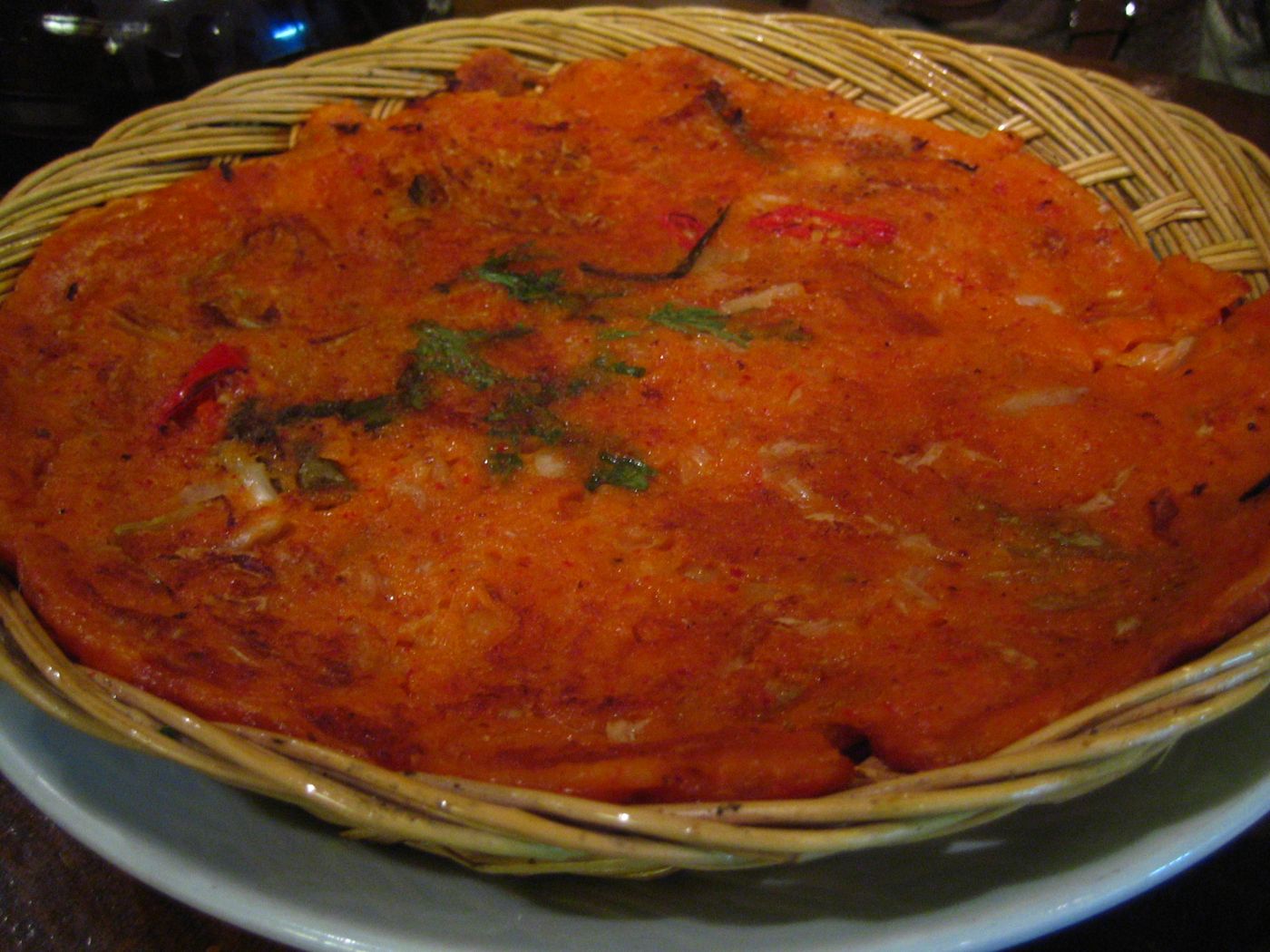 Kimchi Jeon (Kimchi Pancake)김치전Chopped, well-fermented kimchi folded into a thin flour batter and pan-fried until crisp at the edges — tangy, savory and quick to make.
 Japchae (Glass Noodles with Vegetables)잡채Chewy sweet potato glass noodles tossed with stir-fried vegetables, mushrooms and beef in soy sauce and sesame oil — Korea's essential celebration dish.
 Sigeumchi Namul시금치나물Spinach blanched for a few seconds, squeezed dry and dressed with garlic, soy sauce and sesame — one of the simplest and most familiar namul.