History & Culture
Traditional Markets: Jangteo and Sijang
전통시장
Five-day country markets and the great city markets of Namdaemun, Gwangjang, Seomun and Jagalchi, and the soups, pancakes and snacks that feed the people who shop there.
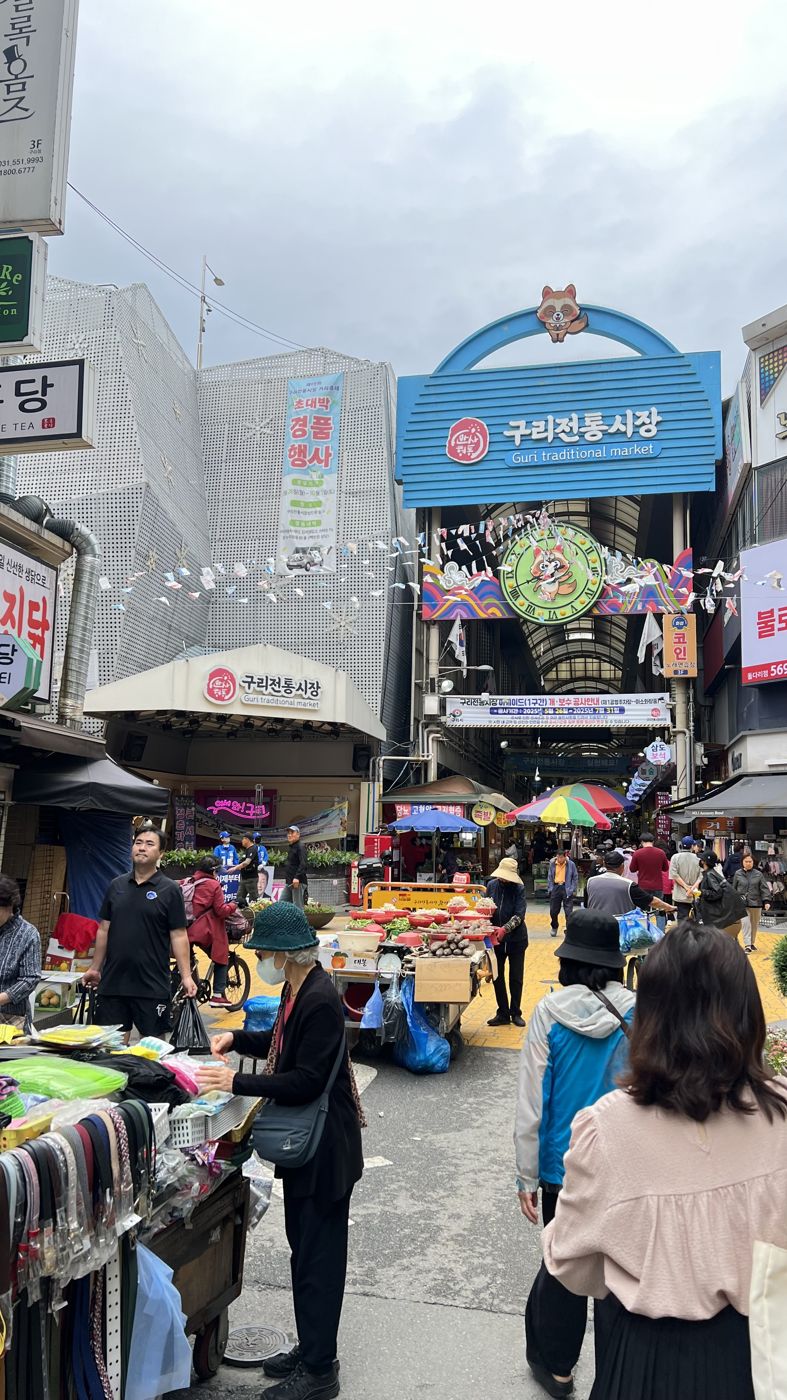 Photo: Jjw, CC BY-SA 4.0, via Wikimedia Commons
For most of Korean history, food reached the table through a market or not at all. The traditional words are jang (장) or jangsi (장시) for a market and jangteo (장터) for the ground it occupies; sijang (시장) is the general modern term. Two kinds of market shaped Korean food culture: the periodic country market that met every few days, and the permanent city market that grew from royal licensed shops and early modern companies.
The five-day market
Periodic markets began to form on their own in Seoul and the central and southern provinces in the late fifteenth century and had spread across the country by the early seventeenth. By the early nineteenth century, government records counted more than a thousand of them. One survey from around 1830 lists 1,052 markets, of which 905 met every five days, which is why the periodic market is still called the oiljang (오일장), the five-day market. Gyeongsang Province had the most. Neighboring markets kept staggered calendars, the 2nd and 7th of each cycle in one town, the 3rd and 8th in the next, so that itinerant peddlers known as bobusang could walk a circuit.
A market day was more than a shopping trip. Farmers sold grain, vegetables and livestock; coastal people brought fish and salt; news and entertainment traveled with the crowds. The Encyclopedia of Korean Culture describes these markets as the social center of rural life well into the 1960s. From the 1970s, roads, refrigeration, supermarkets and rural depopulation thinned them out, though about 522 periodic markets were still operating in 2006, most in North Gyeongsang, South Jeolla and South Gyeongsang.
Seoul: Namdaemun and Gwangjang
Joseon Seoul had licensed shops along Jongno, and in the late Joseon period two large dawn markets grew up outside the walls of officialdom: Chilpae, outside the south gate, and Baeogae, inside the east gate. Together with Jongno they were known as the three great markets of the capital.
- Namdaemun Market: its founding date depends on what counts. The Encyclopedia of Korean Culture's entry dates its formal opening to 1921, when a company took over its management, but traces trade in the area to shops the court built near the gate in 1414 and to merchants who gathered after a tax-grain office was set up nearby in 1608. A separate entry describes a permanent market established in 1897 in that office's disused warehouses as the city's first modern permanent market. Destroyed in the Korean War, the market was rebuilt and then burned again in 1953 and 1968.
- Gwangjang Market: a group of officials and merchants founded the Gwangjang Company in July 1905 to build a new market, settling on a site near the old Baeogae market; it moved to its present location in March 1909. The company still operates under its founding name. Today the market is best known for its food alley, where cooks fry mung-bean pancakes on wide griddles.
Daegu's Seomun Market
Seomun (West Gate) Market began as a modest town market outside the north gate of Daegu. After the Japanese invasions of the 1590s, Daegu became the seat of the Gyeongsang provincial governor, and around 1679 the market moved outside the west gate of the governor's compound. With river transport on the Nakdong and a tax reform that encouraged farmers to sell their produce, it came to be counted among the three great markets of late Joseon. It met on the 2nd and 7th days, and by the late eighteenth century thirteen smaller markets around Daegu met on the other days. Colonial authorities moved it to its present site in Daesin-dong in the early 1920s (the encyclopedia gives both 1922 and 1923), and after the war it became the country's largest textile market.
Busan's Jagalchi
Jagalchi, on the Busan waterfront, grew out of fish trading by the harbor in the early 1920s. During the Korean War, when refugees crowded into the city, women who had lost husbands or needed to feed families sold fish there, and the market's vendors are still called Jagalchi ajime in the local dialect. Nearby Bupyeong market, opened in 1910 as one of the city's first public markets, is tied to the history of Busan fishcake. See Busan for the city's food.
Eating at the market
Markets have always fed their own crowds. The Encyclopedia of Korean Culture notes that on market days a makeshift gukbap stall, rice served in hot soup, would set up in a corner of the market ground to feed peddlers and shoppers at midday. Blood sausage, soups, pancakes and noodles remain the core of market eating, along with the snacks described in Korean street food. Markets are also where many families shop for the produce of kimjang and for the ingredients of ancestral rites.
Sources
- 01정기시장 (Periodic markets) — Encyclopedia of Korean Culture
- 02서울 남대문시장 (Namdaemun Market) — Encyclopedia of Korean Culture
- 03광장회사 (Gwangjang Company) — Encyclopedia of Korean Culture
- 04대구 서문시장 (Daegu Seomun Market) — Encyclopedia of Korean Culture
- 05Busan's markets: Where refugees once gathered, tourists now roam — Korea JoongAng Daily
- 06국밥 (Gukbap) — Encyclopedia of Korean Culture