History & Culture
Royal Court Cuisine of the Joseon Dynasty
조선왕조 궁중음식
The cooking of the Joseon palace kitchens, the king's twelve-dish surasang, and how court cooks and scholars preserved it in the twentieth century.
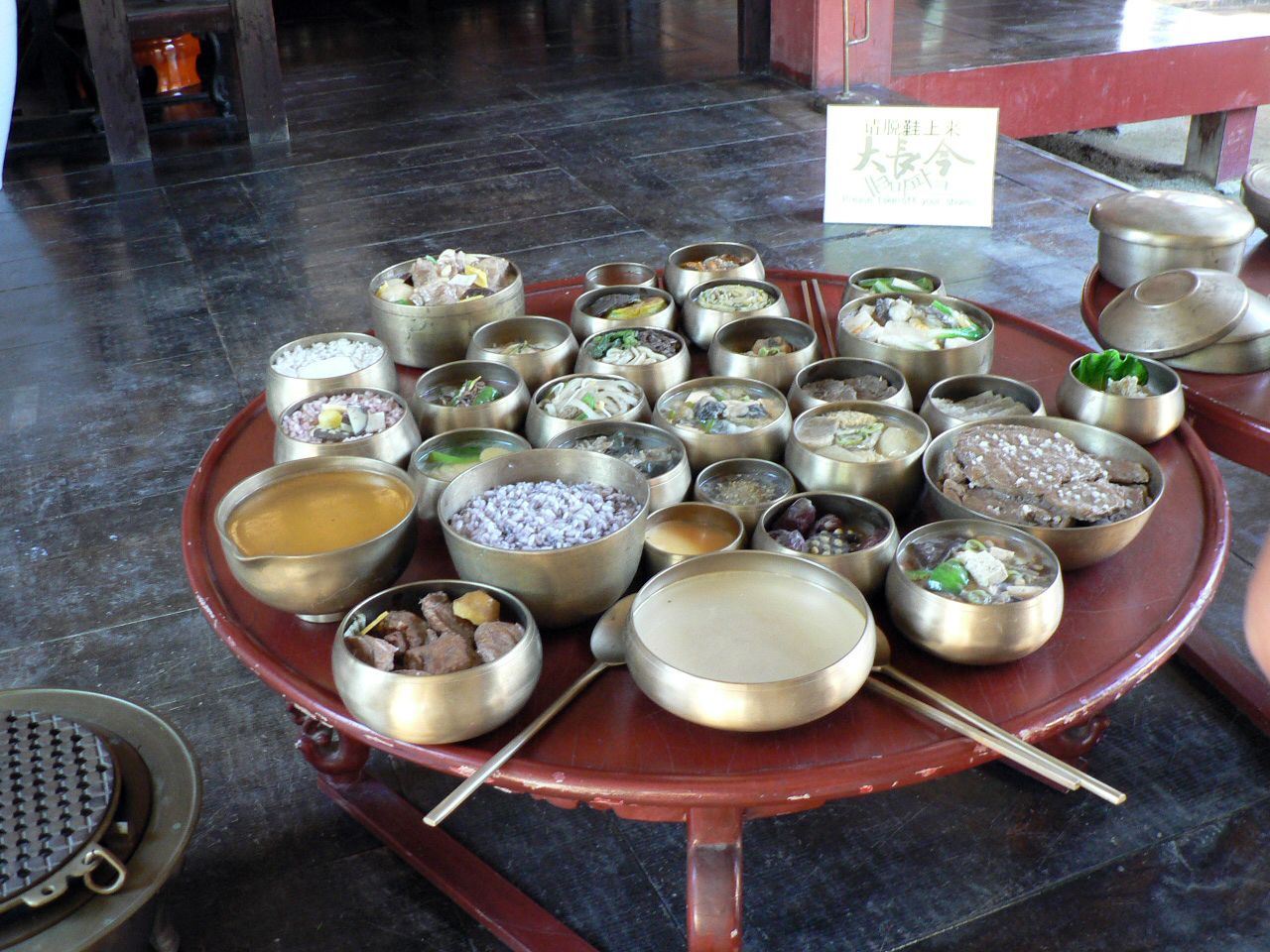 Photo: travelmate2021 from 台灣(中華民國), CC BY 2.0, via Wikimedia Commons
For five centuries, from 1392 to 1910, the Joseon dynasty's palaces maintained kitchens that drew on the best produce of every province. The food served there, known today as gungjung eumsik (궁중음식), royal court cuisine, was not a separate culinary language so much as the most refined version of the Korean table: the same rice, soups, namul, braises and kimchi found in yangban households, prepared with greater range, precision and ceremony.
The palace kitchens
The king's meals were prepared in the suragan (수라간), the royal kitchen, which stood at a distance from the sleeping quarters. Dishes were carried to a serving room near the king's chambers, where cold food could be rewarmed over charcoal before it was arranged and presented. Cooking was the work of trained palace women, the kitchen court ladies, together with male cooks for large banquets.
Accounts of the daily schedule vary in detail, but the royal family ate several times a day, typically described as four to six servings. These included a light morning porridge, two main meals, a simpler midday table and evening refreshments such as noodles or rice drinks.
The surasang
The main royal meal was the surasang (수라상), the honorific name for the king's table. It followed the 12-cheop format, the most elaborate of the bansang settings, and was laid across three tables: a large round lacquered table in front of the king, a smaller round table and a rectangular one beside it. Two kinds of rice were offered, plain white rice and red rice cooked with adzuki bean water, along with two soups, among them seaweed soup. Twelve side dishes followed in shallow lidded bowls, chosen so that ingredients and cooking methods did not repeat: grilled and braised dishes, jeon, sliced boiled meat, raw and cooked vegetables, salted seafood, pickles and dried side dishes. Stews, steamed dishes and kimchi rounded out the table, with soy sauce, vinegared soy sauce and mustard for seasoning.
A court lady sat at the king's table to taste dishes before he ate, a role often associated with checking for poison. Ingredients came to the palace as regional tribute, so the table reflected the seasons and specialties of the whole country.
Much of what is known in detail comes from court records. The Wonhaeng eulmyo jeongni uigwe, the official record of King Jeongjo's 1795 journey to celebrate his mother's sixtieth birthday, is especially valuable because it lists the daily meals served along the way, not just the banquet menus.
From oral tradition to heritage
When the dynasty ended, palace cooking survived mainly in the memories of the women who had practiced it. The most important of them was Han Hui-sun (1889–1972), who entered Deoksu Palace at about age thirteen and served as a kitchen court lady under Emperors Gojong and Sunjong.
The person who turned that memory into a documented body of knowledge was Hwang Hye-seong (1920–2006), a scholar of food who studied under Han for some three decades. In 1957 the two, with Yi Hye-gyeong, published a treatise on Yi dynasty court cookery, the first systematic written record of palace recipes. Hwang's contribution was to measure and standardize what had been passed on by eye and hand, recording quantities and methods in Korean script.
In 1971, Joseon royal court cuisine was designated Important Intangible Cultural Property No. 38 by the South Korean government, and Han Hui-sun was recognized as its first holder. Hwang had worked to secure the designation and founded the Institute of Korean Royal Cuisine the same year. After Han's death, Hwang became the second holder in 1973. The line has continued through Hwang's eldest daughter, Han Bok-ryeo, who became a later holder and leads the Korean Royal Cuisine Culture Foundation.
Why it matters for banchan
Court cuisine is often presented as spectacle, but its lasting influence on home cooking lies in its principles: balance among many small dishes, contrast of color and texture, and restraint in seasoning. Dishes now common at home, from japchae to soy-braised jangjorim, are frequently described as having palace or yangban associations, though the line between court and upper-class home cooking was always porous.