Techniques
Making Juk
죽 쑤기
Korean porridges range from thick rice juk to strained mieum and silky starch eungi; for centuries they were breakfast, comfort and food for the sick.
Juk is grain simmered in plenty of water until it breaks down into a soft porridge. The verb for making it, ssuda, is the same one used for muk, and it implies patience: low heat, a wooden paddle and frequent stirring. The Encyclopedia of Korean Culture regards porridge as perhaps the most primitive form of Korean grain cookery, but it has never been only humble food. It has been an early-morning snack, a palace breakfast, relief food in famine, and above all the dish a household turns to when someone is ill.
Three textures: juk, mieum and eungi
- Juk (죽): grain cooked until soft but still recognizable, either whole or coarsely ground. Plain rice porridge (huin-juk) is the base of the family.
- Mieum (미음): grain cooked until it nearly dissolves, then strained through a sieve so only the smooth liquid remains. The encyclopedia says it first appears in writing around 1800, and lists jujube, white rice, autumn barley and millet mieum among those served to the royal party in the record of King Jeongjo's 1795 visit to Hwaseong.
- Eungi (응이): a thin, silky porridge made from extracted starch. Grain is ground with water, the milky liquid squeezed through cloth and left to settle, and the starch cooked with water until clear. The encyclopedia notes that the name comes from uii, Job's tears, and was later applied to any starch porridge.
Ratios and method
The proportions are what separate the types. For plain rice juk, the encyclopedia describes two methods:
- Whole-grain juk. Wash the rice, soak about two hours, drain, and cook in a heavy pot with five to six times its volume of water. Once the grains have swelled, lower to medium heat and keep cooking without letting it reduce too far. It is ready when soft, swollen grains seem suspended in a translucent, gruel-like liquid.
- Ground-rice juk. Soak and drain the rice, then grind it coarsely in a stone mortar; a drop or two of sesame oil during grinding makes the porridge smoother. Add about five times as much water, stir from top to bottom with a wooden spoon as it first boils so nothing sticks, and cook over medium heat until translucent. The encyclopedia notes that ground-rice juk digests faster than whole-grain juk.
Mieum uses far more liquid, about ten times as much water as grain, simmered until the grains fall apart and then pressed through a double sieve. When a large pot of rice was being cooked, cooks sometimes ladled off some of the boiling rice water and strained it as a quick mieum, which, the encyclopedia notes, was given to the sick and sometimes to babies when breast milk ran short. For eungi, the amount of water is simply adjusted to the thickness wanted.
Plain juk is a starting point. Pumpkin (hobak-juk), abalone (jeonbok), pine nuts (jat), sesame and beef-and-soy janggukjuk are all built on the same technique, with richer ingredients added at the right stage. Season lightly, or not at all, and let the side dishes do the work.
Juk for convalescence
Korean tradition has long treated porridge as food for recovery. The encyclopedia describes plain rice juk as easy to digest and therefore suited to invalids and the elderly. At court, a light porridge table (juksang) was served early in the morning before the main breakfast, and juk and mieum were used as sikchi, "treatment through food," alongside herbal remedies. White rice juk was the most common choice for illness; mung bean porridge was served for high fevers, and milk porridge (tarak-juk) to settle the stomach or when mourning rules forbade meat. These reflect traditional beliefs, part of the idea that food and medicine share a root (see yaksik-dongwon), not medical guidance.
Porridge was everyday food too. The encyclopedia quotes the eighteenth-century scholar Yi Ik observing that people ate rice porridge first thing in the morning and called it joban, and notes that large Joseon delegations traveling long distances breakfasted on it. In hard years, the state handed out porridge as famine relief.
Setting a porridge table
Juk is not eaten alone. A twentieth-century cookbook by Jo Ja-ho, cited by the encyclopedia, sets porridge with a water kimchi such as nabak-kimchi or dongchimi, a small stew, dry side dishes such as shredded dried fish or seaweed jaban, and soy sauce for seasoning to taste. That pairing of something soft and plain with a few sharp, savory accents is a good model even for a quick bowl at home. Because porridge holds heat and moisture, cool leftovers quickly and refrigerate them; see food safety at home.
Dishes using this technique
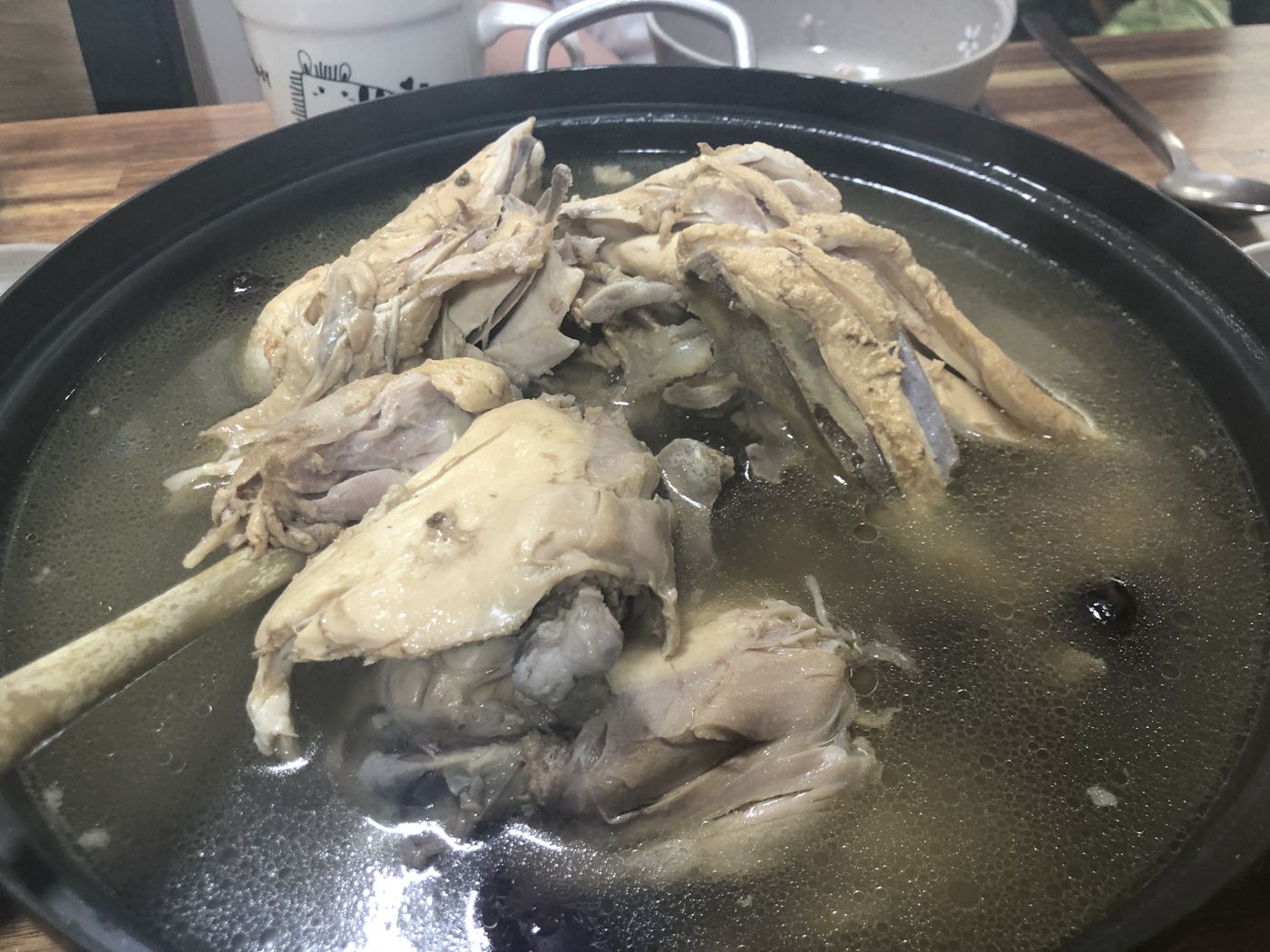 Baeksuk (Plain Whole Boiled Chicken)백숙A whole chicken simmered in plain water with garlic until falling-apart tender, eaten with salt and pepper, then followed by rice porridge cooked in the broth.
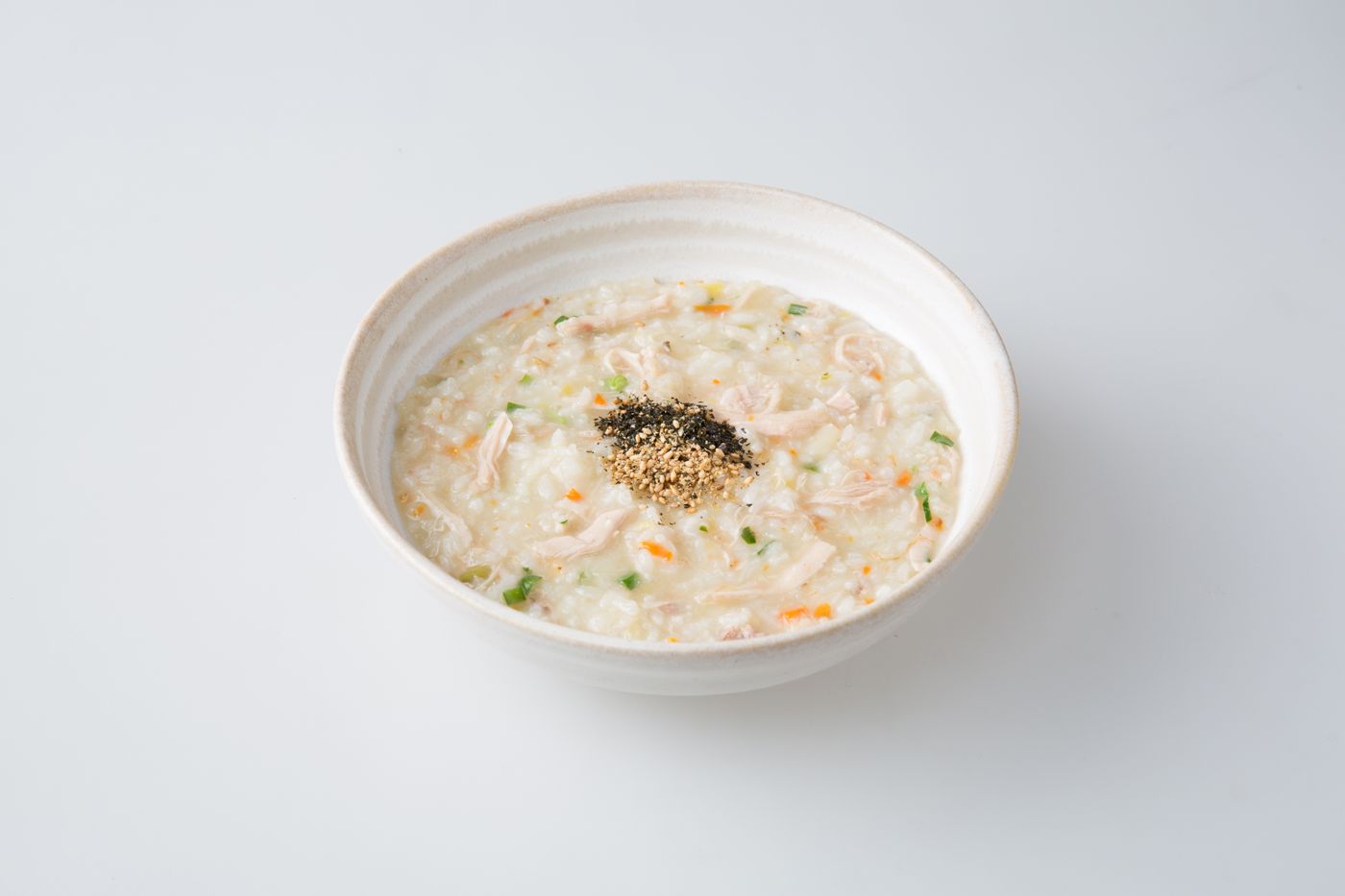 Dakjuk (Chicken Rice Porridge)닭죽Soft rice simmered in a clear chicken broth with shredded meat — a gentle, easy-to-digest porridge long served as summer restorative and sick-day food.
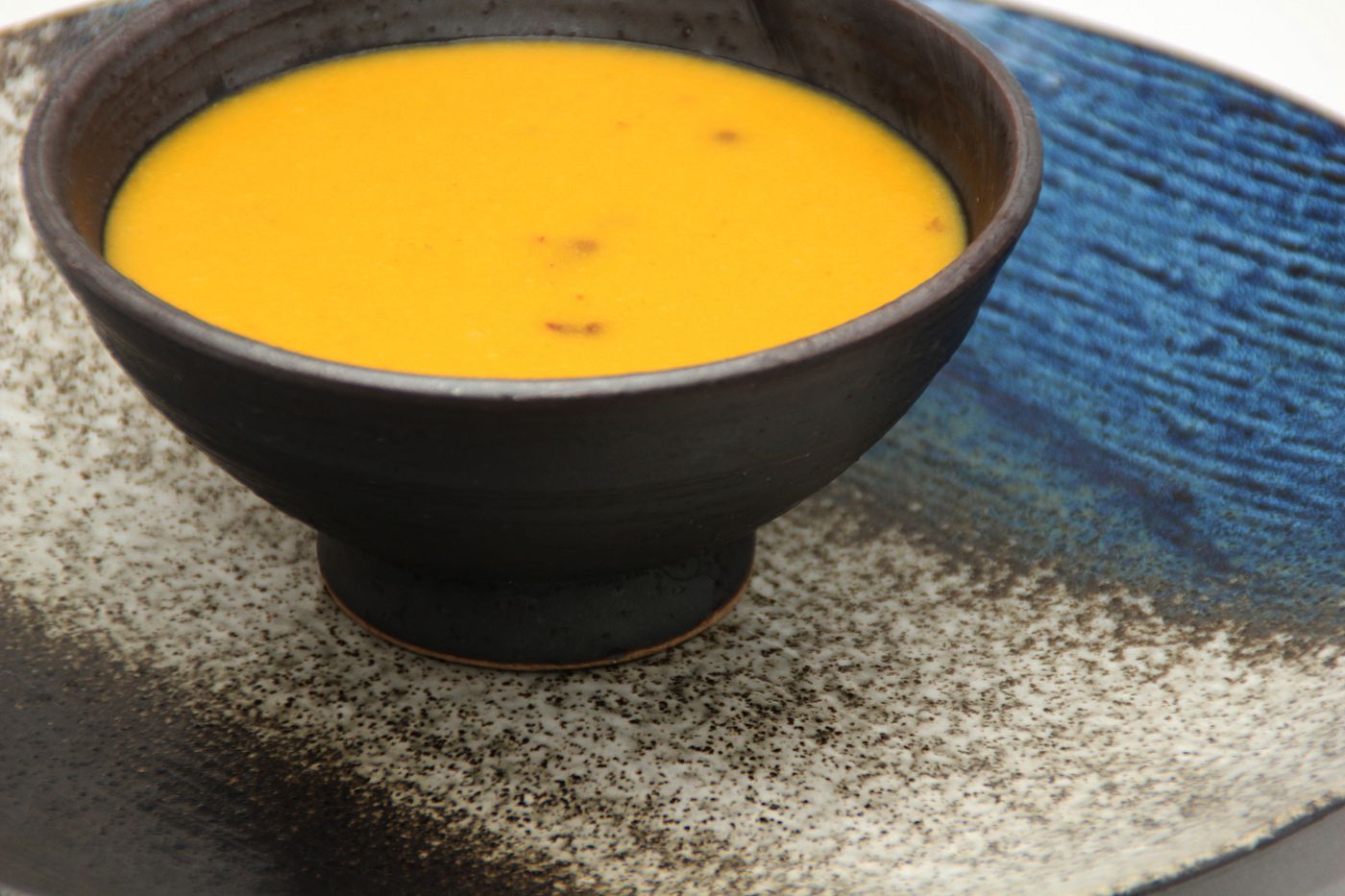 Hobak-juk (Pumpkin Porridge)호박죽Ripe winter pumpkin cooked to a purée and thickened with glutinous rice, often with red beans — a smooth, gently sweet porridge for cold days and convalescence.
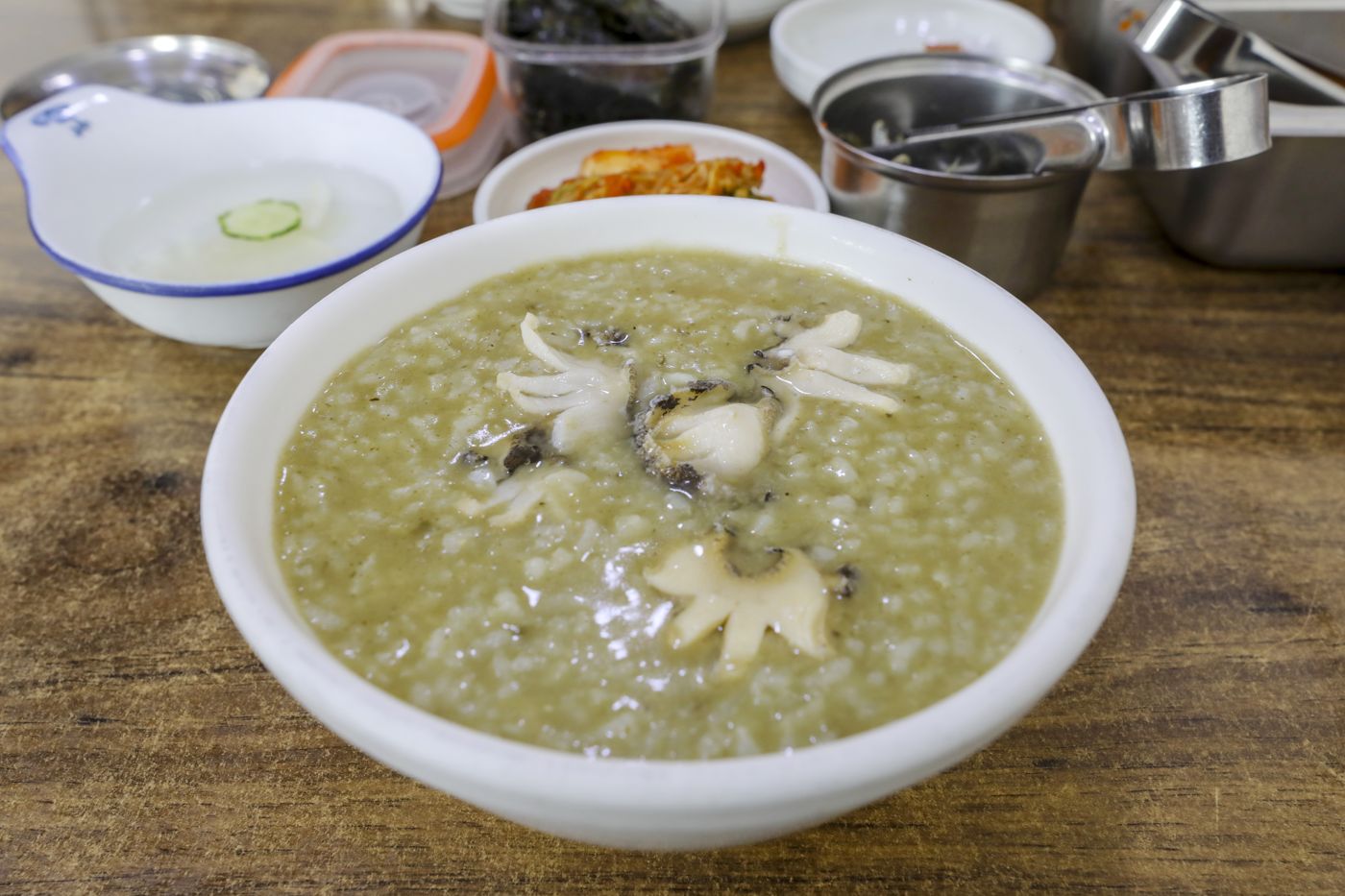 Jeonbok-juk (Abalone Rice Porridge)전복죽Rice simmered with sliced abalone and its green viscera in sesame oil until silky — Jeju's restorative porridge for convalescents, new mothers and anyone in need of comfort.
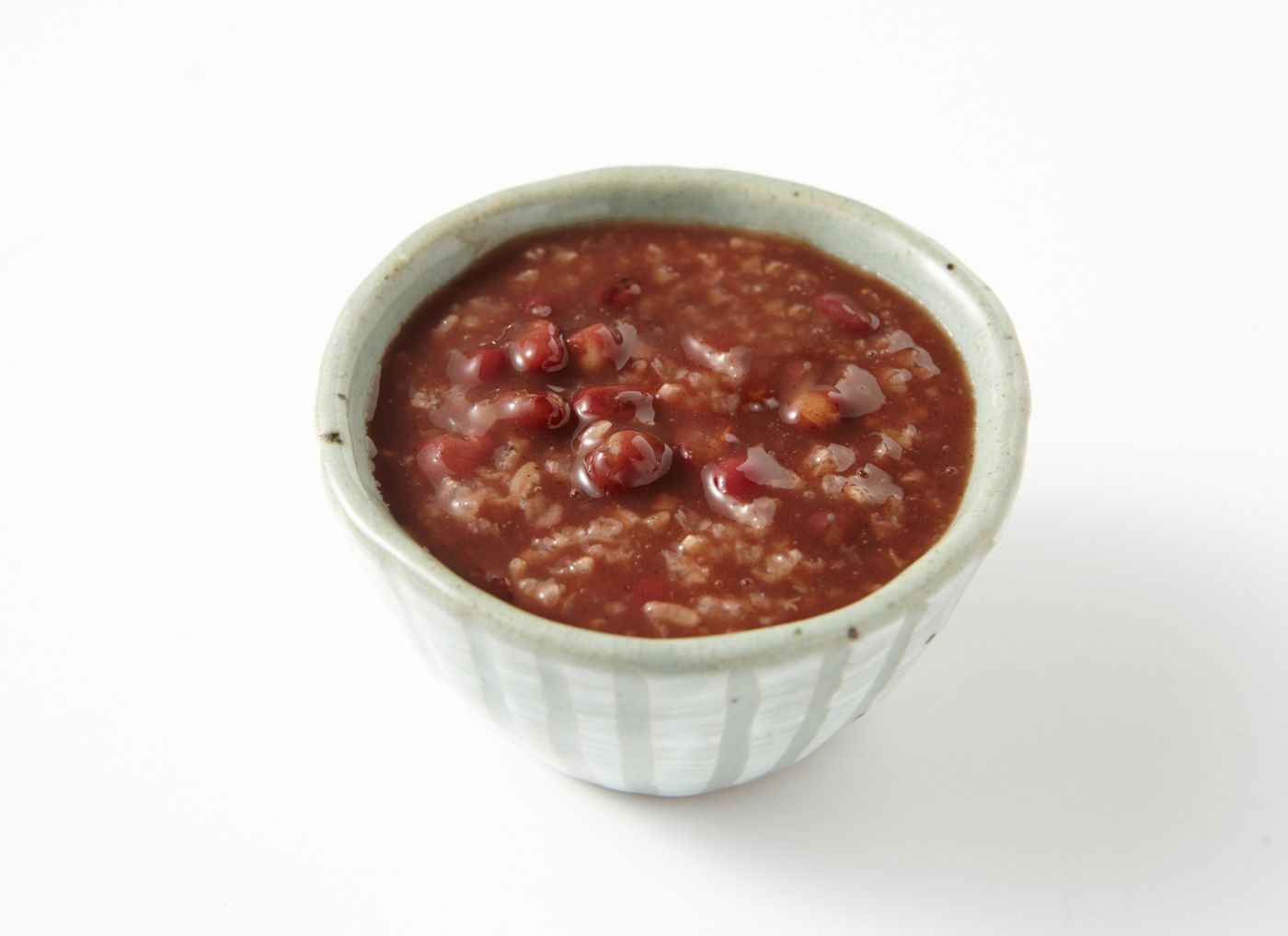 Patjuk (Red Bean Porridge)팥죽Porridge of puréed red adzuki beans and rice with chewy glutinous rice balls, eaten at the winter solstice to ward off misfortune and shared with neighbors.