Regions
Pohang
포항
A steel city on Yeongil Bay with a fishing port's appetite: wind-dried gwamegi from Guryongpo, fishermen's mulhoe in icy chili broth, and Jukdo Market, the east coast's largest.
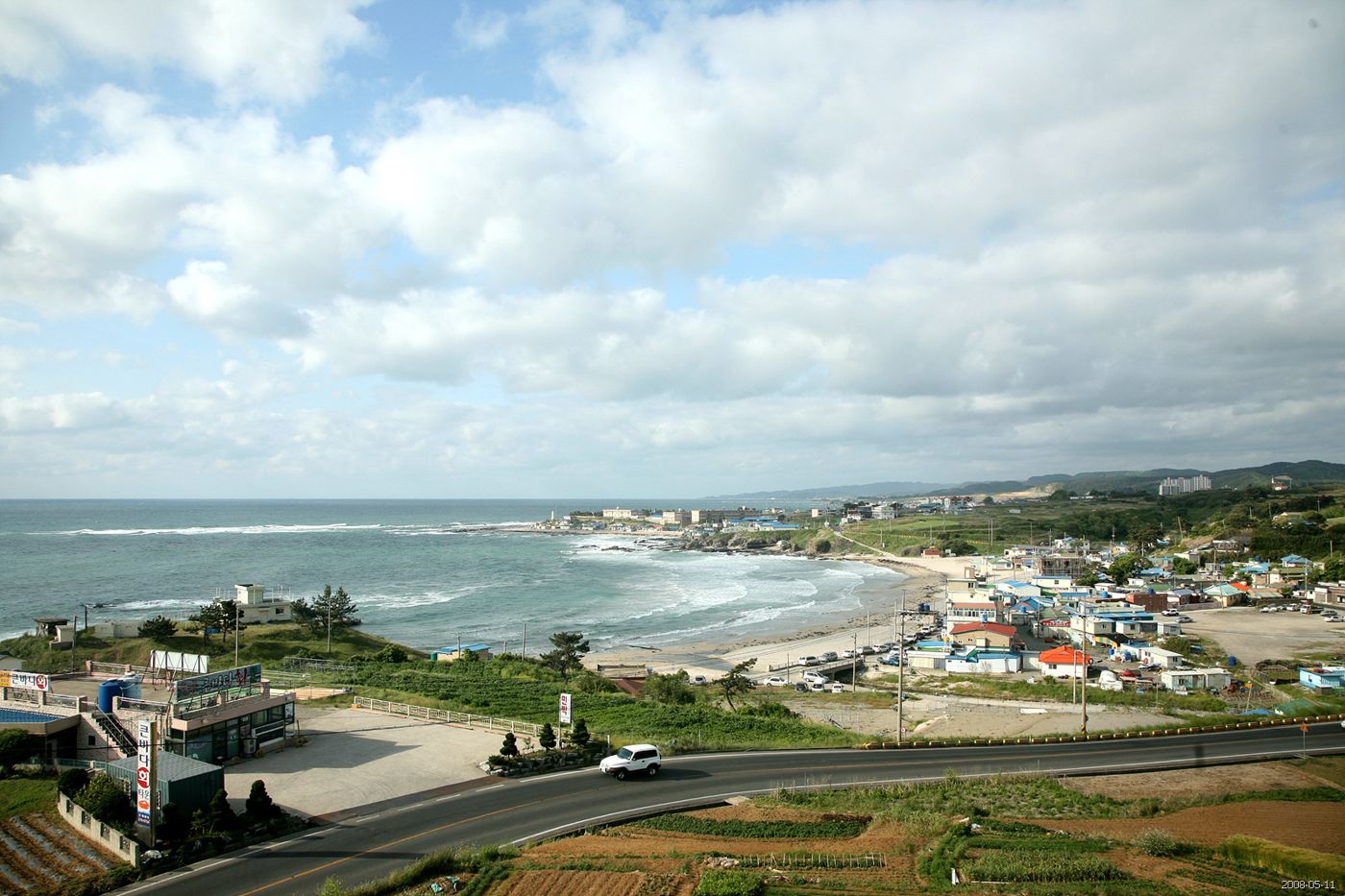 Photo: Junho Jung at Flickr from South Korea, CC BY 3.0, via Wikimedia Commons
Pohang sits on Korea's southeastern coast, where Yeongil Bay opens onto the East Sea. The Encyclopedia of Korean Culture describes a city of about 490,000 people best known for steel, home to POSCO since the 1970s, but with mountains to the northwest and a long fishing coast to the south and east. Saury, squid, anchovies and pufferfish come from its waters, and abalone, sea squirt and flatfish are farmed. Its food reputation rests on three things: gwamegi, mulhoe and Jukdo Market. For the wider region, see Gyeongsang.
Guryongpo and gwamegi
Guryongpo, a harbor town in southern Pohang, grew into a deep-sea fishing base during the Japanese colonial period. The encyclopedia records a periodic market there from around 1940, where cod, herring, saury, squid and seaweed changed hands by barter; from the 1960s a five-day market (on days ending in 3 and 8) traded the town's dried squid, saury, flounder, miyeok and abalone. The Korea Tourism Organization notes that the town still keeps a street of colonial-era Japanese houses alongside its raw-fish restaurants.
Guryongpo's signature is gwamegi: herring or saury left outdoors in winter to freeze and thaw again and again in the sea wind until it is half-dried. The encyclopedia gives the details. The fish are frozen at about –10°C and hung outside from December, drying to roughly 40 percent moisture. The name is traced to gwanmok (貫目), "pierced eyes," because herring were threaded through the eyes to hang; in the Guryongpo dialect mok was pronounced megi, giving gwanmegi, which softened to gwamegi. Herring was the original fish, but after herring catches collapsed in the 1960s, makers switched to saury.
Two origin stories circulate, and both are legends. One, from a collection of humorous tales, tells of a scholar from the coast who, hungry on his way to the civil-service exams, found frozen-dried herring hanging from a branch, liked it and made it every winter after. The other credits sailors who tossed herring onto the cabin roof as a shipboard side dish, only to find the sea wind had cured it for them. The encyclopedia also records a folk association with coastal villages that lost their boats to raiders and needed food that kept.
To eat gwamegi, it is boned and skinned, then wrapped with fresh miyeok, slices of garlic, thin green onion and green chili, with chogochujang and sometimes a sheet of gim. The encyclopedia lists gwamegi among Pohang's specialty dried seafoods, along with nogari (young pollack) and sand lance. For the wider family of dried seafood, see soaking and desalting.
Mulhoe: fishermen's fast food
Pohang also claims mulhoe, raw fish served in cold, spicy broth. The Korea Tourism Organization describes it as fishermen's fast food: crews too busy to stop would slice fish straight from the catch, add gochujang and water, and mix. White-fleshed fish such as flounder, olive flounder and greenling are typical, with squid or sea cucumber, shredded vegetables, sesame oil and icy water or half-frozen broth; rice or noodles go in at the end. Near Homigot cape, the village of Daedongbae is known for hoe-guksu, sesame-oiled noodles mixed with raw fish, vegetables and chili seasoning. Mulhoe is a summer dish, the counterpart to winter's gwamegi and crab. See preparing hoe and hoe culture.
Jukdo Market
Jukdo Market, near the inner harbor, began more than fifty years ago as street stalls on reed-covered wetland and was formally established in 1969, according to the Korea Tourism Organization. It is now the largest traditional market on the east coast, with around 1,500 shops. Its fish market alone holds more than 200 raw-fish restaurants around the auction area, where shoppers can buy seafood and have it prepared on the spot for a small fee. Mulhoe, abalone porridge and, in winter, gwamegi are the dishes most visitors come for. See traditional markets.
Eating well in Pohang
Pohang's best food is seasonal: gwamegi from December, crab from the coast to the north in winter and spring (see Yeongdeok), and mulhoe in summer. Raw fish carries real food-safety risks, particularly in warm months; see food safety at home.