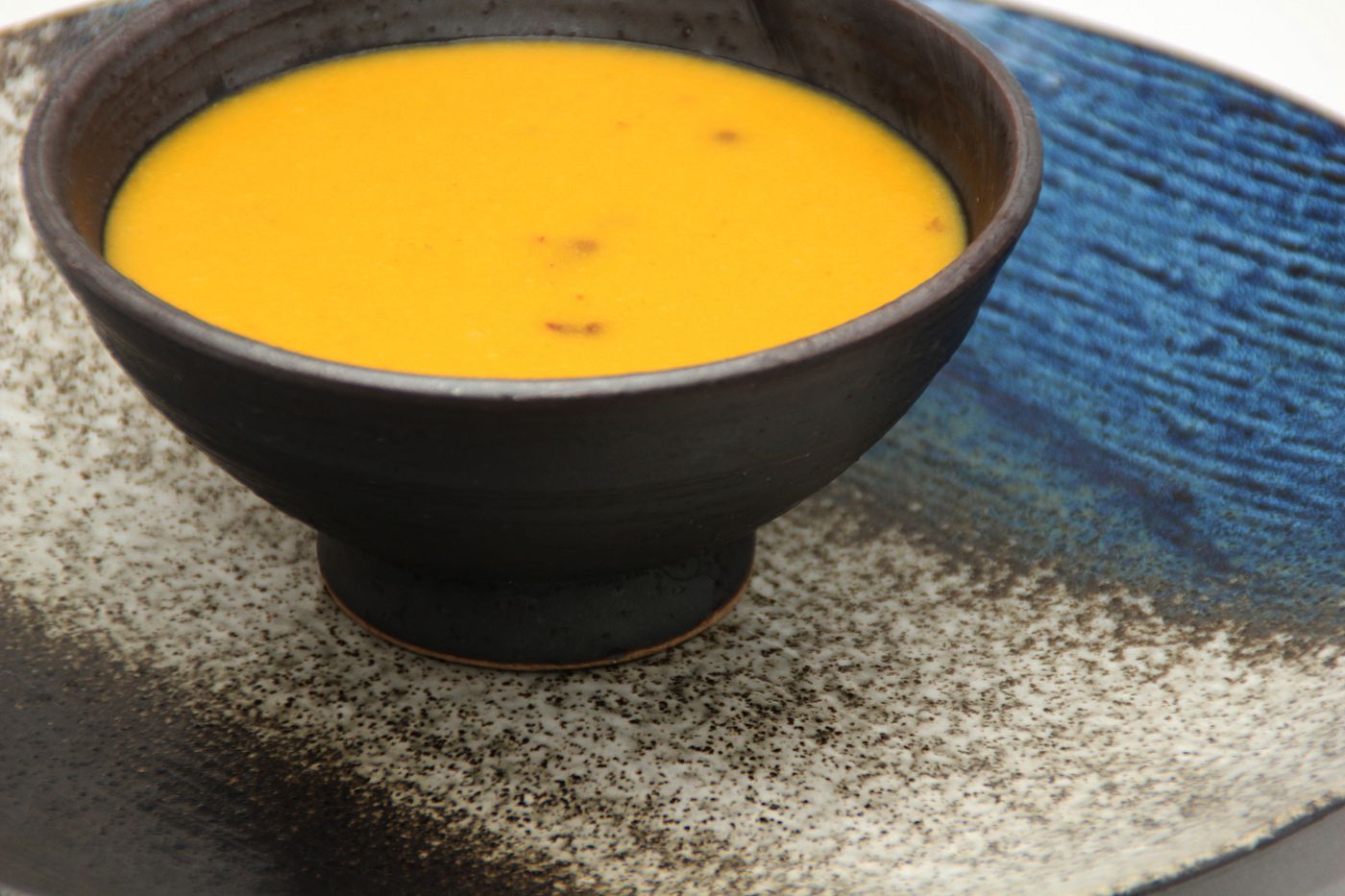
 Photo: Hyeon-Jeong Suk, CC BY 2.0, via Wikimedia Commons
Juk · Porridges 죽
Hobak-juk (Pumpkin Porridge)
호박죽
Romanization: hobak-juk
Ripe winter pumpkin cooked to a purée and thickened with glutinous rice, often with red beans — a smooth, gently sweet porridge for cold days and convalescence.
- Serves
- 4
- Prep
- 20 min
- Cook
- 50 min
Recipe
Ingredients · Serves 4
- 1 kgRipe winter pumpkin or kabocha squashpeeled and seeded weight, cut into chunks
- 60 gGlutinous rice flour (chapssal-garu)about ½ cup
- 50 gDried red (adzuki) beansoptional; soaked overnight
- 800 mlWaterdivided; plus more as needed
- 2 tbspSugaradjust to the sweetness of the pumpkin
- ½ tspSalt
- 1 tbspPine nutsoptional garnish
Method
Technique: Making Juk
Step 1: Drain the soaked red beans, cover with fresh water and simmer for 40–50 minutes until tender but not broken; drain. (Canned unsweetened adzuki beans, rinsed, can be used instead.)
Step 2: Meanwhile, put the pumpkin in a heavy pot with 500 ml water, cover and simmer for 20–25 minutes until very soft.
Step 3: Mash the pumpkin with its cooking liquid, or blend until smooth, and return to the pot.
Step 4: Whisk the glutinous rice flour with 150 ml cold water until no lumps remain.
Step 5: Bring the purée back to a simmer and pour in the rice-flour slurry in a thin stream, stirring constantly. Cook over low heat for 8–10 minutes, stirring and scraping the bottom, until thick and glossy; add more water if it becomes too stiff.
Step 6: Stir in the beans, sugar and salt and simmer 2–3 minutes more. Serve warm, scattered with pine nuts.
Origin & History
Hobak-juk is made most often from neulgeun-hobak, the large, tan-skinned "old pumpkin" left on the vine to ripen fully, though sweet kabocha-type squash is also used. The Encyclopedia of Korean Culture traces pumpkins to the Americas and dates their arrival in Korea to after the Japanese invasions of the 1590s. Buddhist monks were early growers, which earned the vegetable the nickname seungso, "monks' vegetable." By the late Joseon period pumpkins had become an ordinary side ingredient for common people and a food to fall back on in lean years.
The encyclopedia's traditional method begins by boiling the pumpkin until soft and scraping out the flesh. Beans are cooked separately — fresh ones as they are, dried ones after soaking — then glutinous rice is added, and finally the pumpkin flesh, simmered until everything melds. The Korean Food Promotion Institute describes the same porridge with the flesh pressed through a sieve and finished with red beans, other beans and small glutinous rice dumplings (saealsim).
Because it is soft and naturally sweet, hobak-juk has long been considered a good food for people recovering from illness and for the elderly. Whole pumpkins keep for months, and the institute recalls how farmhouses stored a few behind the kitchen through winter, along with a folk saying that eating pumpkin at the winter solstice wards off illness. See making juk and seasonal foods.
Key Ingredients
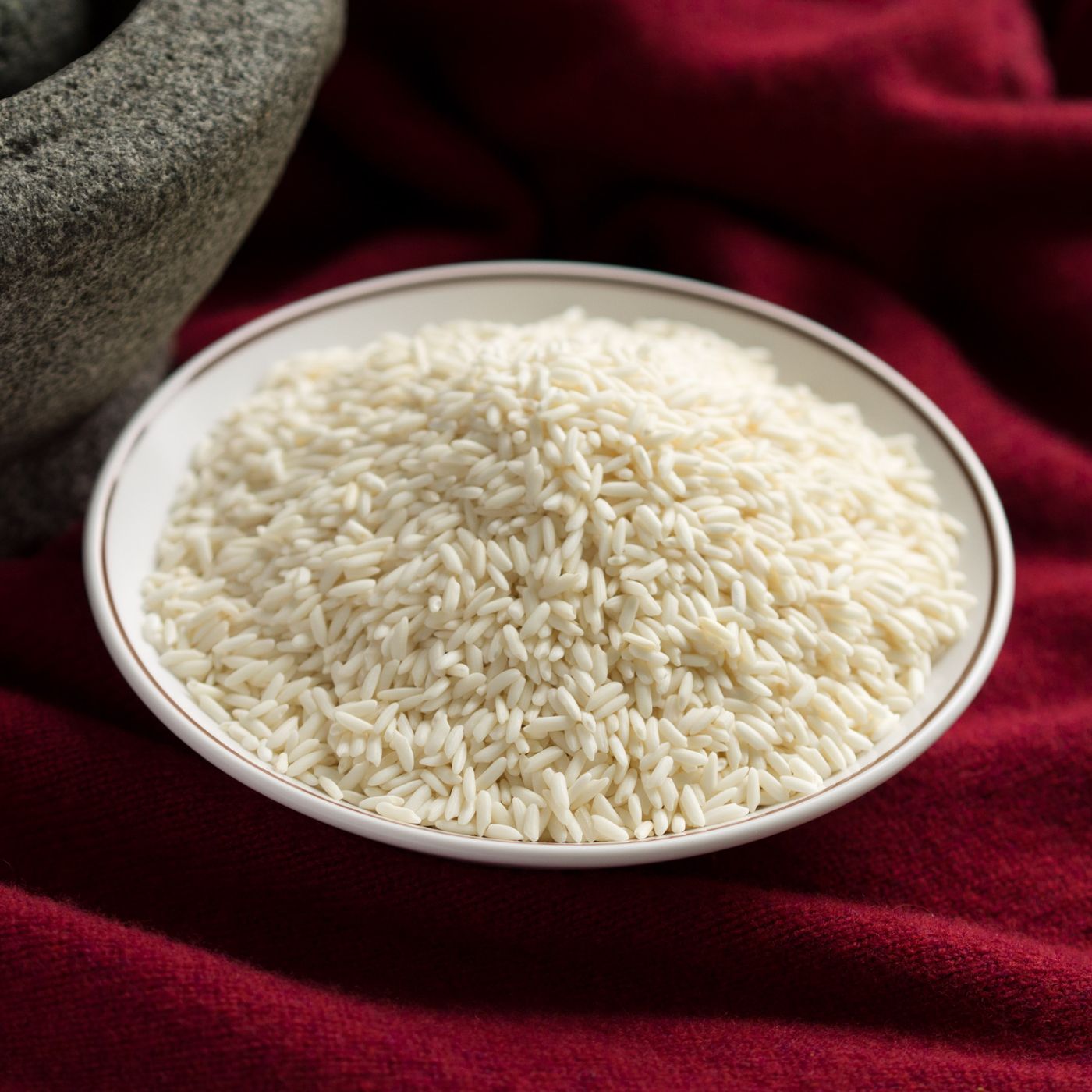 Glutinous rice (sweet rice)찹쌀Opaque, chalk-white grains of glutinous rice that steam into a chewy, elastic mass. Chapssal is the rice of festivals and comfort food: pounded into rice cakes, sweetened into yaksik, and tucked inside the chicken of samgyetang.
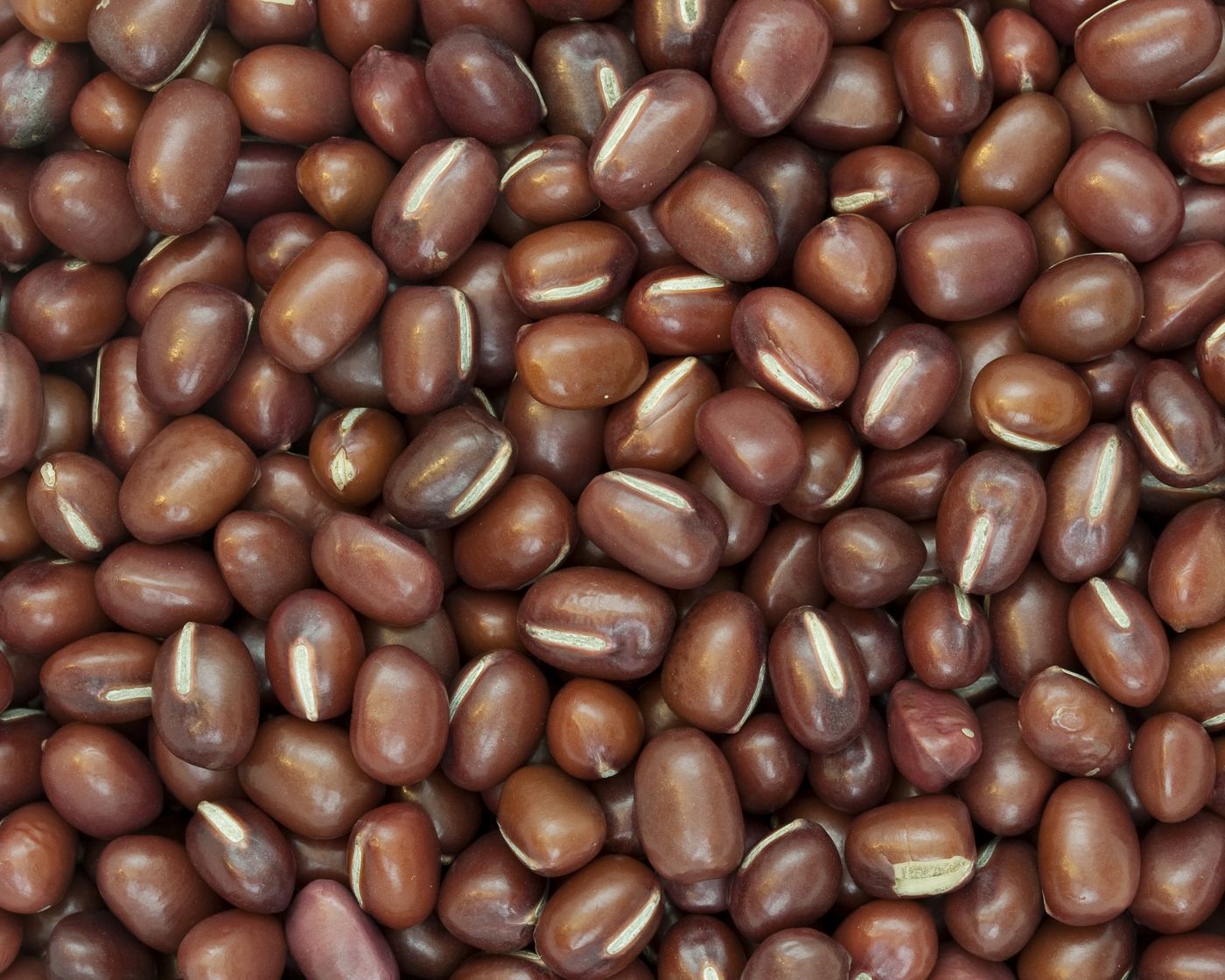 Adzuki beans (red beans)팥Small, glossy, wine-red beans with a thin white seam, simmered into savory porridge, cooked with rice, and mashed sweet for rice-cake fillings and coatings. Their red color was long believed to drive away misfortune.
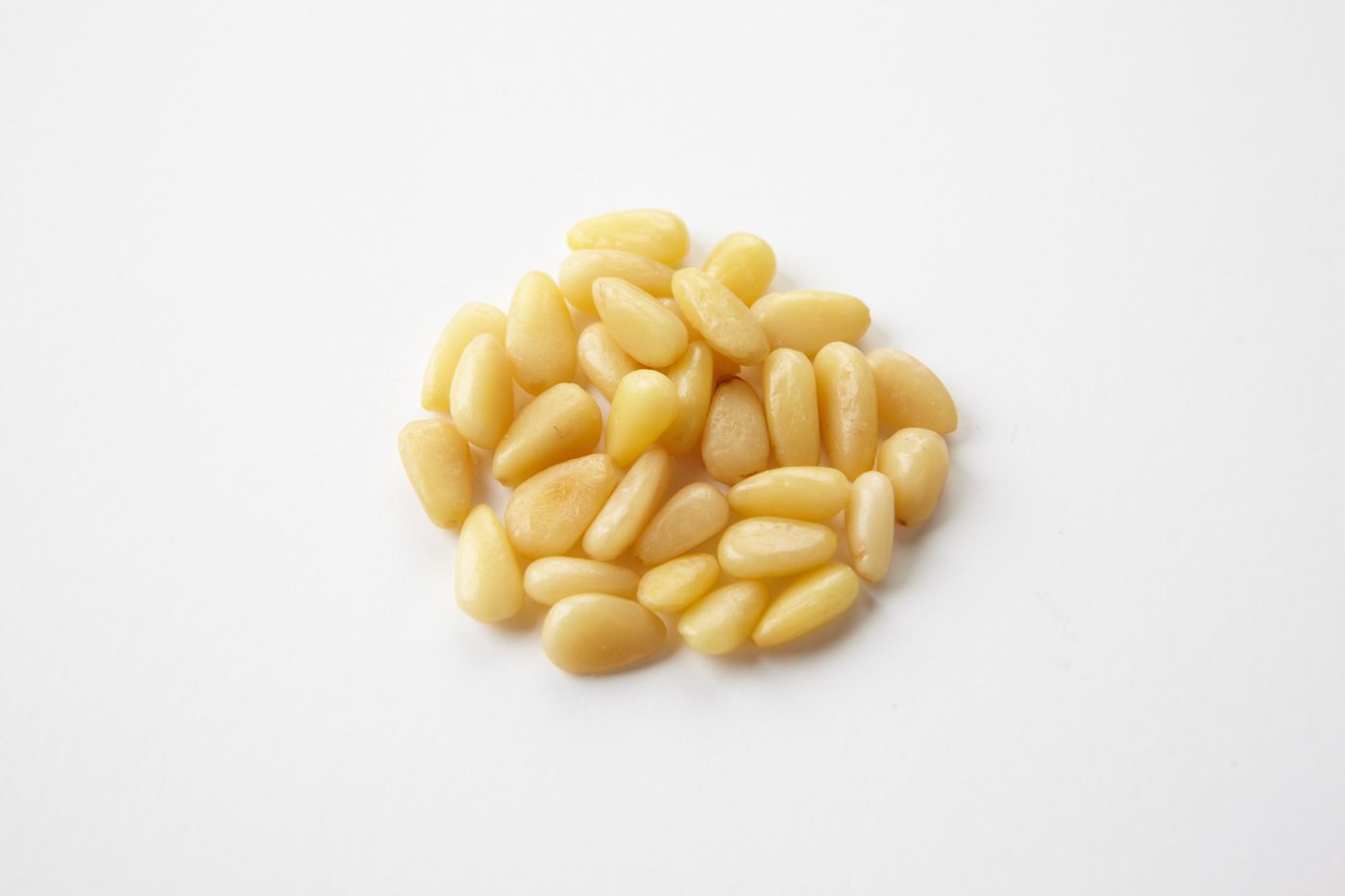 Pine nuts잣Creamy, ivory seeds of the Korean pine, scattered as a finishing garnish on punches, porridges and braises, or ground into the delicate porridge jatjuk. Gapyeong in Gyeonggi-do is the country's pine-nut capital.
Nutrition
| Calories | ~215 kcal |
|---|---|
| Protein | ~5.7 g |
| Fat | ~0.6 g |
| Carbohydrates | ~48 g |
| Fiber | ~6.5 g |
| Sodium | ~295 mg |
Notable forVitamin A (as beta-carotene) · Potassium · Fiber
Estimated from Korean Food Composition Table values for raw ripe pumpkin (F1980030000a) and USDA FoodData Central (SR Legacy) values for uncooked glutinous rice (FDC 168883, used for the flour), raw adzuki beans (FDC 173727), sugar and table salt, divided by 4. Excludes the pine-nut garnish. About 7 g of the carbohydrate per serving is added sugar. Vitamin A and potassium come from the pumpkin, fiber largely from the beans. Actual values vary with ingredients, portion size and preparation.
Health Benefits
- Beta-carotene: ripe orange pumpkin is a source of carotenoids the body converts to vitamin A, a point the Encyclopedia of Korean Culture also makes about the porridge.
- Gentle and easy to eat: soft, warm and low in fat, it is traditionally served to people recovering from illness and to older adults.
- Beans add substance: red beans contribute fiber and plant protein, making the bowl more filling.
Regional Variations
- Neulgeun-hobak-juk: ripe winter pumpkin, glutinous rice and beans — the classic version.
- Danhobak-juk: made with sweet kabocha-type squash, smoother and sweeter; common in restaurants as a starter.
- With saealsim: small glutinous rice-flour balls simmered in the porridge for chewiness.
- Aehobak-juk: a savory porridge of young green zucchini, shredded beef and rice, seasoned with clear soy sauce, which the encyclopedia records alongside the sweet version.
- Hobak-beombeok: a thicker relative with more beans and grains, in which pumpkin is cooked down with flour or grains into a stiff mash.
Pairings
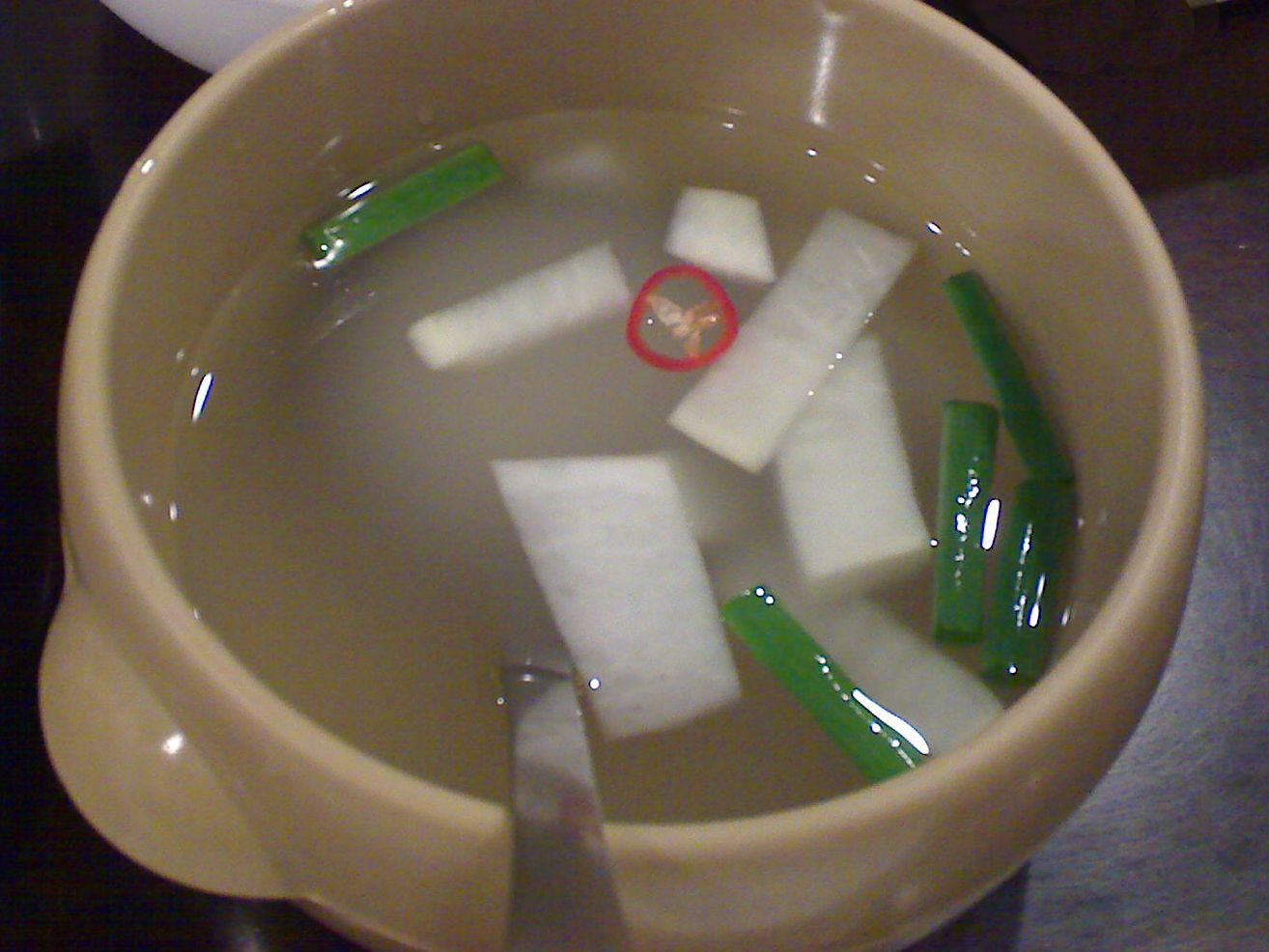 Radish Water Kimchi동치미Whole radishes steeped in a clear salt brine with pear, ginger and green chili — a winter water kimchi whose tangy broth is prized on its own.
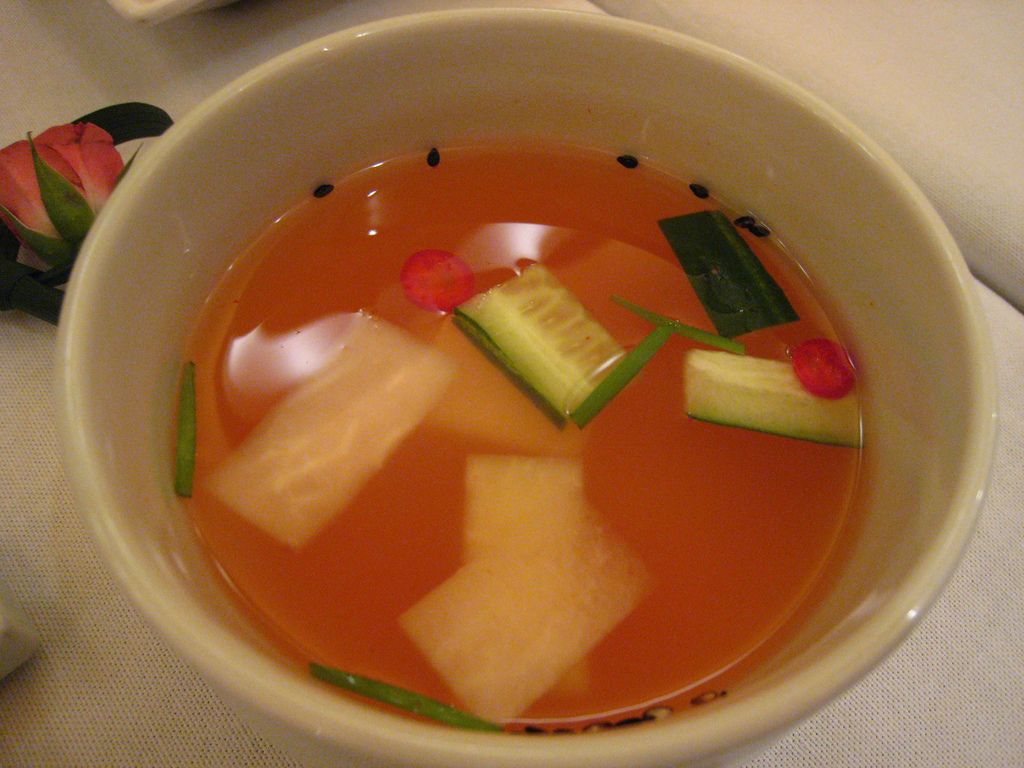 Radish and Cabbage Water Kimchi나박김치Thin squares of radish and napa cabbage in a lightly salted, pink-tinted broth — a mild, refreshing water kimchi eaten by the spoonful.
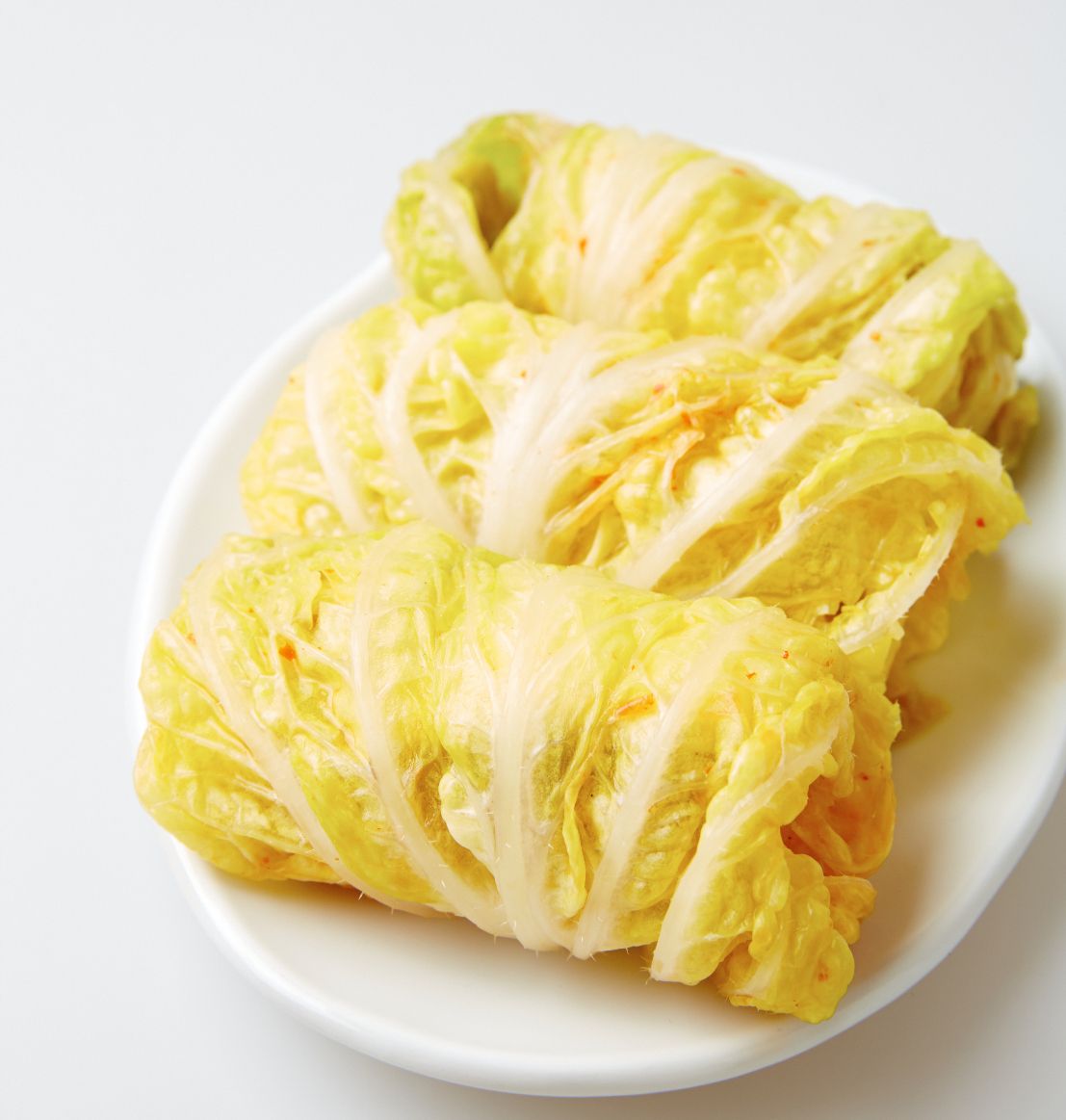 White Kimchi백김치Napa cabbage stuffed with radish, pear, chestnut and jujube and ripened in a clear, cool brine — kimchi with no chili flakes, mild and refreshing.