History & Culture
Jeongwol Daeboreum: Five-Grain Rice, Nuts and Aged Greens
정월대보름
The first full moon of the lunar year and its foods: ogokbap shared among neighbors, bureom nuts cracked at dawn, mugeun-namul, bokssam and ear-brightening wine.
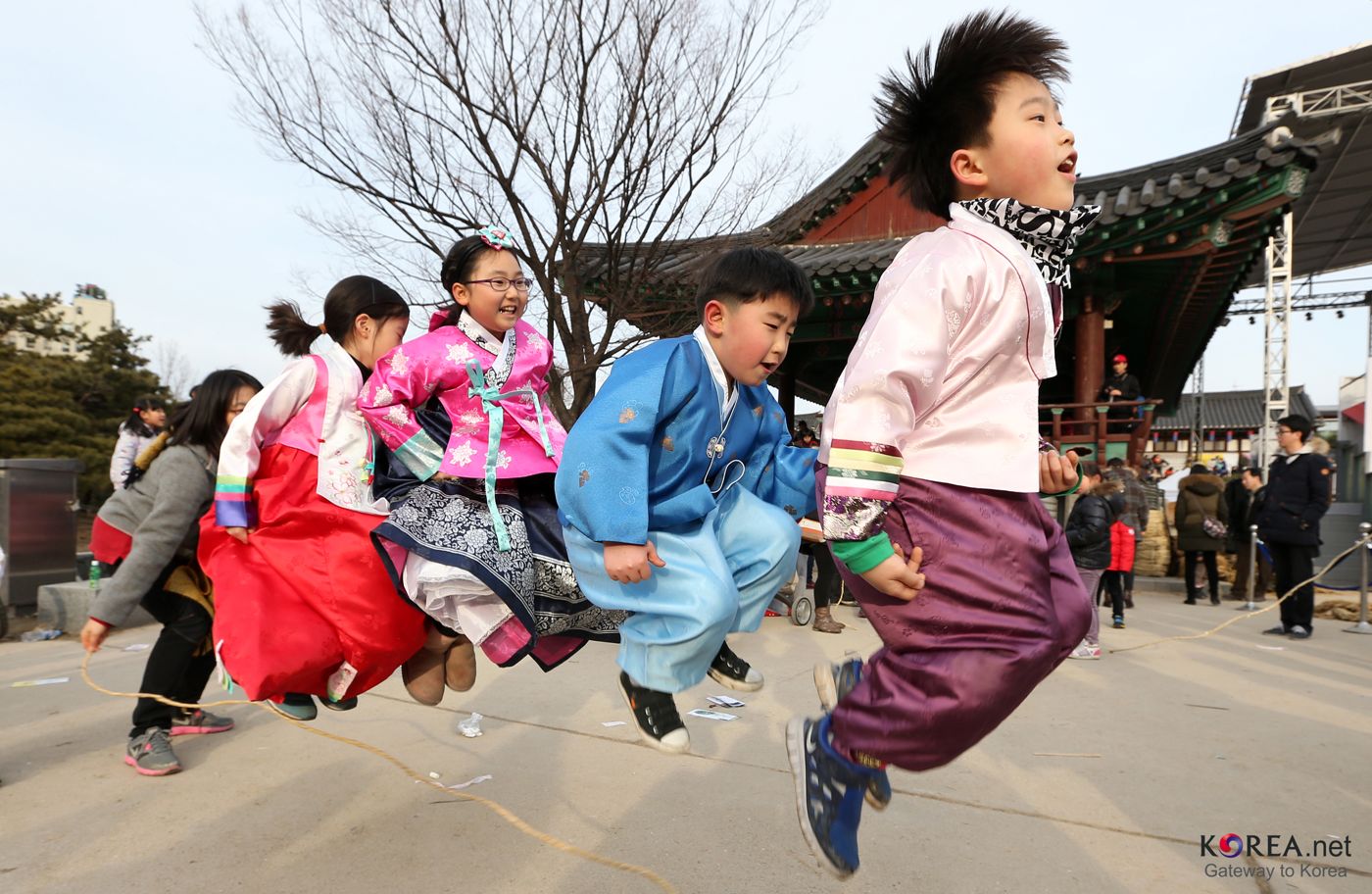 Photo: Korea.net / Korean Culture and Information Service (Jeon Han), CC BY-SA 2.0, via Wikimedia Commons
Jeongwol Daeboreum (정월대보름) falls on the fifteenth day of the first lunar month, the year's first full moon. The Encyclopedia of Korean Culture treats it as nearly as important as Seollal and reads the moon as a symbol of abundance. Village rites were traditionally held that night, and the day carries about forty of the 189 annual customs counted by one folklorist. It is the end of the New Year season begun at Seollal, and its foods are described in the encyclopedia as ogokbap, mugeun-namul, bokssam, bureom, gwibalgi-sul and yakbap.
Ogokbap: grain for the year's harvest
Ogokbap (오곡밥) is rice cooked with several grains and beans. The Encyclopedia says "five grains" can mean grain in general; a typical glutinous version uses glutinous rice, glutinous sorghum, glutinous millet, red beans and black beans. It was cooked on the eve of the full moon and eaten with a spread of namul, expressing a wish for a good harvest, since farmers included every grain they grew. The entry records two sociable customs: eating rice from at least three households of different surnames was thought lucky, so families exchanged portions, and eating nine times in the day was considered auspicious, so people ate small amounts repeatedly. For the grains themselves see chapssal, pat and japgokbap.
Mugeun-namul: vegetables saved for spring
Mugeun-namul (묵은나물, "aged greens") are vegetables dried the previous year and cooked now. The Encyclopedia lists dried gourd, cucumber and mushrooms, along with winter-stored beans, pumpkin, turnip, radish greens, bracken, mountain greens, cucumber stems and eggplant skin, boiled and seasoned. It cites the Dongguk sesigi for the belief that eating them keeps one from feeling the heat the coming summer; that is folk belief, not a nutritional finding. Familiar examples are gosari-namul, doraji-namul, siraegi-namul, gaji-namul and mareun-hobak-namul. The drying methods are in drying and rehydrating vegetables.
Bureom: nuts cracked at dawn
Bureom (부럼) are hard-shelled nuts, usually chestnuts, pine nuts, walnuts and peanuts, bitten early on the morning of Daeboreum. The Encyclopedia cites the Dongguk sesigi for the wish of a year free of trouble and of boils (buseureom), and names older terms such as jakjeol ("biting the boil") and gochi-jibang ("a way to firm the teeth"). It suggests a wordplay logic, the same one behind the bridge-walking custom: biting bureom wards off buseureom. The custom is also recorded in China and Japan, and its Korean origin is unknown. See also bam and jat.
Bokssam, gwibalgi-sul and yakbap
Bokssam (복쌈) are wraps of rice in greens, a fortune custom discussed in ssam culture. Gwibalgi-sul (귀밝이술) is chilled rice wine drunk in the morning in the hope of sharp hearing and only good news; Korea.net notes that parents dabbed it on children's lips. Yaksik, the sweet nut-and-jujube rice, is another full-moon food. For the day in the wider calendar, see seasonal foods.
The rest of the day
Daeboreum also had fire and fortune customs: daljip taeugi (burning a moon house), jwibulnori (swinging cans of embers), and raising a byeotgaritdae, a pole wrapped in grain, to wish for plenty. Many of these have faded, but the foods remain easy to find in markets each year.