Travel
Seomun Market
서문시장
Daegu's great historic market, once counted among Joseon's three largest, plus its weekend night market and the noodles, dumplings and snacks to look for.
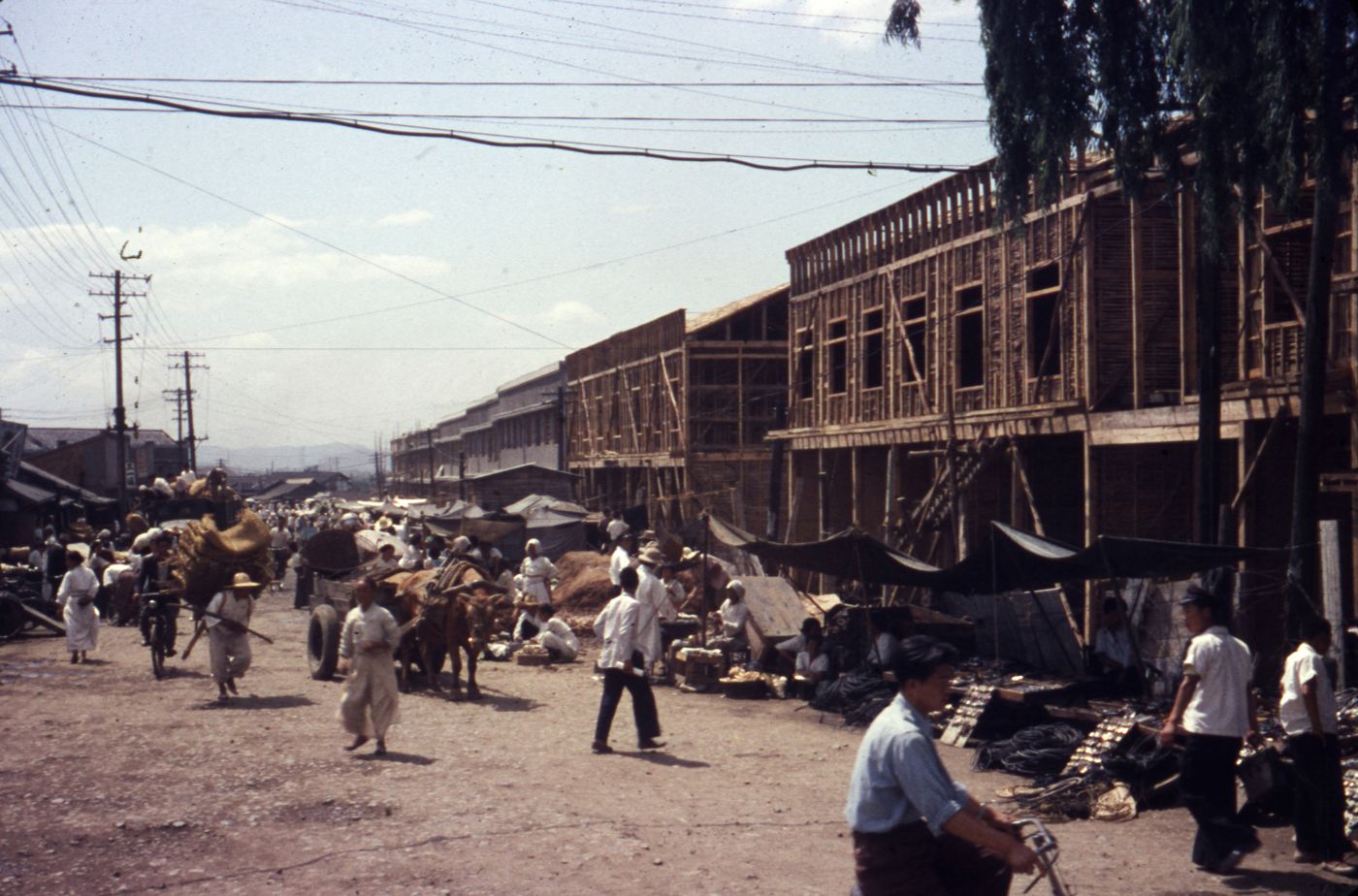
Seomun (West Gate) Market in Daegu has one of the longest pedigrees of any market in Korea and, since 2016, a lively night market on top of its daytime trade. It is a good place to see how an old textile market became a food destination. For the city's wider food culture, see Daegu.
A market of the Joseon era
Visit Korea says Seomun was one of the three major markets of the Joseon dynasty, along with those in Seoul and Pyongyang. The Encyclopedia of Korean Culture gives the fuller story: a small market began outside the north gate of Daegu's walled town and, once the provincial governor's office was established in Daegu, moved outside the west gate, taking the name Seomun. It moved to its current site in the early 1920s (Visit Korea says 1922), on land reclaimed from a large pond. Silk and cotton were the main trade, and Visit Korea says the market's textile volume is the largest in Korea. See traditional markets for how Seomun fits among Korea's great markets.
The night market
The Korea Herald reported that Seomun Night Market opened on June 3, 2016, with more than 80 sellers offering 65 kinds of food after a competition for stall spots, and called it the largest night market in Korea. Visit Korea notes that it was selected as one of Korea's top night-tourism spots in 2020. The night market runs on weekend evenings, and listed hours and closing days have varied between sources, so check the official listing before you go.
The Herald describes a mix of traditional market snacks, such as tteokbokki and sundae, and fusion dishes drawing on Korean, Chinese, Japanese and Western cooking, with many stallholders in their 20s and 30s. That fusion element is part of the point: this is an old market reinventing itself rather than a museum.
What to eat
Visit Korea lists a range of market foods:
- Flat dumplings: Daegu's local specialty, which the page describes as a flat dumpling. Compare other filled dumplings in mandu.
- Noodles: sujebi (hand-torn dough noodles in broth), kalguksu (knife-cut noodles) and a banquet-style noodle soup.
- Snacks: hotteok (sweet pancake) and bean-sprout tteokbokki. See soybean sprouts for the ingredient.
- Pork dishes: pork and rice soup (see dwaeji-gukbap), pork makchang (intestines), and a meat pancake. Visit Korea suggests ordering the large size of the meat pancake.
Visit Korea also advises arriving hungry, and notes that lines at night-market stalls can be long.
Tips
- Day or night? The daytime market is a textile and general market with food stalls and noodle shops. The night market is a separate weekend-evening experience inside the same market area.
- Bring appetite, not a fixed plan. Stall lines move at different speeds, and sharing plates lets you try more.
- Mind allergens and organ meats. Wheat, soy, sesame and shellfish are common, and makchang is an organ-meat dish. See the allergens guide.
Beyond Daegu
For the other great city markets, see Gwangjang Market in Seoul and Jagalchi Market in Busan. For the rural periodic tradition that markets like Seomun grew alongside, read about five-day markets.