Travel
Jagalchi Market
자갈치시장
Busan's waterfront seafood market: the women known as ajime who built it, the grilled hagfish and raw fish it is known for, and how to approach eating there.
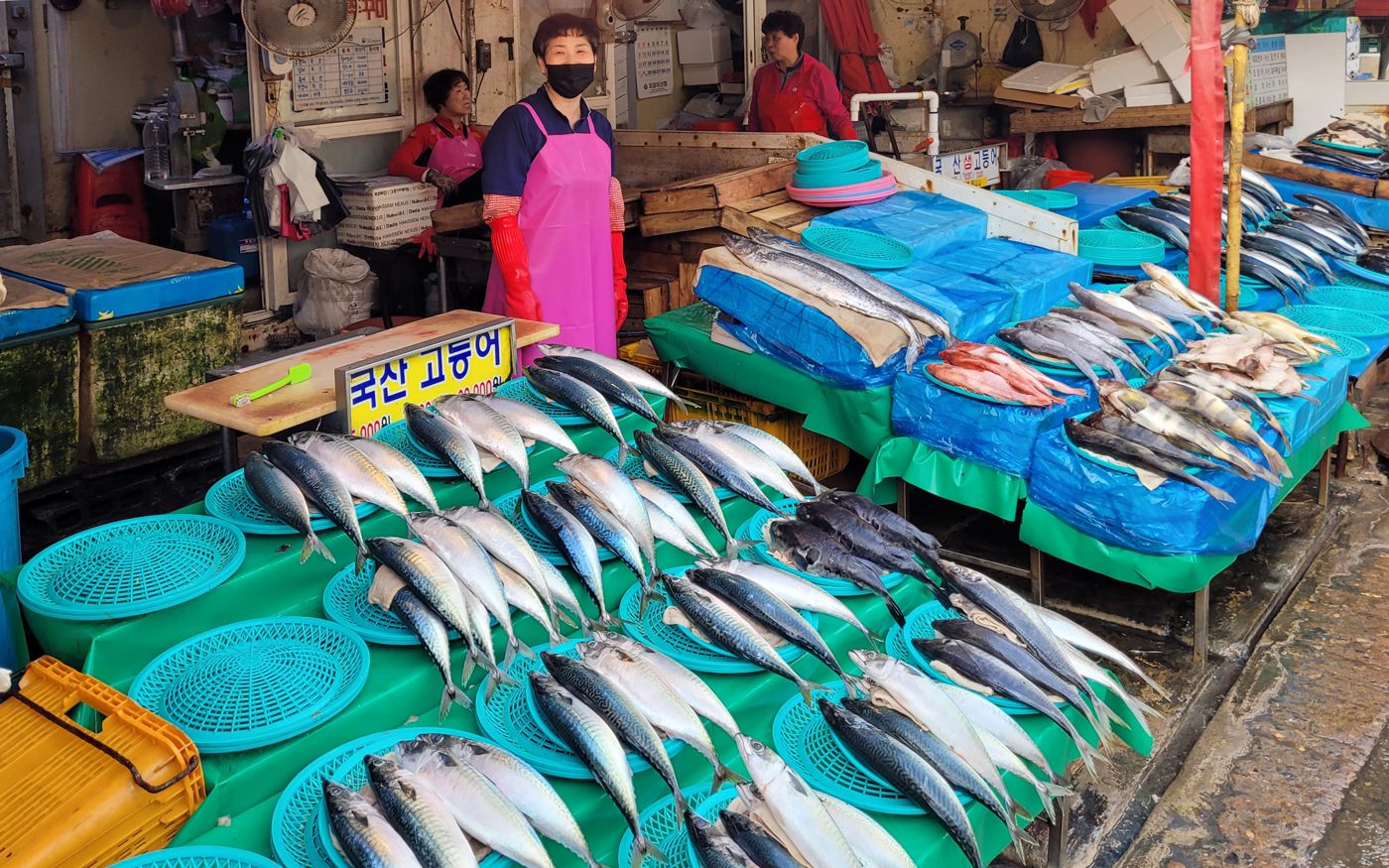 Photo: Bernard Gagnon, CC0, via Wikimedia Commons
Jagalchi Market sits on the Busan waterfront and is often called Korea's largest seafood market. The Korea JoongAng Daily describes it as the biggest seafood market in the country, and Visit Korea says it sells both live and dried fish. It is also one of the places where Busan's port-city identity is easiest to see, hear and taste. For the city's wider food culture, see Busan.
Where it came from
Accounts of Jagalchi's founding differ, so it is best to treat the date as uncertain. One Korea JoongAng Daily article says the market first formed in the early 1920s through street vendors selling seafood from Busan Port; another, citing the Ministry of Culture, Sports and Tourism, says it was officially founded in 1970, with people returning from Japan after 1945 and later refugees of the Korean War helping it grow. The two are not necessarily in conflict, since informal trade often precedes official recognition. For the larger context of Korean markets, see traditional markets.
The ajime
Jagalchi's best-known characters are its women vendors. The JoongAng Daily explains that ajime is the Busan dialect word for a middle-aged woman, a variant of the more familiar ajumma, and that during and after the Korean War many women who had lost husbands or needed to support their families worked there as peddlers and street vendors. Their red aprons have become a symbol of resilience and of women's labor in the city's modern history. Visit Korea notes that most fish sellers are still women, and that they are called Jagalchi ajumeoni.
What to eat
Fresh fish is the point. Vendors sell it live, and Visit Korea says that visitors can eat fresh raw fish at the market itself. Restaurants serve hoe (raw fish) and other seafood, as the JoongAng Daily notes. For how raw fish is cut and eaten, see hoe culture and preparing hoe.
The JoongAng Daily singles out one regional specialty, grilled gomjangeo (inshore hagfish). According to the article, hagfish were once cheap, with the meat often discarded, and poor merchants, often women whose husbands were away at war, began grilling them and selling them around Jagalchi. It is chopped and cooked at the table, marinated or salted, and sometimes eaten wrapped in lettuce. The article says it is believed to boost stamina, which is a folk belief rather than an established health claim, and warns that the pieces keep moving while they cook because the nerves stay intact, which some diners find off-putting. For another grilled-fish dish, see godeungeo-gui.
Eating well here
- Look at the counters before you sit. Asking the price before the fish is prepared is normal. The same approach is described for Noryangjin.
- Expect the market's rhythm. Visit Korea lists daytime hours and a twice-monthly closing day, but these change, so check the official page before you go.
- Be cautious with raw and unfamiliar seafood. Fresh, cold, high-turnover stalls are the safer choice. The allergens guide and seafood, omega-3 and mercury cover general considerations.
- Outside, look for small stalls. Visit Korea mentions vendors along the road and shore selling mackerel and sea squirts from wooden boxes.
Related reading
Busan's other major market, Bupyeong, and its fish-cake tradition are covered in traditional markets. In Seoul, the equivalent raw-seafood experience is Noryangjin, and the city's classic food alley is Gwangjang Market.