History & Culture
Korean Fried Chicken: From Tongdak to Chimaek
한국 치킨의 역사
How rotisserie birds, cheap cooking oil, department-store franchises and a sticky red glaze turned fried chicken into one of South Korea's most loved foods.
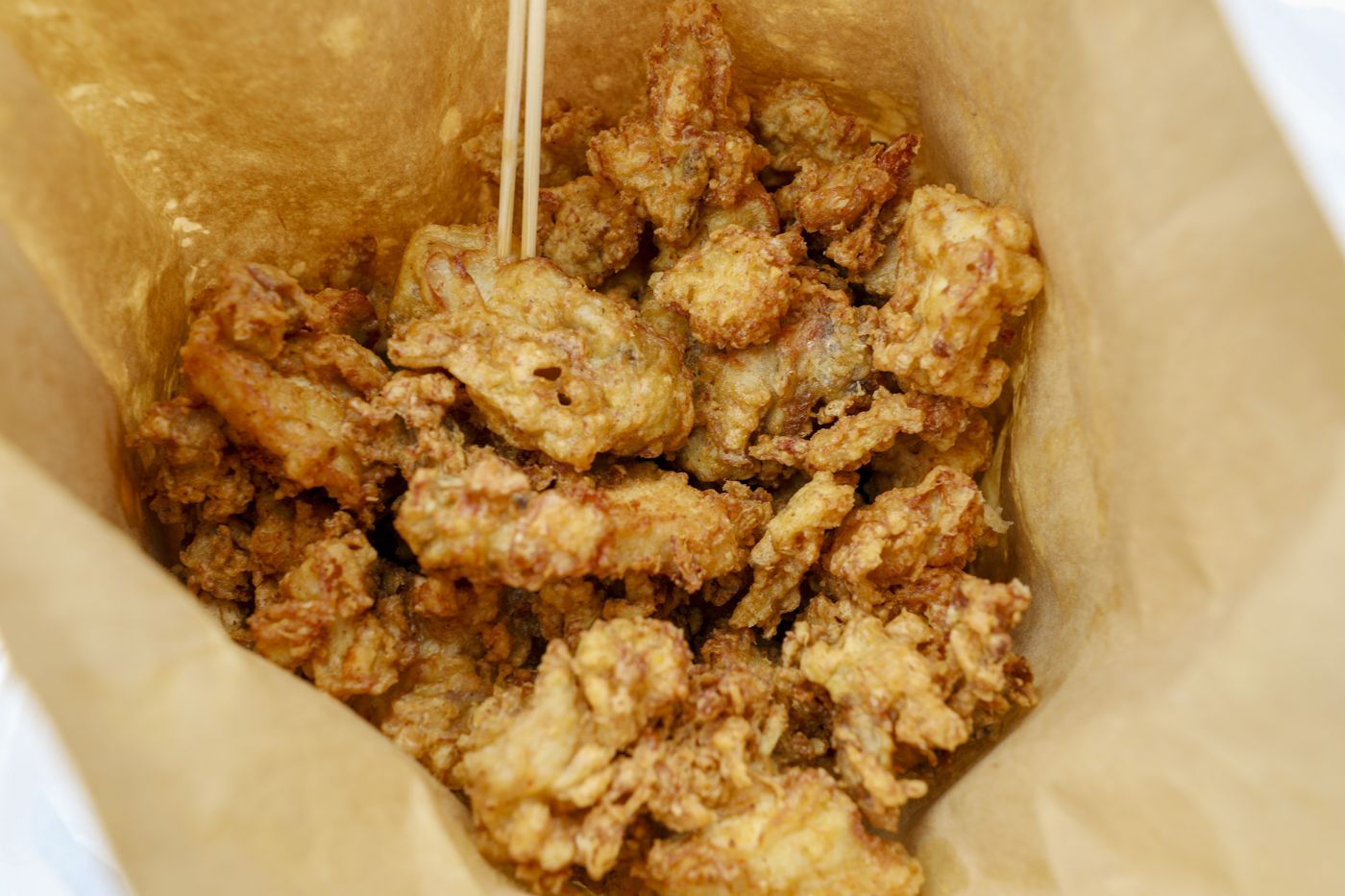 Photo: bryan..., CC BY-SA 2.0, via Wikimedia Commons
In South Korea, chikin (치킨), borrowed from English, almost always means fried chicken: crisp, often fried twice, sold by the whole bird, and delivered to the door with a small cube of pickled radish. The Encyclopedia of Korean Culture estimated that 35,000 to 50,000 chicken restaurants were operating nationwide in 2014. Yet Korean fried chicken is a recent food, a product of the decades of rapid growth after the Korean War.
Before frying: boiled birds and rotisserie tongdak
Chicken had long been part of the Korean table, but mostly boiled or simmered. In the 1950s and 1960s the familiar way to eat a whole bird was in a soup such as samgyetang. Change came from Seoul's Myeongdong, where the Myeongdong Yeongyang Center began selling whole chickens roasted on an electric rotisserie; accounts date this to the early or late 1960s. Electric-oven tongdak (통닭), "whole chicken," became a popular treat. Daegu, meanwhile, was the country's poultry center; by one Korea Times account the city supplied 70 to 80 percent of the poultry distributed nationwide in the 1960s, a background that later made it a cradle of chicken brands.
Cooking oil and the first franchises
Deep-frying at scale needed cheap oil and cheap chicken. Korean food historians point to the arrival of affordable, mass-produced cooking oil in the early 1970s, along with industrial chicken farming, as the turning point: market vendors began frying whole birds in large kettles. The Encyclopedia of Korean Culture notes that, as the decade went on, oil-fried chicken pieces became distinct from roast tongdak and took the English name "fried chicken."
In 1977 Lim's Chicken opened in a department store in Seoul and is generally described as the first chicken franchise and the first brand to sell chicken in pieces rather than as whole birds. Some restaurants were already using imported pressure fryers in the style of the American chain before Kentucky Fried Chicken itself entered Korea in 1984, an arrival that made portioned fried chicken familiar on a mass scale.
Yangnyeom chicken and its inventors
The great Korean innovation was yangnyeom chikin (양념치킨), fried chicken tossed in a sticky, sweet and spicy glaze, typically built on gochujang or chili, garlic and syrup such as mulyeot. It answered a common complaint that plain fried chicken grew greasy and hard as it cooled.
Who invented it is disputed, and sources do not agree:
- Mexican Chicken (Daegu): Many Korean accounts credit Yun Jong-gye, whose Daegu restaurant, opened in 1978 near Hyomok Market, became Mexican Chicken. He is said to have developed the glaze after watching customers leave fried chicken unfinished. The Korea Times dates the introduction of the red sauce to 1985; other accounts place it earlier in the 1980s.
- Pelicana (Daejeon): Pelicana, founded in Daejeon in 1982 by Yang Hee-kwon, also claims to have created yangnyeom chicken, and The Korea Herald has credited it with inventing the dish. Pelicana's franchise network and advertising are widely acknowledged to have made yangnyeom chicken a national food.
The fairest summary is that the glaze emerged from Daegu and Daejeon franchise kitchens in the early-to-mid 1980s, with more than one plausible originator.
The boom years
Through the late 1980s and 1990s new chains multiplied, many of them born in Daegu, among them Cheogajip and Kyochon, which later expanded overseas. After the 1997 Asian financial crisis, chicken shops became a common way for laid-off and early-retired workers to start small businesses, and delivery-focused chains grew quickly. Flavors diversified into soy-garlic, honey and green-onion toppings, and chains competed on ever-crisper double frying.
Chimaek
Chimaek (치맥), a contraction of chikin and maekju (beer), names the pairing that defines the dish today. Fried chicken and beer had long gone together, but the 2002 FIFA World Cup, co-hosted by Korea and Japan, is widely credited with fixing chimaek in national culture as crowds gathered to watch matches. Since 2013 Daegu has held an annual Chimac Festival. Fried chicken also belongs to the wider world of anju and drinking culture, of Korean street food, and of Korean food abroad. For eating it as part of a balanced diet, see eating out at Korean restaurants.