More dishes 기타
Gim Bugak (Fried Laver Chips)
김부각
Romanization: gim-bugak
Sheets of laver pasted together with seasoned glutinous rice, dried, then fried until they puff into airy, crackling chips — a keeping banchan and a famous Namwon specialty.
- Serves
- 4
- Prep
- 30 min
- Cook
- 15 min
RegionJeolla
Jump to recipeRecipe
Ingredients · Serves 4
- 10 sheetsGim (laver) sheetsplain, unseasoned; about 25 g
- 30 gGlutinous rice flourabout 4 tbsp
- 300 mlWater or anchovy-kelp stock
- 1 tspSoy sauce
- ½ tspSugar
- 2 tspToasted sesame seeds
- ½ tspGochugaruoptional
- Neutral oilfor frying
Method
Technique: Twigim: Korean Deep-Frying
Step 1: Whisk the glutinous rice flour into the cold water or stock in a small pot. Cook over low heat, stirring constantly with a wooden spoon, for 5–7 minutes until it turns translucent and thick, like loose porridge. Stir in the soy sauce and sugar and let cool completely.
Step 2: Lay a sheet of gim rough side up and brush a thin, even layer of paste over half of it. Fold the other half over, press, and brush the top with more paste. (Or brush a whole sheet and lay a second whole sheet on top.)
Step 3: Cut into bite-size rectangles with scissors and sprinkle with sesame seeds and a pinch of gochugaru while the paste is wet.
Step 4: Dry on a rack in a sunny, airy spot for a day, or in a dehydrator or 50–60 °C oven for 2–3 hours, until completely brittle. Dried pieces keep for months in an airtight container.
Step 5: To serve, heat oil to about 170 °C and fry a few pieces at a time for 3–5 seconds, until they puff and turn pale. Lift out at once and drain on paper. A light sprinkle of sugar is optional.
Step 6: Cool before serving; store fried chips airtight and eat within a few days.
Origin & History
Bugak is one of the few Korean dishes that are deep-fried. The Encyclopedia of Korean Folk Culture describes it as vegetables or seaweed brushed with glutinous rice paste, dried in good weather and fried in vegetable oil when needed, so that the paste puffs and turns crisp. It stresses that bugak differs from Japanese or Chinese fritters: what goes into the oil is not wet batter but something already dried. The method is old. The 1766 Jeungbo sallim gyeongje gives a recipe in which glutinous rice flour kneaded with soy sauce is steamed, mixed with ground prickly-ash pepper, cut, dried and fried until it puffs, and the nineteenth-century Oju yeonmun jangjeon sango describes Chinese toon shoots dipped in rice paste, dried and fried as a side dish or drinking snack.
Bugak was made when ingredients were plentiful and stored for the leaner months; Korea Tourism Organization describes laver chips as a winter provision and a mainstay of temple cooking, and the folk-culture encyclopedia notes that bugak developed especially in Buddhist temples, where it was a valued source of fat and calories. The name gim-bugak is documented in the 1957 Ijo gungjeong yori tonggo, whose recipe seasons the rice paste with sugar, salt, pepper and chili, brushes it between two sheets of laver, dries them and fries them before serving. The Encyclopedia of Korean Culture lists gim-bugak among the representative mitbanchan — the keeping side dishes stocked in every pantry.
Gim-bugak also has an export history. The folk-culture encyclopedia cites a 1956 newspaper report of Korean laver chips drawing attention at an Australian fair, and exports to the United States through a Korean-American firm in Hawaii beginning in 1961. Interest surged again after a 2018 television appearance, and laver snacks are now a major export. Today the town of Namwon in North Jeolla is the center of production: a 2023 Kyeongin Ilbo report put its output at about 1,263 tonnes a year, roughly 70% of the national total, made with local glutinous rice. Local accounts link the trade to laver brought upriver on salt boats and served as a delicacy in the town's entertainment houses.
Key Ingredients
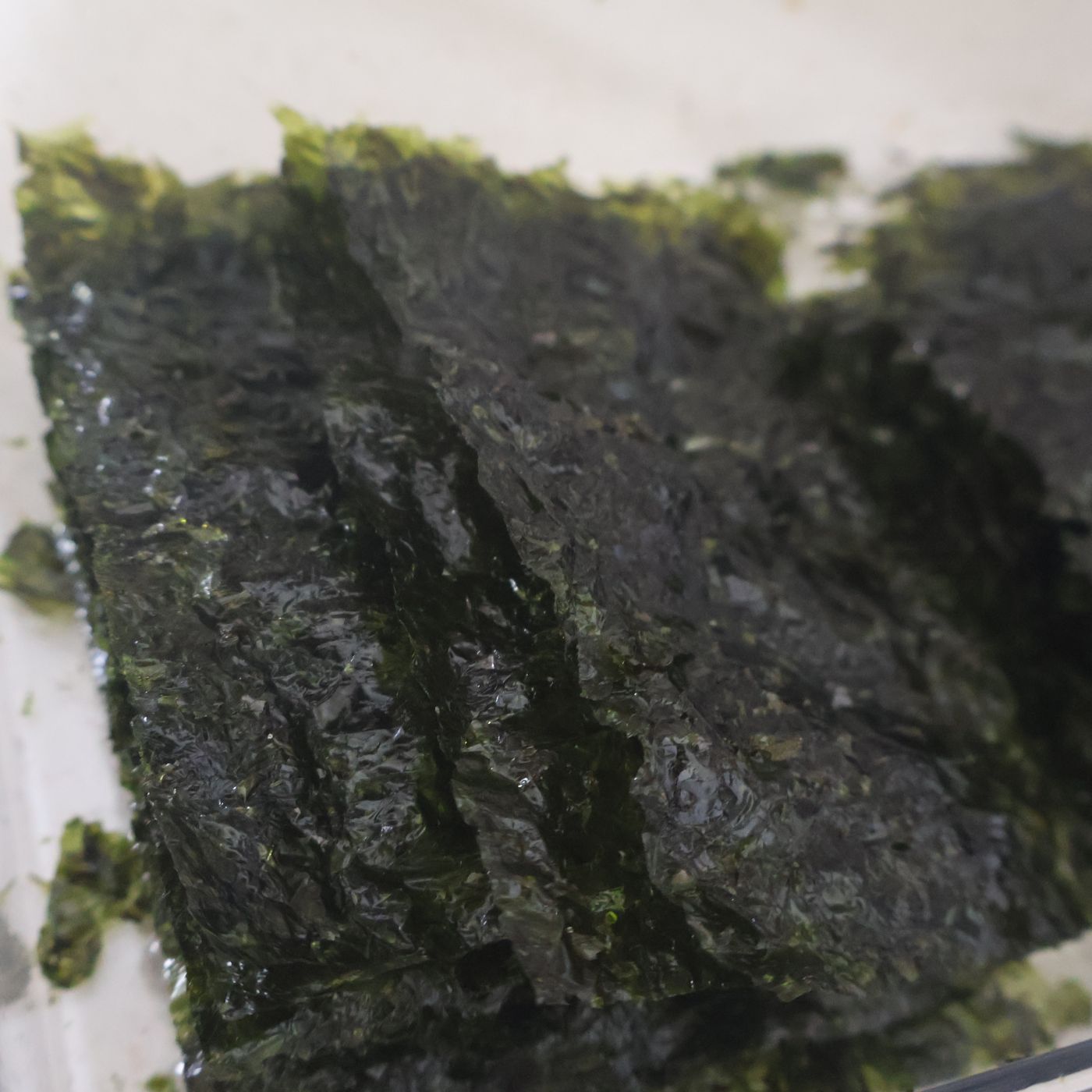 Laver (gim)김Paper-thin sheets of dried red seaweed, toasted until crisp and fragrant. Gim wraps gimbap and rice, crumbles over noodles and soups, and — brushed with oil and salt — becomes the everyday side dish gim-gui.
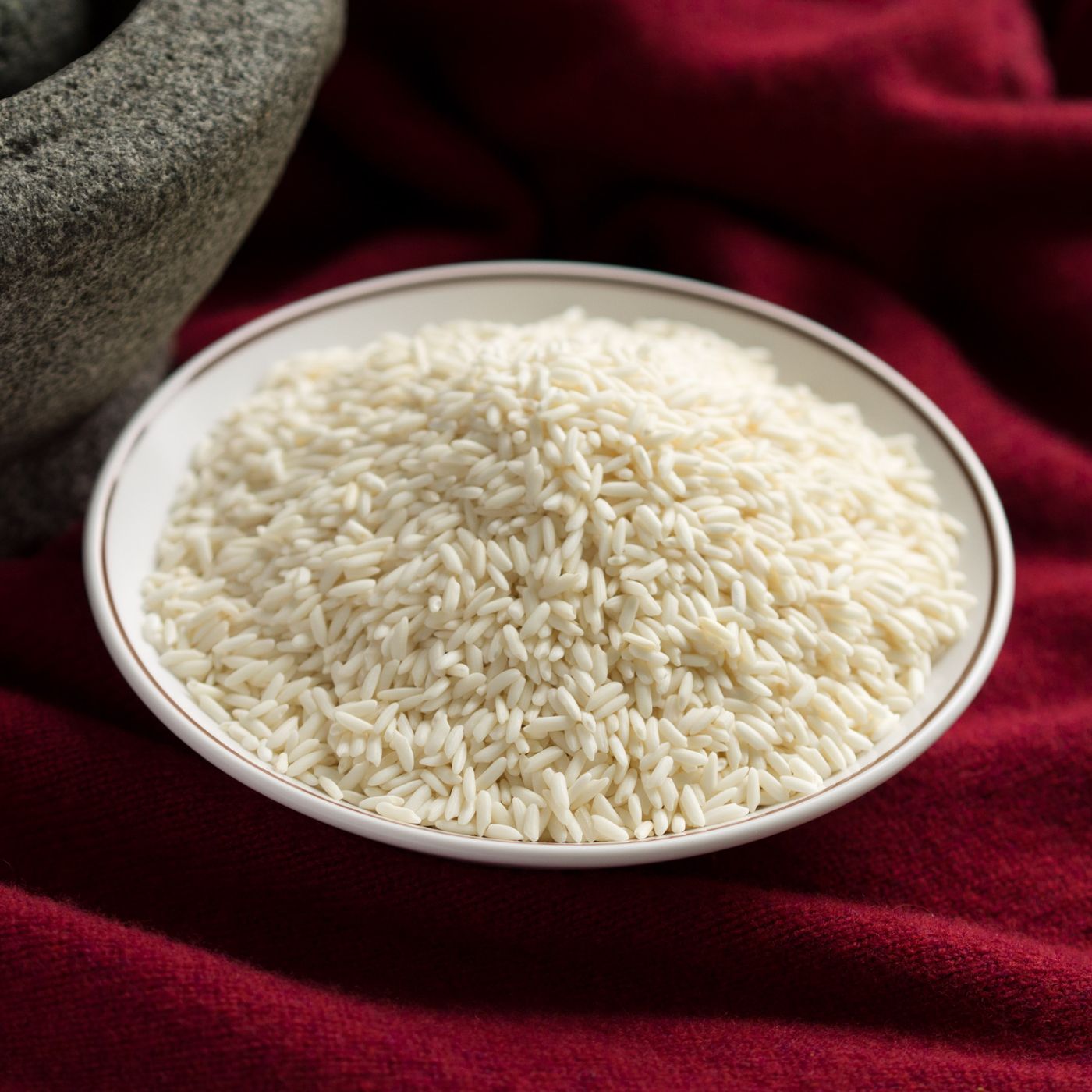 Glutinous rice (sweet rice)찹쌀Opaque, chalk-white grains of glutinous rice that steam into a chewy, elastic mass. Chapssal is the rice of festivals and comfort food: pounded into rice cakes, sweetened into yaksik, and tucked inside the chicken of samgyetang.
 Soy sauce간장Korean soy sauce, in two main kitchen forms: pale, salty guk-ganjang (soup soy sauce) brewed the traditional way from meju, and darker, sweeter jin-ganjang for braises and marinades.
 Sesame참깨Toasted sesame seeds and sesame oil (chamgireum) finish countless Korean dishes, adding a nutty aroma and gloss.
 Gochugaru고춧가루Korean red chili powder, made from dried red peppers ground coarse or fine. It gives kimchi, gochujang and countless banchan their color and warmth.
Nutrition
| Calories | ~99 kcal |
|---|---|
| Protein | ~3.4 g |
| Fat | ~6.2 g |
| Carbohydrates | ~10.2 g |
| Fiber | ~3.2 g |
| Sodium | ~117 mg |
Notable forVitamin K · Folate · Vitamin A
Laver uses the Korean Food Composition Table entry “Laver, for gimbap, dried” (per 100 g: 182 kcal, 38.5 g protein, 903 mg sodium); glutinous rice flour and soy sauce also use Korean table values; other seasonings use USDA FoodData Central. Absorbed oil is an assumption: the finished chips were taken to be about 30% fat, between the Korean table's values for fried kelp (dasima-twigak, 23%) and fried sea mustard (miyeok-twigak, 38%), giving about 21 g of oil for the batch. Actual uptake varies with paste thickness and frying time. Totals divided by four. Actual values vary with ingredients, portion size and preparation.
Health Benefits
- Seaweed nutrients: dried laver is concentrated in vitamin A (as beta-carotene), vitamin K, folate and iron; a light snack portion still carries some of each.
- Iodine: like other seaweeds, laver contributes iodine, a nutrient MedlinePlus notes is needed for normal thyroid function.
- A plant-based keeping dish: traditionally valued in temple diets as a source of energy from vegetable oil.
Regional Variations
- South Jeolla: a Rural Development Administration survey cited by the folk-culture encyclopedia found cooks there making the rice paste with anchovy stock.
- North Jeolla: the same survey found the fried chips finished with a sprinkling of sugar; Namwon producers make the paste with stock from anchovy, kelp, shrimp and radish.
- Temple bugak: the Encyclopedia of Korean Culture notes Songgwangsa's distinctive potato and chili bugak; temples also make bugak from perilla flower clusters.
- Other bugak: perilla leaves (kkaennip-bugak), kelp coated with sticky rice on one side, green chilies, and toon or other leaves; the uncoated fried version of kelp is called twigak.
Pairings
- Gim Gui (Seasoned Roasted Laver)김구이Sheets of laver brushed with sesame or perilla oil, sprinkled with salt and toasted until crisp — eaten wrapped around spoonfuls of rice.
 Myeolchi Bokkeum멸치볶음Small dried anchovies stir-fried until crisp, then glazed in a sweet soy and garlic syrup — a keeping banchan found in refrigerators across Korea.
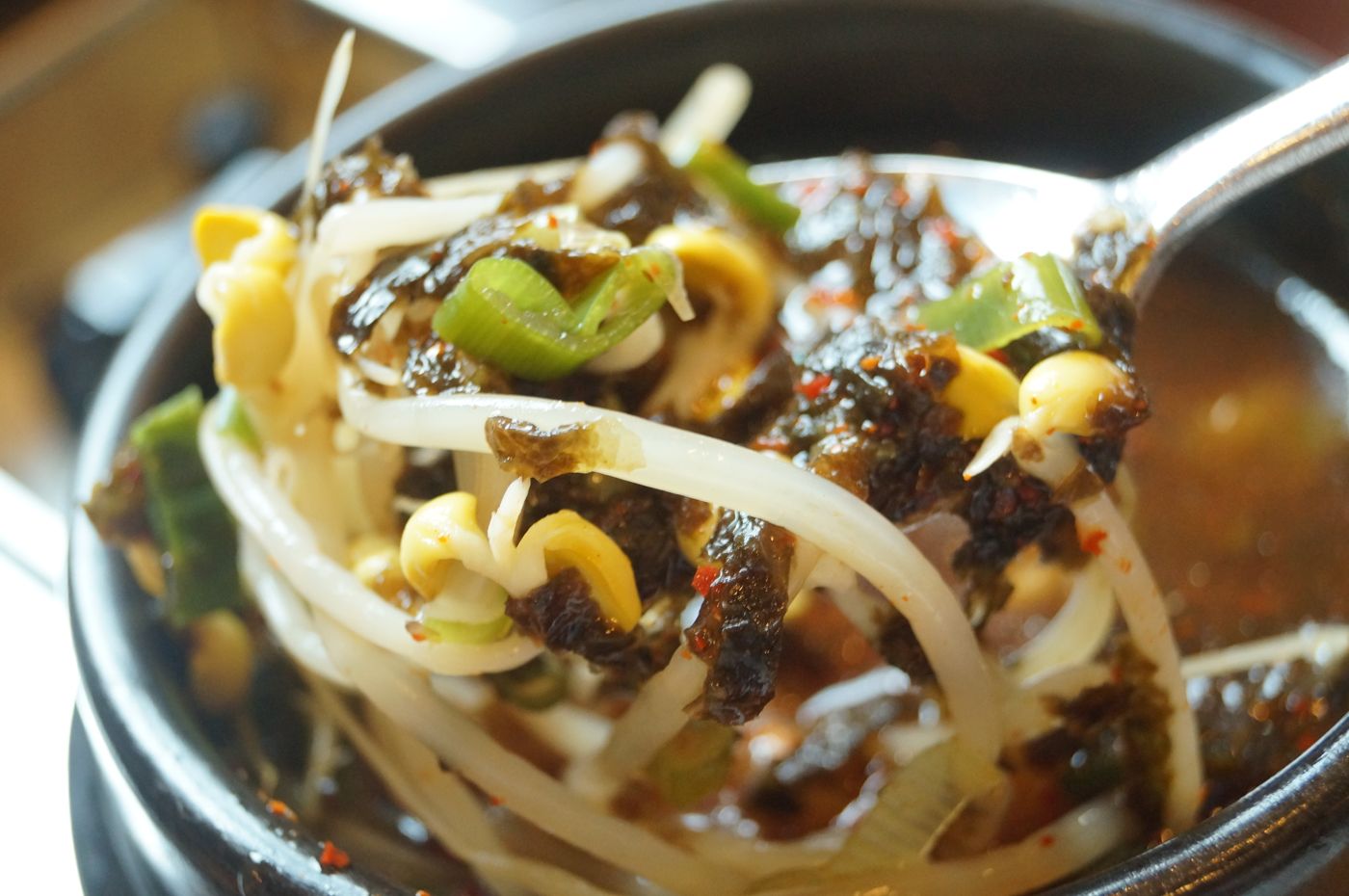 Kongnamul Guk (Soybean Sprout Soup)콩나물국A clear, light soup of soybean sprouts in anchovy-kelp stock, seasoned with salt or soup soy sauce — an everyday guk and a favorite morning-after cure.
Sources
- 01부각 (Bugak) — Encyclopedia of Korean Folk Culture (National Folk Museum of Korea)
- 02김부각 (Gim-bugak) — Encyclopedia of Korean Folk Culture (National Folk Museum of Korea)
- 03부각 (Bugak) — Encyclopedia of Korean Culture
- 04밑반찬 (Mitbanchan) — Encyclopedia of Korean Culture
- 05Laver Chips (김부각 / Gimbugak) — VISITKOREA (Korea Tourism Organization)
- 06[新팔도명물] 밥상 위의 金 '남원 김부각' — Kyeongin Ilbo (2023)
Last updated