Ingredient
Gam (persimmon), gotgam and hongsi
감
Romanization: gam
Korea's emblematic autumn fruit, eaten crisp as dangam, spoon-soft as hongsi, and peeled and air-dried into chewy, sugar-frosted gotgam. Dried persimmons are essential on the ancestral-rite table and steep in sujeonggwa punch.
Flavor
Crisp *dangam* is sweet, mild and apple-crisp with notes of honey and pumpkin. Soft *hongsi* is jammy, rich and intensely sweet. *Gotgam* is dense, chewy and fudge-like, with a concentrated, date-like sweetness.
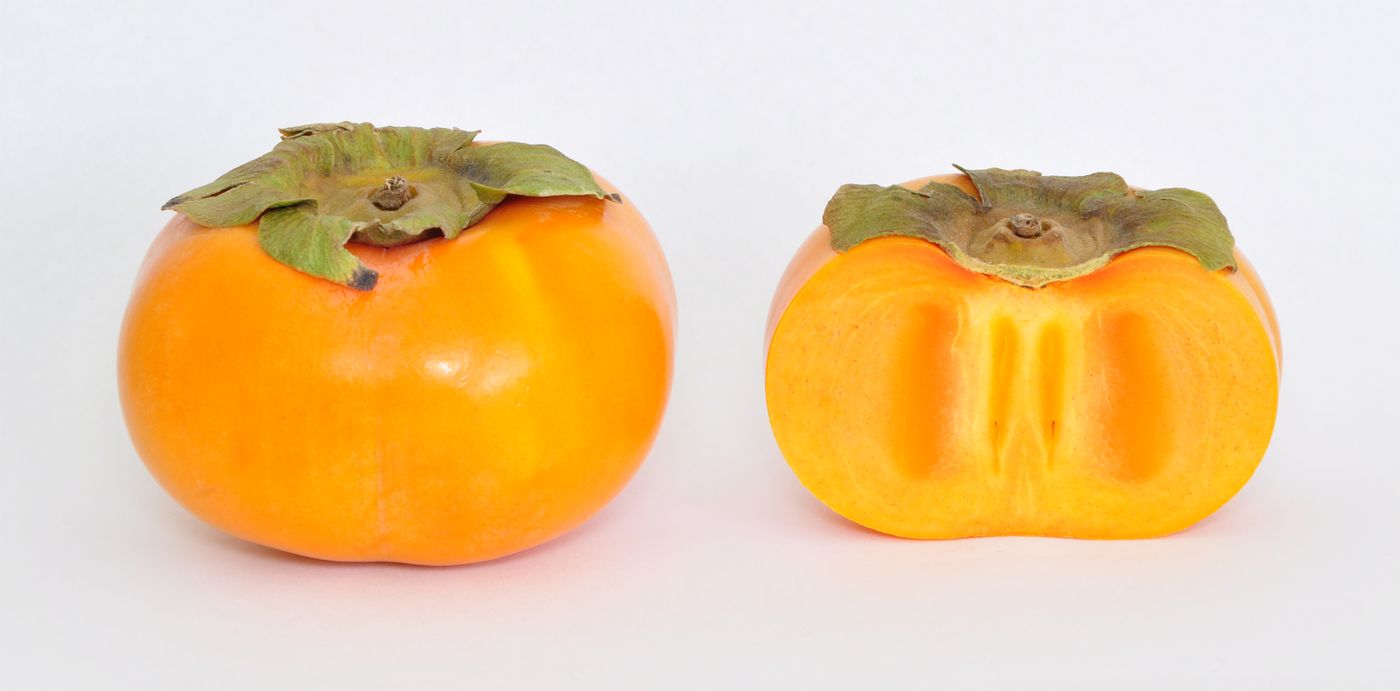 Photo: Joe Ravi, CC BY-SA 3.0, via Wikimedia Commons
Origin & History
Gam is the East Asian persimmon (Diospyros kaki), long cultivated in China and recorded in Korea from the thirteenth-century medical text Hyangyak gugeup bang. Early Joseon records already note persimmon growing in Goryeong. Korean persimmons fall into two broad groups. Sweet persimmons (dangam), such as Fuyu, can be eaten crisp. Astringent persimmons (tteolbeun gam) are mouth-puckeringly tannic until they have fully softened or been dried. That astringency comes from soluble tannins held in tannin cells in the flesh; as the fruit ripens or is treated, the tannins bind into insoluble forms and the puckery taste disappears.
The nineteenth-century glossary Mulmyeong-go lists a whole vocabulary of persimmons. Hongsi (紅柿) are astringent persimmons picked and left in a warm place until they soften to a jelly-like, deep-orange pulp; geonsi is the dried persimmon, gotgam; and the white bloom of sugar that forms on dried fruit had its own names. Chimsi, persimmons soaked in salted water to remove astringency, were another old method. Persimmon is one of the three essential fruits of the ancestral-rite table, and when fresh fruit was out of season, gotgam took its place.
Gotgam is made by peeling firm, not-quite-ripe astringent persimmons and drying them in sun and wind for weeks, traditionally skewered on bush-clover sticks or hung by the stem. The name is usually traced to that skewering (kkotda, to stick or skewer). Sangju in North Gyeongsang Province, the "land of three whites" (rice, silkworm cocoons and white-frosted dried persimmons), has been famous for it since at least the fifteenth century, when the Sejong sillok jiriji lists persimmons and dried persimmons among its tribute. Sangju gotgam is made mostly from the native round dungsi variety, and "Sangju traditional gotgam farming" was designated a National Important Agricultural Heritage in 2019. Cheongdo, south of Daegu, is known for Cheongdo bansi, a flat, seedless astringent persimmon (bansi means "tray persimmon") registered as a geographical indication in 2010. It is prized for hongsi and also dried into gotgam and gamtaraegi strips.
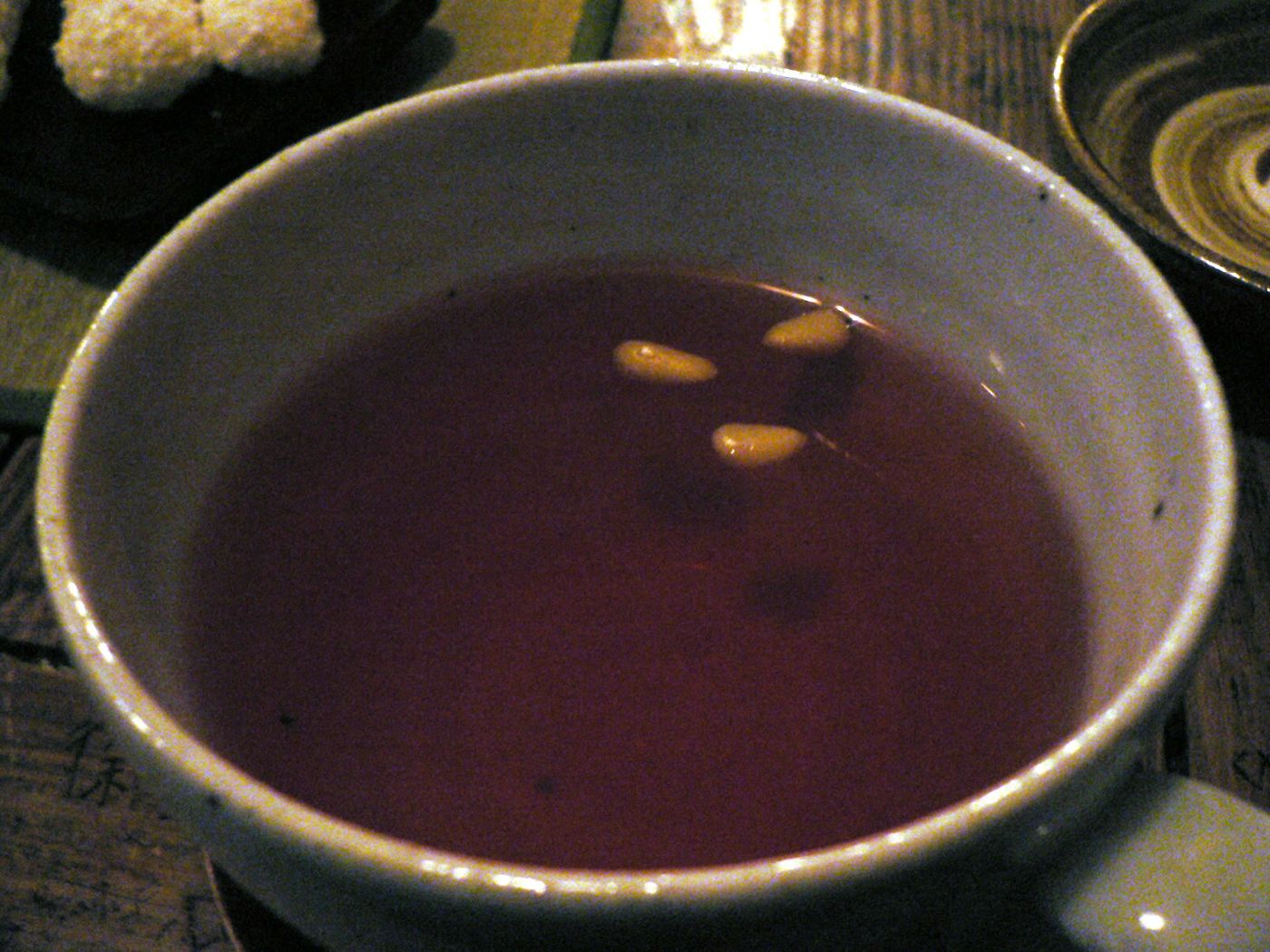
Persimmons are eaten fresh, frozen and dried. Gotgam is wrapped around walnuts as gotgam-ssam, studded with pine nuts as a garnish, used in rice cakes and porridge, and soaked in the cold, ginger-scented punch sujeonggwa, garnished with pine nuts. Leaves are made into tea, and persimmon vinegar is a regional specialty.
Nutrition
| Calories | 57 kcal |
|---|---|
| Protein | 0.38 g |
| Fat | 0.12 g |
| Carbohydrates | 15.13 g |
| Fiber | 1.9 g |
| Sodium | 1 mg |
Notable forVitamin C · Fiber
Korean Food Composition Table entry "Persimmon (Gam), Hard, Raw" (감, 단감, 생것): also 28.84 mg vitamin C per 100 g. For comparison, soft astringent persimmon (감, 떫은감, 연시, 생것) is 69 kcal, 18.41 g carbohydrate and 2.8 g fiber, and semi-dried gotgam (감, 떫은감, 곶감, 반건시) is 219 kcal, 58.93 g carbohydrate, 9.7 g fiber and 567 mg potassium per 100 g. Actual values vary with ingredients, portion size and preparation.
Health Benefits
- Vitamin C and fiber: Per the Korean Food Composition Table, fresh sweet persimmon provides vitamin C and fiber; soft hongsi is a little richer in beta-carotene.
- Dried fruit is dense: Drying concentrates sugar. Semi-dried gotgam has nearly four times the calories of fresh persimmon by weight, so it is best enjoyed in small amounts.
- Persimmon bezoars: Eating large amounts of persimmons, especially unripe or astringent ones, can rarely cause tannins to bind into a hard mass in the stomach (a diospyrobezoar) that may block the intestine. The risk is higher in older adults, people with diabetes and people who have had stomach surgery. Moderate portions of fully ripe fruit, rather than many at once on an empty stomach, are the sensible approach.
- The white bloom is sugar: The powdery white coating on well-made gotgam is natural fruit sugar that rises to the surface as it dries, not mold. Fuzzy, colored or damp spots are a different matter and should be discarded.
Informational, not medical advice. Talk to a qualified professional about your own health and diet.
Sources
- 01감 — Encyclopedia of Korean Culture
- 02곶감 — Encyclopedia of Korean Culture
- 03상주곶감 — Encyclopedia of Korean Culture
- 04청도 반시 — 디지털청도문화대전 (Academy of Korean Studies)
- 05Diospyrobezoar (Persimmon Bezoar)-Induced Intestinal Obstruction in an Older Patient: A Case Report (2025)
- 06Korean Food Composition Table: Persimmon (Gam), Hard, Raw — National Institute of Agricultural Sciences