Ingredient
Garlic scapes
마늘종
Romanization: maneuljong
The firm green flower stalks of the garlic plant, snapped off in spring. Stir-fried with dried shrimp as maneuljong-bokkeum, or pickled in soy sauce and vinegar.
Flavor
Grassy and garlicky but much milder than cloves, with a sweet edge when cooked. The stalks are dense and crisp, staying pleasantly snappy after a quick stir-fry.
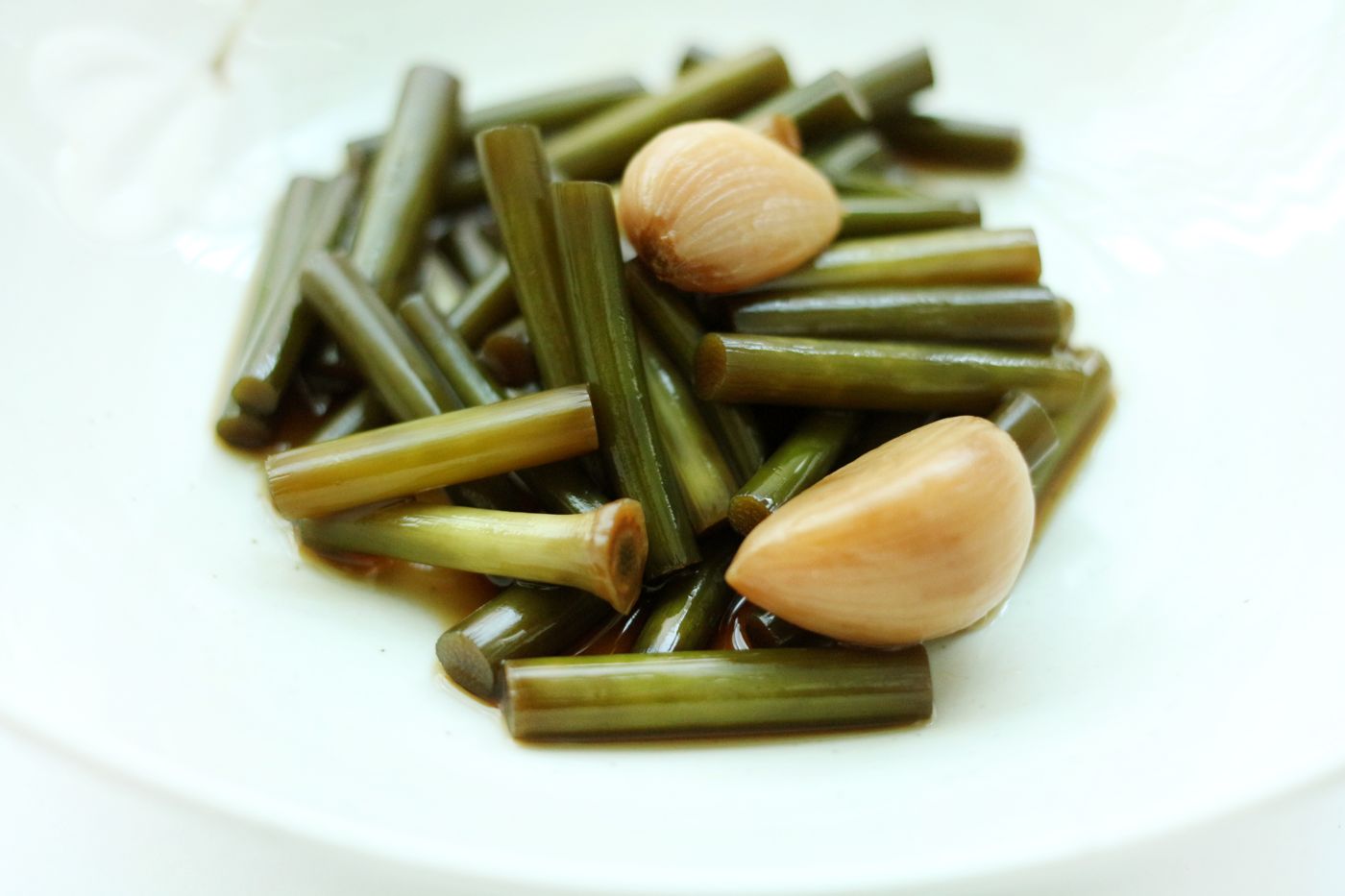 Photo: Hyeon-Jeong Suk, CC BY 2.0, via Wikimedia Commons
Origin & History
Maneuljong is the flowering stem of garlic (Allium sativum). In late spring the plant sends up a tall, smooth stalk tipped with a closed bud; left alone, the bud develops small aerial bulbils rather than true seed, which is how garlic would reproduce if people did not replant cloves.
Removing the scape is a routine part of garlic farming. The stalk appears just as the underground bulb is swelling, and if it is left on, it draws nutrients away from the bulb. Korea's Rural Development Administration advises cutting scapes as soon as they appear, which it estimates raises garlic yields by about 15%. Scapes emerge in late April on the warm-climate (nanji) garlic grown in the far south and around mid-May on the cold-hardy (hanji) types of inland regions, and for eating they are best cut rather than pulled, which can damage the plant.
What began as a by-product of garlic growing became a seasonal vegetable in its own right, at its best in April and May and a source of extra income for garlic farms. Good scapes are dark green, plump, straight and springy, with the bud at the tip still tightly closed; yellowed, tough stalks are past their prime.
Korean cooks pickle scapes in soy sauce and vinegar as maneuljong-jangajji, stir-fry them in oil, often with dried shrimp, and dress them with chili for quick seasoned side dishes. Frying softens their bite and brings out sweetness while keeping a crisp snap.
Nutrition
| Calories | 53 kcal |
|---|---|
| Protein | 1.86 g |
| Fat | 0.06 g |
| Carbohydrates | 13.39 g |
| Fiber | 4.6 g |
| Sodium | 1 mg |
Notable forVitamin C · Folate · Dietary fiber · Vitamin K
Korean Food Composition Table entry "Garlic scape (Maneuljong), Raw" (마늘종, 생것): also 44.4 mg vitamin C, 82 µg folate and 46.7 µg vitamin K per 100 g. Actual values vary with ingredients, portion size and preparation.
Health Benefits
- Vitamin C: Per the Korean Food Composition Table, raw garlic scapes are a good source of vitamin C and also provide folate.
- Fiber: They contain 4.6 g of dietary fiber per 100 g.
- Allium family: Like garlic, scapes contain sulfur compounds responsible for their aroma; research on these compounds is ongoing.
- Pickled form: Maneuljong-jangajji is preserved in soy sauce brine, so it is much higher in sodium than fresh scapes.
Informational, not medical advice. Talk to a qualified professional about your own health and diet.
Dishes with Garlic scapes
- Maneuljong Bokkeum마늘종볶음Tender garlic scapes stir-fried in a light soy and syrup glaze until bright and just yielding — a spring banchan with a mild, sweet garlic flavor.
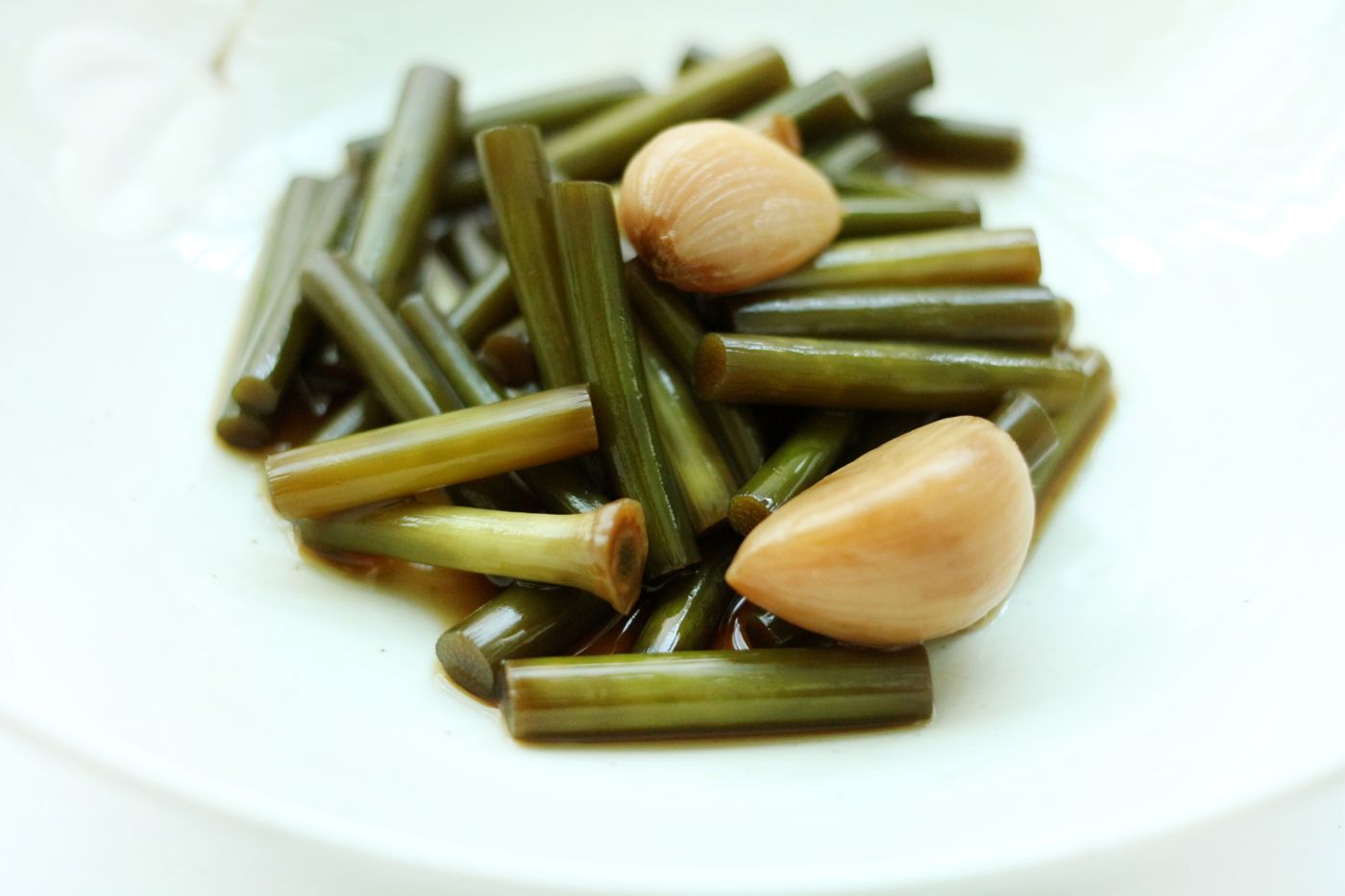 Pickled Garlic Scapes마늘종장아찌Spring garlic scapes cut into short lengths and steeped in a sweet-sour soy brine — crisp, gently garlicky jangajji that keeps for months.