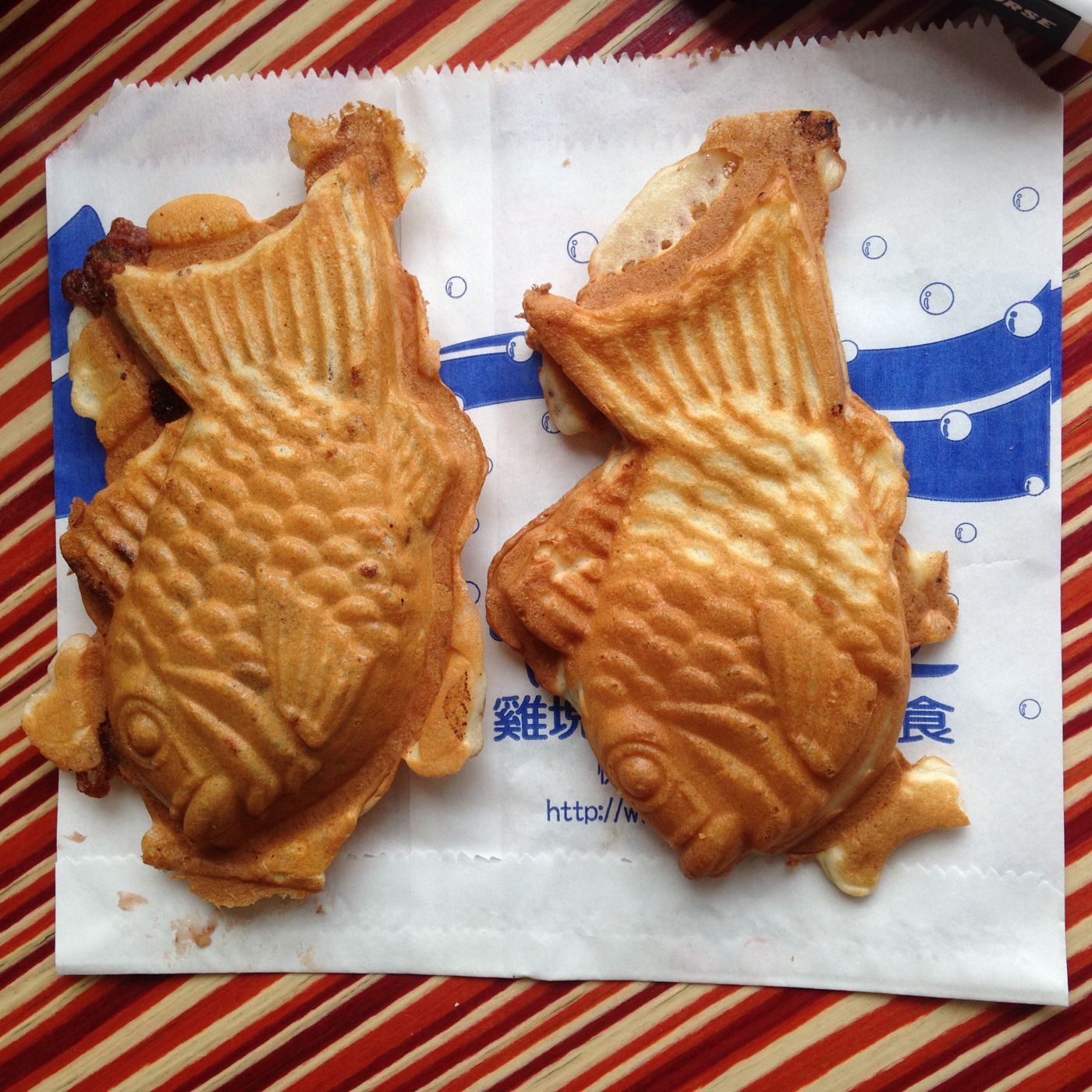
 Photo: Penny Richards, CC BY-SA 4.0, via Wikimedia Commons
Tteok & Sweets 떡·과자
Bungeoppang (Fish-Shaped Red Bean Pastry)
붕어빵
Romanization: bungeoppang
Thin wheat batter baked in a fish-shaped iron mold around sweet red bean paste — a winter street snack descended from Japan's taiyaki.
- Serves
- 10
- Prep
- 40 min
- Cook
- 30 min
Recipe
Ingredients · Serves 10
- 150 gAll-purpose flour
- 1 tspBaking powder
- 1 tbspSugar
- ¼ tspSalt
- 1 largeEgg
- 220 mlMilk or water
- 300 gSweetened red bean paste (danpat)chunky or smooth
- 1 tbspNeutral cooking oilfor brushing the mold
Method
Step 1: Whisk the flour, baking powder, sugar and salt in a bowl. Beat the egg with the milk, pour it in and whisk to a smooth, pourable batter like thin pancake batter. Rest 30 minutes.
Step 2: Heat a bungeoppang or taiyaki mold over medium-low heat for a few minutes, turning it so both halves are hot. Brush both sides lightly with oil.
Step 3: Open the mold and fill each fish shape about one-third full with batter. Quickly spoon a heaped tablespoon of red bean paste into the middle, then cover it with a little more batter.
Step 4: Close the mold and cook 2–3 minutes, then flip it and cook 2–3 minutes more, until both sides are golden brown. Open and check; cook a little longer if pale.
Step 5: Lift the fish out, trim off any thin edges of overflow batter, and cool briefly on a rack so the shell crisps. Repeat with the remaining batter, oiling the mold as needed.
Origin & History
Bungeoppang is one of the pulppang, cakes baked by pouring a runny wheat batter and a filling into hollow iron molds. The folk encyclopedia's Korean Wave culture dictionary describes it as batter and red bean paste baked in a mold shaped like a bungeo, a crucian carp, and calls it one of the defining snacks of Korean street food.
The idea came from Japan. Taiyaki — a similar cake in the shape of a sea bream (tai) — is credited to Seijiro Kobe, who with his brother opened a shop selling round red-bean imagawayaki in Tokyo in 1909 and, after trying turtles and other shapes, settled on the sea bream, a costly fish associated with celebration; the business continues as Naniwaya Sohonten in Azabu-Juban. According to the folk encyclopedia, taiyaki reached Korea in the 1930s, under Japanese rule. After liberation it was absorbed as a cheap batter-cake snack, and after the Korean War, when American aid made wheat plentiful, pulppang sellers needing little money or skill appeared in port towns and cities. In Korea the sea bream became a humbler freshwater carp.
The stalls have tracked the economy. The folk encyclopedia records that bungeoppang carts were cleared from city streets before the 1988 Seoul Olympics as unsightly, then reappeared during the 1997 financial crisis as laid-off workers took to selling them — some people even read bungeoppang sales as a recession indicator. Fillings have multiplied from red bean to custard, chocolate, pollack roe with mayonnaise, corn and pizza, and mini bungeoppang appeared. Rising costs and street regulations have thinned out neighborhood stalls, so fans now share stall locations on social media; bung-segwon, "bungeoppang zone," is slang for living near one, and a child who looks just like a parent is said to be bungeoppang. See Korean street food and hotteok.
Key Ingredients
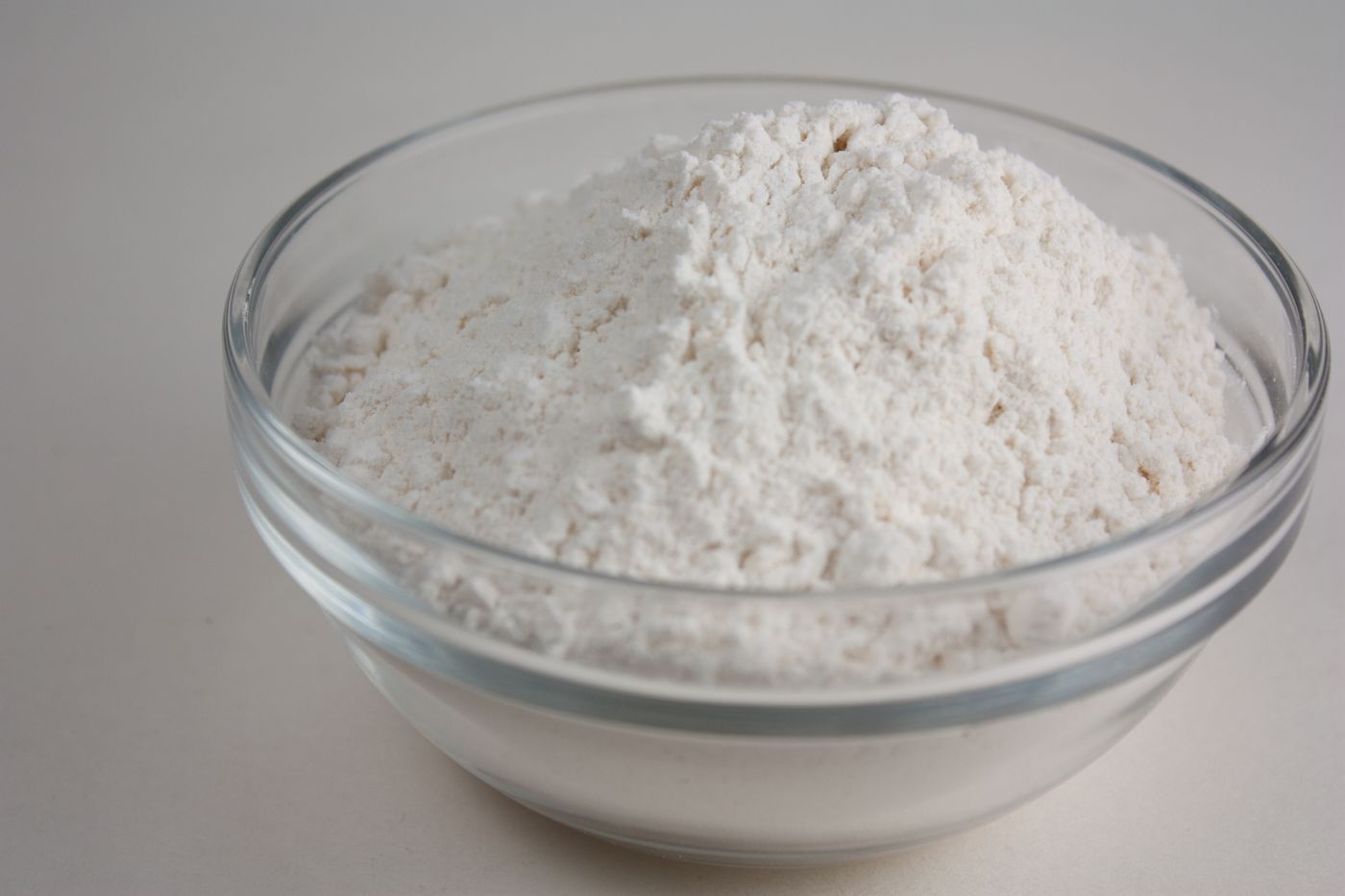 Wheat flour밀가루Finely milled wheat flour, the base of Korean noodles, dumpling wrappers, pancake batters and ramyeon. A luxury for most of Korean history, it became an everyday staple only after the Korean War, when American aid flour flooded the market.
- Egg (gyeran)계란The everyday protein of the Korean table: rolled into gyeran-mari, steamed into puffy gyeran-jjim, simmered in soy for gyeran-jangjorim, and cut into thin yellow and white ribbons of jidan to garnish soups and noodles.
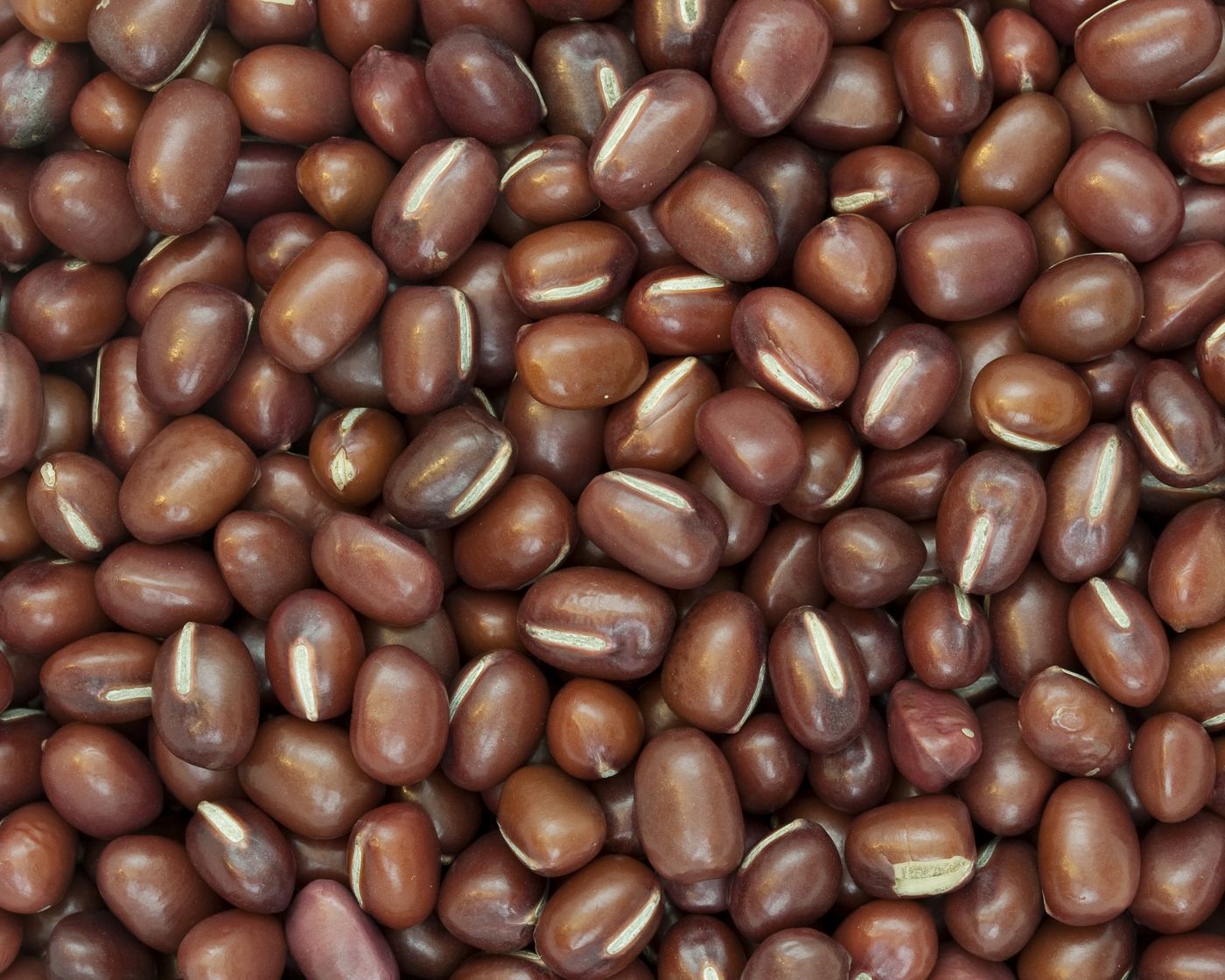 Adzuki beans (red beans)팥Small, glossy, wine-red beans with a thin white seam, simmered into savory porridge, cooked with rice, and mashed sweet for rice-cake fillings and coatings. Their red color was long believed to drive away misfortune.
Nutrition
| Calories | ~254 kcal |
|---|---|
| Protein | ~4.8 g |
| Fat | ~6.4 g |
| Carbohydrates | ~44 g |
| Fiber | ~1.5 g |
| Sodium | ~276 mg |
Taken from the Korean Food Composition Table entry for fish-shaped bun with adzuki bean paste filling (A0210220069a), per 100 g. It describes typical bungeoppang rather than this recipe; a homemade batter with egg and milk will differ somewhat. Bungeoppang is mainly a source of carbohydrate, including added sugar, and is not a notable source of vitamins or minerals. Actual values vary with ingredients, portion size and preparation.
Health Benefits
- A modest treat: a single bun is a relatively small, low-fat sweet compared with many fried snacks.
- Red beans: the adzuki bean filling contributes a little fiber and plant protein.
- Warmth on a cold day: sold hot from the mold, it is traditionally a winter comfort food rather than an everyday food.
Regional Variations
- Classic pat bungeoppang: a crisp-edged batter shell around sweetened red bean paste, the original filling and still the standard in places such as Seoul's Insa-dong.
- Custard and sweet fillings: custard cream (syu-keurim), chocolate and other sweet fillings sold alongside red bean.
- Savory fillings: pollack roe with mayonnaise, corn and pizza; the folk encyclopedia mentions seafood-added versions in Busan.
- Mini bungeoppang: bite-size fish baked several to a mold.
- Japanese taiyaki: the sea-bream-shaped ancestor, still sold across Japan.
Pairings
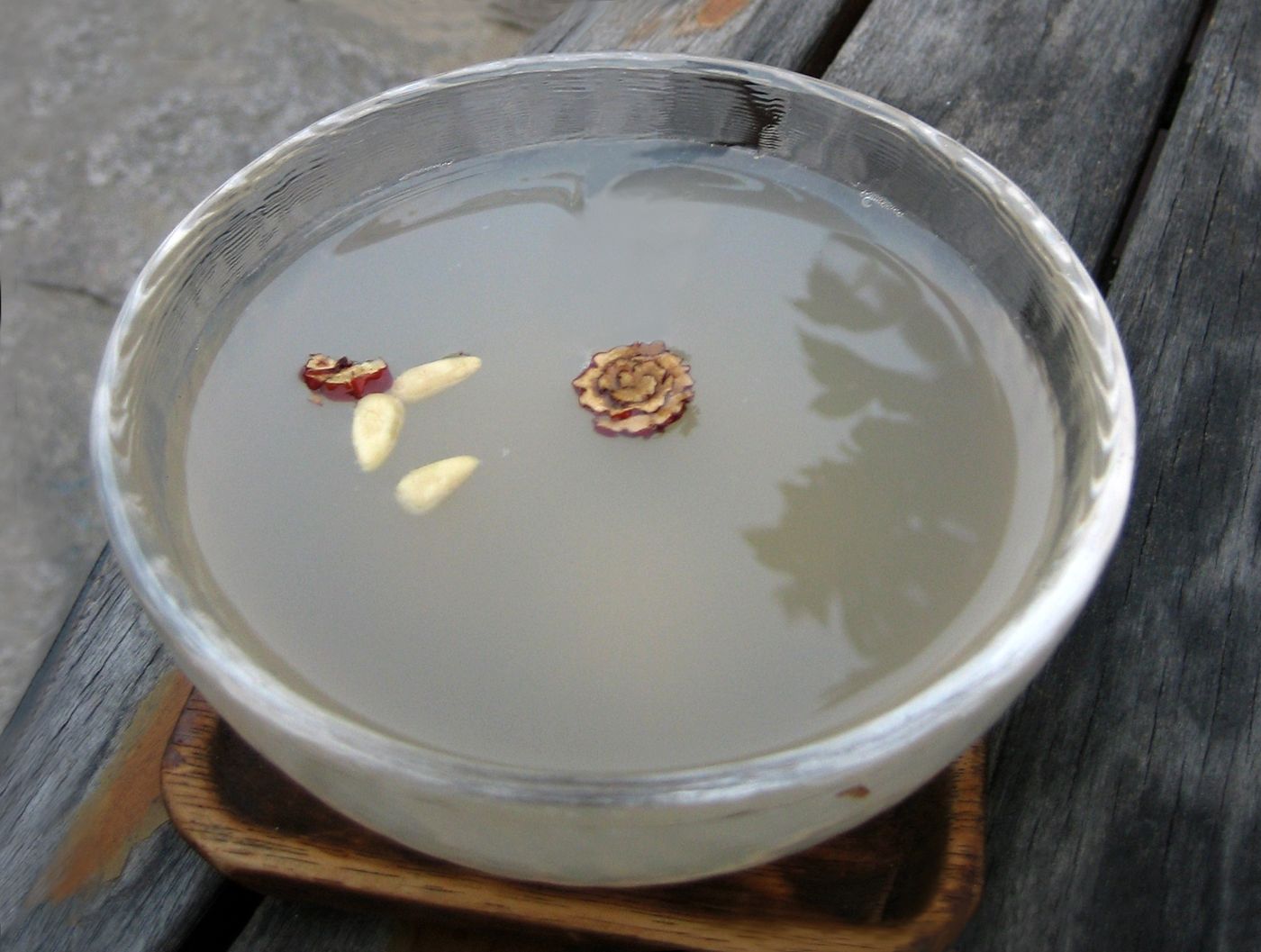 Sikhye (Sweet Malted Rice Drink)식혜Cooked rice steeped in barley-malt water until it sweetens and the grains float, then chilled — the traditional after-feast drink of Korean holidays.
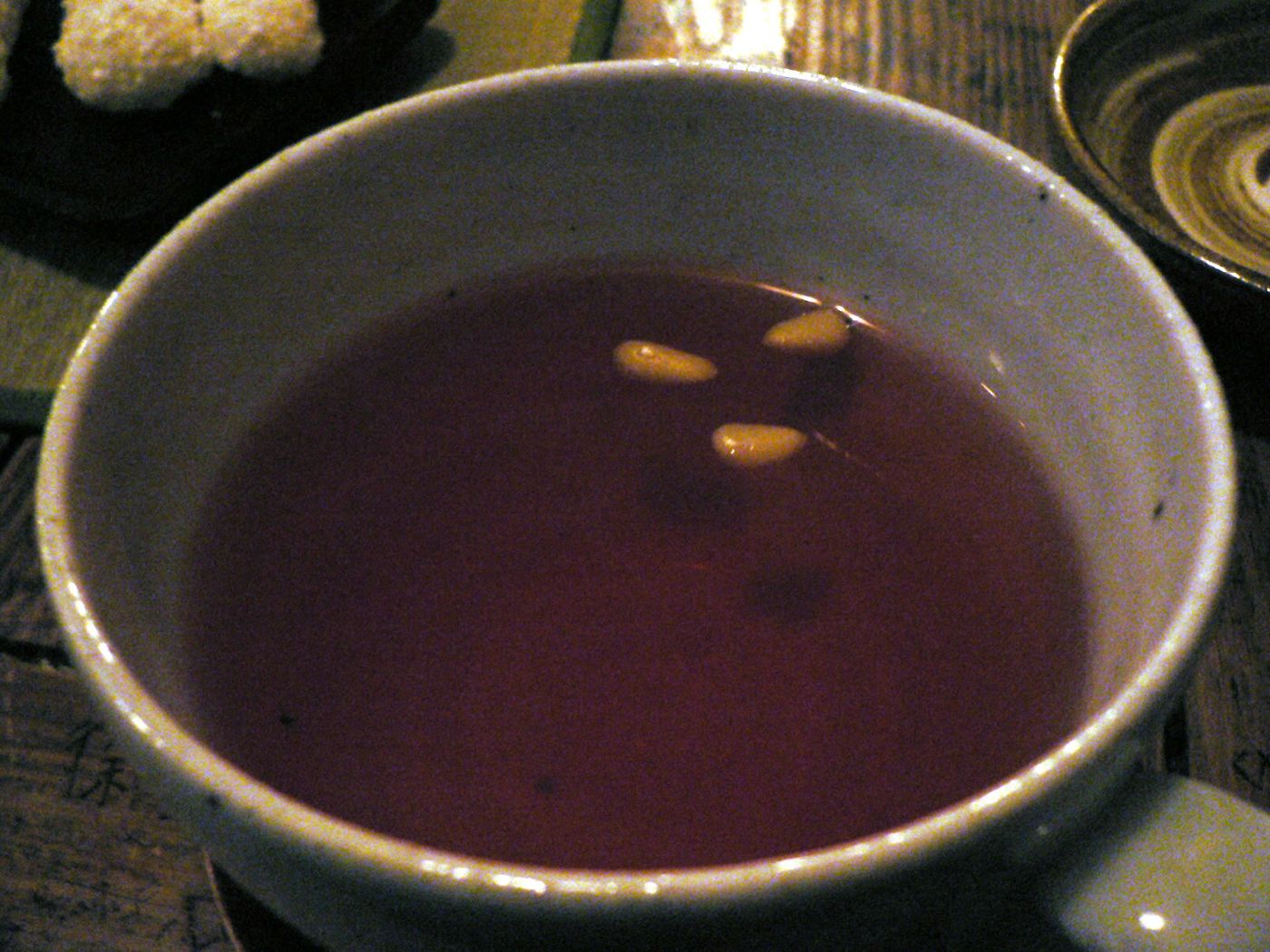 Sujeonggwa (Cinnamon-Ginger Punch with Dried Persimmon)수정과A cold, spicy-sweet punch of ginger and cinnamon simmered separately, sweetened, and served with softened dried persimmons and pine nuts — a New Year drink for guests.
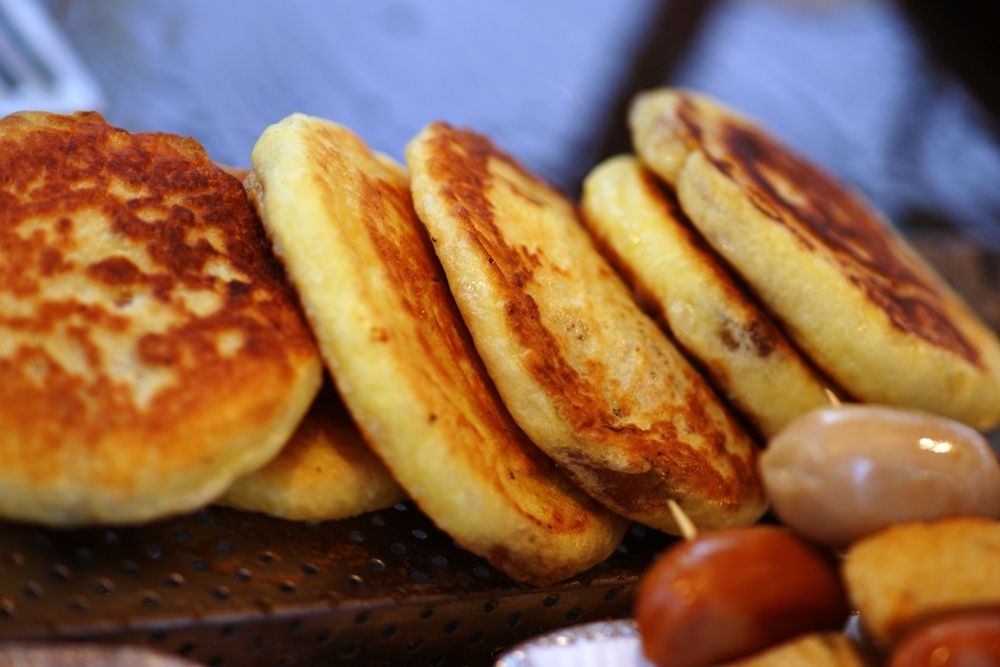 Hotteok (Sweet Filled Pancakes)호떡Yeasted dough wrapped around brown sugar, cinnamon and nuts and pressed flat on an oiled griddle — a winter street snack brought to Korea by Chinese immigrants.
Sources
- 01붕어빵 (Bungeoppang) — Encyclopedia of Korean Folk Culture (Korean Wave Culture Dictionary), National Folk Museum of Korea
- 02Taiyaki: The Story Behind Japan's Beloved Fish-Shaped Snack — Tokyo Weekender
- 03Bread, Fish-shaped bun (Bung-eo-ppang), With adzuki bean paste filling (A0210220069a) — Korean Food Composition Table
Last updated