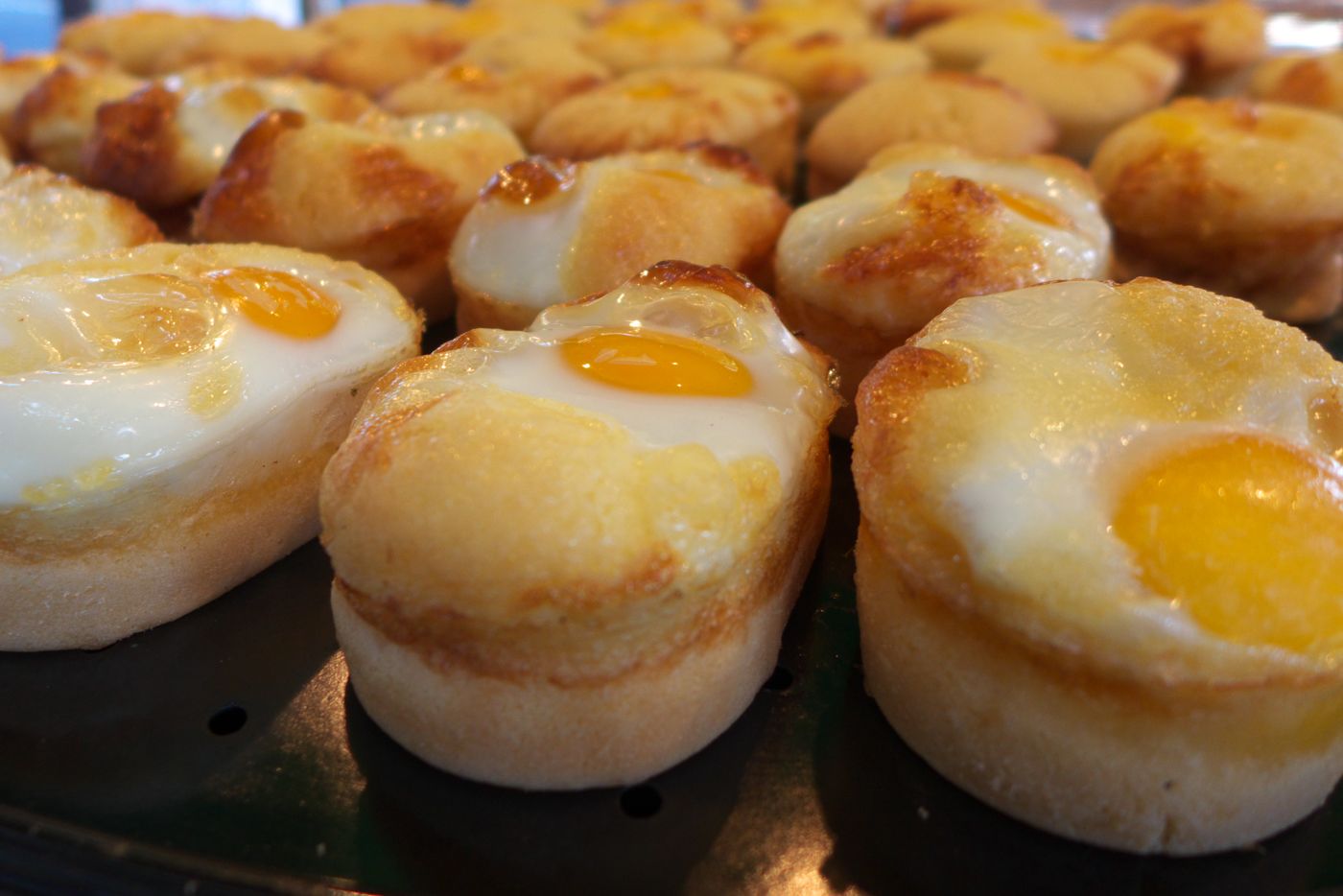
 Photo: travel oriented from Seoul, South Korea, CC BY-SA 2.0, via Wikimedia Commons
Tteok & Sweets 떡·과자
Gyeranppang (Egg Bread)
계란빵
Romanization: gyeranppang
A small oval of lightly sweet batter baked around a whole egg in a hinged metal mold — a warm, filling street snack of Korean winters since the 1970s and 80s.
- Serves
- 6
- Prep
- 15 min
- Cook
- 20 min
Recipe
Ingredients · Serves 6
- 150 gAll-purpose flour
- 30 gSugarabout 2½ tbsp
- 1½ tspBaking powder
- ¼ tspSalt
- 1 largeEgg for the batter
- 150 mlMilk
- 20 gButtermelted, plus extra for the pan
- 6 small to mediumEggs for topping
- Dried parsley or a pinch of salt and pepperoptional, for the tops
Method
Step 1: Heat the oven to 190 °C (375 °F). Butter six cups of a muffin tin or six small oval loaf molds well.
Step 2: Whisk the flour, sugar, baking powder and salt in a bowl. In another bowl, whisk the batter egg, milk and melted butter. Stir the wet ingredients into the dry until just smooth; a few small lumps are fine.
Step 3: Fill each cup about half full with batter. Crack one egg on top of each. Pierce the yolk lightly with a toothpick if you want it to set evenly, and sprinkle with parsley or a little salt and pepper.
Step 4: Bake 15–20 minutes, until the bread is risen and golden at the edges and the egg white is fully set. For a firm yolk, bake a few minutes longer.
Step 5: Cool 5 minutes, run a knife around the edges and lift out. Eat warm. With a gyeranppang griddle, bake on the stovetop over medium-low heat with the lid closed for about 5 minutes per batch.
Origin & History
Gyeranppang, literally egg bread, is a palm-sized loaf of sweet, slightly salty batter with a whole egg baked into the top. Street vendors make it in a metal griddle with a row of small oval or round wells and a hinged lid: the folk encyclopedia describes half-filling each well with batter, cracking an egg on top, closing the lid and baking over medium-low heat for about five minutes, so the bread is soft and the yolk just set. It is eaten straight from the mold, often in paper, and is most associated with cold weather.
According to the folk encyclopedia's entry, by Oh Se-mi-na, gyeranppang appeared on city streets in the 1970s and 1980s, as rapid urbanization and economic growth created demand for quick, cheap food that people could eat on the move. A piece or two was filling enough to pass for a meal, and the entry notes that the snack stayed popular nationwide through the hard years after the 1997 Asian financial crisis. The early version was simply flour batter and egg; later vendors enriched the batter with butter or milk and began adding cheese, corn or ham.
It now belongs to the familiar winter lineup alongside bungeoppang and hotteok, and the folk encyclopedia points out that it has become one of the street foods foreign visitors seek out in tourist districts such as Seoul's Myeong-dong, Busan's Gwangbok-dong and Incheon's Chinatown. See Korean street food.
Key Ingredients
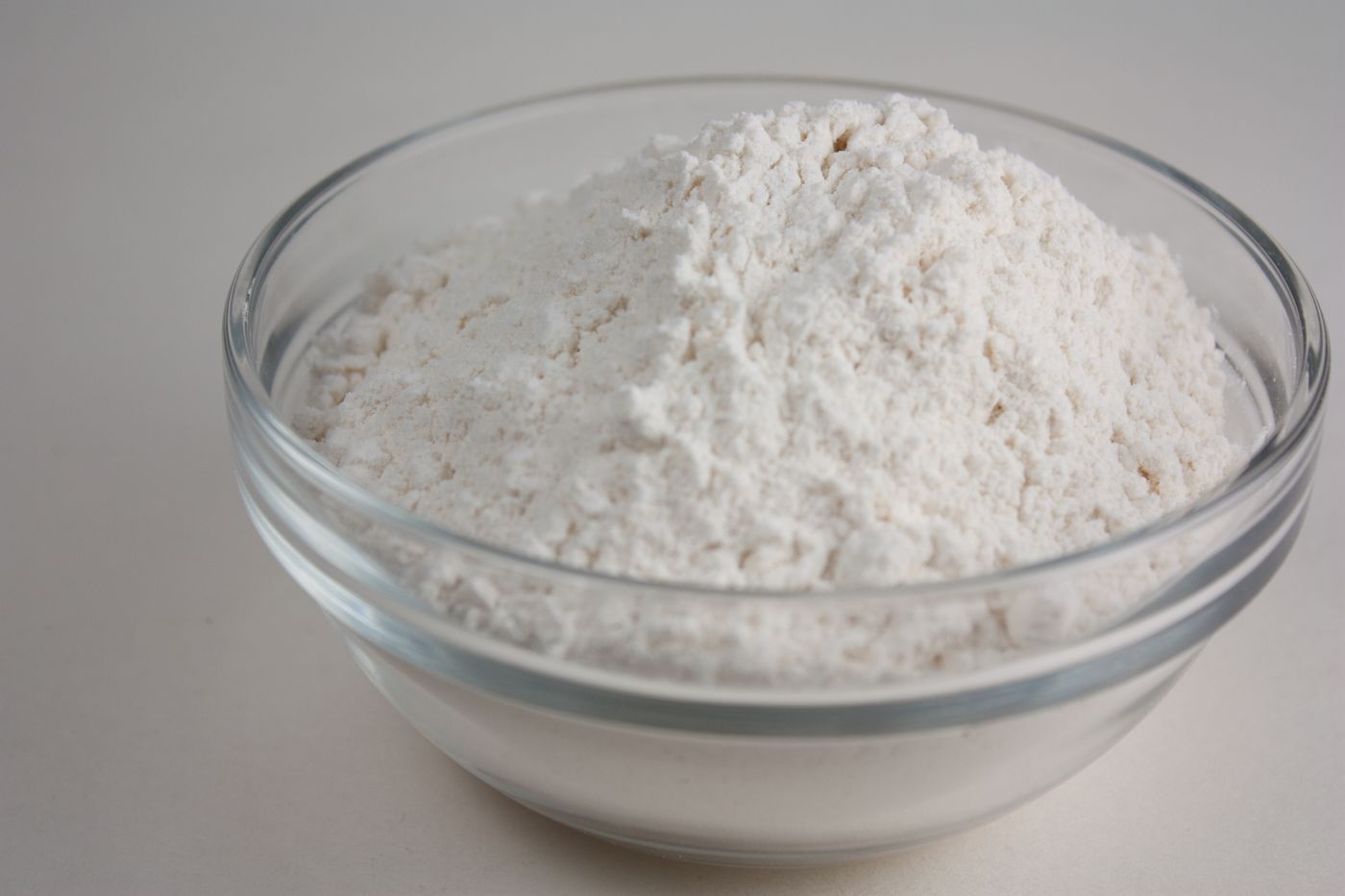 Wheat flour밀가루Finely milled wheat flour, the base of Korean noodles, dumpling wrappers, pancake batters and ramyeon. A luxury for most of Korean history, it became an everyday staple only after the Korean War, when American aid flour flooded the market.
- Egg (gyeran)계란The everyday protein of the Korean table: rolled into gyeran-mari, steamed into puffy gyeran-jjim, simmered in soy for gyeran-jangjorim, and cut into thin yellow and white ribbons of jidan to garnish soups and noodles.
Nutrition
| Calories | ~235 kcal |
|---|---|
| Protein | ~11 g |
| Fat | ~9.3 g |
| Carbohydrates | ~26 g |
| Fiber | ~0.7 g |
| Sodium | ~285 mg |
Notable forSelenium · Folate · Vitamin B12
Estimated by summing USDA FoodData Central (SR Legacy) values for enriched all-purpose flour (FDC 168894), granulated sugar (FDC 169655), double-acting baking powder (FDC 172803), table salt, whole egg (FDC 171287; seven eggs at 50 g), whole milk (FDC 171265) and salted butter (FDC 173410), divided by 6. Street versions vary in size and are often sweeter. The folate largely comes from enriched flour. Actual values vary with ingredients, portion size and preparation.
Health Benefits
- An egg in every piece: each loaf carries a whole egg, adding protein, vitamin B12 and selenium to what is otherwise a sweet snack.
- Filling and portable: as the folk encyclopedia notes, one or two pieces can stand in for a quick meal; pairing with fruit or milk rounds it out.
- Simple ingredients: a homemade version lets you control the sugar and butter.
Regional Variations
- Classic: a plain, lightly sweet batter with one whole egg, sometimes sprinkled with dried parsley.
- Enriched batters: butter and milk for a softer, richer crumb, a change the folk encyclopedia describes as replacing the early plain batter.
- Toppings: cheese, sweet corn or ham baked in with the egg.
- Tourist districts: the folk encyclopedia mentions cream-filled versions in Myeong-dong and seafood versions in Busan.
Pairings
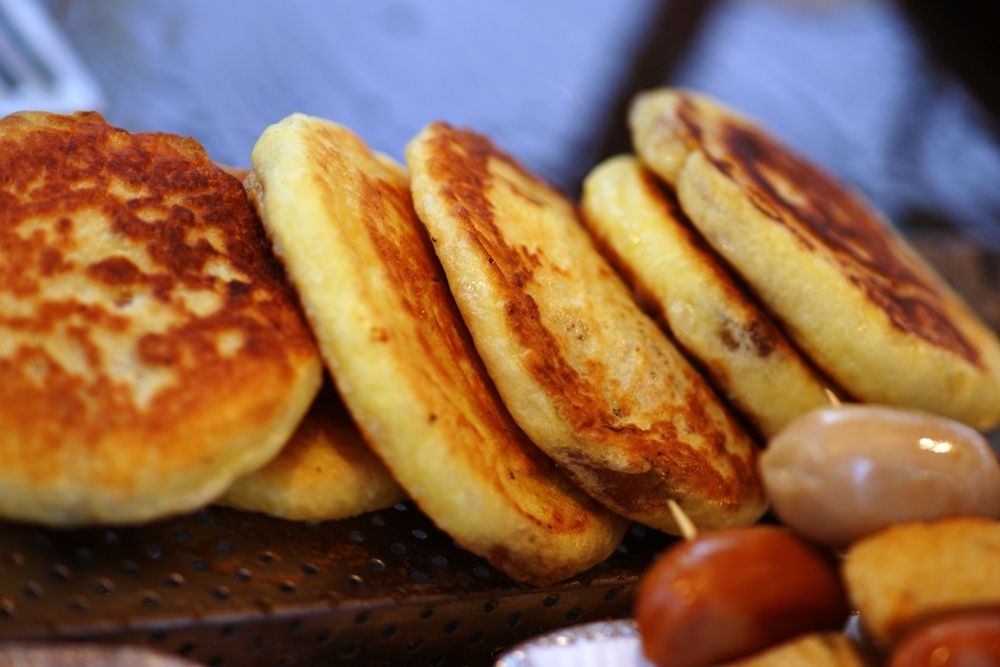 Hotteok (Sweet Filled Pancakes)호떡Yeasted dough wrapped around brown sugar, cinnamon and nuts and pressed flat on an oiled griddle — a winter street snack brought to Korea by Chinese immigrants.
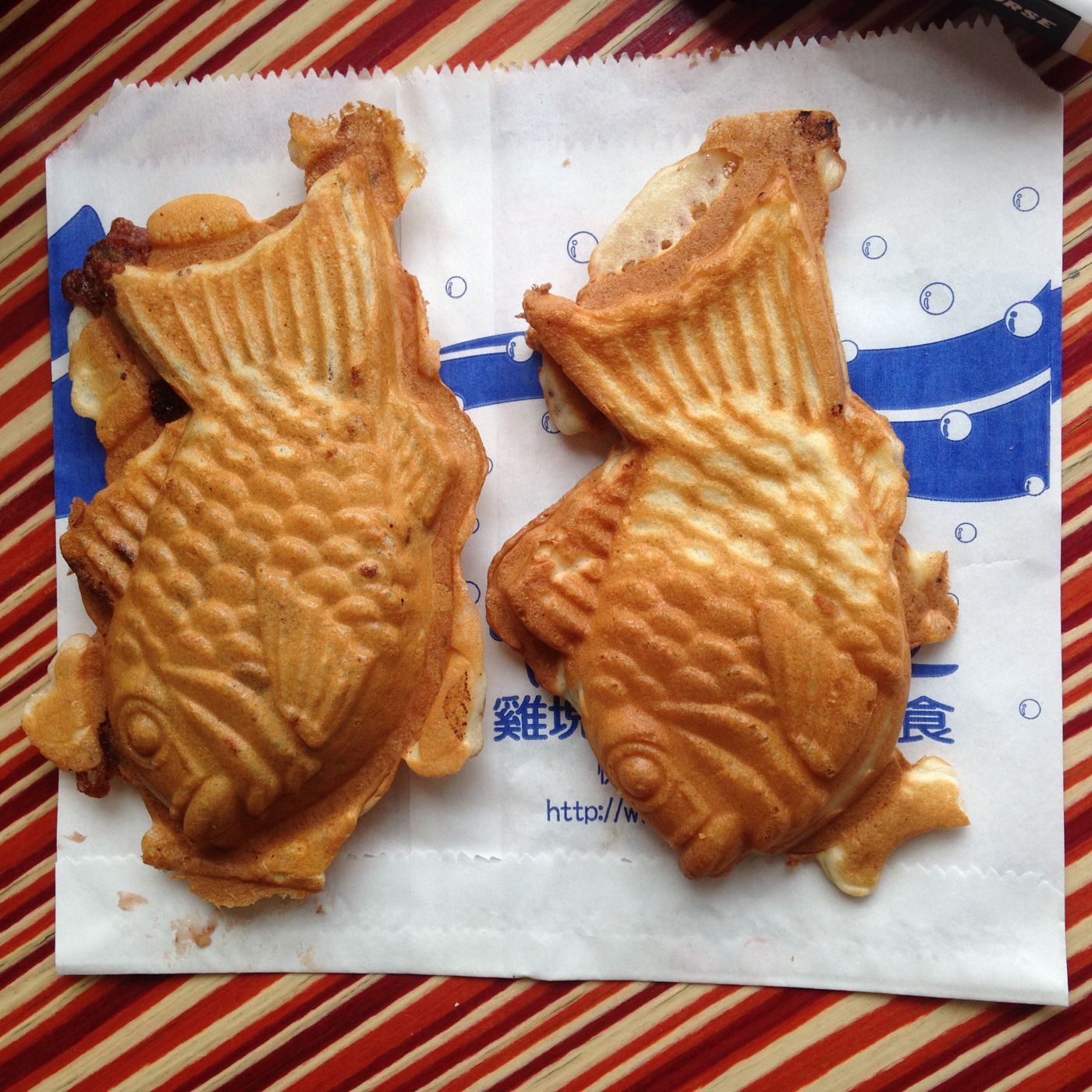 Bungeoppang (Fish-Shaped Red Bean Pastry)붕어빵Thin wheat batter baked in a fish-shaped iron mold around sweet red bean paste — a winter street snack descended from Japan's taiyaki.
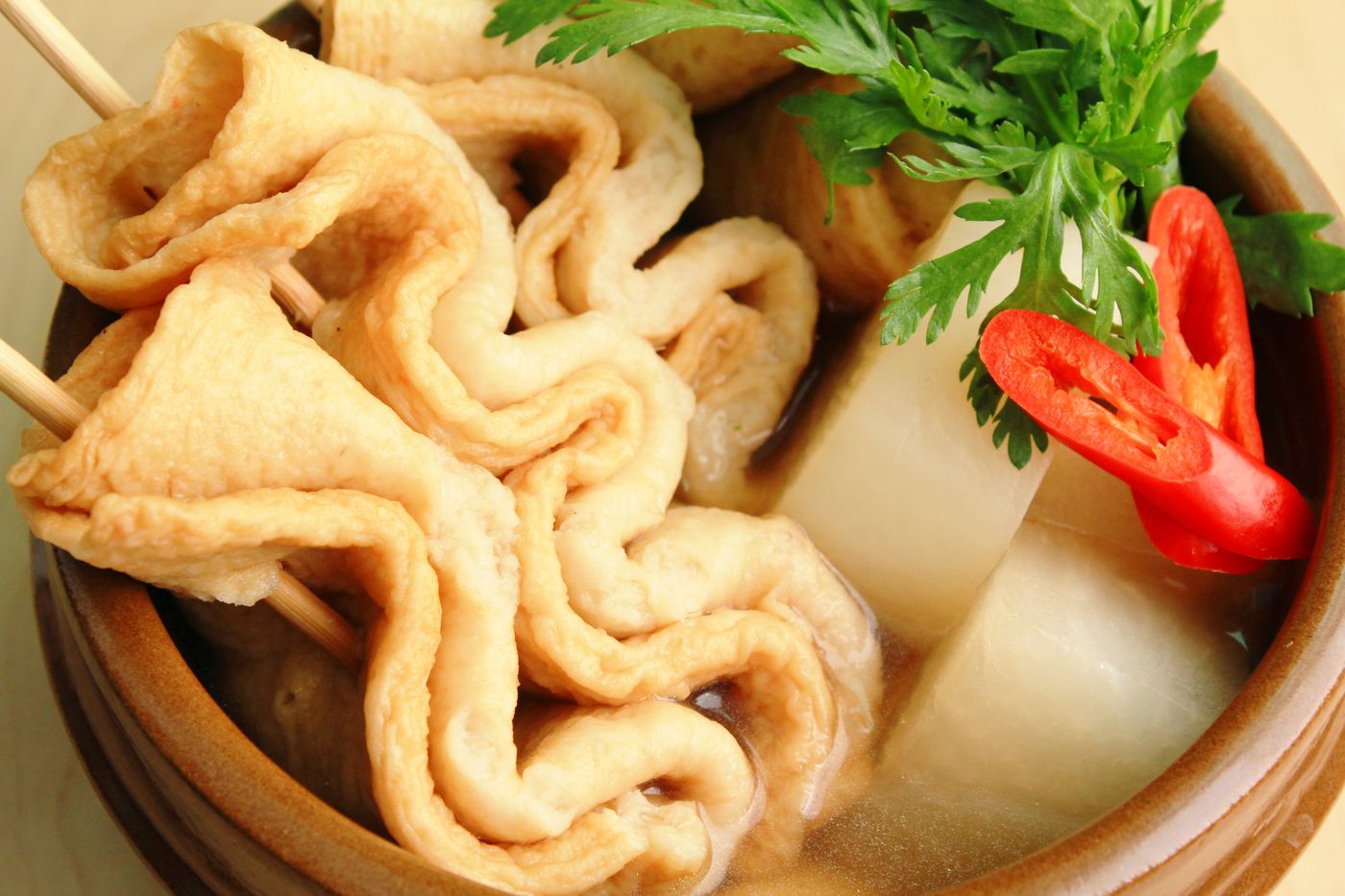 Eomuk Tang (Fish Cake Soup)어묵탕Fish cakes, often threaded on skewers, simmered in a clear anchovy, kelp and radish broth — Busan's winter street-stall soup and a quick home dish.