Ingredient
Lotus root
연근
Romanization: yeongeun
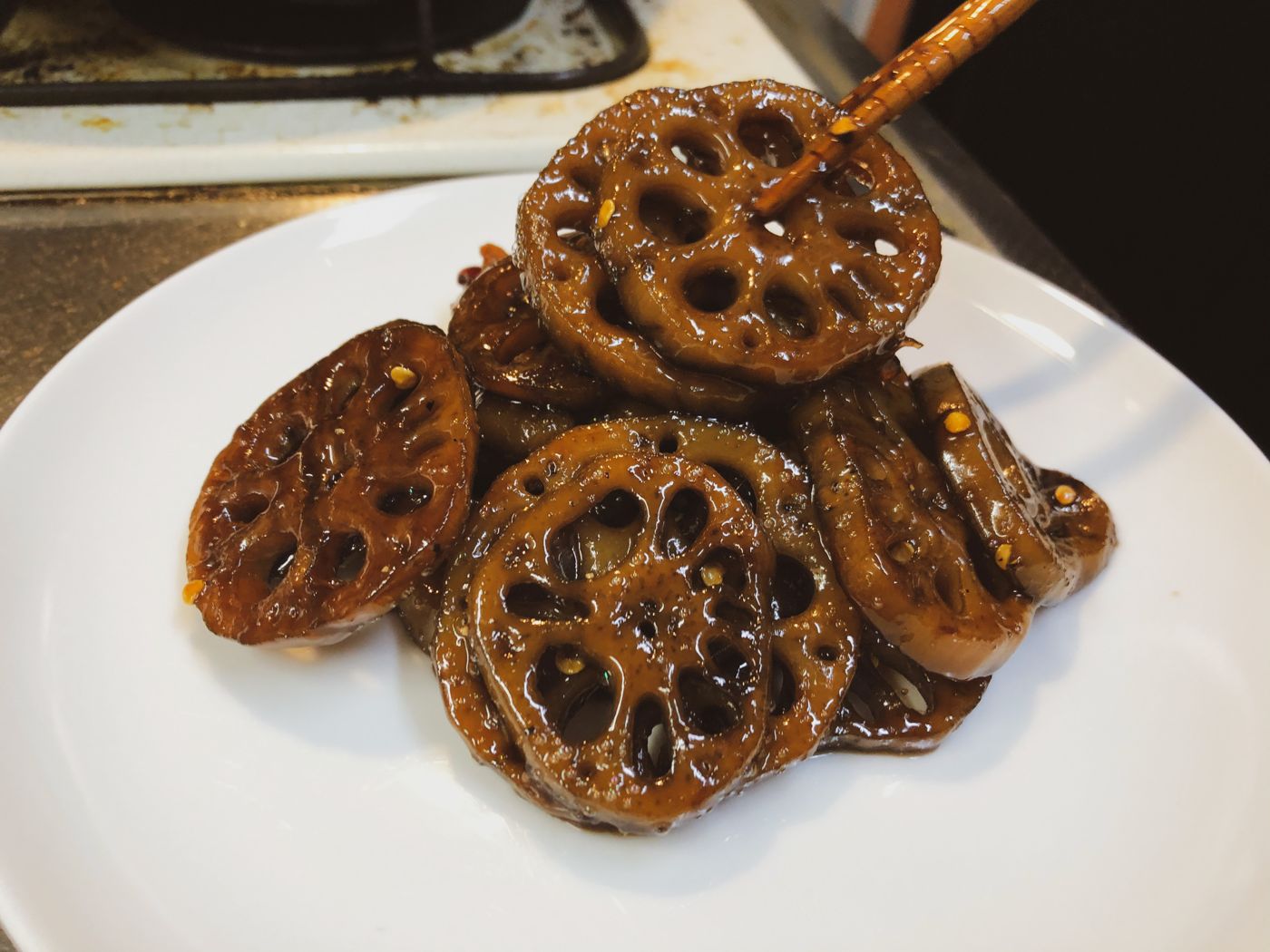
The crunchy, lace-patterned rhizome of the lotus plant. Sliced into rounds, it is simmered in soy sauce and syrup until glossy and chewy as yeongeun-jorim.
Flavor
Mild, faintly sweet and starchy, with a clean, crisp crunch when briefly cooked that turns pleasantly chewy after long braising.
Origin & History
Lotus root is the underground stem of the sacred lotus (Nelumbo nucifera), a perennial water plant native to India. The rhizome creeps through pond mud in jointed sections and swells in autumn, when it is harvested. Inside, it is pierced by hollow air channels that give each slice its lacy pattern, and when a piece is snapped, fine silky threads stretch between the halves.
In Korea, as elsewhere in Asia, the lotus is closely tied to Buddhism, which adopted the flower as a symbol of purity rising unstained from the mud. Lotuses were long planted in temple ponds and other cultivated waters, and today they are grown in ponds and flooded paddies, blooming pink or white in July and August.
Almost every part of the plant is used. The root is braised as yeongeun-jorim, candied in honey as jeonggwa, deep-fried and pickled in vinegar. Cooks often add a little vinegar while cooking to keep the slices pale. Starch extracted from the root was traditionally cooked into a smooth, porridge-like dish, and the seeds and leaves are used both in food and in traditional medicine.
Nutrition
| Calories | 74 kcal |
|---|---|
| Protein | 2.6 g |
| Fat | 0.1 g |
| Carbohydrates | 17.2 g |
| Fiber | 4.9 g |
| Sodium | 40 mg |
Notable forVitamin C · Dietary fiber · Potassium · Vitamin B6
Values from USDA FoodData Central (SR Legacy), "Lotus root, raw" (FDC ID 169250). Braised yeongeun-jorim adds sugar and sodium from the sauce. Actual values vary with ingredients, portion size and preparation.
Health Benefits
- Fiber: Lotus root is a good source of dietary fiber.
- Vitamin C: It provides a notable amount of vitamin C when raw; some is lost during long cooking.
- Minerals: It is a source of potassium and also provides vitamin B6 and copper.
- Traditional use: In traditional medicine the root and its joints were used for their astringent qualities; these are traditional beliefs rather than established health effects.
- Braised form: Glossy yeongeun-jorim is cooked with soy sauce and syrup, so it carries added sugar and sodium.
Informational, not medical advice. Talk to a qualified professional about your own health and diet.