Ingredient
Black soybeans
검정콩
Romanization: geomjeongkong
Glossy black soybeans, led by large, green-hearted seoritae. Simmered in soy sauce and syrup they become the shiny side dish kongjaban; they are also steamed, roasted or ground.
Flavor
Nutty and faintly sweet with a dense, meaty bite; seoritae is softer and sweeter than yellow soybeans, and braising gives it a chewy, glossy, sweet-salty finish.
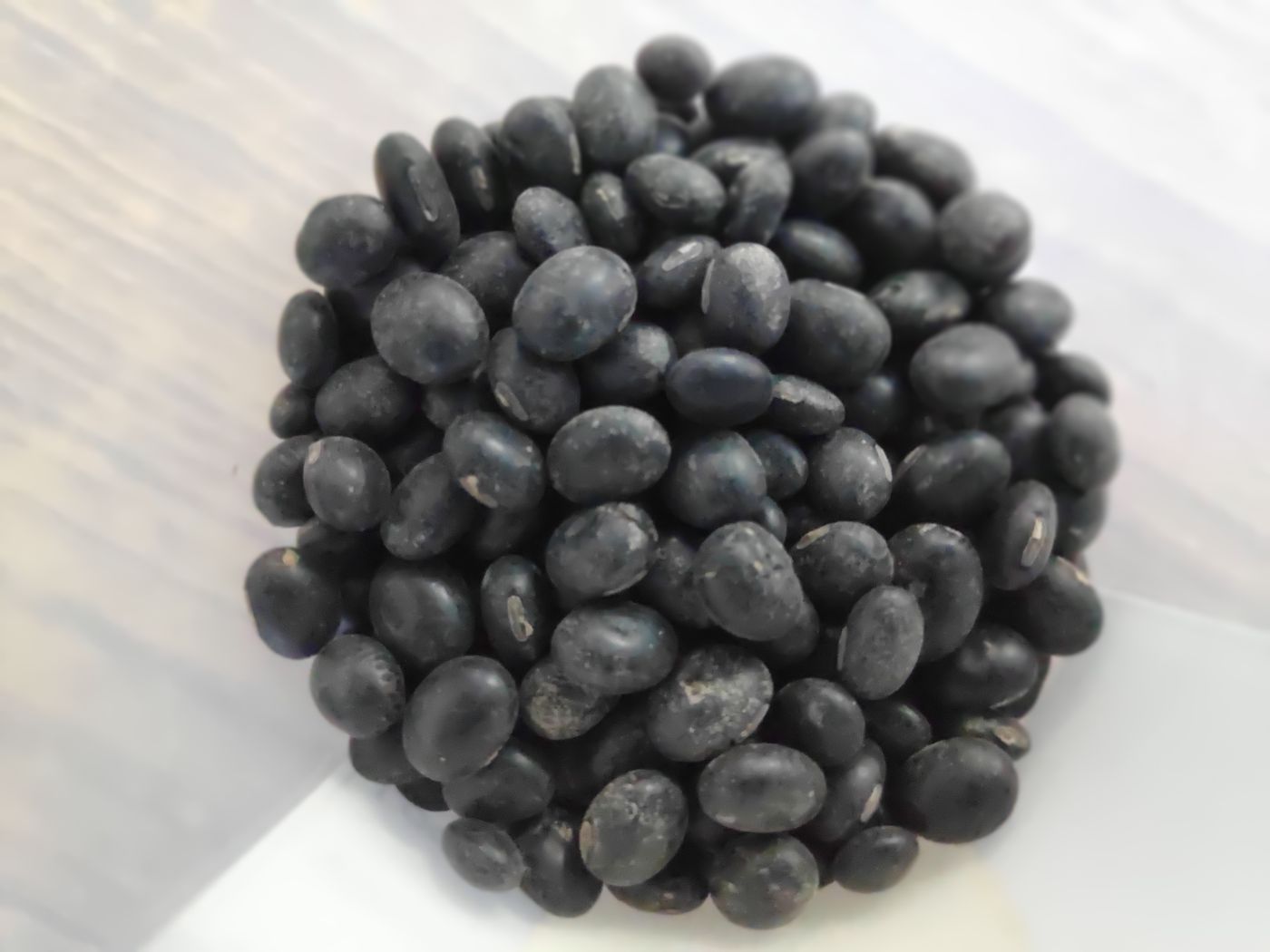 Photo: Gaurav Dhwaj Khadka, CC BY-SA 4.0, via Wikimedia Commons
Origin & History
Geomjeongkong ('black beans') are soybeans (Glycine max) with black seed coats. Koreans name soybeans by size and color, and several black types are sold. Seoritae is a large black bean with green cotyledons inside, which is why it is also called sokcheong ('green inside'); heuktae is a black bean with a yellow interior; and the small, glossy seomoktae, or jwinunikong ('rat's-eye bean'), is a separate small-seeded black bean valued as both food and medicine.
Seoritae is a traditional landrace rather than a modern cultivar. In a 2021 study of 29 Korean colored soybeans it was among the slowest to mature, taking about 148 days from sowing. Its name, 'frost bean,' is popularly explained by its late harvest after the first autumn frosts.
Soybeans as a crop are generally believed to originate in Manchuria, the northeast of China and the old territory of Goguryeo; soybeans have been excavated at the Bronze Age site of Odong in Hoeryong, North Hamgyeong, and the crop is thought to have spread from Korea to Japan.
Black beans are the usual choice for kongjaban (also kongjorim), whose name comes from jwaban, salty side dishes that 'sit beside the rice.' The late-19th-century Siuijeonseo braises boiled beans with soy sauce, scallion, ginger, oil, sesame, chili, honey and minced meat; today the beans are simmered in soy sauce and water until wrinkled, then finished with sugar or syrup and sesame.
Nutrition
| Calories | 401 kcal |
|---|---|
| Protein | 38.02 g |
| Fat | 13.35 g |
| Carbohydrates | 33.43 g |
| Fiber | 21.3 g |
| Sodium | 1 mg |
Notable forProtein (38 g) · Dietary fiber (21.3 g) · Folate (314 µg) · Iron (7.7 mg)
Values copied from the Korean Food Composition Table (Rural Development Administration / National Institute of Crop Science) for this exact food, per 100 g edible portion. Heuktae (black soybean with yellow interior) in the same table is very similar: 406 kcal, 35.8 g protein and 21.4 g fiber per 100 g dried. Actual values vary with ingredients, portion size and preparation.
Health Benefits
- Protein and fiber: Like other soybeans, black soybeans are rich in protein and fiber and supply folate, iron, magnesium and potassium.
- Pigments under study: The black seed coat is rich in anthocyanins, and green-cotyledon types such as seoritae contain more lutein than yellow-fleshed beans; research on what these compounds mean for health is ongoing.
- Soy isoflavones: Soybeans contain isoflavones, plant compounds with weak estrogen-like activity. Harvard's Nutrition Source describes soy as a nutrient-dense protein that can safely be eaten several times a week.
- Considerations: Soy is a major food allergen. Kongjaban is braised in soy sauce with sugar or syrup, so it contributes sodium and added sugar.
Informational, not medical advice. Talk to a qualified professional about your own health and diet.
Dishes with Black soybeans
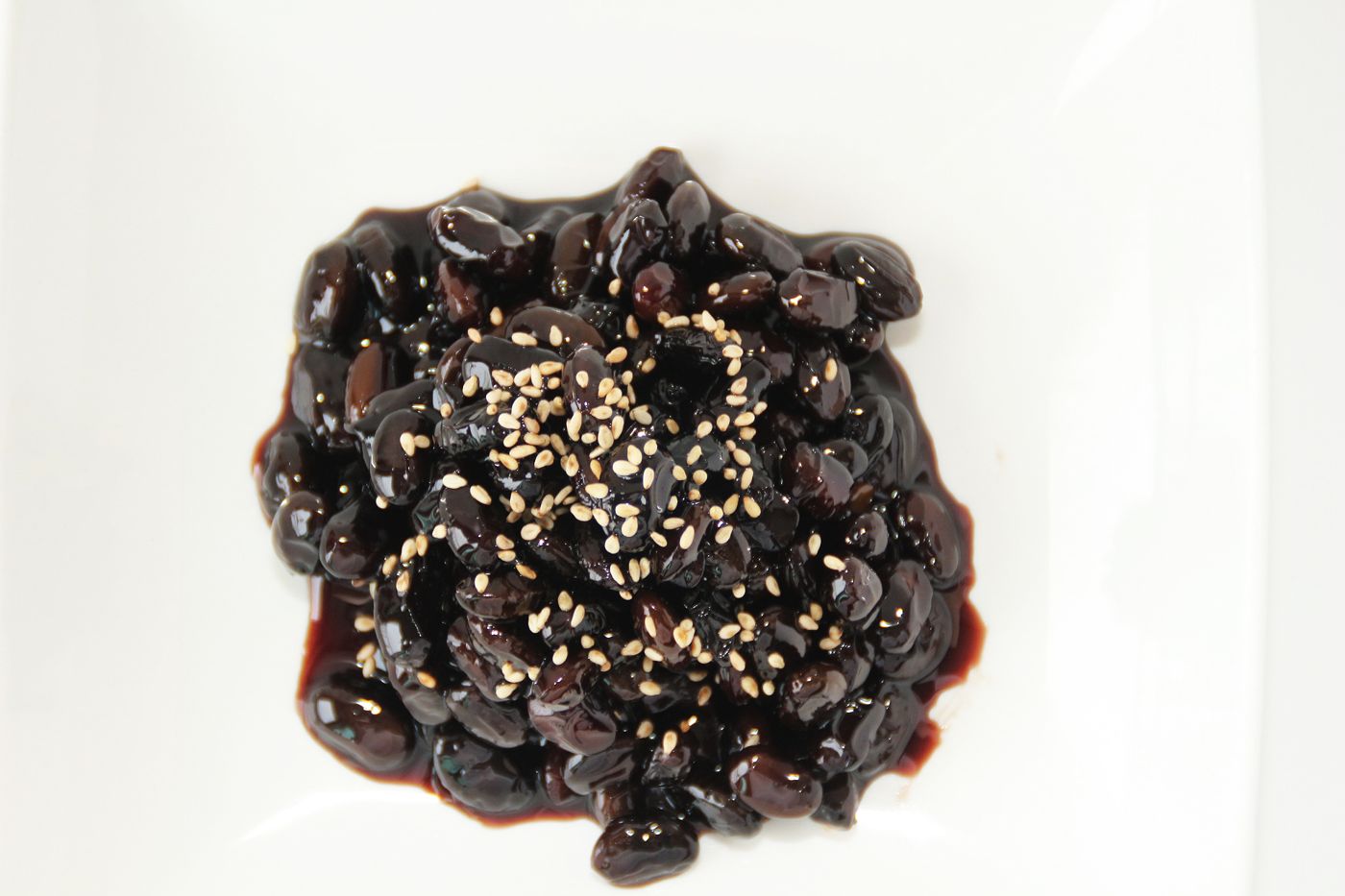 Kongjaban콩자반Black soybeans simmered in soy sauce until wrinkled and glossy, then finished with syrup and sesame — a sweet-salty, chewy keeping banchan.
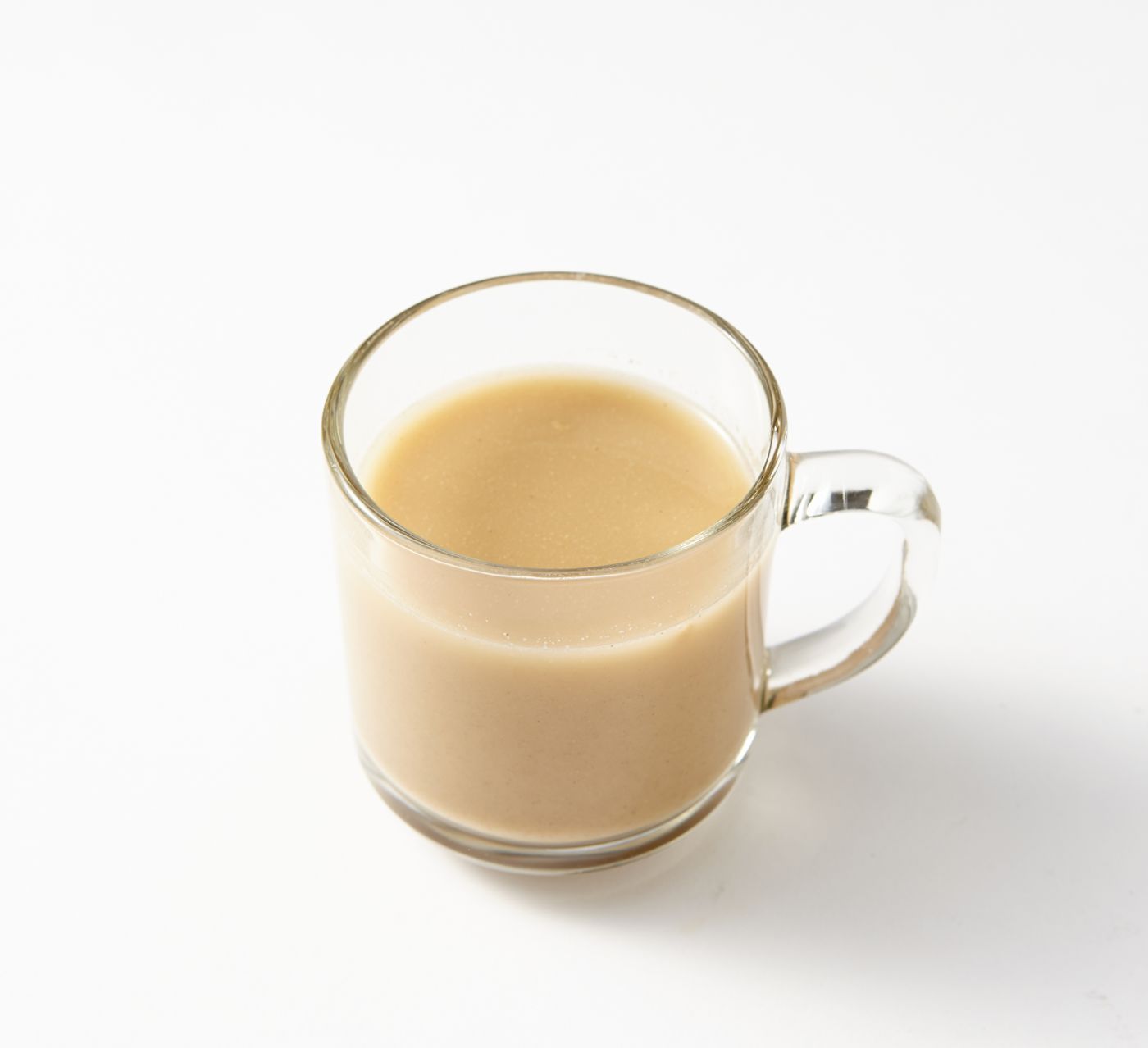 Misutgaru (Roasted Grain Drink)미숫가루A fine powder of steamed, dried and roasted grains stirred into cold water with honey — a nutty summer drink that doubled for centuries as travel food and famine ration.
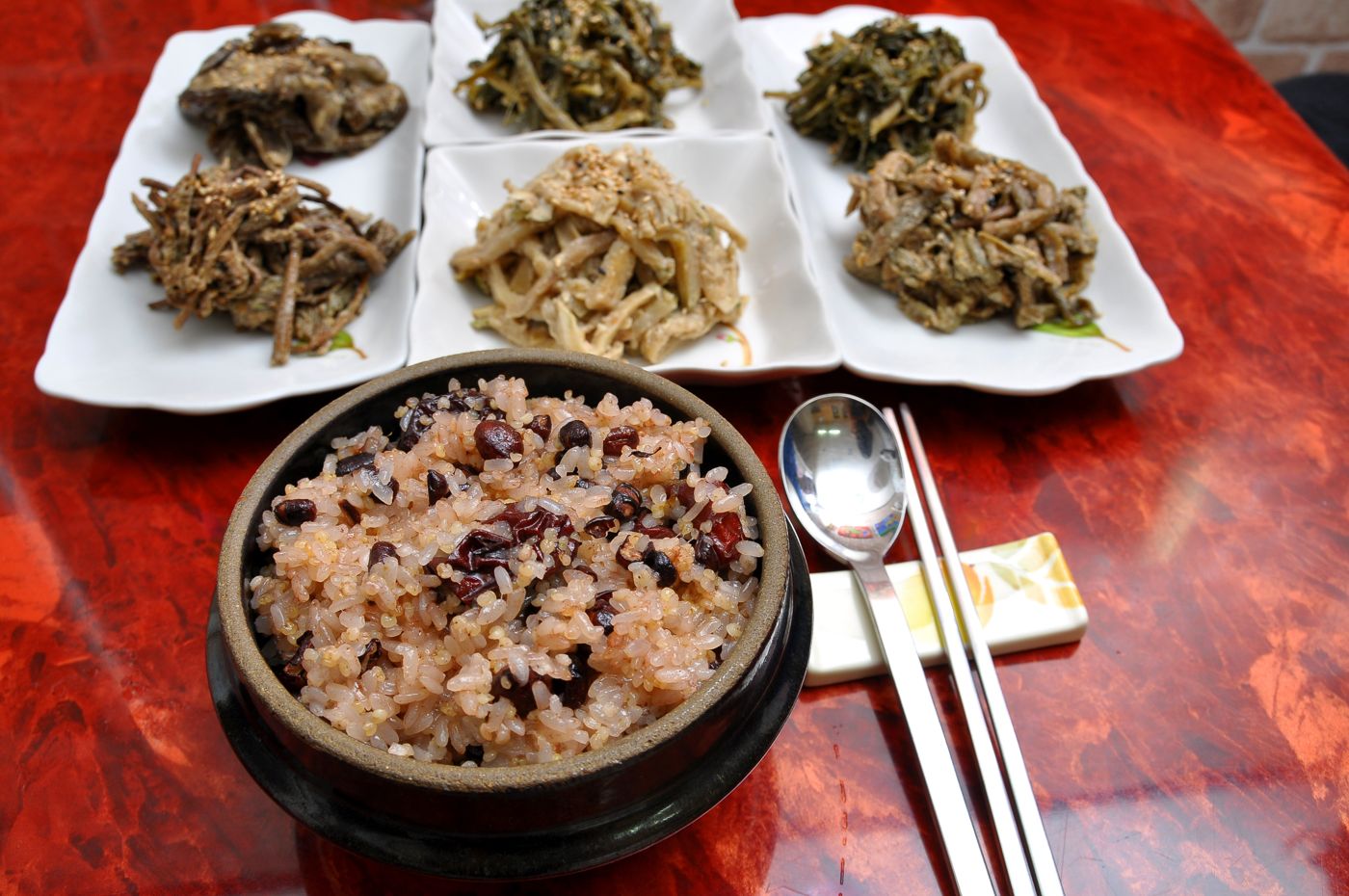 Ogokbap (Five-Grain Rice)오곡밥Glutinous rice cooked with sorghum, millet, red beans and black soybeans for Daeboreum, the first full moon of the lunar year, and shared among neighbors for a good harvest.
Sources
- 01콩 (Soybean) — Encyclopedia of Korean Culture
- 02콩자반 (Kongjaban) — Encyclopedia of Korean Culture
- 03Protein, Amino Acid, Oil, Fatty Acid, Sugar, Anthocyanin, Isoflavone, Lutein, and Antioxidant Variations in Colored Seed-Coated Soybeans (Plants, 2021)
- 04몸에 좋다는 검은콩, 서리태와 서목태 차이는? — Hidoc News
- 05Korean Food Composition Table — Soybean, Black, Seoritae, Dried
- 06Straight Talk About Soy — The Nutrition Source, Harvard T.H. Chan School of Public Health